- Research
- 6 min
- 05/06/2026

Prof talk | From solar farms to solar dresses
How solar energy is becoming part of everyday life
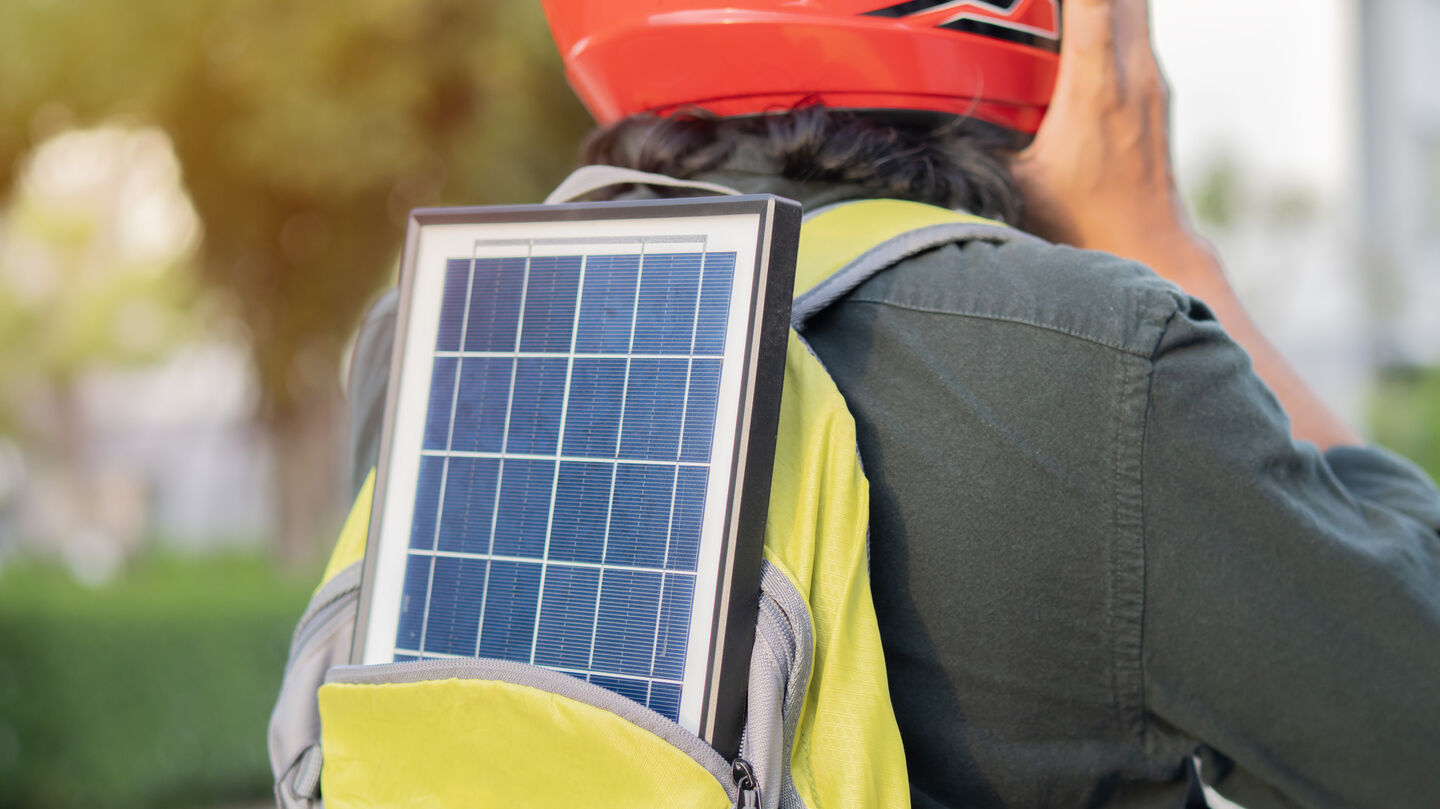
We mainly associate solar panels with rooftops and solar farms, but according to TU/e professor Angèle Reinders, the future of solar energy extends much further. From building facades to cars, and from clothing to phone cases, solar cells are increasingly being integrated into everyday objects.
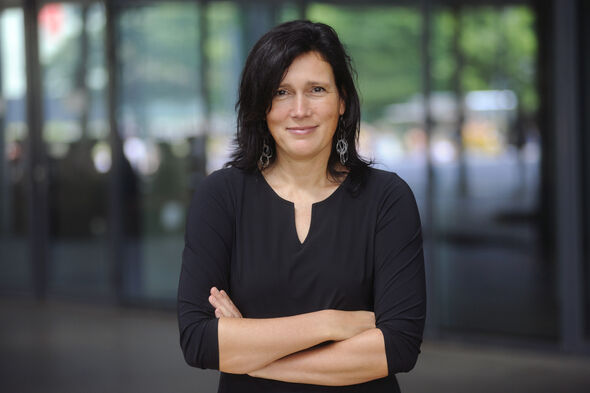
Angèle Reinders combines energy technology with design questions in her research. This interdisciplinary approach suits the professor of Design of Sustainable Energy Systems in the Department of Mechanical Engineering at TU/e well. “I don’t just look at the technology itself, but also at what you can do with it. My focus is on ways to integrate sustainable energy into all kinds of applications, from buildings to vehicles.”
In Reinders’ work, the emphasis is on translating research into practical applications. “Using measurements and simulations, for example, we calculate how much solar radiation a solar-powered car can capture while driving,” she says. This gives designers a better understanding of the potential of different solar technologies and how feasible they are in practice.

The broader picture is always taken into account: Is the technology sufficiently developed? Is the application financially viable? Can it be integrated into a product? And how do users respond to it? Ultimately, this combination of factors determines whether a technology will actually be adopted.
“The ultimate goal is to reduce CO₂ emissions, accelerate the energy transition, and safeguard our energy security. And to do so at an affordable cost and in a way that fits well within our living environment,” says Reinders. “And it has to look good too,” she adds with a smile.
An integrated approach
That integration—defined by Reinders as the broad incorporation of solar energy into products, buildings, infrastructure, and the built environment—is, in her view, crucial. She argues that much more can be achieved with solar energy by integrating panels differently into buildings and objects.
“I believe that as people, we can design our surroundings and, in doing so, determine what the energy transition will look like. Instead of continuing to build more large-scale solar farms, we can also think about ways to integrate solar panels more effectively into the landscape or combine them with agriculture.”
There is an enormous amount of space within infrastructure that can be used for solar energy. Why wouldn’t we use it?
Such an integrated approach also makes optimal use of Dutch design expertise, says Reinders. “The Netherlands is truly a design-oriented country, with strong design programs and events such as Dutch Design Week. This allows you to introduce energy technology in a way that aligns with how people experience their surroundings. You can also combine functions. For example, if you replace part of a building envelope with solar panels, you suddenly create an entirely new type of building component.”
Untapped space
When Reinders was asked some time ago on a radio program about a project involving the installation of solar panels between railway tracks, she was immediately enthusiastic. According to her, there are still many underutilized spaces in the Netherlands that are suitable for generating solar energy, such as railway infrastructure, highway noise barriers, and embankments.
“There is an enormous amount of space within infrastructure that can be used for solar energy. Why wouldn’t we use it?” she says. The idea is not entirely new: several pilot projects have already been carried out, although large-scale implementation has yet to take off. According to Reinders, this is becoming increasingly attractive, partly due to the rise of electric vehicles. “Why wouldn’t we power them with solar energy?”
Low emissions
Reinders also emphasizes the relatively low CO₂ emissions associated with solar energy. Emissions from the Dutch electricity grid, which still relies heavily on gas- and coal-fired power plants, are roughly ten times higher (source: CBS). Compared with countries such as Poland, where coal remains dominant, the difference can be as much as twentyfold in favor of solar energy.
According to Reinders, the potential of solar-powered cars is significant. She points to the TU/e spin-off Lightyear, which, following a restart under the name Lightyear Layer, continues to develop integrated solar panel technology. “We have calculated that 30 to 40 percent of a solar car’s energy demand can be supplied directly by the sun,” she says.
Yet solar cars are still not driving on public roads. Why is that? “Innovation often starts in a niche market, so it takes time before it breaks through. The technology works, and we know it can be implemented on a larger scale at relatively low cost.”
The built environment
Reinders also sees major opportunities for solar energy in the built environment. With support from the 4TU Heritage project, she is working on the renovation of aging buildings and the integration of solar panels into roofs and facades. These are not conventional panels mounted on top of roofs, but so-called integrated solar panels, in which solar cells become part of the building material itself, such as facade elements. “In this way, you can turn a building into a sustainable power plant,” she says.
Combined with seasonal energy storage, this could become an important direction for sustainable energy supply in the built environment. “Buildings consume a great deal of energy themselves, so if you generate that energy locally, supply and demand are much better aligned.”
Instead of installing solar panels on existing buildings as an afterthought, they could be incorporated into the design from the outset. Some companies are already developing solar panels that can be colored or patterned so that they better match a building’s appearance or, when necessary, blend in almost invisibly.
“You can produce solar panels in terracotta colors or with a concrete-like finish that are virtually indistinguishable from the original building materials,” says Reinders. Ultimately, they need to be integrated into a building and its surroundings in a way that does not disrupt the visual environment. “One example is solar panels designed to resemble roof tiles, which are barely noticeable.”
Practical challenges
In addition to aesthetic and design-related questions, there are also practical challenges. Integrated solar panels need to be installed in a smart way so that damaged components can be replaced easily. Keeping surfaces clean is also important, because dirt and dust can block sunlight.
“In the Netherlands, this is less of an issue because it rains frequently, preventing excessive buildup of dirt on solar panels. But in dry, dusty environments—such as solar energy systems in desert regions—you need active cleaning systems, otherwise energy output drops significantly,” says Reinders.
Another complicating factor is that solar energy systems in buildings operate at the intersection of multiple technical requirements and regulations. They must comply not only with solar panel standards but also with building regulations concerning issues such as fire safety and sound insulation.
In principle, solar clothing could let you charge your phone at a festival without carrying a power bank
“A solar panel that functions as a building component must therefore comply with the relevant building codes and certifications,” Reinders explains. “A great deal of work is being done in this area, but many challenges still require collaboration across disciplines.”
Wearing a solar dress to a festival
There are also more unconventional applications of solar energy. Researchers are experimenting with solar cells embedded in clothing. Some designs feature dresses with solar panels on the shoulders or chest, and watches with integrated solar cells are already widely available commercially.
“It is still very niche and experimental, but in principle, solar clothing could let you charge your phone at a festival without carrying a power bank,” says Reinders. “Especially on a sunny day.”
Different stakeholders
How realistic is it that these kinds of innovations will one day become part of everyday life? Reinders is optimistic. “I believe that solar-powered cars and the integration of solar energy into the built environment will definitely find their way into society,” she says.
“And I can already see solar cells being used in wearables, such as watches and phone cases, as well as in Internet of Things applications. Think, for example, of solar-powered price tags in supermarkets.”
The integration of solar cells into other product categories, such as clothing, is more complicated, according to Reinders. As with applications in buildings, the technology enters an entirely new product sector with its own rules and standards. “You not only have to comply with requirements for solar cells, but also with standards for clothing. Solar cells in textiles must be flexible, washable or removable, and they must not contain toxic materials.”
In addition to dealing with different standards, certifications, and regulations, these innovations also involve very different stakeholders. “You are essentially entering a completely new world,” says Reinders.
That is precisely why collaboration between disciplines is essential. Designers and architects can help translate the technology into practical applications. “They can bridge the gap to a specific domain.”
The aesthetic dimension
Last but not least, aesthetics also play an important role. “When we can integrate solar cells into materials in a way that allows for personalization—for example through different colors or printed designs—the likelihood that people will embrace the technology increases significantly,” says Reinders. “Consumers are much more likely to want a roof element in their home if it looks good. Once you achieve that balance, you’re in a strong position.”
According to her, we are currently at exactly the stage where collaboration between sectors and stakeholders is crucial for successfully integrating the technology. Reinders hopes that solar energy will become part of an increasingly wide range of applications in the years ahead.
“The technology already exists, it works, and it is cost-effective, so in that sense I’m very solar-minded,” she says with a smile. “And I believe we can find solutions to the practical challenges.”
This article was translated using AI-assisted tools and reviewed by an editor
Discussion