- Campus
- 7 min
- 02/03/2026

Accelerating particles for medical use: radiation on campus
What it takes to produce radioactive substances for healthcare
In a concrete bunker on the TU/e campus, a machine is running that few people ever see, yet hospitals depend on it: a cyclotron. Spin-off AccTec uses it to accelerate proton beams for medical purposes. Soon, a second particle accelerator will be put into operation.
AccTec is located in the Cyclotron and Extractor buildings on the south side of campus. The company was founded in 1999 as a spin-off from TU/e and has since grown into one of the university’s most successful subsidiaries; only staffing agency Euflex generates higher revenue.
What quite literally and figuratively keeps this success running is the cyclotron: a particle accelerator that speeds up protons to produce so-called radionuclides. Radionuclides are the building blocks of radiopharmaceuticals—radioactive substances used for medical diagnosis and treatment.
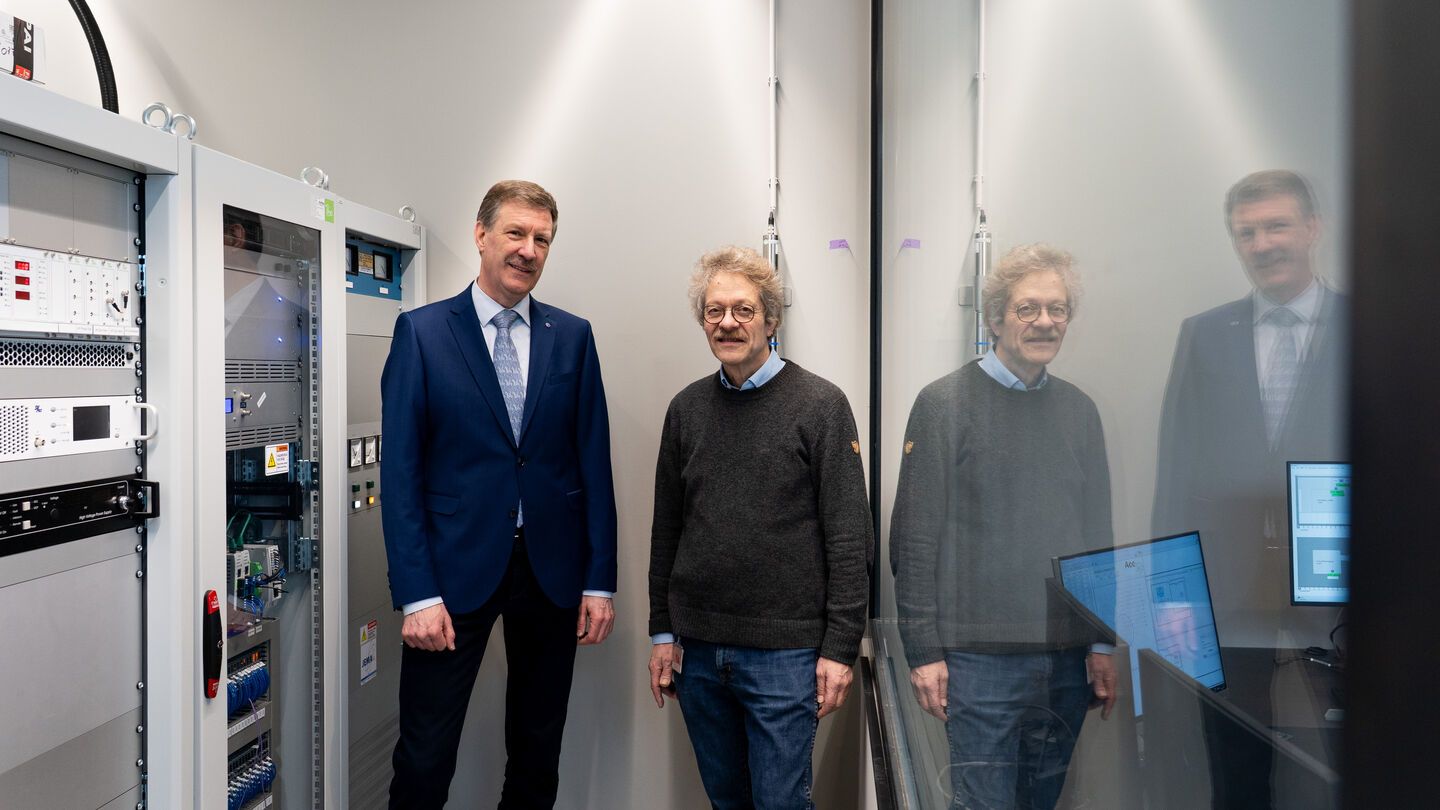
To further expand radionuclide production, AccTec will soon commission a second cyclotron. This brings new challenges in terms of technology, safety, and regulation, say AccTec director Leo van IJzendoorn and TU/e radiation expert Gilles Moerdijk (right and left in the main photo, respectively). But first, they explain how a cyclotron actually works.
How does a cyclotron work?
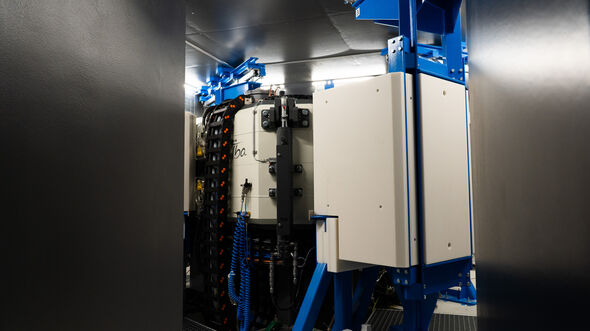
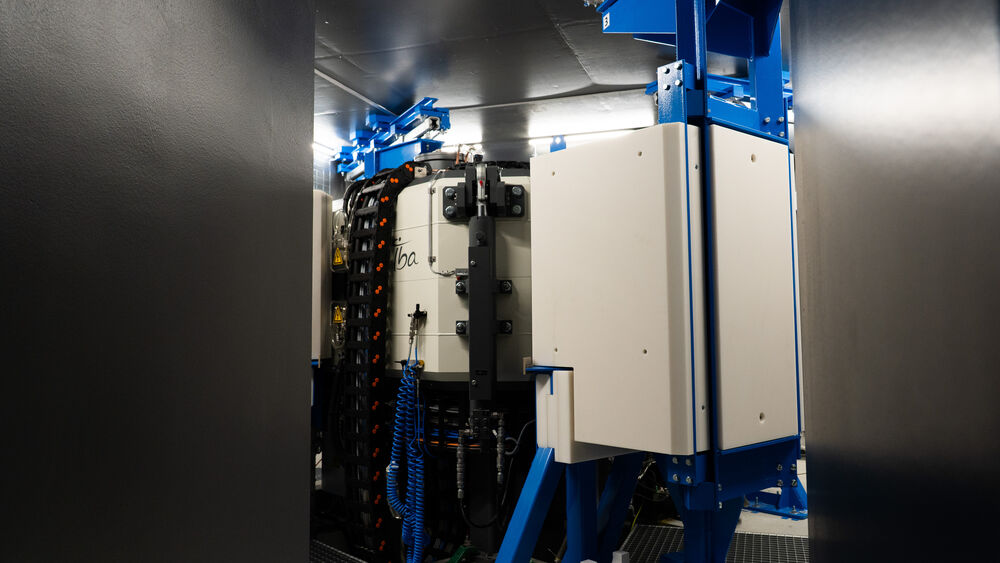
A cyclotron is a specific type of particle accelerator consisting of an electromagnet shaped like two disks, with a vacuum system containing an ion source and high-frequency electric fields in between. The device accelerates charged particles, such as protons, to extremely high speeds of about 60,000 kilometers per second. For comparison: that is roughly 20 percent of the speed of light.
Dual role
AccTec employs a total of eighteen people. Some of them work part-time at AccTec and part-time as researchers at TU/e, within the Department of Applied Physics and Science Education. According to Van IJzendoorn, this creates a valuable interaction. “At TU/e, for example, they conduct research on new accelerators, and they can apply that knowledge in practice with us. This creates a strong cross-fertilization between research and application.”
“What is characteristic of a cyclotron is that the particles move in a spiral trajectory—that’s where the name comes from,” Van IJzendoorn explains. This acceleration arises from the combination of a magnetic field and a high-frequency electric field. “The magnetic field keeps the particles moving in a circle, while the electric field gives them an extra push during each rotation.”
Because of this continuous acceleration, the particles move outward from the center in ever-larger orbits until they reach the wall of the cyclotron. “At that point, they are guided out of the spiral path and launched into what is called a target, which in our case simply contains water.”
When the accelerated proton beams collide with the atomic nuclei in the water, a nuclear reaction occurs. This produces new, unstable, radioactive atomic nuclei, known as radionuclides. “For example, we produce radioactive fluorine-18, which is used in tracer fluids for PET scans,” Van IJzendoorn says. Medical products that contain radionuclides—such as these tracer fluids—are collectively referred to as radiopharmaceuticals.
From radionuclide to PET scan
AccTec is responsible for the first step in the production process of radiopharmaceuticals: accelerating protons. As soon as these accelerated particles hit the water target and radionuclides are created, the product becomes the property of its sole customer, GE HealthCare. This company, which is also located on the TU/e campus, processes the radionuclides into radiopharmaceuticals: radioactive medical substances, such as agents for radiotherapy or tracer fluids for PET scans.
The radioactivity of these substances is essential. When a radiopharmaceutical is injected into the body for a PET scan, the emitted radiation can be detected by the scanner. This makes it visible where the tracer accumulates in the body—for example, in tumors.
However, this essential radioactivity also creates time pressure. Radioactive substances decay: over time, their radiation decreases. Fluorine-18, for instance, has a half-life of about 110 minutes.
“That means the radioactivity is halved in just under two hours,” Van IJzendoorn says. This is why AccTec operates day and night. During the day, radionuclides with a longer half-life are produced; at night, the focus is on substances for which speed is crucial. “By the time they are processed into radiopharmaceuticals and arrive at the hospital, they must still be sufficiently radioactive—otherwise you won’t see anything on the scan.”
Exceptionally stable
A cyclotron is complex to operate, Van IJzendoorn explains. “It’s not a device where you just plug it in and it works. Every time you use it, you have to recalibrate all the settings to be able to accelerate the proton beams in a controlled way.” He also notes that AccTec continuously monitors the installation and carries out extensive preventive maintenance.
Because of this complexity, delivery reliability at many companies with a cyclotron is around 70 percent, since things do occasionally go wrong. AccTec has specialized in operating and fine-tuning the cyclotron. “Our delivery reliability is above 99 percent, which is extremely high and something we are proud of.” The cyclotron is so well maintained and so exceptionally stable, that the manufacturer likes to use AccTec’s system for testing purposes.
Background radiation
While the production of radionuclides is indispensable for healthcare, it also involves health risks. Both AccTec and GE HealthCare employees are exposed to elevated levels of ionizing radiation, which can be dangerous. But how much radiation are we talking about?
Radiation is measured in sieverts. In the Netherlands, citizens are exposed on average to 1.5 millisieverts per year. “We call that background radiation,” Moerdijk explains. “It comes from outer space, from the Earth’s crust, and even from your own body. We are all slightly radioactive.”
Background radiation can vary considerably by location. “In the province of Limburg, for example, it is somewhat higher than the average 1.5 millisieverts because the soil contains more radioactive material. And in areas with a lot of thorium and uranium in the ground, such as in the Czech Republic and southern Finland, radiation levels can be three times as high. On some beaches in India, this even rises to 10 millisieverts per year.”
The Dutch average of 1.5 millisieverts does not include radiation from medical sources, such as radiotherapy or undergoing a PET scan, Moerdijk adds. “And if you frequently travel by airplane, that also adds to your exposure. At higher altitudes, you receive more radiation from outer space.”
Safety measures
Companies that work with ionizing radiation are subject to a fixed legal limit for how much radiation they are allowed to emit. At the boundary of their premises, they may not expose the surroundings to more than an additional 0.1 millisieverts per year above background radiation. This means AccTec does everything possible to prevent radiation from leaking outside and exceeding that limit.
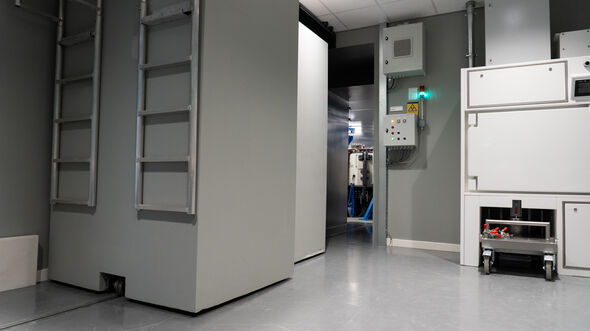
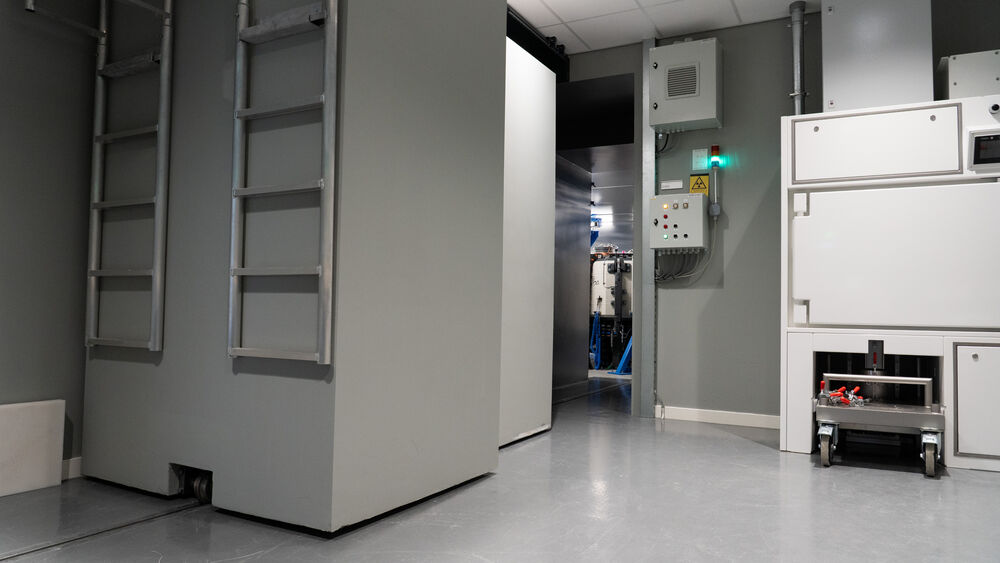
They do this in several ways. “First of all, the cyclotron is housed in a bunker with 2.4-meter-thick concrete walls,” Van IJzendoorn says. In principle, the walls only need to be two meters thick, but because ventilation ducts run through them, extra concrete is required to compensate.
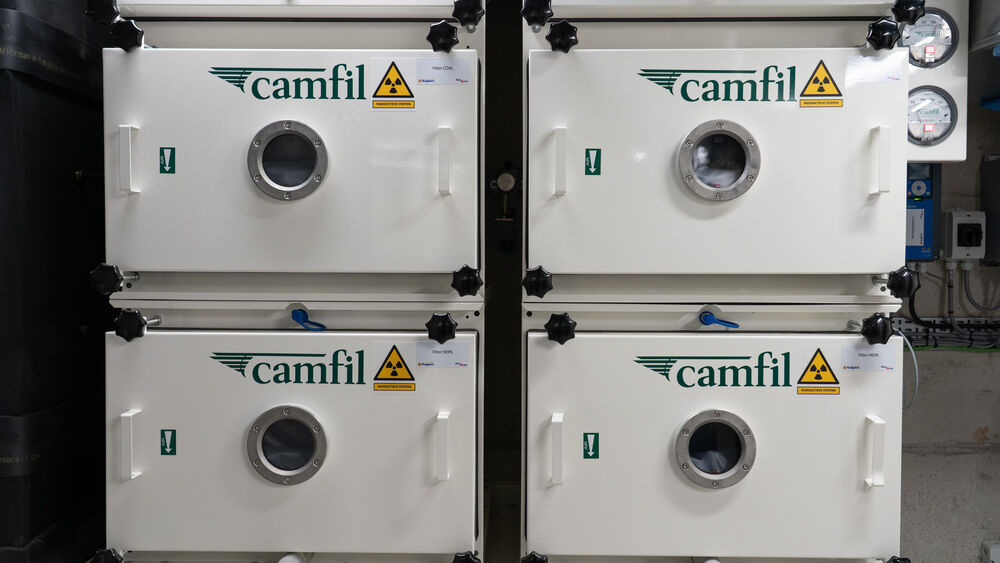
The ventilation system is, in principle, directly connected to the outside air. However, because the ducts contain several sharp bends, the radiation in the air loses energy with each ‘collision’ against the wall. The last radioactive particles are captured in a filter system with activated carbon filters, which also functions as an automatic emergency system: if radiation levels become too high, the ventilation shuts off immediately. This prevents contaminated air from escaping outside.
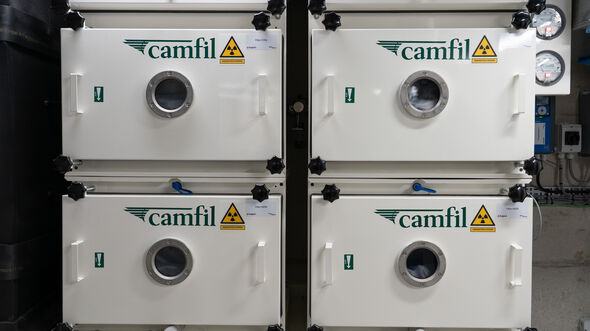
Risks
Different standards apply to employees who work with radioactive substances, reflecting occupational risk. Depending on their tasks, they may receive a higher radiation dose than the general public. For operators at AccTec, the limit is 6 millisieverts extra per year.
“Additional exposure involves risks, such as an increased chance of cancer,” Moerdijk says. But he stresses that this must be seen in perspective. “As a truck driver, you have a greater chance of dying in traffic than a lab worker has of developing cancer from radiation.”
Health effects
Acute health effects are unlikely to occur among employees. “Only at exposure levels of around 200 millisieverts at once do we see temporary changes in blood values, such as a decrease in white blood cells. And at around 2,000 millisieverts in one go, slight reddening of the skin can occur,” Moerdijk explains.
“Our employees receive at most 6 millisieverts extra per year, and that is spread over an entire year.” By comparison, the so-called LD50—the dose at which half of those exposed would die—is around 5 sieverts in one go. “That is more than eight hundred times the annual additional dose our employees receive. Doses above 10 sieverts, such as those experienced by some firefighters during the Chernobyl disaster and by part of the population during the bombing of Hiroshima, have never been survived.”
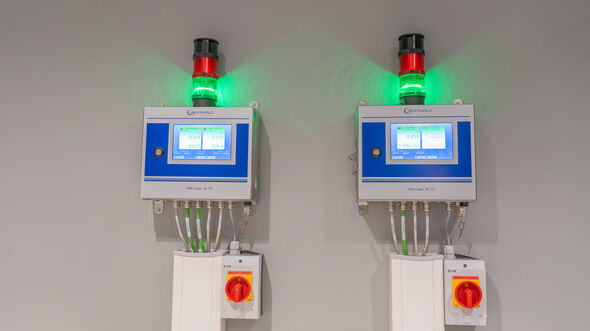
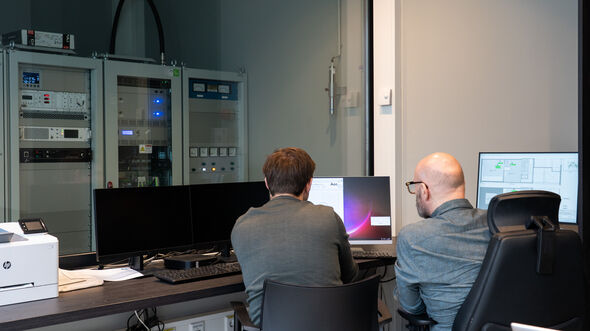
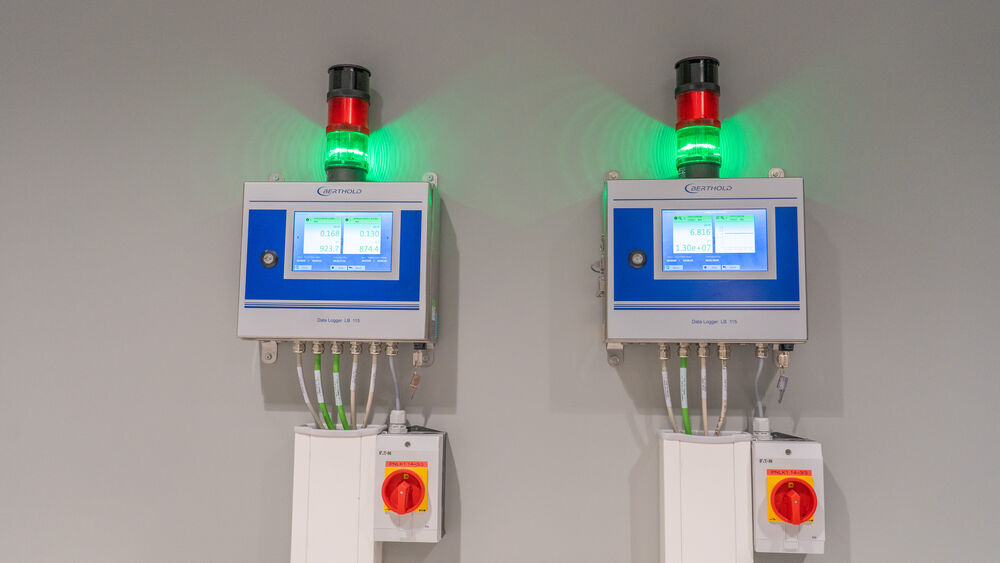
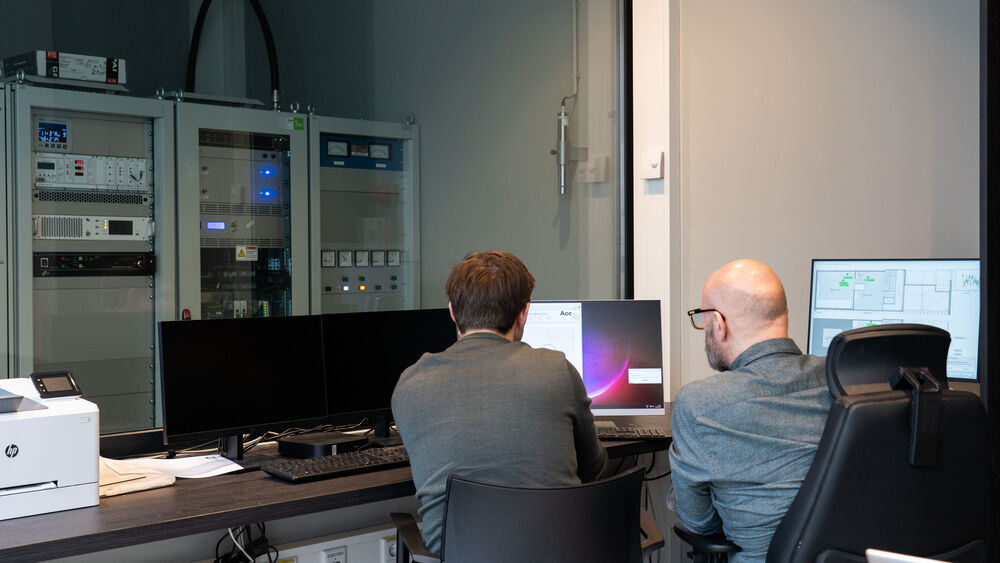
Despite this perspective, people who work with ionizing radiation face risks that the general population does not. That is why exposure is continuously monitored. In AccTec’s control room, computers constantly track radiation levels in the various areas of the building.
In addition, after visiting the cyclotron bunker, employees pass a contamination monitor that checks their hands and feet for remaining radioactive particles. This prevents radioactive substances from spreading outside the shielded areas.
Getting to work
Everything AccTec does falls under the supervision of TU/e’s radiation protection unit. Together with TU/e, NWO Institute DIFFER, Fontys, and spin-off PTGE, the company operates under a single so-called Nuclear Energy Act Complex License, issued by the Authority for Nuclear Safety and Radiation Protection (ANVS). This license regulates all sources of ionizing radiation on campus.
Until now, AccTec produced radionuclides with one cyclotron, but with the arrival of a second one, the license had to be renewed. The new license is expected to come into effect later this month. In any case, the installation is already ready for use, including all required safety measures.
This article was translated using AI-assisted tools and reviewed by an editor.
Discussion