
- Student
- 09/06/2026

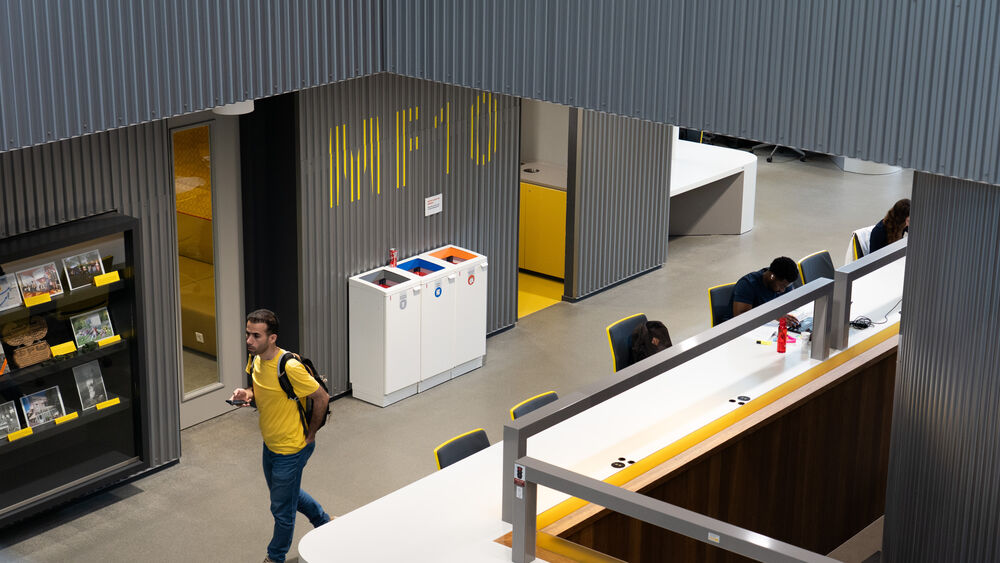
Library turns MF 10 into living room for relaxation moments
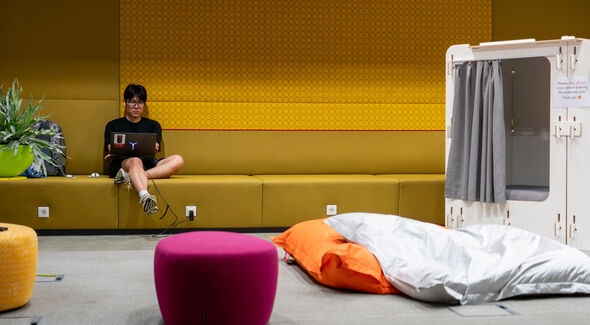
With €7,500 from TU/e’s Student Wellbeing Fund, Geraldine Suijkerbuijk of LIS can transform former classroom MF 10 into a permanent Recharge Room. The library front desk employee believes such a space is needed, as she sees students experiencing high levels of pressure and stress.
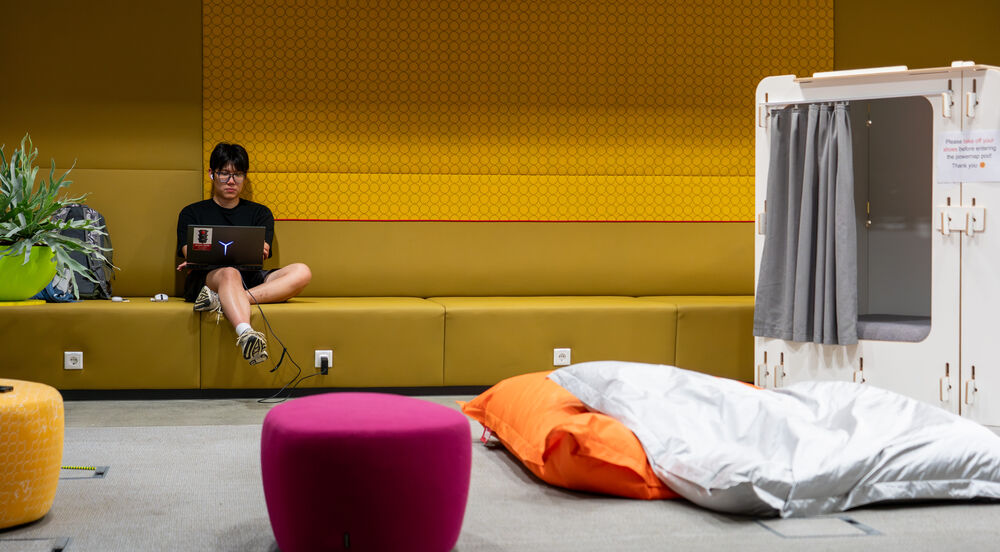
“I’ve been working at the library front desk for eight years, and I’ve noticed that students are under a lot of pressure. The power nap pods are used extensively: students appreciate having a moment to relax. TU Delft and Maastricht University have created living room-style spaces where students can read, practice yoga, or simply unwind. During a visit, I saw how much those spaces were appreciated.”
Inspired by that experience, Suijkerbuijk submitted an application through the TU/e Wellbeing Fund. “With a Recharge Room, we can offer students a place where they can take a moment for themselves. They can take a power nap to recharge, attend a well-being workshop, practice meditation or yoga, or quietly read a self-help book. All of these activities are intended to reduce stress and give students a break from their studies,” she wrote in her proposal.
“Giving it a soul”
The space is intended to help students reconnect with themselves, but Suijkerbuijk would first like to create a warmer atmosphere.
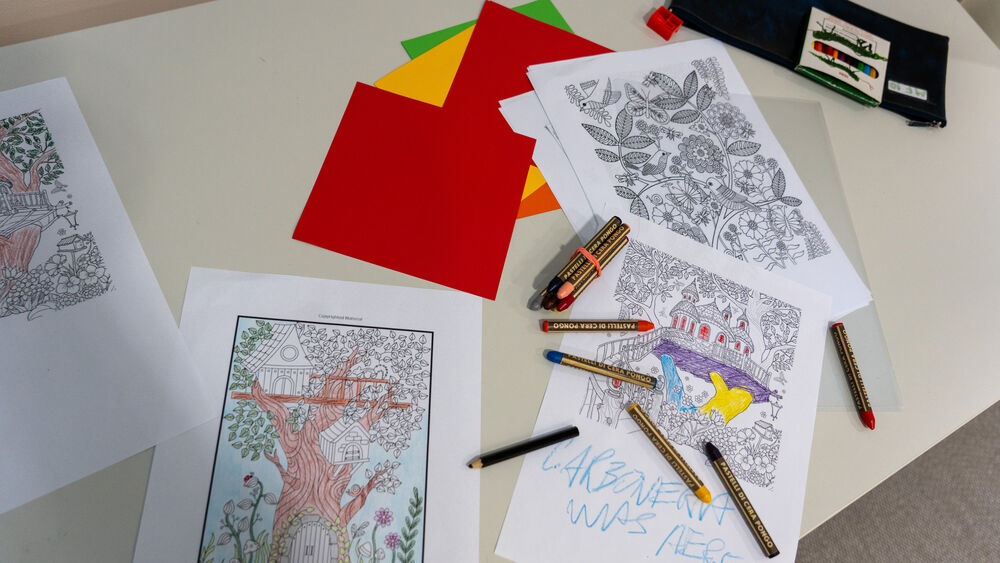
“I’d like to give MF 10 a bit of a soul with things like plants and different lighting. A bookcase with self-help books is also on my wish list. And drawing materials, a rug on the floor, yoga mats… But the room should remain low-stimulation and have a long lifespan. I’d also really love to have a giant image of Egbert the fish on the wall.”
She is also allowed to spend part of the funding on massage chairs. “During Wellbeing Week, a friend of mine offered chair massages here, and there was a huge amount of interest. We want to offer that again during exam periods, but I’ll need to find another source of funding to cover the labor costs.”
Ground rules
For now, the Recharge Room will only be available during the day as a place to relax.
“We’re keeping it closed in the evenings because there is no supervision then, and the ground rules have not yet been clearly defined,” says the initiator. “It shouldn’t become a hangout spot. We can enforce the quiet policy during the day, but outside those hours it becomes more difficult.”
Suijkerbuijk regularly organizes activities that reflect her commitment to student well-being. In December, for example, she organized a gift campaign for international students who stayed in Eindhoven during the Christmas break. “We are more than just a library. We’re looking forward to discovering how students will experience and appreciate the Recharge Room in the future.”
For the practical design and setup of the space, Suijkerbuijk is receiving support from architecture and building engineering student Kai Ceelen, who works as a student assistant at the library front desk.

Discussion