- Student
- 4 min
- 05/12/2025
Holidays for internationals: from Yalda to Sinterklaas
What is it like for internationals to spend the festive month of December far from home?
While most Dutch people are busy writing poems, making surprises, and looking forward to the arrival of Sinterklaas, the same period looks very different for international students at TU/e. From Yalda Night in Iran to eating twelve grapes in Spain, internationals celebrate December in their own ways while discovering Dutch traditions at the same time.
For many students, celebrating the holidays far from home is a mix of excitement and nostalgia. Duru Mutlutürk, a first-year Mechanical Engineering student from Türkiye, has only been in the Netherlands for four months and is experiencing the festive December season here for the first time. “I only found out who Sinterklaas is last week,” she admits.
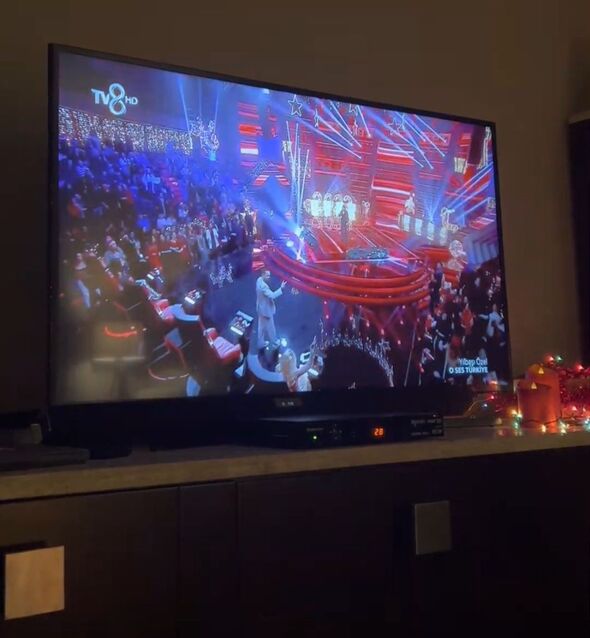
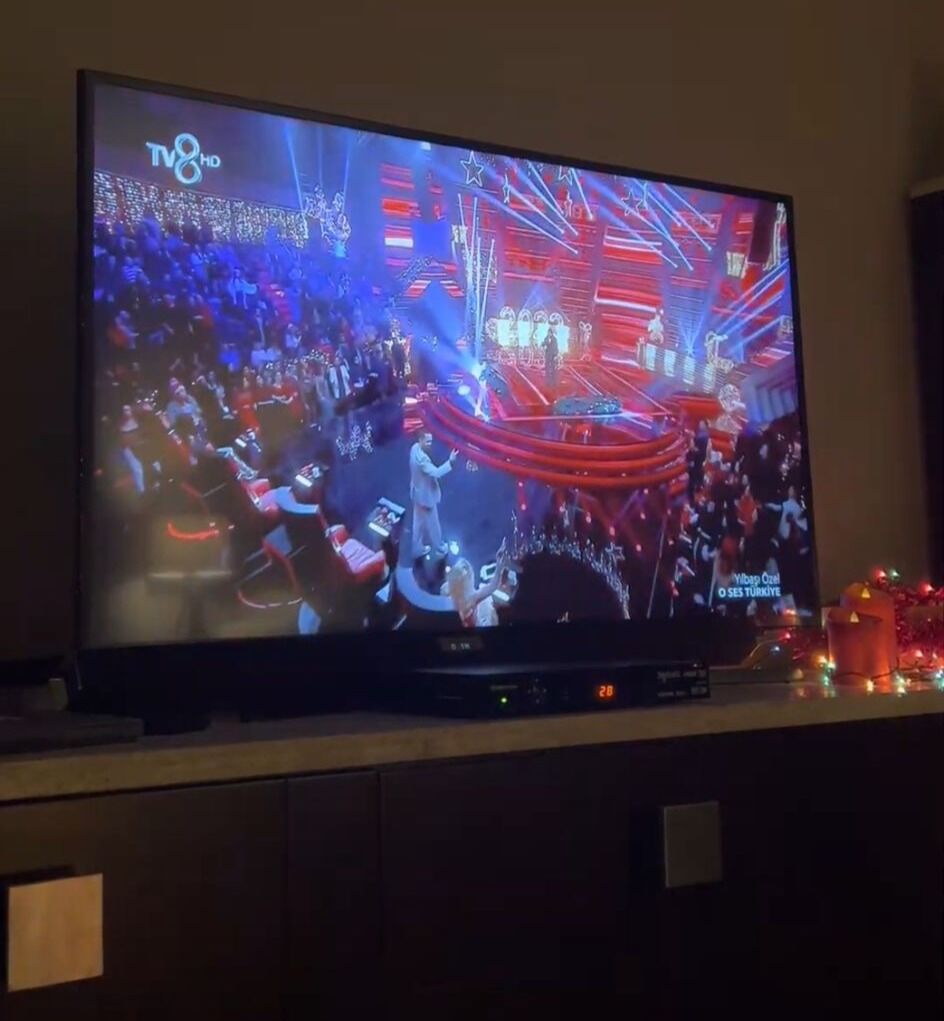
In Turkey, the main December tradition is celebrating New Year’s Eve. “At the beginning of December, we put up a Christmas tree and place gifts underneath with everyone’s name on them. We don’t open them until December 31. After that, we eat together and watch The Voice of Türkiye, a special episode of the popular TV show featuring celebrities singing. Almost every household has the TV on,” Mutlutürk explains. Around midnight, many people go outside to celebrate the New Year. Since the streets can get very crowded, she prefers to spend this special evening at home, surrounded by her family.
Twelve grapes at midnight
Rocío Andres, a first-year Applied Physics and Mathematics student from Spain, has only been living in the Netherlands for a few months. Back home in Spain, celebrating Christmas means a lot to her—it’s mainly about family, a festive dinner, and gifts. What she finds truly special, however, is their New Year’s Eve tradition: at midnight, they eat twelve grapes—one for each month—while making wishes. “This way, you start the new year full of hope for the months ahead,” she explains.
She also looks forward to Día de Reyes on January 6, Three Kings' Day, a celebration featuring a special cake with a hidden bean and a small king figurine inside. “Whoever finds the bean has to pay for the cake, and whoever finds the figurine gets crowned with a paper crown,” she says, although she isn’t sure if this tradition is celebrated throughout Spain or just in her family.
Being away from home makes her miss these rituals this year, which makes her feel a little sad. But discovering Sinterklaas in the Netherlands has been a fun surprise. “Sinterklaas lives in Spain, so I totally love that!” she laughs. Her friends even told her that Sinterklaas takes naughty children to Spain—which gave her a playful idea: “Maybe I should misbehave, so I can get a free ride back to my country,” she says jokingly.
Unmarried men
In the homeland of Kalina Bandeva, a first-year Computer Science student from Bulgaria, December is a mix of old folklore and modern celebrations. In Bulgaria, December 6 is known as Saint Nicholas Day. But whereas the Dutch Sinterklaas is a true children’s holiday with gifts, this day is dedicated to sailors and ports and is mainly celebrated symbolically. “Usually the only celebration is cooking a carp and eating it with your family and friends,” she says.
Christmas Eve is celebrated on a larger scale, with a feast featuring an odd number of dishes. “We light a large log so the evening fire keeps burning, and we leave some food for the Holy Spirit,” she explains. “Around midnight, unmarried boys and men go from house to house singing Christmas carols and wishing health, happiness, and prosperity for the coming year. In return, they receive a gevrek, a type of bread shaped like a wreath.”
She notes that these days, Christmas Eve is celebrated much more like in the Netherlands—with Santa Claus, or ‘Grandpa Christmas’ as he is called in Bulgaria—a Christmas tree, and presents. The traditional customs still exist in rural areas, she adds, but says: “I grew up in Sofia, the capital, so I’ve sadly never experienced them firsthand.”
Echoes of Sinterklaas
Diana Dumitrescu, a first-year Computer Science and Engineering student from Romania, finds echoes of Dutch Sinterklaas in her home celebration of Moș Nicolae (Saint Nicholas). “The tradition is to place your boots right next to the window on the night of December 5th, and in the morning you shall find small gifts there, such as chocolate, candy, socks, or small toys,” she explains. She admits that this tradition is mainly focused on children and is not as big a deal as the Dutch Sinterklaas.
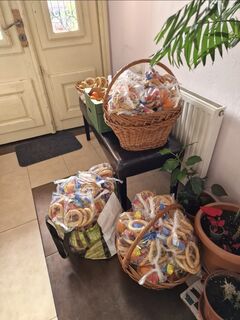
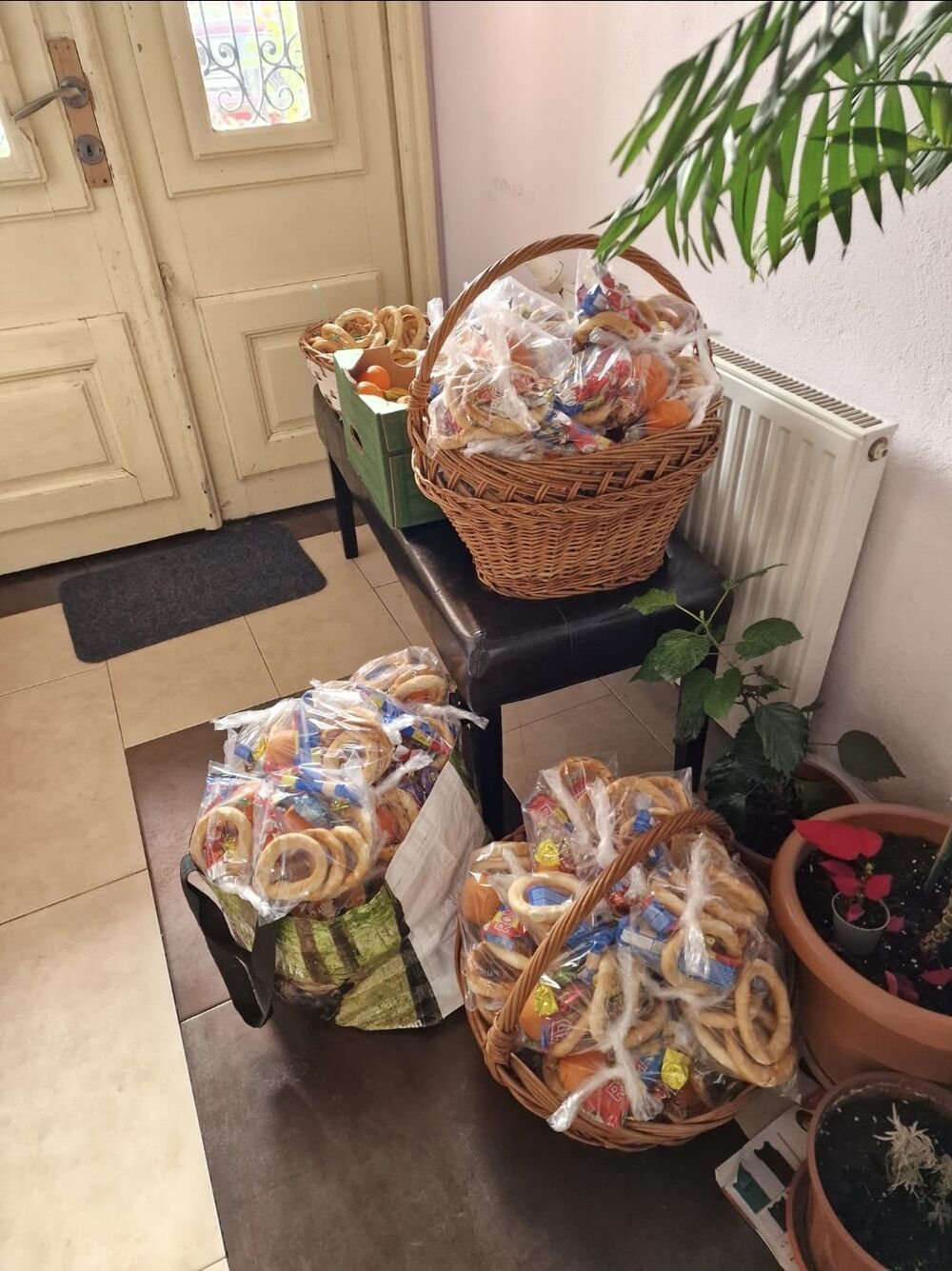
The most important celebration for her is Moș Crăciun—literally “Old Man Christmas”—on Christmas Eve. The whole family gathers for dishes such as sarmale (cabbage rolls stuffed with meat and rice) and cozonac (sweet yeast dough filled with chocolate and walnuts). In the evening, children go door to door singing Christmas carols and receive money, pretzels, fruit, or candy. Afterwards, they open gifts from Moș Crăciun and spend time with their family.
Although she will be celebrating Christmas in Romania with her family, she is already enjoying the festive atmosphere in the Netherlands. “When I see Dutch traditions, like Christmas lights and tree decorations, I feel a little more at home here,” she says.
Yalda Night
Farnoosh Alizadeh, a master’s student in Construction Management and Engineering from Iran, shares another special tradition. Her family celebrates Yalda Night, the winter solstice, marking the longest night of the year—this year on December 21. People celebrate by gathering with loved ones, reading Persian poetry, and enjoying pomegranates, nuts, and watermelon.
According to her, it’s mostly about spending extra time together. “For most families, it isn’t about the size of the table or any other luxury, but about feeling the warmth of family and togetherness on a long, cold night,” she says.
Wholesome
Experiencing Dutch traditions has been both fun and surprising for the students. Some, like Mutlutürk, are delighted by the small daily customs, such as eating pepernoten, but the figure of Sinterklaas has truly enchanted her. “I would love to be a kid these days, just to wait for Sinterklaas to arrive and receive gifts in exchange for carrots left in shoes,” she says.
For Alizadeh, encountering Sinterklaas for the first time took some getting used to, but she appreciates the sense of togetherness the tradition creates. “Once you learn more about it and see how people prepare, it starts to feel heartwarming.”
For Dumitrescu, the Dutch tradition was also something new. “I heard about the custom where someone dresses as Sinterklaas and travels through the cities, but I was disappointed to find out only after he had already been in Eindhoven,” she says. “My friends also told me about the tradition of writing poems for each other, and I think it’s wholesome.”
Learning about other cultures
Bandeva had never heard of Sinterklaas before moving to Eindhoven. “At first, I just thought it was the Dutch name for Christmas.” In the past few weeks, she has learned more about the tradition. Although some aspects are controversial, such as the – now largely outdated – practice of dressing up as Zwarte Piet, she generally enjoys it and appreciates that the Dutch keep their traditions alive. “In Bulgaria, Christmas is usually only celebrated on Christmas Eve and Christmas Day, but here it feels like the celebration lasts the whole month.”
For many students, December is a chance to celebrate both worlds. They can take part in Sinterklaas activities with fellow students—like Mutlutürk through her student association W.S.V. Simon Stevin—while also continuing the familiar traditions from home. It’s also a great opportunity to learn about each other’s customs and share experiences. “It’s so interesting to learn about different cultures around the world during winter,” Andres concludes.
This article was translated using AI-assisted tools and reviewed by an editor.
Discussion