- The University
- 09/12/2025
Search for the most suitable learning path for every student
How can we help every student find the right place as quickly as possible? That is the key question driving the working groups that spent the past two years on project Wisselstroom. Staff members from Avans University of Applied Sciences, Fontys and TU/e explored how HBO and research universities can exchange data, how the transfer process can be improved, and how collaboration can be initiated and sustained.
They exist: students who, for example, start a university degree in Mathematics in Nijmegen after completing pre-university education (VWO), then restart with Mechanical Engineering in Enschede after receiving a negative binding study advice (BSA), only to begin the next year in Eindhoven with the higher vocational education (HBO) program in Mechanical Engineering. They are not following the fastest route toward a suitable diploma. What doesn’t help, is the lack of consensus on exemptions.
How can educational institutions get their students to the right place more quickly? And equally important in this region: how do you keep them motivated to pursue an education and career in engineering, natural sciences or ICT? Part of the answer lies in the simple observation that employees of different educational institutions need to get to know one another.
Unfamiliar
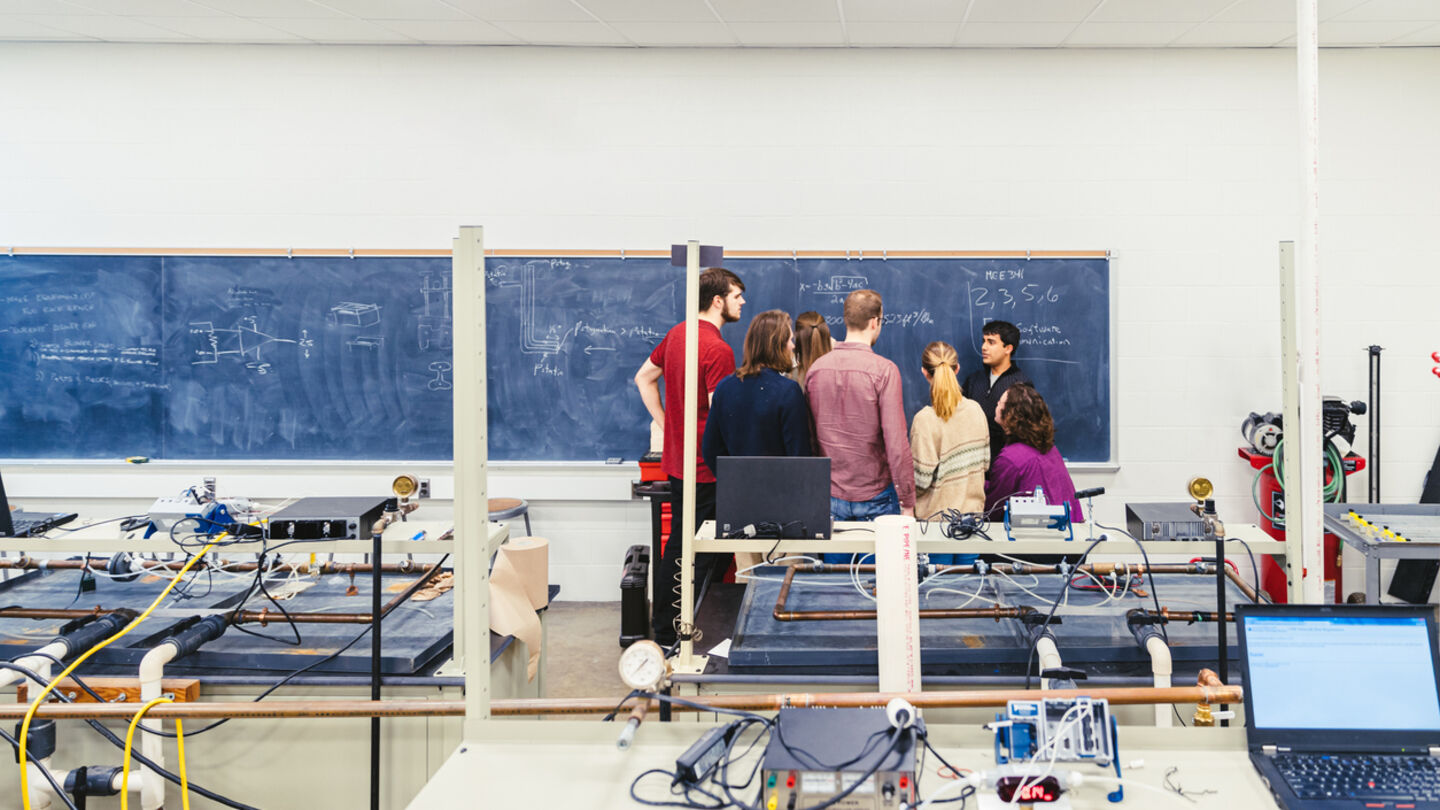
Until 2024, education coordinator Rob van der Heijden worked at Mechanical Engineering in Gemini. “Back then, I had the same relationship with the colleagues across the way (from Fontys Mechanical Engineering in the Nexus building, on the other side of the Flux field, ed.) as with those in Breda (from Avans University of Applied Sciences in Breda, ed.). Which is to say: no relationship at all. It’s so important that we know how to find each other, which is why I’m glad we have the Wisselstroom project.”
Wisselstroom is the name of the collaborative project in which Fontys, Avans University of Applied Sciences and TU/e are joining forces to guide students toward the most suitable learning path. On Monday, December 8, all members came together to conclude the project and share and discuss their findings.
Patrick Vercauteren from Avans University of Applied Sciences explains that his working group first identified the key questions for which data is needed. How successful are students who transfer from HBO to a research university? And what about those who switch from a research university to HBO? He reached out to student finance provider DUO, that keeps track of the flows of pupils and students. “A first step toward a national approach for data availability has been taken.” It remains a tough task, however, as the challenge is to strike a balance between data that is useful for policy and data that complies with GDPR regulations.
Transferring
The working group led by Fontys lecturer Olaf van Buul focused on the transfer process of students. In the presented Wisselstroom report, he states: “With fragmented information, inadequate guidance, unclear exemptions and intake moments, and limited contact between HBO and TU/e, the process becomes difficult.”
Van Buul explains that he once advised a student who had earned 60 ECTS at TU/e, but was still required to start in the first year at Fontys. His working group developed a plan to make the transfer process more transparent and better guided. One of the six measures is the introduction of a standard intake procedure that considers a student’s previous academic background.
Study choice
“It turns out that students with a pre-university education (VWO) are often unfamiliar with the options in HBO during their study choice process. And think about their expectations—shaped by themselves, but also by parents and schools—that choosing a research university is the logical next step after VWO,” says Anneke Sikkema, policy officer at TU/e. Her working group intensified collaboration with Avans University of Applied Sciences and Fontys.
“We now have joint informational materials. We attend each other’s open days and organized a joint day for secondary school counselors together with Fontys Engineering. Previously, these days were held separately, and attendance was declining. During this joint day, counselors had the opportunity to explore both HBO and the university up close. They rated the day very positively and said the collaboration between Fontys and TU/e was clearly of added value. For the upcoming academic year, the joint counselors’ day is scheduled for March 26, 2026.”
Another success is an informational magazine, EHBK: first aid for study choice, created by a Fontys intern and now widely used by counselors and secondary school students.
Sikkema notes that many new ideas emerged during the concluding meeting. “It’s great to see that everyone is eager to keep the collaboration going. When colleagues from different institutions get to know each other better, we can better help students find the learning environment that truly fits them.”
This article was translated using AI-assisted tools and reviewed by an editor.
Discussion