- Education
- 01/04/2026

“Education is getting more breathing room again”
Education Minister Rianne Letschert on investment, student well-being, and restoring stability
The Netherlands’ new Minister of Education, Rianne Letschert, has an additional €1.5 billion to spend—and she wants to use it to bring back “stability and calm.” “Of course, you never know how long you’ll stay in office.”
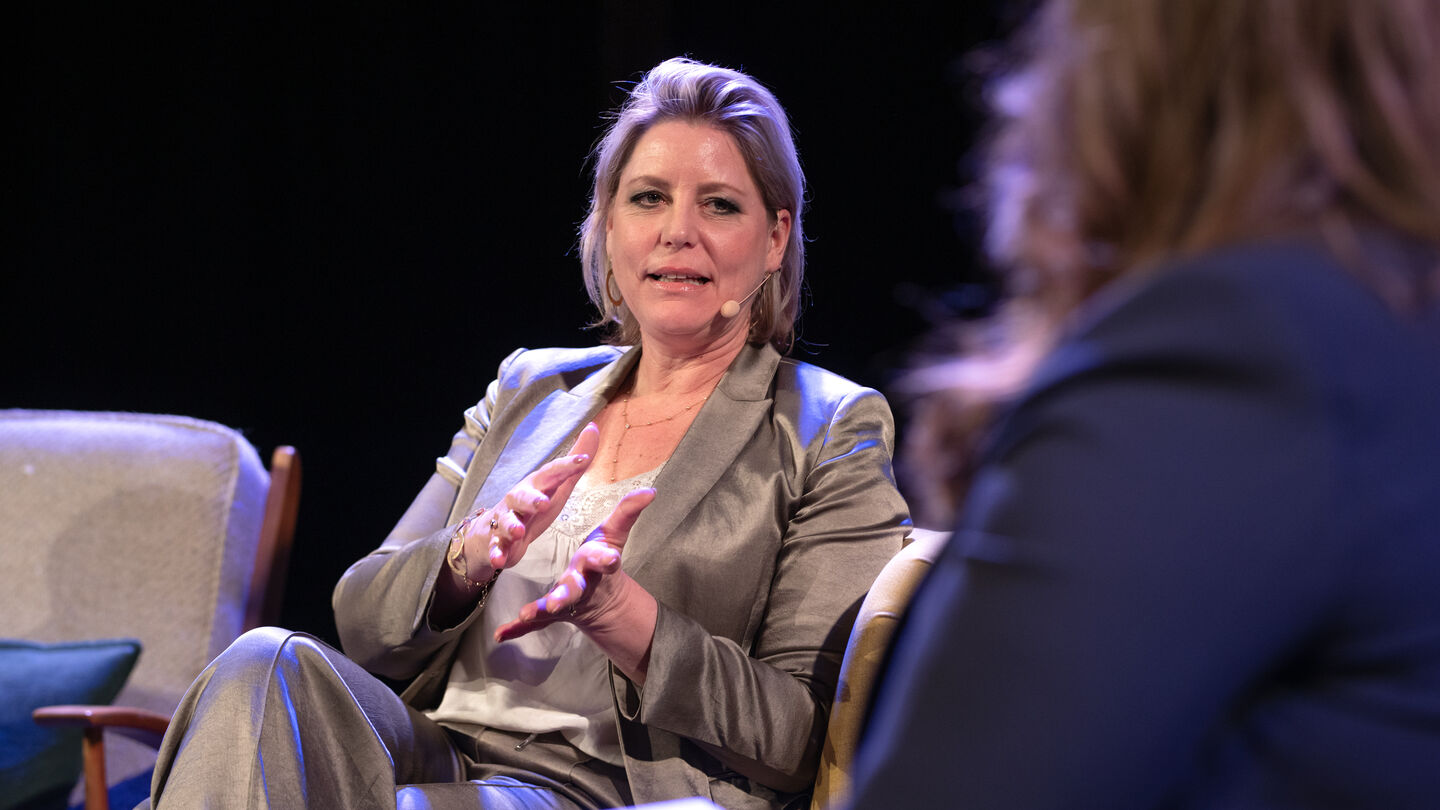
Rianne Letschert has been Minister of Education for five weeks, representing D66 in a minority coalition with the CDA and VVD—a coalition she also helped shape as the lead negotiator.
An additional €1.5 billion is being allocated to education. “That’s good news,” she says in Utrecht, where she is presenting the Teacher of the Year award. “It allows us to reverse a large part of the cuts and make new investments.”
That makes her, as she puts it, a minister with money—though she still needs to negotiate how it will be spent. The coalition does not have a majority, so whatever her plans, support from the House of Representatives—and later the Senate—is not guaranteed.
A minister with money. Is that a relief?
Letschert: “Absolutely. When you look at what the cuts have done to education and research… I see a lot of enthusiasm in vocational education, universities of applied sciences, and research universities to work together on how to spend that money well.”
She says she wants to restore stability and calm. “In recent administrations, there have been many changes, which led to constant shifts in policy and strategy. And of course, you never know how long you’ll stay in office, but I’m aiming for four years. That’s what we’re working toward.”
One of the major issues in higher education is student stress. What can policymakers do to reduce it?
“We’re going to increase the basic grant for students living away from home, which should provide some relief. Financial stress does not help your mental well-being.”
That’s just a few dozen euros a month, right?
“Yes, but for a student, that’s still quite a substantial amount. It’s approaching fifty euros, so I wouldn’t call that ‘just a few dozen.’”
What else?
“It’s also important that universities continue to invest in programs focused on student well-being. Those came under pressure due to the cuts, because funding tends to go first to teaching and research. The additional funds from this government give institutions more room to continue programs related to social safety and mental health.”
First-year students also experience stress from the binding study advice. New research raises serious questions about its effectiveness. Will you change the rules?
“Ultimately, it’s up to institutions themselves to decide how to support student success. But I will certainly review the research carefully and ask: what exactly does the binding study advice achieve, and does this call for a new discussion within the sector?”
But the research didn’t come out of nowhere, and your predecessors wanted to change it. Isn’t it already on your agenda?
“The issue is not included in the coalition agreement, so taking action would require discussions within the coalition and, of course, with the House of Representatives. I’m especially interested in how the sector itself views this research. Is the binding study advice the right way to guide students and help them develop? That responsibility lies there—it’s not solely up to politics.”
How was that handled in Maastricht when you were in a leadership position there?
“That varied by program, field, and sometimes even by dean, who held final responsibility. But I’m no longer a university administrator.”
Budget cuts at universities and colleges are not only the result of government policy, but also of declining student numbers. Fewer international students have come to the Netherlands as well. The new government wants to create more room again for English-language education.
Will you start attracting international students again?
“Saying ‘attracting them to the Netherlands’ sounds very instrumental, but this government wants to look at a more targeted talent strategy. We want to put forward a positive agenda while also addressing the challenges universities and colleges face in certain cities. Institutions want more control themselves, and I plan to discuss that with them.”
If you rely on self-governance in higher education, what is the role of politics? What direction will you set as minister?
“I can’t share that yet. But I want to give institutions trust. For years, they have asked for specific policy measures to better manage internationalization. For example, they wanted the ability to cap enrollment in English-language tracks within programs. That option is now in the law, so they can start using that tool.”
Trust alone can’t solve everything, can it? Take the workload of teachers and researchers—if administrators could fix that, they would have done so already, right?
“When it comes to workload, you shouldn’t overlook the impact of budget cuts. And the COVID-19 crisis has also had a real effect on these institutions. I think they handled it very well. Now we’re entering what we hope will be a period of four years with a stable government that is once again investing in the sector to create a sense of calm and stability. That is also intended to help address workload issues.”
D66 originally wanted much more funding, didn’t it?
“Always.”
Is €1.5 billion enough to solve the problems?
“You have to be realistic. When you look at the challenges this country faces and what is being asked of healthcare and social security, I’m simply very pleased that we’ve secured €1.5 billion for education within this coalition. That’s a very positive signal. Yes, you could say it’s not enough—but you also have to look at society as a whole. In that context, I think the education sector can be quite satisfied.”
Discussion