
- Student
- 13/04/2026

Student team builds satellite for fertilization in space
TU/e student team Aster in Space is set to help Eindhoven-based startup SpaceBorn United make human reproduction in space possible. Within two years, a fully operational satellite containing a mini IVF lab is expected to be in orbit around Earth.
Aster in Space was founded four years ago by TU/e students to make the space industry more accessible to students in the region. The team’s ultimate technological goal is to launch its own satellite into orbit. This satellite will include an antenna capable of measuring electromagnetic radiation at longer wavelengths than is currently standard, potentially leading to new scientific insights.
Thanks to its collaboration with SpaceBorn United (SBU), an Eindhoven-based biomedical startup, the team can now test its equipment in space—bringing that ultimate goal significantly closer. SBU is researching reproduction in space as a step toward self-sustaining settlements on the Moon, in Earth’s orbit, and on Mars. In addition, the company expects its research to improve IVF procedures on Earth.
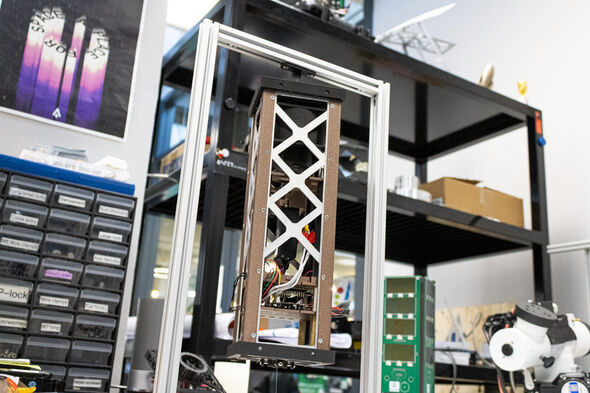
“SpaceBorn United provides the laboratory, and we supply all the subsystems, such as power, the onboard computer, and systems to determine the satellite’s position,” says financial manager Jeroen Kodde of Aster, who studies Applied Physics at TU/e. “Our equipment must be able to withstand the shocks of launch and the conditions in space, such as radiation and extreme temperatures.”
Orbital launch
Aster in Space aims to reach space within two years. The team previously sent a prototype of its satellite, including the necessary subsystems, to an altitude of 35 kilometers. The new space vehicle will need to go higher and remain in space longer. The plan is for it to orbit Earth at an altitude of over one hundred kilometers for three to five days.
“For us, this is an opportunity to further develop and test our technology in space,” Kodde says. With more than thirty members, the team is ready to get started. “We are still looking for additional students with expertise in electrical engineering, radio waves, and antenna design.”
Aster team member and Fontys Mechatronics student Eser Sazli initiated the new collaboration. He works part-time at SBU and contributed to the design of the IVF lab.
“This will be Aster’s first launch in which our equipment actually enters orbit,” Sazli says. “That’s a huge step for us. We now have secured funding and the necessary expertise. I think we’re ready.”
Space babies
It is the second time Aster in Space and SBU have joined forces, says CEO Egbert Edelbroek. “About a year and a half ago, the students helped us develop a system for our lab. It was successfully tested in an IVF clinic and in the Large Centrifuge at the European Space Agency to simulate the g-forces of a launch. That collaboration worked very well.”
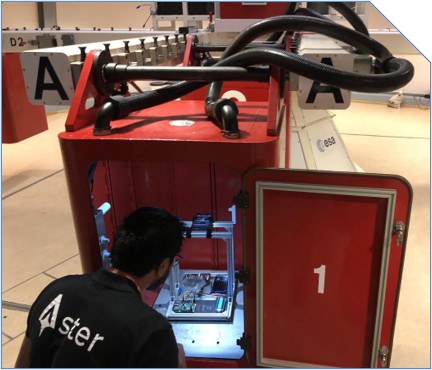
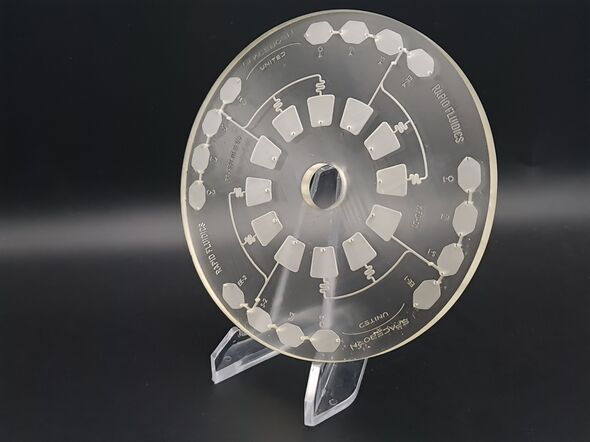
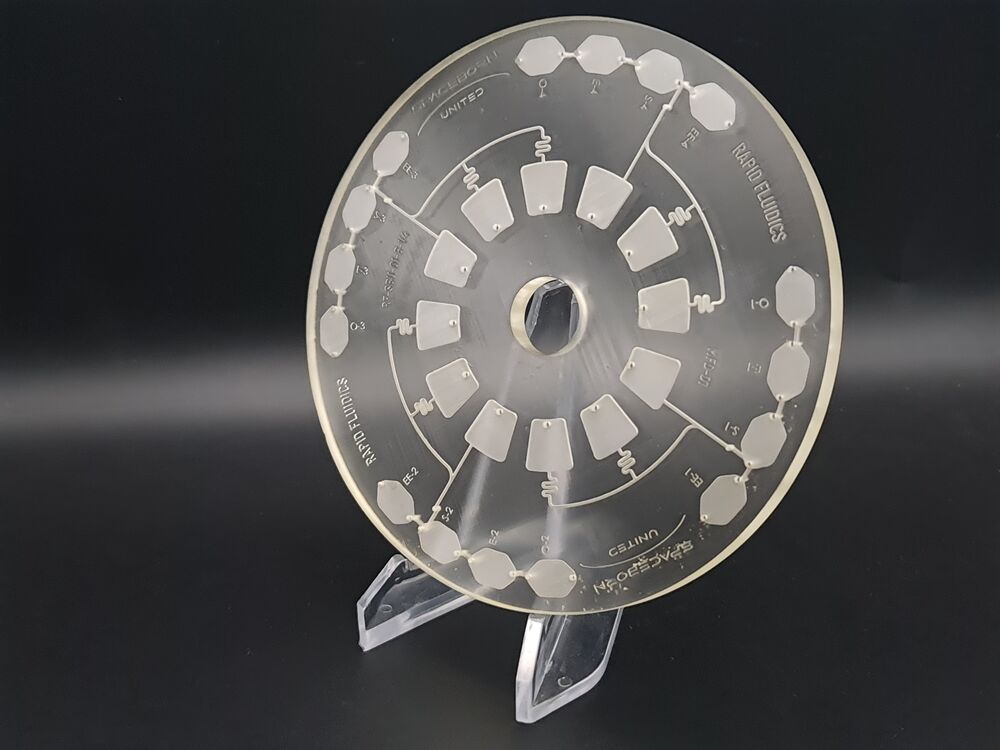
Last year, the startup successfully launched a mini IVF incubator called Assisted Reproductive Technology In Space (ARTIS). “At that time, the main concern was whether we would even be allowed on board the SpaceX rocket, due to strict regulations and technical requirements.”
The current project involves a more advanced prototype, Edelbroek continues. “We have added additional sensors. With that, we hope to take the next step in validating our technology.” The expectation is that mouse embryos will be sent into space during the joint mission with Aster.
Growing interest
Research into the effects of reduced gravity on fertilization is relevant for future long-duration space travel and habitation. Not only to sustain human space colonies, but also to create viable food sources on site. Interest in this field is growing. NASA, for example, is aiming to return to the Moon, and SpaceX plans to send humans to Mars by 2030. Edelbroek expects to witness the first baby born in space within his lifetime.
This article was translated using AI-assisted tools and reviewed by an editor.
Discussion