- Student
- 4 min
- 20/08/2026

Students don’t club anymore, but they do drink
Stratumseind is no longer the place to be
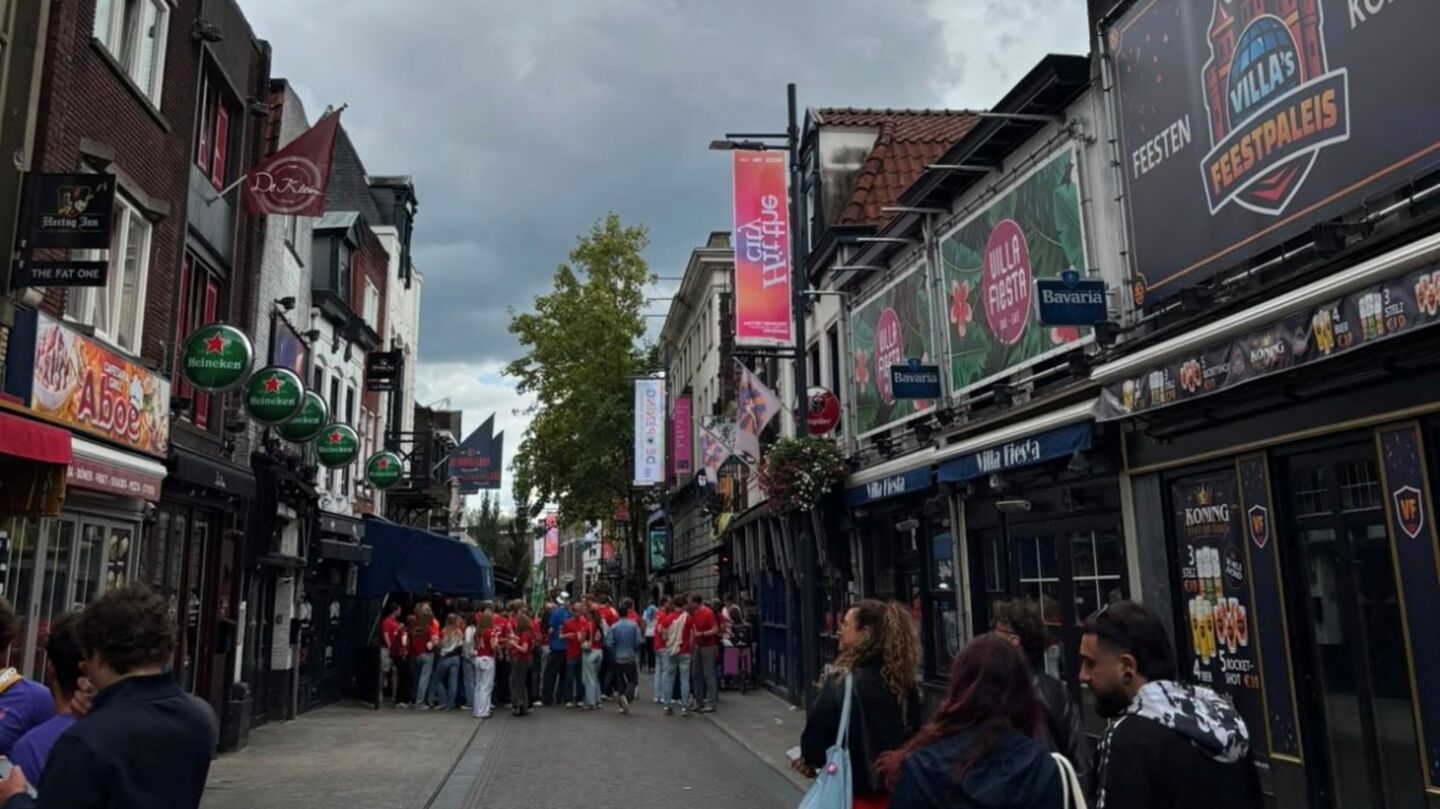
Students club less than they used to. It is a nationwide trend, which is also visible in Eindhoven: Stratumeind is too expensive and too boring, is a frequently cited argument. Are the notorious days of the Hollywood and the Danssalon over for good?
In recent years, nightlife has had to make way for coffee shops, lunch spots, and other daytime venues. And consequently, beers have partly been replaced by cappuccinos. It is a trend visible nationwide.
But Eindhoven has the longest nightlife street in the Netherlands: Stratumseind. You can still find many students there on weekends or on Thursday nights, traditionally student night. Yet it is much quieter than before. Why is that?
Discotheques
The Netherlands has lost no less than 45 percent of all nightclubs in ten years. This is largely due to the new generation going out less often at night and seeking each other out during the day instead. According to the Trimbos Institute, the number of young people aged 16 to 35 who visit a club weekly has nearly halved in recent decades, as shown by the 2023 Great Nightlife Survey.
This is no different in Eindhoven. The city used to have several discotheques, such as the Hollywood and Danssalon, but nothing remains of them. However, there are still over 180 cafes in the city. And while these certainly still attract students, fewer than before.
Daytime hospitality, on the other hand, has grown significantly: by no less than 33 percent nationwide. Coffee bars, in particular, have sprung up like mushrooms in the Netherlands in recent years: from a little under 1,400 in 2020 to over 2,000 in 2025.
Drinking habits
In the mid-2000s, about 95 percent of students drank occasionally, compared to 81.1 percent now, according to a Trimbos study. Despite this decrease, the number of heavy drinkers has remained virtually the same all this time: one-fifth of all students.
University students have been drinking the most for years: 89.9 percent of them occasionally have a glass of alcohol, compared to, for example, 74 percent of MBO students (CBS). Among university students, the number of heavy drinkers is also the highest: 27 percent. For higher professional education, this is 24 percent, and among MBO students, it is 17 percent. A heavy drinker is someone who drinks at least four (female) or six (male) glasses of alcohol once a week.
In 2014, the legal drinking age was raised to eighteen, and this—together with the NIX18 campaign—influenced students' drinking behavior: on average, they took their first sip at a later age.
Since the coronavirus pandemic, there has been more focus on health, and this also influences students' drinking behavior. Additionally, high prices in the hospitality industry curb consumption, although students are finding alternatives to this, such as pre-drinking at home and bringing alcohol from the supermarket when going out.
Boring
Cursor asked on Instagram—where the vast majority of followers are TU/e students—whether (and why) they have also started going out less. That turns out to be the case. A narrow majority in the Cursor poll indeed says they go out less than ‘in the past’, so measured within their own generation.
Only 5 percent of students go out multiple times a week. 20 percent visit a bar once a week and 30 percent do so once a month. Almost half go less often or even never. So ‘Thursday student night’ is no longer really a thing. In total, 517 students responded to the poll, and there are about 15,000 students studying at the TU/e in total.
The main reasons for going out less are the cost, lack of time due to studies, and missing bars that match their own style. However, they cannot always pinpoint exactly what atmosphere they are missing in nightlife.
TU/e student Aleksander does point out, however, that many cafes in Eindhoven are all alike. The few nice bars he has visited are characterized by good music. “The RGB Silent Disco is an example of that. They have fun music, and if there happens to be a bad song, you can easily choose another one yourself via your headphones.”
But he visits this bar less often now, too. “The interior decor has been the same for years, which is a bit boring, and my studies have also started demanding more of me, leaving me less time to go out.”
Costs
Lack of time is another reason frequently mentioned in the Instagram poll. Students need more time for their studies than they used to, and falling behind in their studies has become more expensive. Partly as a result, going out ranks lower on the priority list.
The cost of drinks these days is also a thorn in the side of students. “A night out costs around 80 euros,” comments one of Cursor followers on Instagram. And: “it is just way too expensive.”
Furthermore, many respondents say they feel (by now) too old for Stratumseind. Yet figures show that the average visitor to the nightlife street is indeed of student age: between 18 and 23 years old.
Alternative parties
Cursor also recently spoke with Egor Kubyshev, a TU/e Mechanical Engineering student who organizes alternative parties to better meet the needs of international students. He feels that the pubs on Stratumseind are primarily geared towards the Dutch in terms of music, drinks, and atmosphere, and he jumped into that gap. And with success: his parties are always sold out.
Night Embassy
A minority in the Cursor poll indicated that they go out on Stratumseind no more or less often because they feel unsafe there. This sometimes has to do with the crowds, but a TU/e student who wishes to remain anonymous states that he avoids the area because he was assaulted there.
“As a grown man, I have never experienced this anywhere else, except here. To me, it really feels like an unsafe and unwelcoming place here.” However, he does think it is good that an initiative has since been launched to make visitors feel safer: the Night Embassy. A place to seek help if needed while going out, but also to rest for a moment, a shoulder to cry on or a glass of water.
Night Embassy founder Imke Sloos sees interest in the ‘safe haven’ in Eindhoven’s nightlife district. “At some point, we have all needed someone in the middle of the night,” she says. “We are basically that sober friend who is there to think along with you. Whatever is going on, just knock on our door. We also have condoms,” she adds with a wink. Goal: going out safely and having fun again, and with a happy end.
*This article has been translated by AI and has been reviewed by an editor
Discussion