- People
- 19/02/2026

Rianne Letschert: steady on course and incredibly kind
“If everyone lets the complicated jobs pass them by, we won’t move forward.”
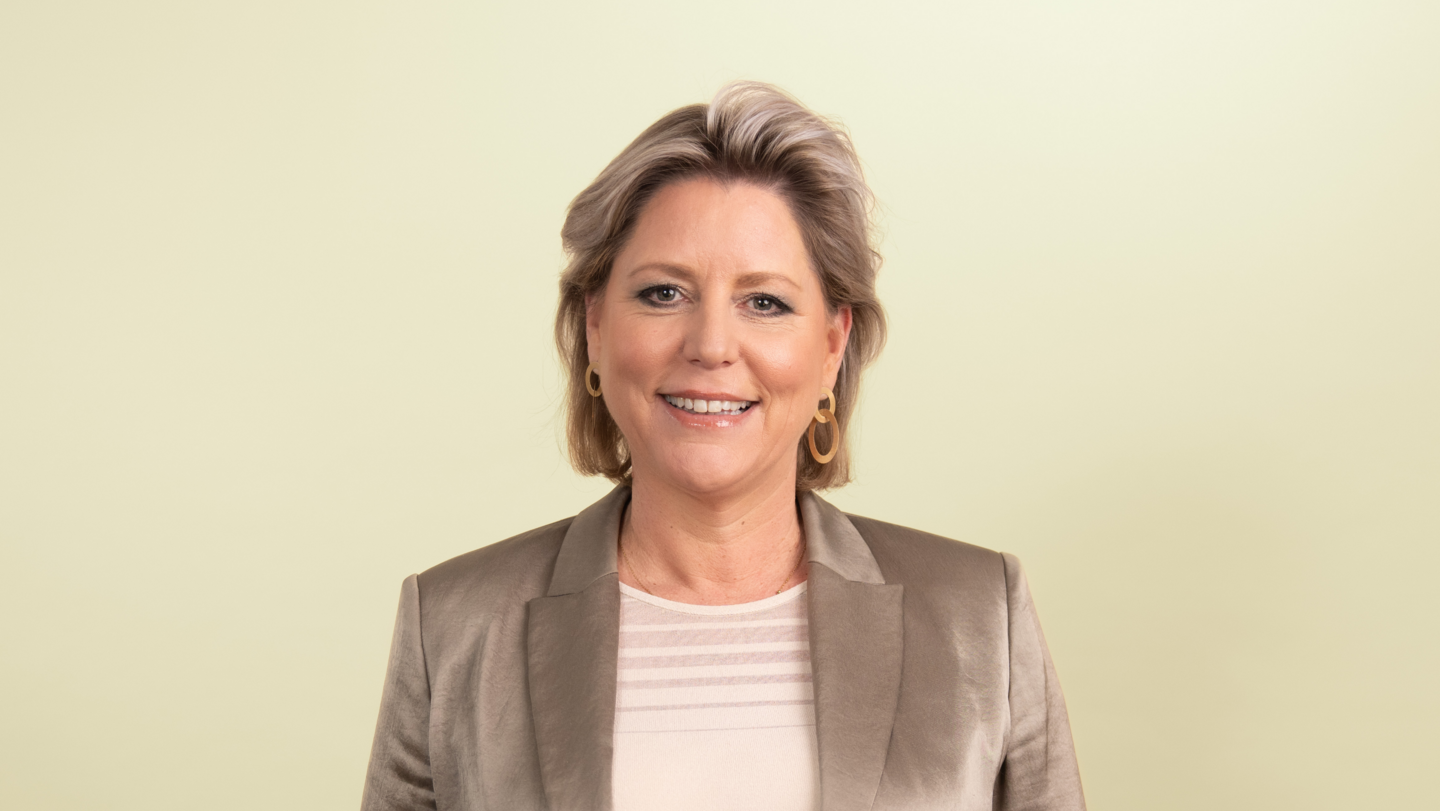
Rianne Letschert, the incoming Minister of Education, Culture and Science, rose rapidly through the academic ranks to become a university administrator. She receives widespread praise for her style.
In December 2025, Rianne Letschert suddenly finds herself in the spotlight of national politics. As an informateur, she will lead the coalition negotiations between D66, CDA, and VVD.
She received the request while sitting in her car, she recounts at the press conference where she introduces herself to journalists. “I almost drove into the guardrail.” She found the assignment honorable, but also nerve-racking.
One of the political reporters in The Hague asks about her style: how would she describe her own way of working? Letschert responds: “Sharp on the content, not on the person. And warm in the relationship.” It may sound cliché, but others say it is accurate.
Victimology
Rianne Letschert (1976) grew up in Stiphout, in the province of Noord-Brabant. She studied international law and then entered academia. In 2005, she earned her PhD in Tilburg on the position of minorities in international law. In 2012, she became a professor of victimology there. Among other topics, she researched victims of wartime violence.
In 2013, she became a member of De Jonge Akademie, a society of relatively young top scientists seeking to improve the academic world. Two years later, she became its chair.
She has charm, but she is also very smart. She sees things she wants to tackle and sets her course toward them.
She was actually set to become dean of Tilburg’s law faculty in 2016, as the next step in her career, when she was offered the position of Rector Magnificus of Maastricht University. She did not pass up that opportunity. At 39, she became the youngest female Rector Magnificus ever. In 2021, she moved one seat over and became President of the Executive Board.
Free press
Letschert is friendly and attentive, says editor-in-chief Wendy Degens of Maastricht’s university newspaper Observant. “An employee of the university had lost her mother. Letschert knew this, and on the next Mother’s Day she sent her a message wishing her strength.”
Moreover, Letschert strongly values a free press. “We sometimes write critical stories she doesn’t like,” Degens says. “She occasionally responds, but it has never had consequences. We can simply be the ‘watchdog,’ and she always remains willing to talk with us.”
Observant had long wanted to send a weekly newsletter to all students and staff but had not succeeded with previous presidents. Letschert immediately approved, Degens says.
As an administrator, she did not shy away from lobbying. Degens: “She went to The Hague frequently to talk about internationalization. She had support from the entire region: mayors, the province, and other educational institutions. She has charm, but she is also simply very smart. She sees things she wants to tackle and sets her course toward them.”
A better academy
At De Jonge Akademie and later as an administrator, she focused heavily on “recognition and rewards,” the ideal that academia should be more than a competition over who can publish the most articles in prestigious journals. Researchers may have other talents as well, such as leadership, teaching, or sharing knowledge with society. Different career paths should be possible.
Letschert saw in her own field what the rigid counting of scientific publications led to. Writing annotations on case law was barely valued anymore and had turned into a hobby, she said in 2015 at a meeting on evaluation systems and academic careers.
A department simply needs different types of people (…). A soccer team doesn’t consist only of strikers or goalkeepers.
The problem is that discussions about the system are often led by the winners of that system, Letschert observed. Once we are in control, she told her fellow young researchers, we must do something about it.
Professor of philosophy Jeroen de Ridder (Vrije Universiteit Amsterdam) still knows her from that time, although he joined De Jonge Akademie somewhat later and became chair two years after her. De Ridder: “What I especially remember is that she is incredibly kind. You might think administrators are ‘important’ people who talk only with other important people, but she wasn’t like that. She took plenty of time to get acquainted with new members of De Jonge Akademie, and the conversations were always pleasant, engaging, and informative.”
Even after she left the society and became rector, she wanted to catch up with him every few months for an hour about the plans and projects of De Jonge Akademie. De Ridder: “That is quite remarkable. As a rector, you really have to clear your schedule for that.”
And Letschert did not abandon her ideals. Once in control in Maastricht, she continued to fight for recognition and rewards. “A department simply needs different types of people, with talents in research, education, leadership, and societal impact,” she explained in 2020. “A soccer team doesn’t consist only of strikers or goalkeepers.”
Hack
There have been plenty of intense events at Maastricht University over the past ten years. Take the hijacking of its systems by hackers. The university yielded to the blackmail and paid a ransom in bitcoins; otherwise, the damage would have been too great. Years later, thanks to police work, the bitcoins were recovered and turned out to have increased in value.
And then there was the COVID crisis. Under her leadership, Maastricht University became the first in the Netherlands to dip into its financial reserves. Letschert: “We must invest now and free up reserves. Those reserves are meant for times of crisis.”
Then I may occasionally be the token woman, but in the hope that the image truly shifts: more women in senior positions
Like other universities, Maastricht has also seen many protests and occupations in recent times. A gathering featuring a pro-Israel speaker was disrupted by demonstrators, after which the university decided to cancel another event for safety reasons. This drew fierce criticism.
At the same time, Letschert also ordered the evacuation of a building occupied by pro-Palestinian demonstrators. She was also a member of the task force on combating antisemitism established by the Schoof cabinet, partly in response to intense protests in higher education that sometimes left Jewish students and staff feeling unsafe.
Not modest
Over the years, she became politically active and affiliated with D66. In 2018, she forged a municipal executive coalition in Maastricht through negotiations between parties with very different views: CDA, D66, VVD, GroenLinks, SP, and the Seniors Party.
She stands out from the crowd. In 2019, for example, she was named Top Woman of the Year—an honor that did not come out of nowhere, as she had been approached before and now accepted the nomination. “Look, it isn’t my life ambition to be in the spotlight, but this time I thought: I’ll do it, I can show what I’m capable of,” she told Observant. “Then I may occasionally be the token woman, but in the hope that the image truly shifts: more women in senior positions and a different tone in the debate about working women.”
Within D66, appreciation for her style grew—at least with party leader Rob Jetten. She had reportedly been approached earlier for a post in the fourth Rutte cabinet, but at the time it came too soon, and she declined.
Still, it was no secret that she would like to become a minister. “The ministership is a tough job, not an honorary one,” Letschert said last August in the newspaper De Limburger. Yet she was willing to take it on: “If everyone lets the complicated jobs pass them by, we won’t move forward.”
So once she became informateur, it was easy to guess that she wanted to become Minister of Education, Culture and Science on behalf of D66. On February 23, she will stand on the palace steps with her fellow ministers and show whether her much-praised style can make a difference in the polarized politics of The Hague.
This article was translated using AI-assisted tools and reviewed by an editor.
Discussion