
- News
- 30/01/2026

“I am personally proud that we are fully reversing the cuts to education,” D66 party leader Rob Jetten said on Friday afternoon at the presentation of the coalition agreement Aan de slag – bouwen aan een beter Nederland (Getting to work – building a better Netherlands).
The three parties are setting aside an extra 1.5 billion euros for education and research. That money is expected to cover a wide range of priorities, including senior secondary vocational education (MBO), education quality, tackling the teacher shortage, and strengthening the Education Inspectorate. In addition, funds are earmarked for “investments in research and science and for the purchasing power of students.”
TU/e responds: “Music to our ears”
Koen Janssen, President of the Executive Board of TU/e, responded enthusiastically to the plans of the new government in an initial reaction: “This coalition agreement is extremely good news for higher education and science, for the Netherlands as a whole, and for TU/e as well.”
“There is attention for innovation ecosystems, the Brainport region, knowledge valorization, and international talent, and we are finally moving toward the 3 percent standard for Research & Development. In short, this is music to our ears. We look forward to seeing the plans of the new cabinet further fleshed out.”
In fact, education-focused party D66 had wanted to invest several billion euros more in education and research. That did not come out of the negotiations. CDA and VVD apparently were not on board.
Students
Much remains unclear in the agreement. Take student purchasing power: it states that the basic student grant for students living independently will increase, but not by how much.
The three parties also want to introduce a mandatory internship compensation, possibly accompanied by an internship fund for shortage sectors (for companies that are short on cash). But no one knows yet what that compensation would amount to.
They also plan to cap interest on student loans at 2.5 percent, to prevent student debt from rising unchecked in the future. Repayment should be made easier through employers, allowing former students to pay off their debt more quickly.
In addition, the parties say they want to “invest in the mental well-being and resilience of students,” but this, too, has not yet been made concrete. “Educational institutions will be given room to provide proper support and deploy student psychologists,” the agreement states. It also adds: “Initiatives by students and young people themselves will be actively encouraged.”
Internationalization
The parties have also reached agreement on international students and researchers. They are keen to “bring in top scientific talent, which is needed for groundbreaking research and innovation.”
They also want internationalization to help supply skilled professionals “in the sectors where the challenges are greatest.” Think ICT and engineering, and possibly healthcare as well. There are shortages across many parts of the labor market.
As a result, English-taught education is no longer an issue for the coalition parties. They will maintain the current range of non-Dutch-taught programs, they agree. They are even scrapping the previously announced assessment for new ‘foreign-language’ programs.
But how do they intend to keep a grip on the influx of international students? To that end, they will make “binding administrative agreements” with universities and universities of applied sciences.
The interests of the region will weigh heavily in these agreements. “Universities of applied sciences and research universities need international talent to sustain business and knowledge clusters in the region,” the three parties state. “We will give them room to do so.” They cite Brainport Eindhoven, Wageningen Foodvalley, and Noviotech Campus in Nijmegen as examples.
Incidentally, the cabinet wants to make funding for MBO and higher vocational education (HBO) stable and predictable. “Institutions will become less vulnerable and less dependent on fluctuations in (international) student intake,” the agreement says. This apparently does not apply to universities.
Defense
Spending on education pales in comparison to spending on Defense. Universities of applied sciences and research universities could also benefit from that. The parties want the government, industry, and knowledge institutions to work together.
“To safeguard our technological lead, the cabinet is committed to establishing a defense innovation authority,” the agreement states. “This authority will also co-finance joint research projects with knowledge institutions that are of added military value to Defense.”
An “increasing share of up to 10 percent of the defense budget” will be allocated to this. That could amount to roughly 2 billion euros.
Cuts
Ultimately, citizens and companies will have to pay a “freedom contribution” of €5 billion. One way or another, everyone will have to dig into their pockets.
The cabinet also wants to cut €6 billion from the healthcare deductible and shorten the maximum duration of unemployment benefits from two years to one. In addition, from 2033 onward, people will have to work longer before qualifying for the state pension (AOW).
Not set in stone
Together, D66, CDA, and VVD hold 66 seats in the House of Representatives—ten short of a majority. For all their plans, they will therefore need support from opposition parties. The coalition agreement is not set in stone.
On some issues, the cabinet may be able to work with GroenLinks–PvdA, while other topics could be aligned with right-wing parties such as JA21 and SGP, which together hold enough seats to help the cabinet secure a majority.
The House of Representatives will debate the final report and the agreement next week. Jetten will then be appointed formateur and can begin assembling the new cabinet, in which he himself will become prime minister.
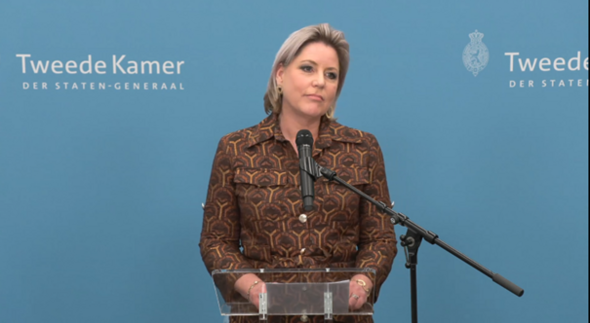
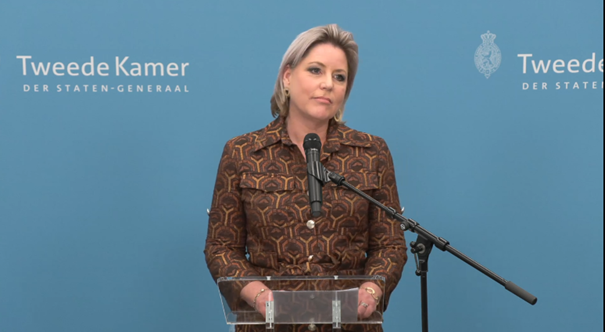
Coalition negotiations in recent weeks were led by informateur Rianne Letschert, who in daily life is President of the Executive Board of Maastricht University. There is a chance that she will soon move to The Hague.
Letschert hopes that future ministers will seek broad support in society for their plans, she said when handing over her final report to the House of Representatives. It will take a great deal of effort, she thinks. “I advise them to buy a good coffee machine.”
This article was translated using AI-assisted tools and reviewed by an editor.
Discussion