- Research
- 3 min
- 27/02/2026

How a stranger at the station determines your route
For three years, TU/e researchers from the group of professor Federico Toschi studied how train passengers move along the platform and how they board and exit trains. Using privacy respectful sensor technology and physics-based models, they now show that we unconsciously follow the person in front of us—even when that choice is less efficient.
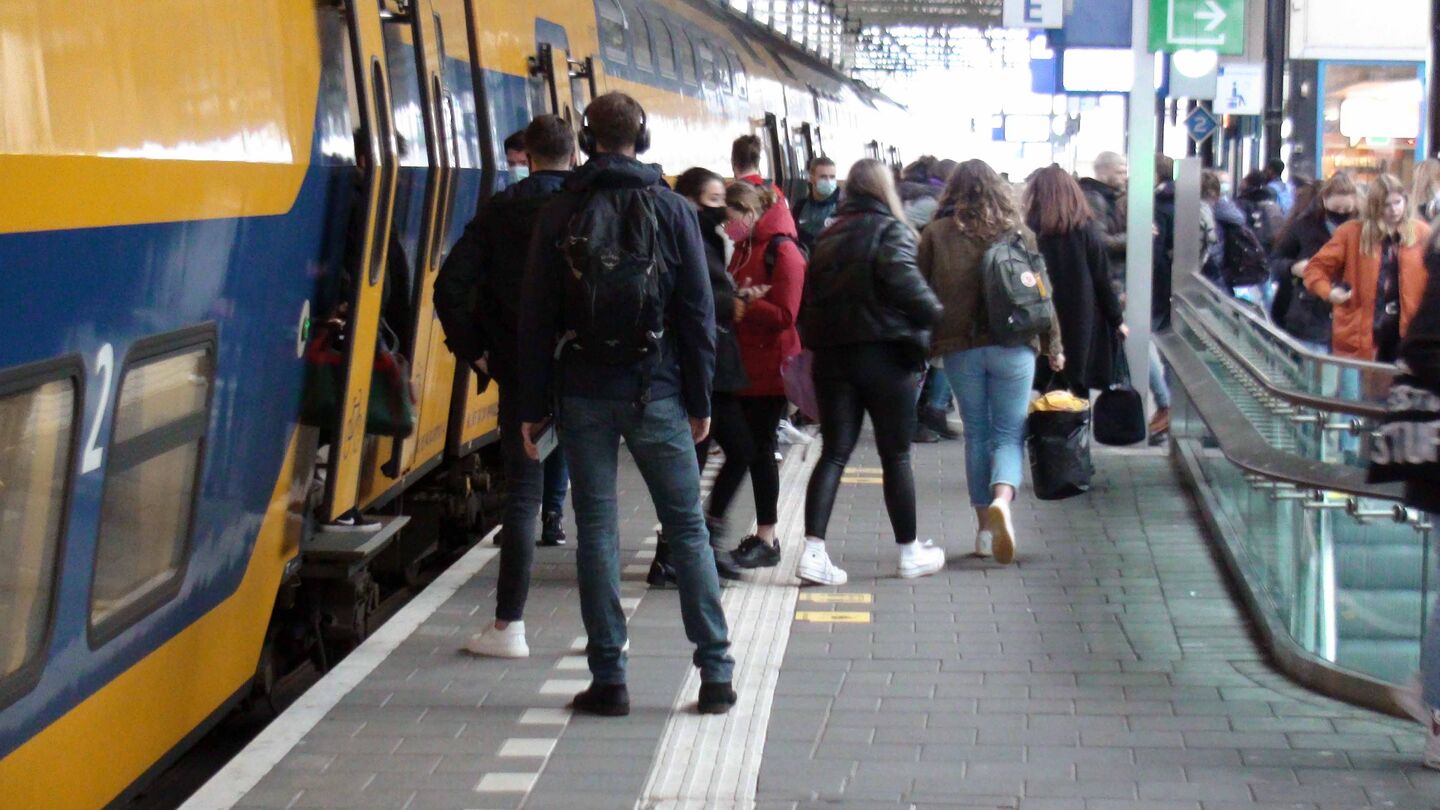
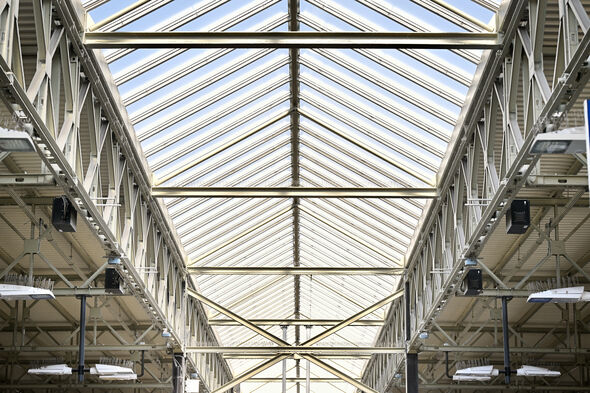
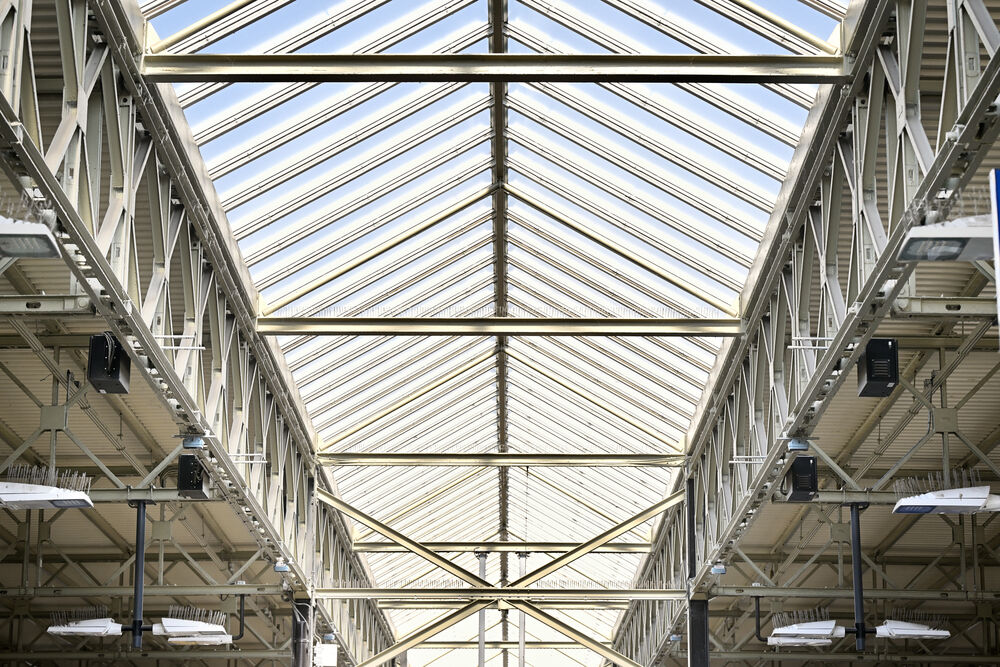
Anyone who looks up at platforms 3 and 4 at Eindhoven Central Station will spot them high up in the roof structure: small black devices that reduce passersby to anonymous, moving circular shapes. From 2021 to 2024, they continuously recorded how people hurried to catch their trains and how they exited toward the station’s main hall. They did so during the busy evening rush hour as well as on early Sunday mornings.
Data from the devices was analyzed within the research group Computational Multiscale Transport Phenomena, led by professor Federico Toschi. The group in the Department of Applied Physics and Science Education has long focused on modeling pedestrian flows in crowded environments, he explains.
“When we zoom out far enough on a crowd, we can use mathematical and physics-based models to systematically analyze movement within a network. With that perspective, and together with rail infrastructure manager ProRail, we studied how people behave on the platform.”
To track people over longer periods on routes with changes in elevation—such as stairs and escalators—new sensor technology was essential, Toschi says.
“This allows us, as one of the first research groups worldwide, to characterize human behavior in public spaces with high accuracy and over extended periods of time.”
One leader, many followers
That is how postdoc Ziqi Wang identified something striking in the movement patterns of about one hundred thousand passengers exiting trains, which she analyzed using a mathematical method. In an email—Wang is currently in China for a few weeks—she explains her findings.
“When you step off a train, you often end up following the person in front of you. In the platform footage, we observed a remarkable number of clusters consisting of two people moving in the same direction and at the same speed: a leader and a follower.”
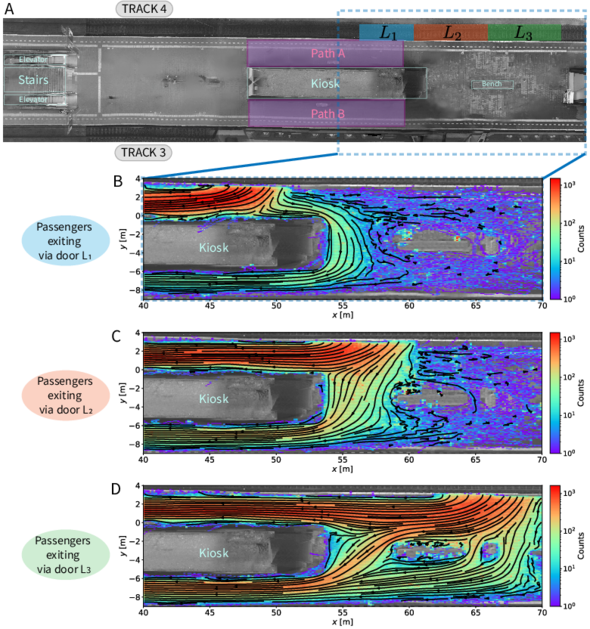
Wang examined three train door zones near a kiosk on the platform. “Even when someone chose the longer walking route past the kiosk, strangers followed that person.”
This often triggers what Wang describes as a choice avalanche, a pattern she also identified in the data. “Followers are then followed by others, and those followers in turn attract more followers. That’s how we see a sudden shift in walking routes emerge—even when it’s not the most efficient path.”
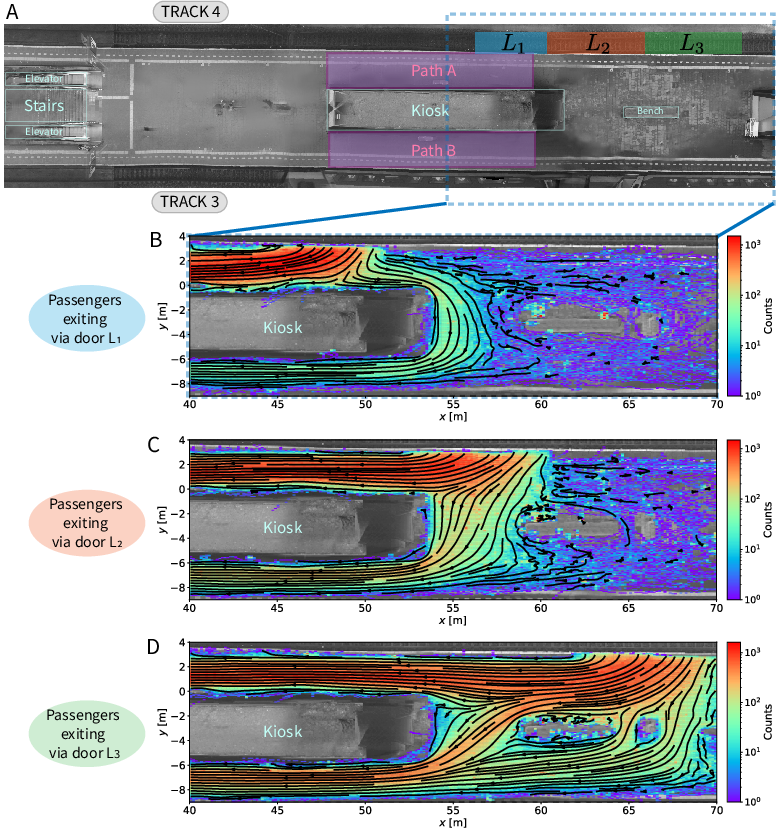
Avalanche behavior
A possible explanation for this stranger-following effect in crowds, Toschi says, may have to do with comfort. “You can’t clearly see what’s happening ahead of you, so you’re more likely to rely on the person in front. That person also creates extra space, making it easier for you to move in their ‘wake.’”
These observations show that crowds do not always act logically or efficiently, Toschi emphasizes. “Next, we want to explore whether, for example at a station or during a busy event, we can influence the flow of people by subtly steering a ‘leader.’ Would that also trigger a follower avalanche?”
This tool could also help optimize crowd management measures and support the design of new stations to improve passenger flow.
“We can assess the impact of a sign and determine which color or symbol works best to disperse a crowd more effectively. Or which objects may become obstacles during peak times. In this way, we hope to make our surroundings a little safer and easier to navigate.”
This article was translated using AI-assisted tools and reviewed by an editor.
Discussion