- Student
- 12/06/2026

Student startup makes blind people more independent
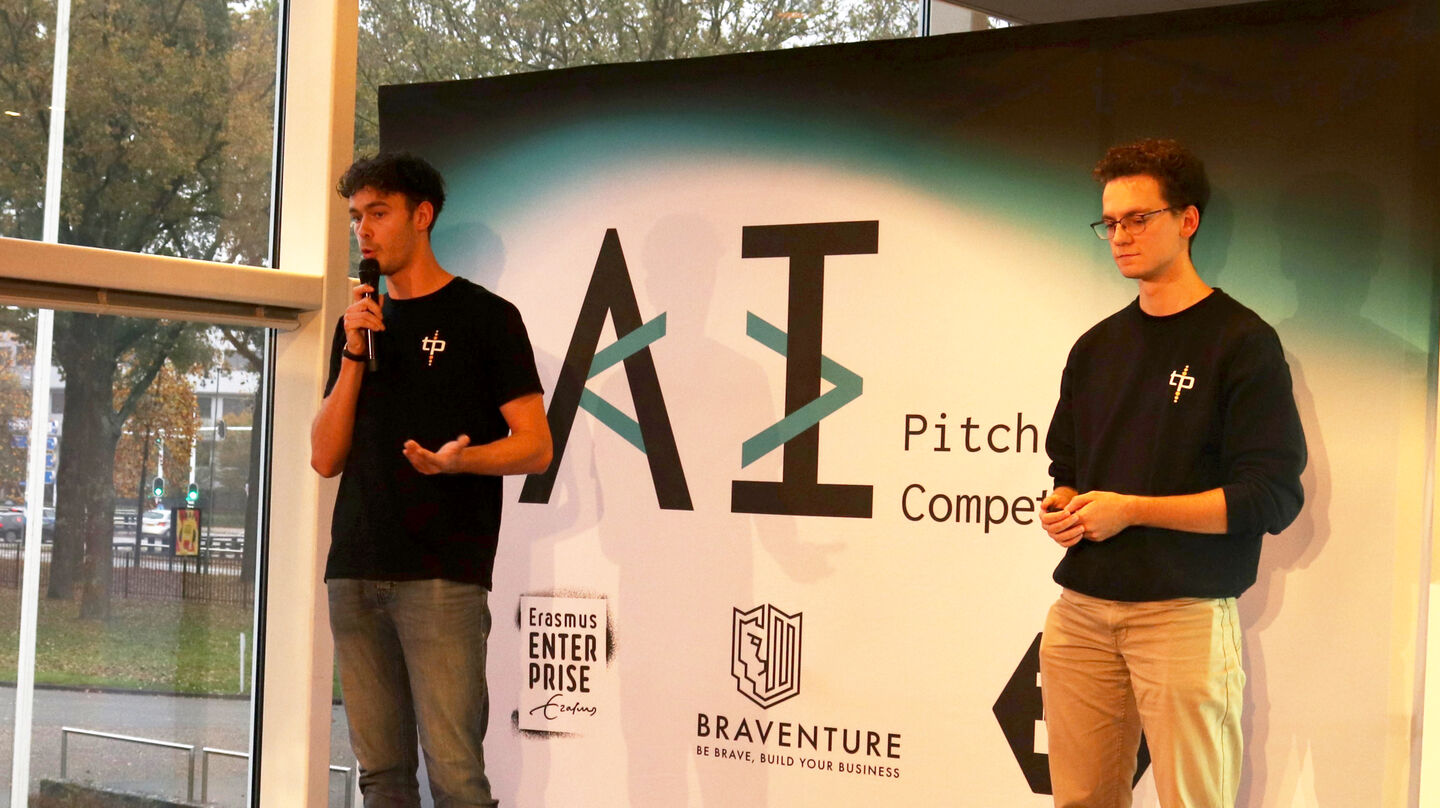
An app that guides you through a train station concourse or busy city streets by describing your surroundings in real time—backed up by a pair of human eyes ready to step in when needed. That’s the innovative idea behind Touchpulse, the startup founded by TU/e students Liam Geschwindt and Sjoerd van de Goor.
“On a busy crossing or in a crowded station, navigation is already difficult for most people,” says student and co-founder Liam Geschwindt. “But if you’re blind, you’re often completely dependent on others.” With TouchPulse, he and co-founder Sjoerd van de Goor aim to change that.
How it started
The two met in 2023 during the TU/e Contest, an innovation competition for students in Eindhoven. “We actually competed against each other,” Geschwindt recalls. “Afterwards, we went for lunch and decided to build a company together.”
We thought: what if you can talk to an AI assistant and it tells you everything about your environment?
At the time, Van de Goor was working with student team HART on a haptic sleeve that conveys information through vibrations to users missing a sensory input. “Like blind people for example.” The concept proved technically interesting but difficult to scale. “From a business perspective, it wasn’t ideal in terms of cost and comfort,” says Geschwindt. Still, it prompted them to take a deeper look at the challenges faced by blind and visually impaired people—and potential solutions.
Getting started
The students spoke with dozens of blind and visually impaired individuals to map out their needs. One theme kept resurfacing: navigation. Around the same time, generative AI was gaining traction. “We thought: what if you can talk to an AI assistant and it tells you everything about your environment in order for you to navigate?”
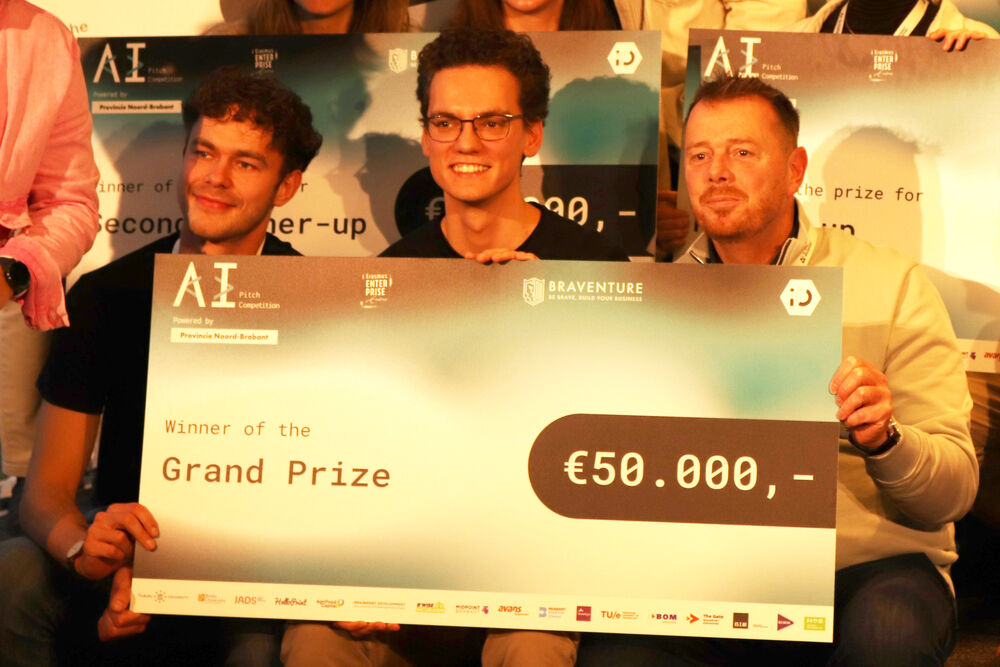
Convinced of their business case, the two founded Touchpulse as a general partnership (VOF) in early 2024. From there, things moved quickly. In May, they took second place in the TU/e Contest. “We won €2,500 and a free office space on campus for a year.” A few months later, they secured an additional €50,000 in seed funding after winning the AI Pitch Competition.
A first pilot with blind users in The Hague soon followed. “Up until then we relied solely on AI, but after the pilot we realized a human back-up is still needed in certain situations.” That’s why the app is now connected to live operators who can step in when needed, providing an extra layer of support.
We often think we’re too busy as students, but that stage of life is actually the perfect time to launch a startup
Today, the beta version of the app has more than 900 users. Its business model targets organizations rather than end users. Universities and train stations, for example, pay to make their locations more accessible using Touchpulse. This aligns with new European accessibility legislation encouraging organizations to improve the inclusivity of their services.
Geschwindt hopes their story will inspire other students to start their own businesses. “We often think we’re too busy as students, but that stage of life is actually the perfect time to launch a startup,” he says. “You have a flexible schedule, and the university gives you access to all the tools you need—plus people who are willing to help—at no cost.”
Discussion