
- Student
- 17/03/2026
Cursor explains | Earning extra income for internationals
Do I need to apply for a work permit myself? How many hours am I allowed to work alongside my studies? Can I work for multiple employers? These are all questions international students—from outside Europe—may struggle with. Cursor poses them to TU/e’s staffing agency EuFlex.
There are quite a few misconceptions about the rules for international students working part-time in the Netherlands, say EuFlex staff. What doesn’t help is that the information on residence permits is written in Dutch.
Currently, around two thousand students have part-time jobs through EuFlex. A growing share of these students come from abroad. The rules differ significantly depending on whether students are from within or outside Europe.
Work permit
According to Nederlandse Arbeidsinspectie (the Dutch Labor Authority), European students are allowed to work in the Netherlands—this is part of the free labor market. Students from outside the European Economic Area (EEA) need a work permit, known in Dutch as a tewerkstellingsvergunning (TWV). These students come from countries outside the 27 EU member states plus Liechtenstein, Norway, and Iceland.
Two EuFlex specialists—support officer Myrna de Win and TWV expert Onno Leenen—outline the key rules for non-EEA students.
“To study here, you need a residence permit. To work here, you also need a work permit, which the Dutch government calls a TWV.” Employers apply for these permits through the Dutch social security institution, the UWV.
Below are six rules international students should be aware of:
1. A work permit is valid for one employer
“Students who already have a part-time job at a supermarket and apply for a EuFlex job need to realize that their TWV only applies to that supermarket,” says De Win. A TWV is typically issued for a full year.
You can have two TWVs for a combined maximum of sixteen hours. “The tricky part is that employers usually request the maximum number of hours, even if the job is only four hours a week. They assume you might work more later, and then the paperwork is already done. EuFlex does the same.”
However, students often don’t know how many hours their first TWV covers, and a second employer may only find out after the UWV rejects their application—sometimes weeks later.
2. A work permit cannot be applied for in advance
“The UWV requires a concrete application,” says Leenen. “So the hiring process must be completed before we can submit a TWV request.”
This can lead to delays and unfair situations, De Win explains. “If we receive a request on March 3 to hire a non-EEA student as a student assistant, it’s not guaranteed they can start on April 1. It can take up to five weeks for the UWV to approve the permit.”
“A European student could start immediately, making them a more attractive candidate. That’s unfair. Many TU/e staff offering student assistant positions don’t realize this.”
3. Students do not apply for a work permit themselves
De Win: “It’s a misconception that it’s difficult for students to apply for a TWV. They never do this themselves. The employer applies for the permit through the UWV. The student just has to wait for the outcome.”
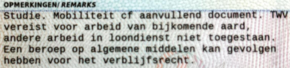
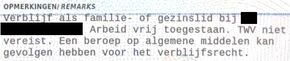
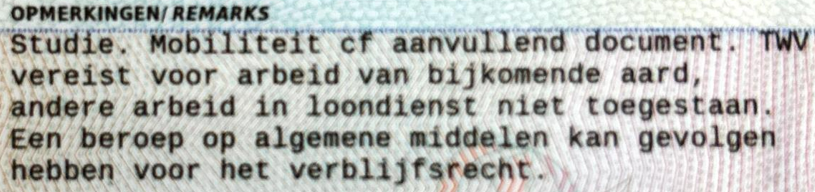
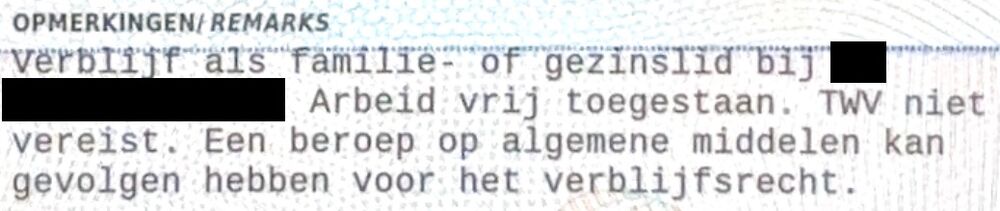
4. Students must read the back of their residence permit
“Even though it’s written in Dutch, it’s essential to read the back of your residence permit,” says Leenen (check the examples below).
“A residence permit alone does not grant the right to work. Students living with family who moved to the Netherlands earlier may be allowed to work without a TWV—that will be stated on the permit.”
“At EuFlex, however, we more often see student residence permits. In those cases, we do need to apply for a TWV.”
5. Working without a TWV carries risks
On the back of residence permits, there’s a vague message: ‘Accessing public funds may affect your right of residence.’ De Win and Leenen agree it’s unclear wording, but emphasize that working without a TWV is essentially illegal.
“Your residence permit could be revoked. And you’re uninsured as long as your contract hasn’t been signed. That also applies to EU students and Dutch nationals.”
6. Not all Ukrainians fall under the same rules
Ukraine is not part of the EEA, so Ukrainian students normally need a TWV. However, since the war with Russia, the Dutch government has introduced a special stamp under the Temporary Protection Directive for Ukrainians.
“If students qualify for this arrangement—meaning they arrived in the Netherlands after November 2021—they do not need a TWV. What’s confusing is that students must apply for this stamp themselves through the Immigration and Naturalisation Service (IND).”
Discussion