
- Employee
- 01/07/2026

Behind the scenes | Toos van Doorn, first aid instructor
From technicians to schedulers, and from IT specialists to catering staff—it takes many hands to keep TU/e running smoothly. But who are the people behind the scenes? Cursor puts them in the spotlight. This time: self-employed first aid instructor Toos van Doorn.
She estimates that as many as five hundred members of the TU/e community know her. As “Toos”, because almost no one knows her last name. To them, she is just Toos from the emergency response team. For the past twenty-five years, the Riethoven resident has been providing training, refresher courses, and practical exercises for the university’s emergency response officers (BHV) among staff and students.
Every student board is responsible for ensuring that qualified emergency response officers are present at its events. In addition, TU/e wants enough BHV officers available in every building. Toos is not involved in deciding who attends her courses; that is arranged by the TU/e fire department.
The fire department also schedules the refresher courses for staff. BHV officers working in office buildings attend two refresher sessions each year. Those working in higher-risk buildings such as Helix and Cascade receive three refresher sessions annually.
What exactly does your job involve?
“I teach first aid skills to staff and students through classroom instruction and practical exercises. On average, I do that three days a week. As a freelancer, I also work with clients in sectors such as hospitality and industry.
“Candidates for a BHV certificate have already completed the theoretical part through e-learning. After that, I teach them practical skills in Fenix. How do you perform CPR and use an AED? How do you move injured people? What is the correct response to choking, burns, and fractures? And how do you recognize and respond to conditions such as stroke, epilepsy, and diabetes?”
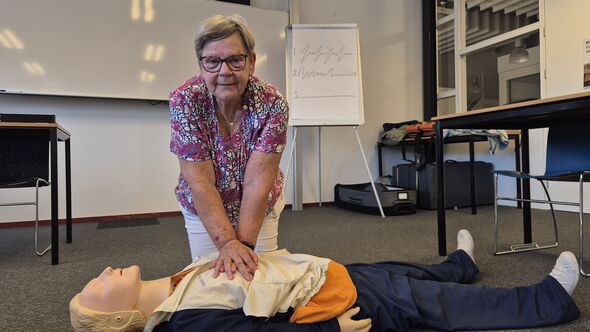
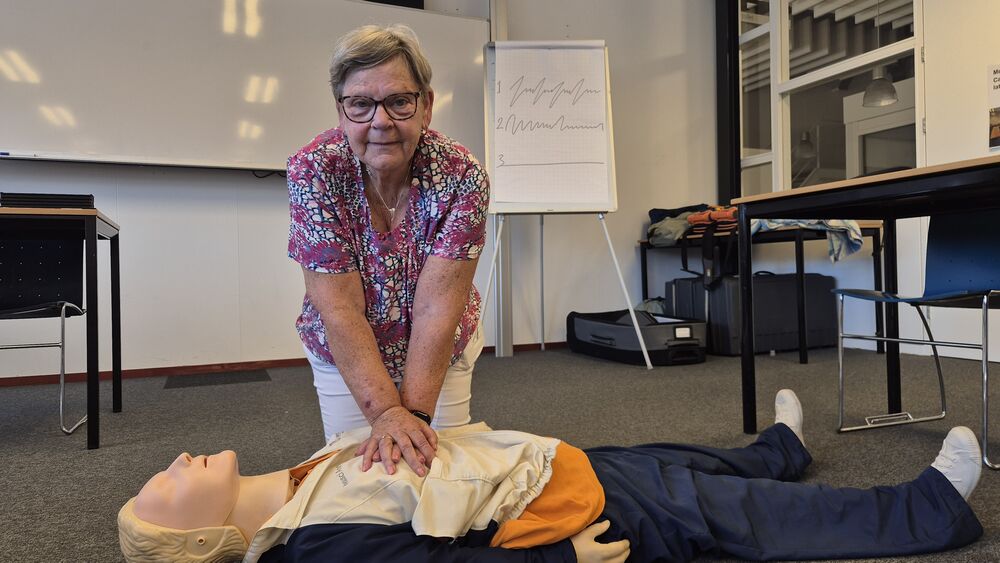
“BHV officers also have to learn how to respond to unexpected situations. That’s why we organize emergency response exercises for staff, and I always work with Karin Verkorven, who plays the role of a casualty as a LOTUS training actor.”
“The fire department comes up with a scenario, and I make sure it’s realistic. Someone has fallen down the stairs, a person is lying injured and bleeding in a building where there is also a fire, or an employee is sitting pale and sweating in an office chair, for example.
“Afterwards, we evaluate the exercise together with all the participants so everyone can learn from it. What went well? What could be improved? We mainly give lots of compliments. After all, everyone volunteers to do this.”
What time do you clock in?
“The sessions last half a day and take place in Fenix. I arrive about forty-five minutes beforehand to collect the attendance list, make coffee for the participants, and restock the first aid kit.”
What time do you clock out?
“After three hours of teaching, I pack up the CPR mannequin, clear away the coffee cups, and straighten the chairs. I make sure the room is tidy again.”
How did you end up in this job?
“When my own two children were four and two years old, I wanted to know what to do if they ever had an accident. I found the first aid course so interesting that I decided to train as a LOTUS casualty actor afterward. I did that for twenty-four years.
“Later, I also became a certified first aid instructor. Just two months after earning that qualification, I was asked to come and teach at TU/e. This September will mark exactly twenty-five years.”
When will you step away from this job?
“I’m retiring at the end of 2026. After the summer break, I’ll be seeing all the BHV officers for the last time. I already know how I’ll end those sessions: ‘If we happen to run into each other somewhere off campus—at a café terrace, for example—we’ll have a drink together!’
“But I won’t really stop doing this kind of work. I’ll remain active with the first aid association in Riethoven, attend refresher sessions with the Red Cross twice a month, and continue volunteering for the Red Cross at events.”
What do you enjoy most about your job?
“Working with people and teaching them something. When I hear that someone has actually used what they learned in my classes, I’m happy for them and proud of myself. Once, a woman gave me a large box of chocolates because, thanks to my lessons, she immediately knew what to do when her husband's breathing suddenly sounded very different while he was asleep. She recognized it as agonal breathing and was able to resuscitate him.” (Agonal breathing is an irregular, labored, and noisy way of gasping for air that can indicate cardiac arrest, ed.)
“Another staff member told me she was able to help a stranger in the street who was having an epileptic seizure. She said she kept hearing my voice with instructions in her head. I think that’s wonderful.”
What do you enjoy least?
“I really have to think hard about that. There’s actually nothing I dislike. Sometimes I have a very busy week and sigh when I look at my schedule. But as soon as I get into the car, I’m looking forward to it again.
“If I really have to mention something, it’s students who keep looking at their phones even after I’ve asked them several times to stop. I don’t enjoy that.”
What do you do when you get home?
“I enjoy walking and cycling, and sometimes I relax at home by watching a movie. Preferably a horror or action film. I do keep paying attention to whether what I’m seeing is realistic.
“I also like reality TV about hospitals, the police, or dangerous drivers. I absolutely love it—call me a disaster tourist, haha. I’m glued to the television.”
“When I retire, I’d also like to volunteer at a hospice and become a cycling companion for people who can’t cycle independently. And who knows what else will come my way.”
This article was translated using AI-assisted tools and reviewed by an editor.
Discussion