
- Student
- 17/11/2026

Hunger Games as inspiration for student housing
Make a plan that would allow Eindhoven to build twenty thousand additional student rooms. That was the assignment of the Disruptive Challenge of Built Environment. And do it within 24 hours. One group involved all city residents and designed a glass dome over a sports field. With 110 percent creativity, the winners devised districts like those in the Hunger Games film saga.
Eight groups of four or five TU/e architecture students took part this weekend in the 24-hour challenge organized by study association AnArchi, in collaboration with the municipality and housing consultancy HEVO.
The organizers called on participants to think outside the box. A revolution is needed to keep up with the growing demand for student housing, they stressed, and conventional housing is no longer enough. The plans were therefore allowed to be revolutionary, with feasibility coming second.
Bike ride
Saturday morning started with a bike ride through the area where the student housing would be located, in short, around the Karpendonkse Plas. The students then worked on their ideas in the Microstad building on Dorgelolaan. Three groups didn’t go home for the night. They kept working on their models or crawled into a sleeping bag for a few hours.
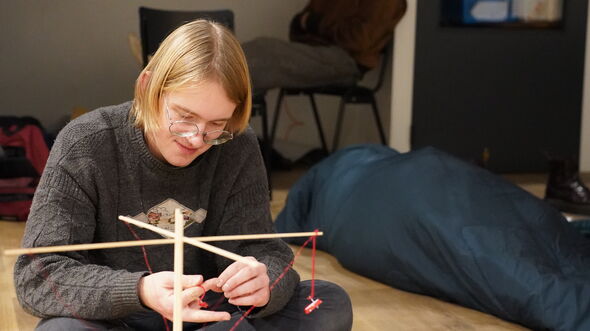
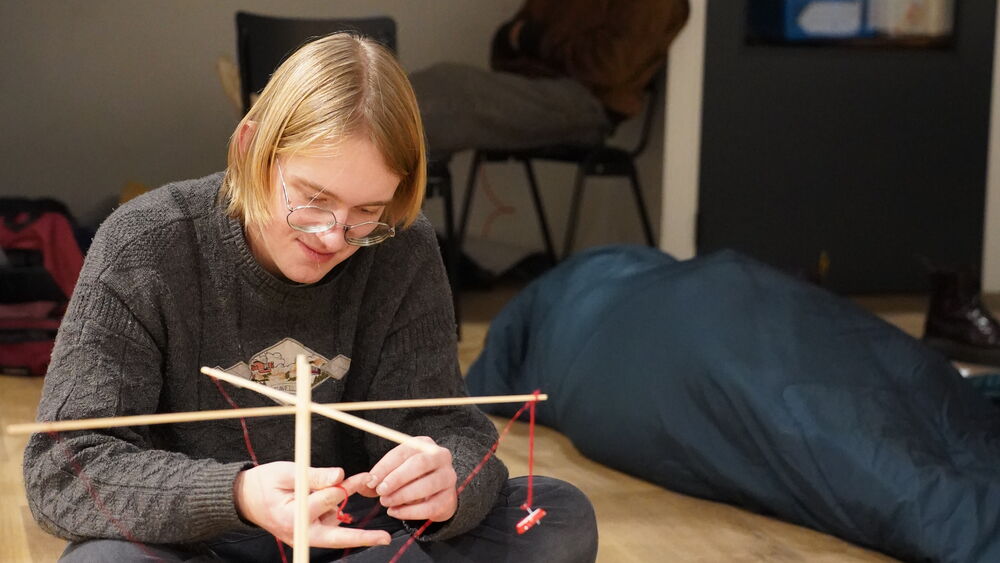
Tomáš Jirmann’s group took urban social issues into account. “We see that different social groups, such as students and local residents, often live separately from each other.”
Dommel
“Our design tries to solve this by creating spaces that attract a broad audience, such as a cultural center and a sports field covered by a glass dome,” Jirmann continues. “We’re also placing our cultural center on the bank of the Dommel, which fits the trend of the river being an important cultural route through Eindhoven, passing other sights such as the Van Abbemuseum, the city hall, and the planned Rijksmuseum next to the campus.”
The group won second prize, worth 500 euros, with the design. The jury praised its emphasis on the need for social integration and the fact that the students add architectural value to Eindhoven as a whole, not just to the campus.
The bubble of your association
The main winners thought about student culture at TU/e. “It revolves largely around associations, from study and sports associations to cultural associations and identity-based associations,” says Lukasz Latuszek. The advantage of this structure is organized social contact, but the downside can be that students don’t get out of their bubble. In addition, his group feels that the campus is an isolated island within the city.
“Our answer to the design challenge was to recreate the world of the Hunger Games on campus. To be precise: the ‘district’ aspect from the films. We divide the campus and the adjacent project area geographically into different hobby and activity categories, such as party, games, art, innovation, food, sports, and care. We determine the categories and the size of the districts based on the current associations at TU/e and the number of active participants in them.”
Monorail
In each of these neighborhoods, the group used architecture to encourage interaction between students. In the art district, residential towers have shared studios at the center of the building, next to the elevators. “This way, we hope students will effortlessly take part in activities alongside their studies, make connections, and make friends with like-minded people.”
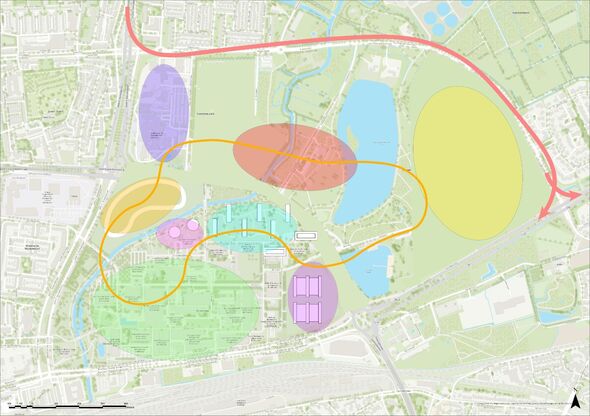
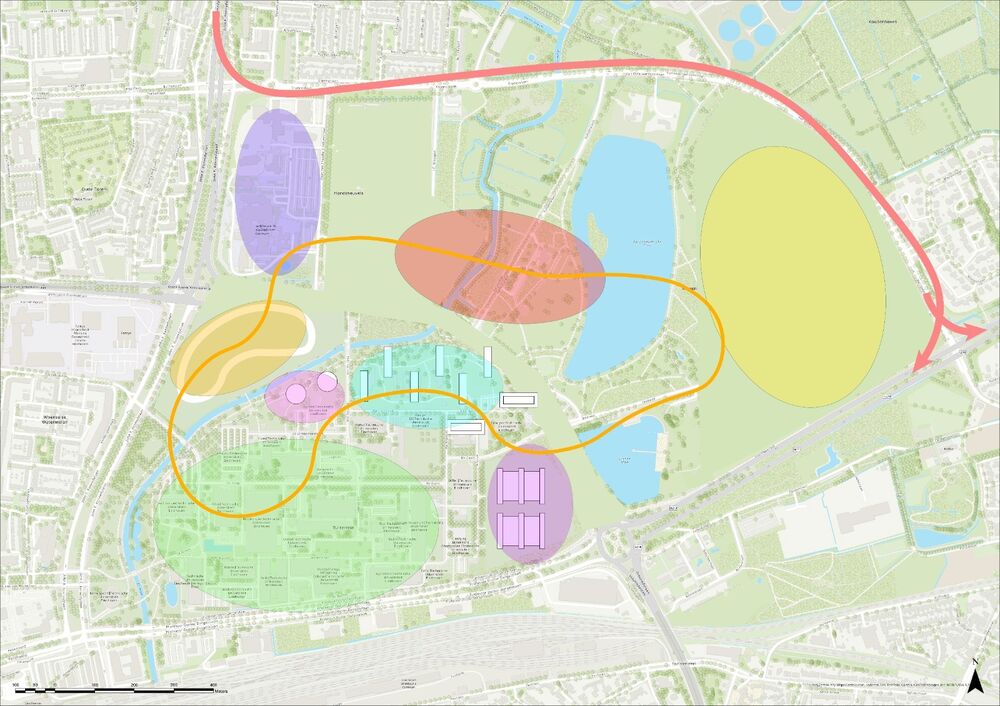
To bring together students with different interests, the group made the residential districts dependent on each other. “If someone from the art district wants to go to the bar with a friend, they go to the party district, or if someone living in the party district wants to go to the gym, they go to the sports district.”
“This way, students use the entire campus to meet their daily needs. To make this easier, a monorail has been built that runs around the campus between the districts and continues on to the city center.”
Fantasy
In design and architecture, almost anything is possible. At least if you have an investor who doesn’t need to make a return and a brave engineer who takes on the challenge, Latuszek puts it into perspective.
“The goal of the challenge was never to be feasible, but rather to break the status quo and think with 110 percent of your creativity. Although our concept may seem crazy and outside the box, it contains some ways of thinking that could indeed be implemented in realistic projects. To do that, you first have to think illogically.”
The group won 1,000 euros. To keep it from disappearing into their bank accounts, the four will use it for a fun weekend away that they will remember for a long time. “And of course we’re going to watch the new Hunger Games movie!”
This article was translated using AI-assisted tools and reviewed by an editor.
Discussion