
- Campus
- 09/09/2026
MediaLAB began in 2013 as a pilot for lecturers to create knowledge clips. In recent years, work has focused on establishing a new audiovisual hub for the entire university community.
The lab has three studios, each equipped for a different type of production. The staffed TV studio is linked to the Unreal game engine. This makes it possible to create different environments or place virtual objects on the studio floor. This studio is intended for larger productions, such as talk shows and panel discussions.
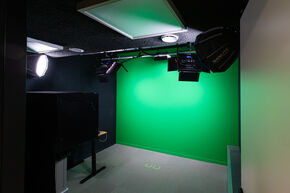
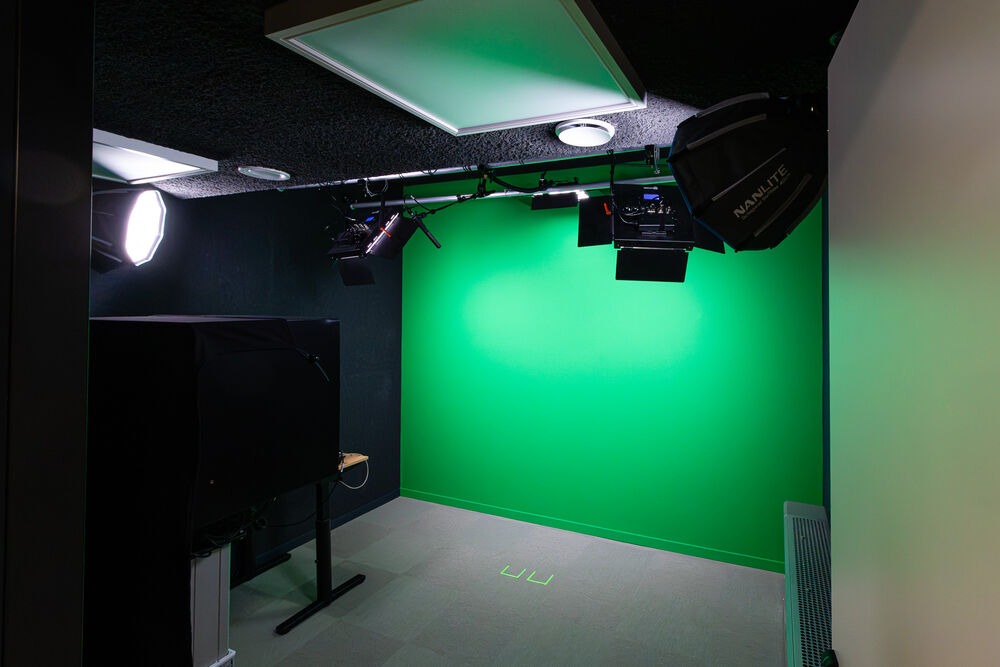
Anyone who wants to record a short video on their own can use the Do It Yourself (DIY) studio. This green-screen studio is equipped with, among other things, a camera and a teleprompter, which the presenter can use to read their script. Users can create productions there using PowerPoint.
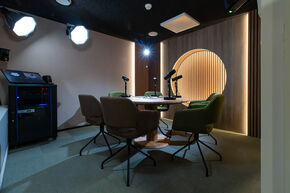
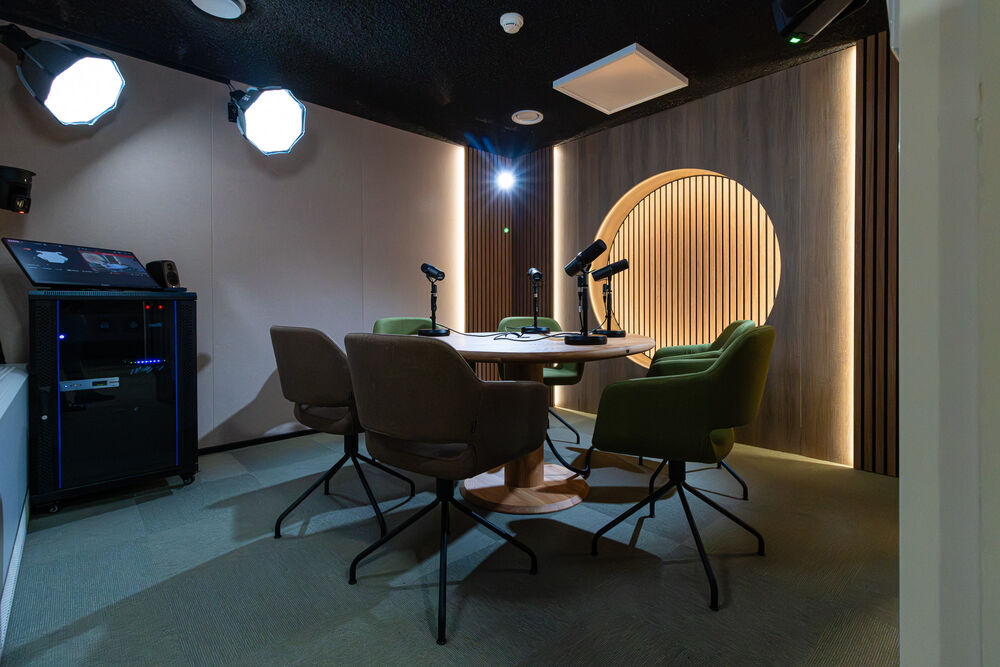
The third studio is designed for video and audio podcasts with up to four people. Cameras automatically follow whoever is speaking. Users can control and edit the recording themselves via a control panel.
Leading the way
Audiovisual productions are becoming increasingly prominent in education, says Joost Nevels, manager of MediaLAB. “The landscape has become more dynamic. The goal of the lab is to bring all these possibilities together into one place for everyone on campus.”
Nevels hopes MediaLAB will drive innovation across the university. “We don't want to follow or lag behind anymore. We want to be a university that leads the way in developing new audiovisual formats. That applies not only to education, but also, for example, to communicating scientific research findings, internal policy communication and student recruitment.”
Already in use
The podcast room and DIY studio are already in use, says audiovisual staff member Camiel Heijnen. “We record introductory material for lectures that students can listen to on the train. This allows lecturers to go into greater depth during the lecture itself.” These two studios can be booked through the website of the MediaLAB,
Users without prior experience can first receive an explanation of the equipment. For large projects, technicians help with editing, 2D animation and motion graphics. Equipment is also available for productions on location, including a mobile film set with two 4K cameras, lighting and audio equipment.
Heijnen: “We use our knowledge of audio and video to think along with users. We support them throughout the production process, but the user remains the owner of their project.”
Cursor took a first look at MediaLAB and tried out the DIY studio:
This article was translated using AI-assisted tools and reviewed by an editor.


Discussion