
- Student
- 05/03/2026

She would have loved to have had a group of female friends, but Yun Oudekerk (on the right on the main photo), a fourth-year Electrical Engineering student only had a few women to choose from in her program. “After the first year, only about ten were left.” In the fourth year of her studies, she decided after all to make an effort to connect women in the program with each other.
There was clear interest. What started as a committee within Thor has now grown into the study association’s first official sorority (see box). In addition to social activities, the sorority offers recognition and support to its members. Oudekerk wants to spare other female students the loneliness she herself experienced, particularly during the first years of her studies.
Confidence
Valkyrie also aims to build its members’ confidence, says chair Libby Crezee (third from the right on the main photo). She notices that when tasks are divided during group projects, female students often end up with fewer technical roles, even though they have the necessary knowledge.
“We want them to feel: I know what I’m doing, I’m doing the same work as the men in my program, I’ve taken the same courses, I have just as much right to be here.”
Independent
Valkyrie began in May last year as a committee of Thor, but from the outset the goal was to develop into a sorority. As a committee, the members were not fully free to make their own choices. For example, they were not allowed to organize activities exclusively for women, because women were not designated as a specific target group. According to Oudekerk, some members of the association felt that changing this would be sexist and would exclude men.
“We wanted to be independent and have our own board. We now also hold general members’ meetings.” The study association had to amend its statutes and financial regulations to make the establishment of the sorority possible. Since November, Valkyrie has been an official sorority within Thor.
When Oudekerk presented her plan for Valkyrie to the rest of Thor’s board—all men—she received immediate support. “Inclusion is an important issue for the board,” says president Gijs Jongenelen. “This felt like a natural step. We’ve supported it from day one.”
Gap
Some members of the study association did question whether creating a separate sorority for women might actually widen the gap between men and women.
The opposite turned out to be true. “We now see that it actually narrows the gap,” Oudekerk says. Jongenelen agrees: “I see women participating more in activities, and they’re also more often present at the bar. They’re engaging more with the association as a whole.”
Continue reading below the photo.
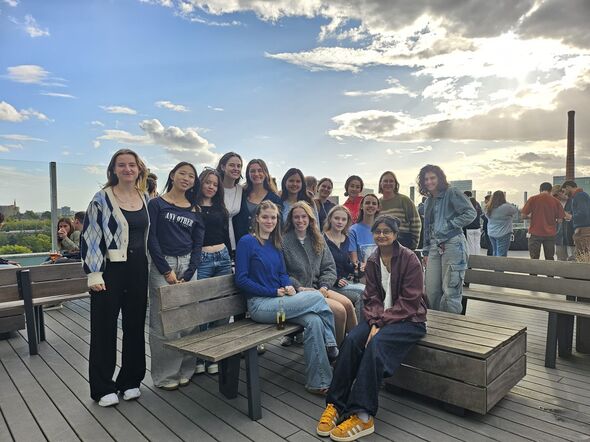
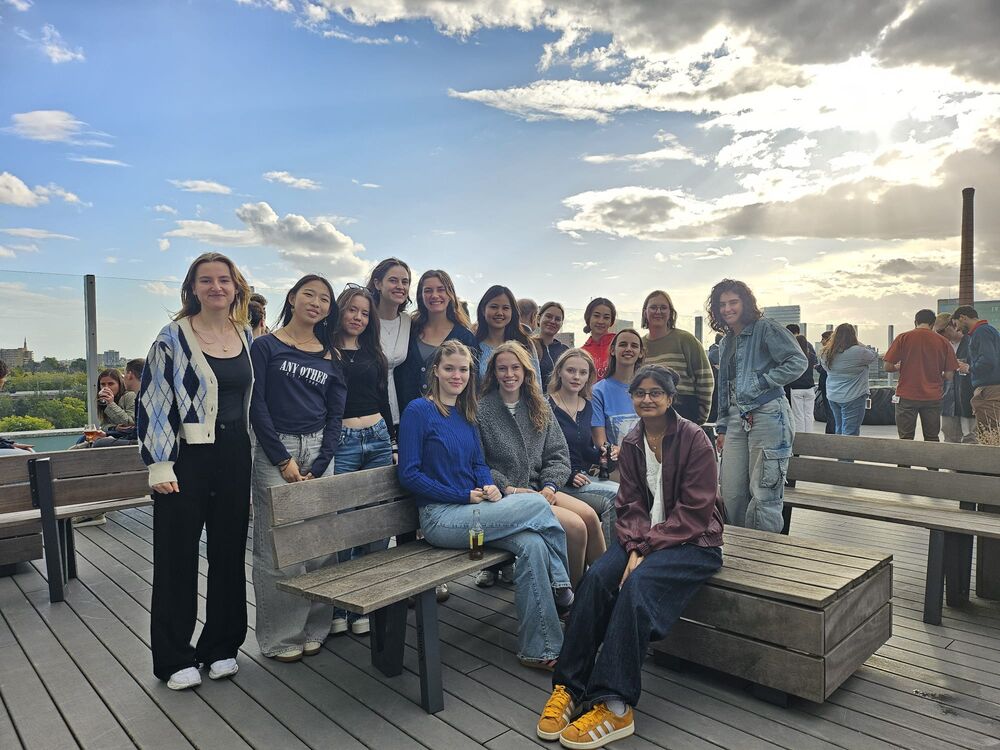
Members of Valkyrie are also more likely to become active members of Thor, Crezee adds. “Being part of Valkyrie makes it easier for female students to join Thor activities, because they already know some people. As a woman, it can be quite intimidating to walk into a room full of men and say, ‘I want to join.’” Fellow sorority member Beyza Bilgin agrees. “Through my contact with Valkyrie members, I’ve gotten to know more male members of Thor.”
Few women
The sorority currently has fifteen members. This year, the Electrical Engineering bachelor’s program has a total of 124 female students, accounting for 16 percent of the student population. The master’s program is also 16 percent female.
The share of women in the program increases each year, but only slowly. In 2023, the department commissioned a “gender scan,” an independent study on gender diversity and inclusivity. Among other things, the study aimed to determine how the program could be made more attractive to female students.
Change
Crezee is also aware of a course in which female students are given priority for teaching assistant positions when they have the same grade as male candidates. Two of her friends secured such a position. That did not sit well with two male students who were not selected, even though they had lower grades than her friends.
Situations like these sometimes make her wonder whether change is truly possible, but Crezee also sees signs of improvement around her. “Compared to my first year, a lot has already changed,” also Oudekerk observes.
And there are further reasons for hope: according to Crezee, the more women who choose to study Electrical Engineering, the better things will become. “Maybe more women will enroll here when they hear about Valkyrie.”
This article was translated using AI-assisted tools and reviewed by an editor.
Discussion