
- People
- 10/03/2026

Former olympian: “If you want to exercise more, start small”
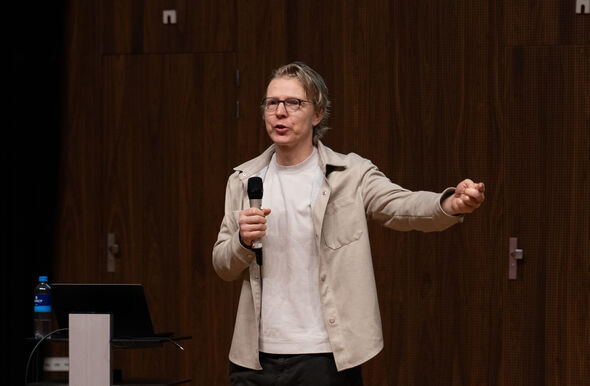
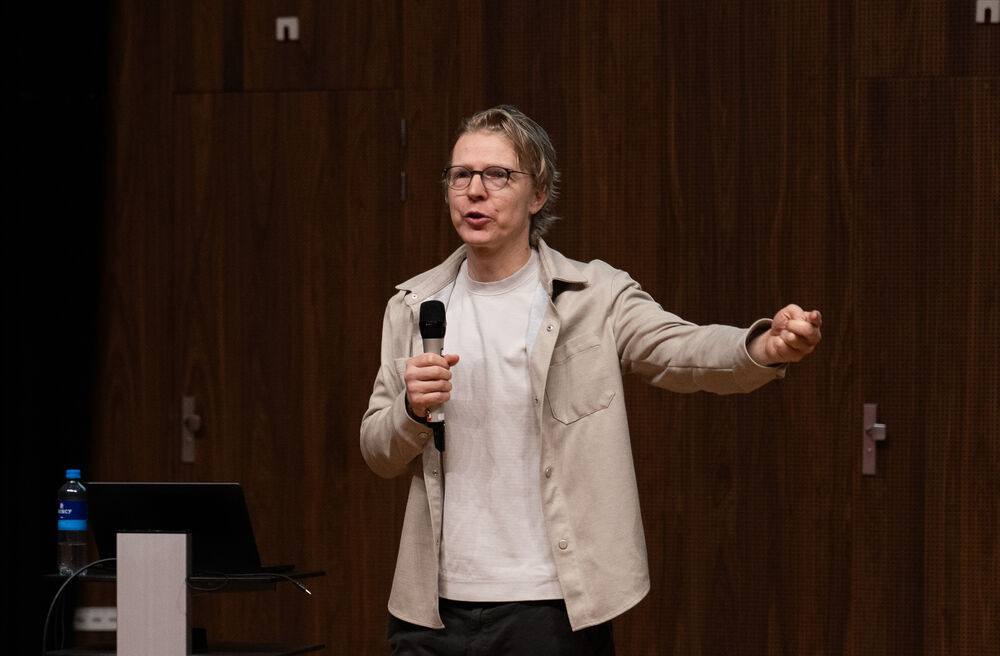
As one of the highlights of the TU/e Wellbeing Week, former Olympic speed skater Beorn Nijenhuis gave a lecture in the Coronazaal of Luna on Monday. His message: change doesn’t happen through willpower, but through small repeated actions. “That’s how exercising becomes as routine as brushing your teeth.”
About forty people came to listen to former elite athlete Beorn Nijenhuis on Monday afternoon. For ten years he was an Olympic long-track speed skater. At 25, he transitioned to the academic world and became a neuroscientist. Now, among other things, Nijenhuis teaches students at the conservatory and helps them improve their cognitive performance.
According to Nijenhuis, three aspects are crucial for that. Sleep ranks firmly in first place, followed by physical activity and mindfulness. When he tells his students that they should mainly start moving more and exercising, he mostly sees slumped shoulders.
Atheists
“Not everyone, but most of them really don’t like sports. Getting them to move is very difficult,” Nijenhuis says. But how do you get people who have no desire to exercise—the people Nijenhuis sometimes calls the atheists in the church of sports—to start moving anyway?
The former elite athlete finds the answer in neuroscience. It shows that you can change your behavior by slowly carving out a new ‘little river’ in your brain through small repeated actions, allowing you to develop a new habit.
Business model
Most people actually do the opposite when they want to change something in their lives. According to Nijenhuis, the entire business model of commercial gyms is even built around this. In January they are packed with people trying to stick to their New Year’s resolutions, but a few weeks later things have already quieted down considerably. “You can set your watch by it—it happens every single year.”
According to Nijenhuis, this happens because behavior patterns cannot be changed through sheer willpower alone. The habits we already have can be seen as wide, predictable rivers in the brain.
“If you want to create a big change, it’s as if you place a large dam in front of that river. The pressure behind the dam keeps building until it breaks, and you fall back into your old pattern.”
Ten minutes
If you want to maintain a healthy brain and live a long life, Nijenhuis says you should do cardio at least three times a week for between 35 and 45 minutes, with your heart rate rising above 120 beats per minute. But that doesn’t mean you should start there all at once.
“I would much rather have my conservatory students start by exercising ten minutes per week.” If they do that, he says, the chances are much greater that they will actually keep exercising, because those small steps gradually deepen the channel of that new little river in their brain.
“My goal is that by the end of the process, these students see exercising the same way they see brushing their teeth. They don’t think about it anymore—they just do it.” So forget about ambitious, life-changing resolutions—start small.
This article was translated using AI-assisted tools and reviewed by an editor.
Discussion