
- Student
- 12/03/2026

New TU/e student team Abyss explores maritime technology
TU/e welcomes a new student team, starting this spring: Abyss. Their goal: to innovate maritime technology, while showing that a student team is not only about achievements, but primarily about learning, collaborating, and experimenting. They are pursuing this through a new type of submarine, TU/e student and co-founder Iordanis Pagonidis says.
Abyss, the team’s name, is a nod to the deep sea: a largely unexplored realm where technology plays a crucial role in further discovery. “With Abyss, we are building an unmanned submarine specifically to explore these deep-sea areas,” says Iordanis Pagonidis, student Mechanical Engineering at TU/e and co-founder of the team.
How to start a student team
Like any other student team, Abyss began with an initial idea. According to Pagonidis, the idea can be about literally anything—but there is one essential requirement: it must be innovative. “They don't want you to work on existing technology, but to try to come up with something new. Something that hasn't been done before.”
With that principle and their submarine idea in hand, he and three fellow students approached TU/e innovationSpace, where student teams are supervised. There, a process of discussions and pitches followed, during which their idea was refined step by step.
“You'll talk with technicians from innoSpace who basically try to find holes in your idea,” Pagonidis explains. “That sounds harsh, but it helps to determine whether your idea is actually feasible.”
After several rounds, Abyss obtained the status of a so-called discovery team: a trial period in which the team has to show that both the idea and the team are viable.
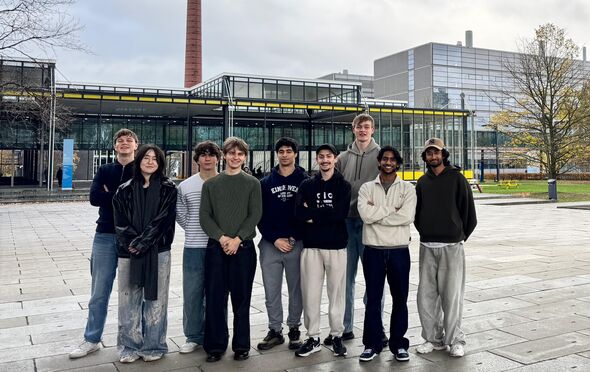
Concretely, this means the students now have to achieve three things: creating a first prototype, finding new members, and proving that the team can continue without the founders. “Once you've done that, you can officially become a TU/e student team.”
Wax
The innovative idea of Abyss lies in the way their submarine changes depth. Normally, submarines control their depth with ballast tanks, foam materials, or propellers. But the students of Abyss experiment with a new buoyancy system based on wax.
“By heating up the wax it expands, and we take advantage of this expansion to change our volume,” explains Pagonidis. “When the wax expands, the volume of the submarine increases and the density decreases, causing it to rise. When the wax contracts again, the submarine sinks deeper into the water.”
According to the team, this technique offers major advantages compared to existing solutions. “It’s much simpler and therefore it can be integrated into smaller systems,” says Pagonidis. Perfect for unmanned underwater drones, which preferably should be as small as possible.
In addition, the wax system provides more freedom in choosing depths, he continues. Unlike existing techniques, which fix a submarine to a single predetermined depth range, Abyss can adjust this while operating.
“This way we can operate across a much larger range of depths,” says Pagonidis. “And according to our first calculations, our wax system is also more energy efficient than common techniques.”


A different way of working
Beyond technical innovation, Abyss also focuses on a second type of innovation: an alternative approach to working within a student team. Pagonidis and his co-founders noticed that many existing student teams impose strict requirements on specific skills and minimum time commitments. According to him, this diminishes the educational aspect of student teams and creates a barrier for many students who might otherwise want to join.
“At Abyss, we want to put a lot of focus on the educational part as well,” says Pagonidis. “Being involved with a student team is supposed to teach you skills; you don’t have to arrive as a complete engineer.”
If you’re interested in something that isn’t part of your study, please do apply too. Everyone is welcome
The team also adapts students’ involvement to their available time and motivation, so everyone can participate without feeling overwhelmed. “We can tailor it to the person. So, if someone says they only have 4 hours a week, and nothing in or around exam weeks, we’ll make that work.”
Almost ready
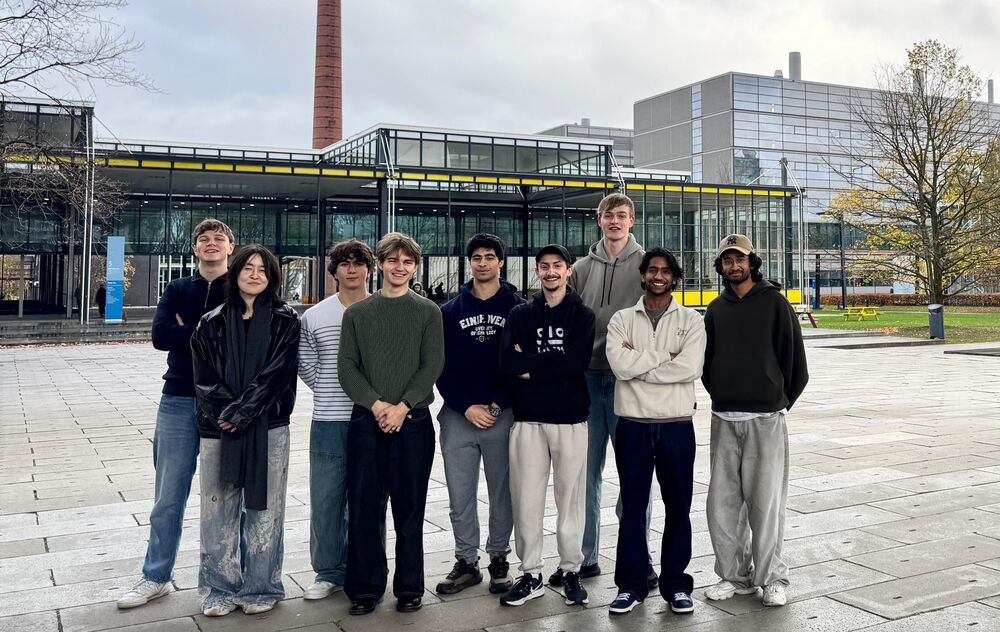
After about a year of preparation—from the initial idea, through discovery team status, to the first prototype—Abyss can officially call itself a student team any day now. During this time, the team has grown to thirteen members but continues to actively seek new enthusiastic students.
Pagonidis emphasizes that Abyss is a multidisciplinary team, so students from all programs are welcome. “And if you’re interested in doing something that isn’t necessarily part of your study, please do apply too. Everyone is welcome—we’re all here to learn.”
Discussion