
- Student
- 03/07/2026

Chemical Engineering & Chemistry gets intake restriction
To safeguard the quality of the program, TU/e’s bachelor’s program in Chemical Engineering & Chemistry will introduce an intake restriction. It will take effect starting in the 2027–2028 academic year. The department is exploring the possibility of offering a Dutch-language track alongside an English-language track, with only the English track being subject to the intake restriction.
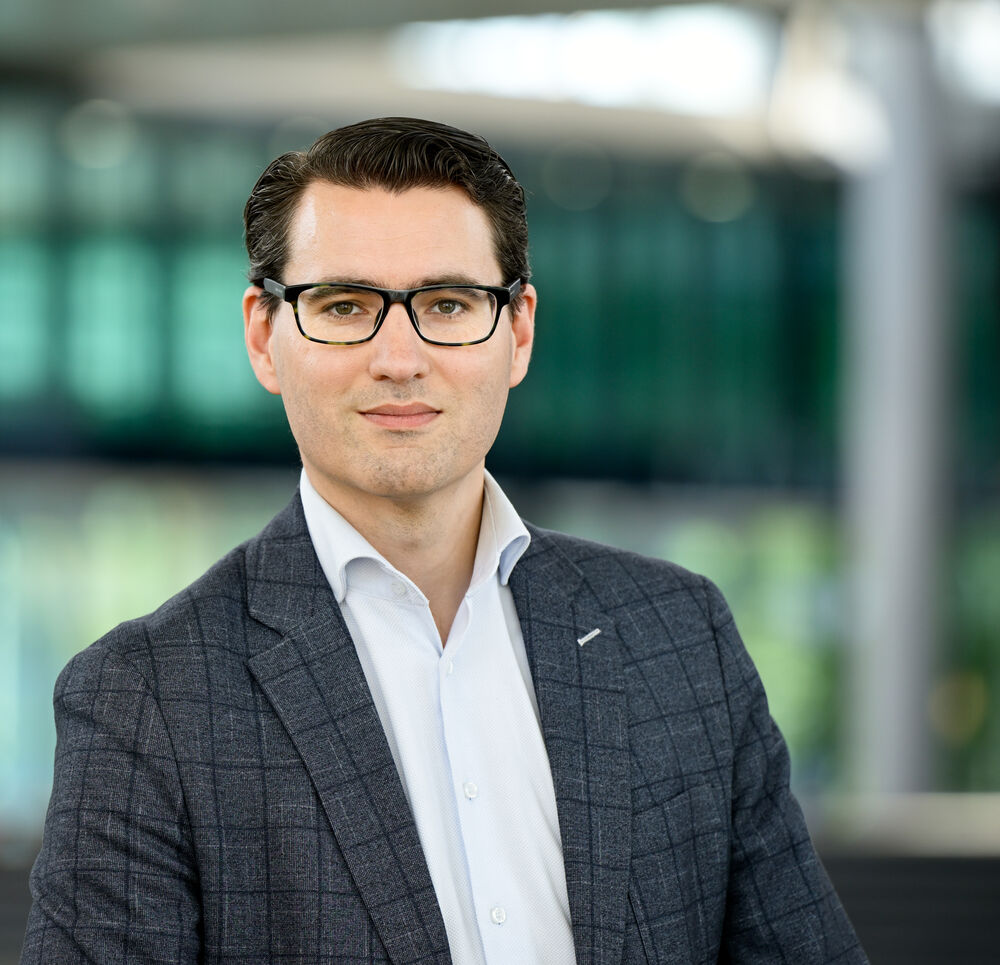
An intake restriction will definitely be introduced, Dean Mark Boneschanscher of Chemical Engineering & Chemistry (CE&C) confirmed in response to questions from Cursor. The department board made the decision in consultation with the Education Committee and the department council. In September, the Executive Board (CvB) will decide on the maximum number of students who will be admitted.
According to Boneschanscher, limiting enrollment is necessary because the number of applications to the program is growing rapidly. “Our bachelor’s program is already the largest in the Netherlands in this field, and we are quickly growing toward becoming one of the largest bachelor’s programs in Europe,” he explains.
Safeguarding quality
According to the dean, the CE&C bachelor’s program has a strong hands-on focus, with many projects and laboratory classes. “Our current laboratory capacity—which was recently expanded—can accommodate a maximum of 220 first-year students.”
The university expects to welcome 235 students to the bachelor’s program in the coming academic year.
“Because of the sharp increase in applications, primarily from abroad, we are forced to introduce a cap in order to continue safeguarding the quality of the program, particularly its practical components,” Boneschanscher says.
Two tracks
Given the large number of international applications, the department wants to carefully consider how both the intake restriction and the bachelor’s program as a whole should be organized. It is exploring the option of creating two tracks within the program: an English-language track and a new track with a significant proportion of instruction in Dutch. Only the English-language track would be subject to an intake restriction.

The program’s rapid growth is largely driven by international students. “By applying the intake restriction exclusively to the English-language track, the program can keep the growth in international enrollment manageable while preserving accessibility for Dutch students and safeguarding educational quality,” Boneschanscher says.
Accessible to Dutch students
Because CE&C fulfills a public educational role, it should remain accessible to Dutch students who have completed pre-university education (VWO), the dean argues. At the same time, a Dutch-language track would lower the threshold for this group to study at TU/e.
According to Boneschanscher, the chemical industry in the Brainport region also has a strong demand for highly educated Dutch-speaking engineers with an international outlook. “A bilingual educational offering is better aligned with the needs of this labor market.”
Introducing two tracks is one of the few ways—if not the only way—the university can limit enrollment without affecting the admission of Dutch students.
The issue recently attracted considerable attention because the three existing fully English-language bachelor’s programs at TU/e with an intake restriction do apply their enrollment cap to all applicants. This raised concerns about the impact on Dutch students (see text box).
Dutch versus international
A column by full professor Boudewijn van Dongen sparked debate in April about TU/e’s programs with an intake restriction. He criticized the policy, arguing that students from the region could lose out in the decentralized selection process because of competition from international applicants. The column led to parliamentary questions about the accessibility of programs with an intake restriction for Dutch students. Minister of Education Rianne Letschert said she had seen no evidence that large numbers of students were being displaced by international applicants. Program directors likewise stated that Dutch students were not being left behind.
Whether the two-track model will actually be introduced depends on several factors. One important condition, Boneschanscher says, is that there must be broad support for the plan within the CE&C community. According to him, the community is currently close-knit, and the department wants to keep it that way.
One program
“Students from both tracks will therefore be part of the same program, work together as much as possible in educational activities, and belong to the same study association, project groups, and program community. The goal is not to create two separate programs, but one program with two accessible admission pathways.”
According to the dean, the plan will only go ahead if the new tracks make it possible to maintain educational quality, ensure the program remains manageable for students, preserve cohesion within the student community, and avoid increasing the workload. Many details also still need to be worked out.
Asked whether the introduction of the intake restriction would be postponed if the two-track model cannot be implemented in time, Boneschanscher says: “Postponement is not an option for us. We are confident that we can establish a solid foundation for the two tracks and continue refining them year after year.”
This article was translated using AI-assisted tools and reviewed by an editor.
Discussion