
- Research
- 4 min
- 12/10/2026

AI tackles sex, drugs, and violence in the back seat
Self-driving public transport is on the rise, but who keeps an eye on passengers when there is no longer a driver?
You may have already used one abroad: a driverless bus or taxi. But what if an intoxicated fellow passenger suddenly attacks you or misbehaves in another manner? TU/e assistant professor Pavlo Bazilinskyy is researching how to prevent—or, if necessary, combat—such situations using AI.

Pavlo Bazilinskyy is an assistant professor in the TU/e department of Industrial Design, focusing on AI-driven interaction between automated vehicles, their occupants, and other road users. You might be thinking, “Why is interaction necessary? Surely these vehicles just drive themselves?”
Yes, that’s true. But a driver has a social function alongside their driving duties. “Even if they aren’t legally permitted to physically protect you, their mere presence acts as a deterrent against unwanted behavior,” notes Bazilinskyy. That presence is missing in self-driving vehicles. “And cameras don’t have the same effect. They have some impact, but more is needed.”
That is why Bazilinskyy and his research group are investigating the types of inappropriate behavior that can occur in self-driving vehicles and how AI can be used to prevent or address them.
“This is particularly important in public self-driving vehicles like city buses, shared Ubers, or airport shuttles, where many different people are in close proximity.”
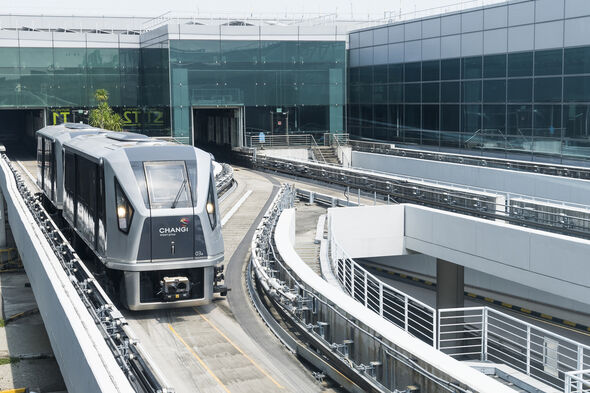
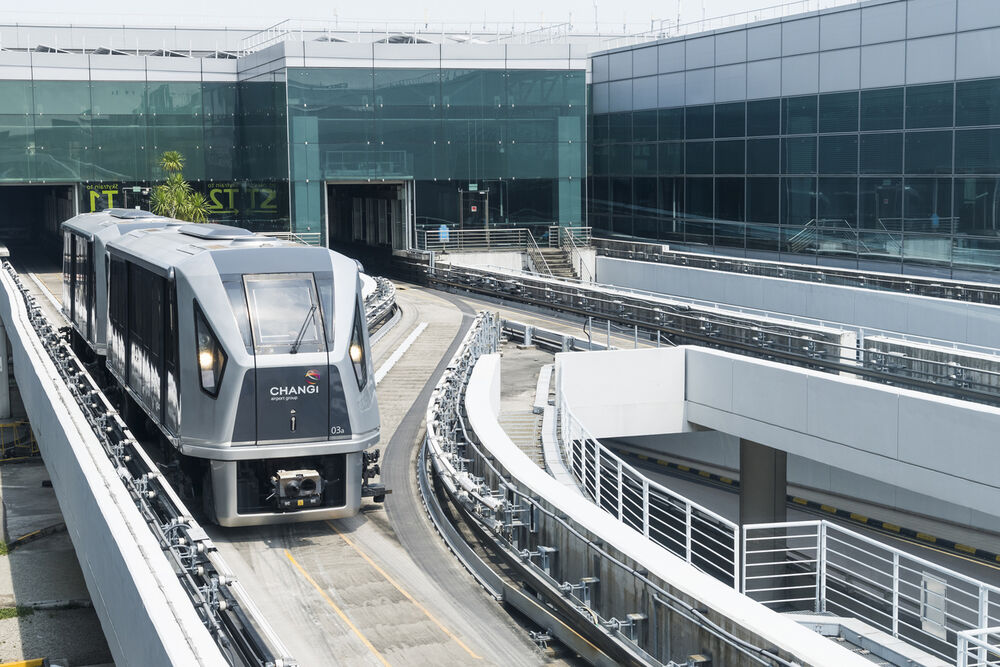
You can find such airport shuttles in places like Singapore and Hong Kong, for example. Driverless Ubers—in collaboration with Waymo—are already operating in various U.S. locations, such as Dallas and Atlanta, and China has autonomous buses, for instance in Jinan.

Partition
Inappropriate behavior can take many forms, Bazilinskyy notes. He and his colleagues have already made international headlines—including the BBC, Wired and The Times—for their background research on sex in shared self-driving taxis.
Bazilinskyy laughs awkwardly when we bring it up. “That aspect got a lot of publicity, but the research covers a much wider scope. Of course, having sex in the back seat of a shared taxi isn't desirable.”
“Imagine sitting there with your young child when the man opposite you starts pleasuring himself. You’d want that situation to stop immediately. But how?”
The researcher can envision a few options: “a partition that automatically rises to separate the passengers. But even that could cause problems—for instance, if you’re sitting next to that man with a child opposite you. Another option could be for the vehicle to stop immediately, the doors to open, and the police to be called.”
Pornhub
Some colleagues ‘had’ to spend hours watching such behavior on Pornhub—since some creators like to film themselves having sex in forbidden locations—to understand what happens and how such situations arise, in order to devise AI-based solutions.
“But we also studied different scenarios. For example, drug use where dangerous needles are left behind, or intoxicated people becoming violent toward others. Or the introduction of weapons, creating a high-risk ride.”
Unexpected behavior
Bazilinskyy is a realist. “People simply do unexpected things in unexpected places, especially when they’re under the influence. You have to come up with a solution for that before putting self-driving vehicles on the road.”
Admittedly, there is little experience with this in the Netherlands so far, aside from a trial running since 2025 in Rotterdam, where a self-driving bus travels from Meijersplein metro station to Rotterdam The Hague Airport.
“China and the US are much further along in this regard. Yet, there are still relatively few solutions for this specific problem,” Bazilinskyy notes.
Legislation
Having a car or bus intervene is one thing, but shouldn't there also be new legislation for this? After all, these are new situations that did not exist when the older laws governing public transport were drafted. Bazilinskyy believes that new legislation could certainly help, but that it is not a cure-all.
“Strict laws only have an impact after an incident has occurred. We want to prevent the situation from arising in the first place, or at least put a stop to it as quickly as possible.”
In addition to legislation governing human behavior, legislation is of course also needed to regulate future solutions of the kind Bazilinskyy is investigating.
Development
Bazilinskyy believes the reason the US and China are much further ahead with self-driving vehicles is that their regulations regarding AI development are more lenient. “We do have an AI Act here, but we don't really have an AI industry. That is ironic, isn’t it? We have Mistral, of course, but on an international scale, they aren't exactly major players.”
He also expects that the EU will regulate the use of AI in scientific research only stricter in the near future. “That will make it difficult to keep pace with China and the US.”
Conquering the world
Despite the risks associated with self-driving taxis and buses, he recognizes that this form of transport represents the future. “There is a major shortage of drivers, and the data show that self-driving vehicles are safer than human drivers.” A recent study in Nature Communications supports this.
It shows that autonomous vehicles are generally involved in fewer accidents than human-driven cars. However, there are caveats: the self-driving cars in the study performed less well when making curves and in dark or twilight conditions. And the majority of the public expected to use them, do not yet feel safe in a self-driving car or bus.
“However, we must work hard to quickly put a stop to the new types of risks caused by passengers”, Bazilinskyy circles back to his research. “After all, this mode of transport is evolving rapidly and will become commonplace in the Netherlands sooner than most people think.”
Discussion