- The University
- 7 min
- 08/10/2026

Cheap Chinese chemicals put Dutch industry under pressure
If we don’t make choices now, a choice will be made for us
Recent research by Rabobank shows that low-cost Chinese chemical products are increasingly displacing the domestic industry, leaving our country vulnerable and dependent. “We do see these dependencies, but we tend to look the other way,” acknowledges chemist Mark Boneschanscher of TU/e.
The Netherlands is among the European countries most reliant on Chinese chemicals. While competitive pressure was long concentrated on consumer goods, it is now shifting toward industrial chemicals and intermediate products—a trend with significant implications for the Netherlands.
Direct imports from China account for 3.6 percent of all chemical products used by Dutch companies; when indirect supply chains are included, that figure rises to 5.3 percent. This makes the Netherlands significantly more dependent than, for instance, France. While these percentages may seem low, China already holds a monopoly on many substances.
To draw a parallel with the automotive industry: if you manufacture a car yourself but the engine must come from China, that engine represents only a small percentage of the vehicle—yet it is an essential component. The same applies to the chemicals that serve as raw materials for a vast array of products manufactured in the Netherlands.
Geopolitical risk
This dependency is not merely an economic issue; it also poses a geopolitical risk. In recent years, China has imposed export restrictions on materials such as gallium, germanium, and certain graphite products. A similar restriction on basic chemicals would hit the Netherlands hard.
Basic chemistry is the branch of the chemical industry focused on producing simple, large-scale chemical substances that serve as building blocks for more complex products, such as plastics, medicines, paints, and cosmetics.
Strategic risks
While cheap imports lower costs for companies in the short term, they leave the Netherlands vulnerable to geopolitical tensions or export restrictions. In such a scenario, the resulting economic loss would outweigh the gains previously realized from cheap imports.
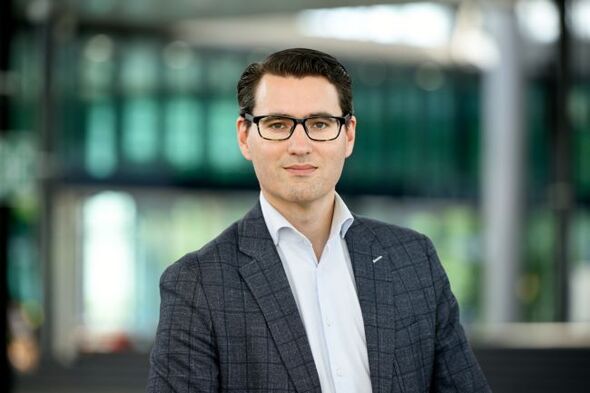
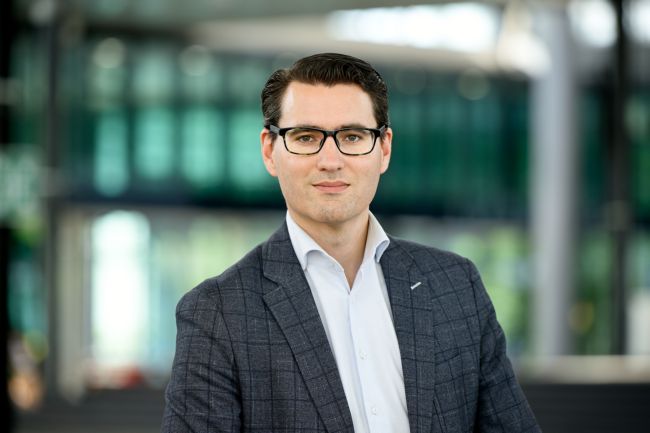
“That is where the tension lies for me: between short-term gain and long-term loss,” acknowledges Mark Boneschanscher, Dean and Professor of Sustainable Chemistry Innovations at TU/e.
“You might reap an economic benefit today from a cheaper product from abroad, but in doing so, you simultaneously dismantle something in the Netherlands that you might desperately need later on.”
Displacement of Dutch production
If basic chemicals—essential for broader industrial supply chains—shift to China, the Dutch manufacturing industry weakens. Rabobank calculated the impact: if chemicals from China become 10 percent cheaper, Dutch production drops by 7 percent.
Rabobank also modeled what would happen if Chinese basic chemicals became even cheaper. A 10 percent price drop leads to a 7 percent decline in Dutch basic chemical production. This decline comes on top of an already significant contraction: since 2022, the Dutch chemical sector’s output has fallen by a quarter.
Political concerns
If Europe loses too much production capacity, we become increasingly dependent on China for products essential to our economy and sustainability efforts. CDA members Judith Bühler and Joris Lohman recently submitted parliamentary questions regarding this issue.
Anglo-Saxon vs. Rhineland models
“It is also a philosophical question: what do we actually expect from a company in the Netherlands? You can reason primarily based on shareholder value and financial returns, which drives a focus on short-term profit.”
“This Anglo-Saxon model is dominant in the petrochemical industry. Alternatively, you can take a broader view based on the value a company creates for employees, the region, and society. We often associate the latter with the Rhineland model, with BASF and DSM serving as prime examples.”
Crossroads
The Dutch chemical sector is currently at a crossroads: do we opt for short-term gain or long-term resilience? And how much production capacity can the Netherlands afford to lose?
Boneschanscher considers this a complex question. “The chemical industry is highly integrated. If you specialize in high-end fine chemicals but become dependent on, say, China for virtually all your building blocks, you increase your supply chain dependency and lose vertical integration.”
“The more steps in the chain you lose, the less efficient you become; your margins shrink, and you are more likely to lose your knowledge advantage.”
“You don’t have to carry out every step of every supply chain in the Netherlands; that isn’t realistic. However, supply chain integration fosters knowledge exchange, speed, and economic benefits. If you remove the foundation, you shouldn’t be surprised when the end of the chain eventually follows suit.”
Battery market
China demonstrated this itself with the battery market. “For a long time, the prevailing view in Europe was: let the extraction and processing of raw materials happen elsewhere, while we handle the high-tech segment—and the associated margins—such as selling electric cars. But it’s not that simple.”
“Whoever controls processing, materials, and large-scale production builds up knowledge, infrastructure, a supplier base, and a skilled workforce. That makes the step to the next part of the value chain increasingly smaller.”
This is how China built a highly integrated battery value chain. Moving from raw material processing to battery cell production, integration into battery packs, and finally the manufacturing of electric cars proved to be a small step. “And yet, here we are, surprised that China is ‘suddenly’ taking over the international electric car market,” says Boneschanscher, shaking his head.
Cars
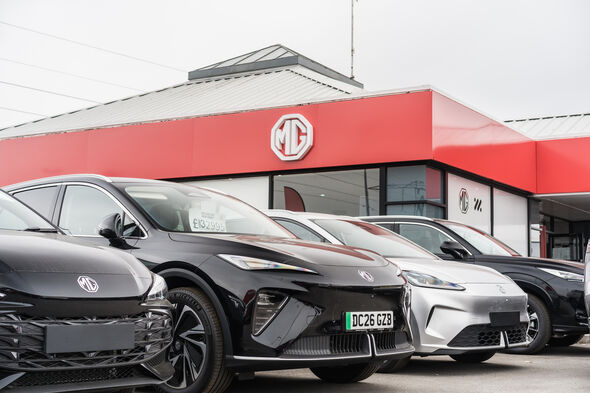
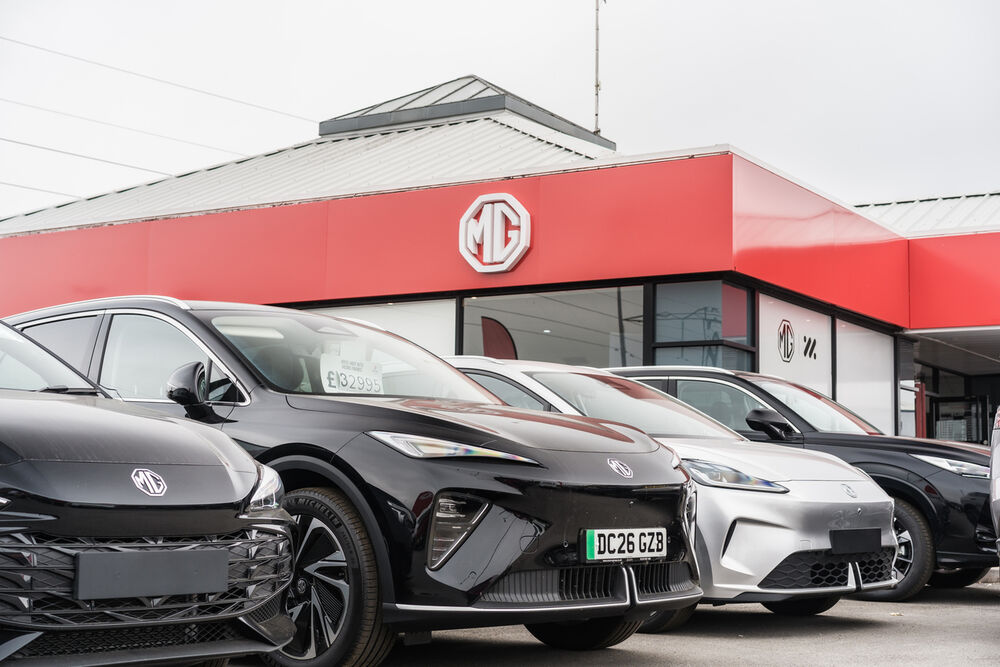
“I recently attended a car show in Amersfoort and saw a massive surge of Chinese brands: Firefly, NIO, BYD, Dongfeng,” Boneschanscher notes. “To my mind, Tesla was the only real competitor left.”
“The Chinese vehicles were more advanced and cheaper than the electric models from BMW and Mercedes. I even saw a Huawei car online recently that featured a home cinema system. European cars are simply being pushed out of the market now.”
“That is precisely why I object to the idea that basic chemicals are a low-margin business and can therefore just be shifted to China,” the chemist says, circling back to the original question.
Realistic
“At the same time, I am realistic: I know we cannot continue producing everything in the Netherlands. The raw materials situation here has changed, too, and that impacts our chemical industry.”
Groningen gas is no longer available, and electricity prices are linked to the price of gas. “That makes it difficult for energy-intensive basic chemicals production to remain competitive here. Consequently, we can no longer handle all basic chemical production; that requires a lot of cheap energy.”
Eindhoven Grid Lab
It does not follow, however, that solar or wind energy are too expensive or cannot offer a solution. “On the contrary: cheap renewable electricity is actually a key part of the solution,” notes Boneschanscher.
“However, a chemical industry that operates 24 hours a day requires more than just installed wind and solar capacity. You need sufficient grid capacity, flexibility, storage, and sustainable molecules like hydrogen.”
TU/e is conducting research into how to generate enough energy for these types of industries and create a grid infrastructure capable of reliably transporting all that renewable energy. The new Eindhoven Grid Lab was opened last week to support this work.
Making choices
“We need to have a proper, substantive discussion here in the Netherlands. We know we can no longer keep all basic chemical production here, but we still haven't decided what we *will* do instead.”
According to Boneschanscher, this reflects the political climate in the Netherlands, where too few strategic choices are being made. It is a point that former Philips CEO Hans de Jong also raised last September at a conference on technological resilience organized by the engineering association Kivi.
“If we don’t make a choice, a choice will be made for us,” the executive stated at the event, speaking in a personal capacity. The Scientific Climate Council also produced a report on this subject, titled ‘Kiezen of Verliezen’ (Choose or Lose). The issue is gaining traction, yet only the political establishment can truly make these choices for our country. So why doesn't it?
Boneschanscher doesn’t have an immediate answer to that either. “What I do see is that complex industrial debates quickly become very binary: for or against a specific industry, for or against subsidies, the economy versus the climate. Yet the interesting questions actually lie somewhere in between.”
“What kind of industry do we want to have in twenty years? What infrastructure goes with that? What expertise must we retain? And what are we willing to invest to achieve that? I would like to see that substantive assessment take center stage.”
STEM professionals in government
The Kivi conference also highlighted a prevailing sentiment that too few STEM professionals work in government—whether in the civil service or in politics. IT expert Bert Hubert issued an urgent plea to raise awareness: more STEM expertise is genuinely needed to ensure there is sufficient background knowledge to make well-informed decisions regarding our position in knowledge and technology and our resilience.
Boneschanscher believes this indecision also stems from a psychological factor: “We would rather not face the reality. We know about ‘ill switches’ in devices and vehicles from China, yet we continue to buy them anyway.” “Take the railway sabotage on Prinsjesdag (State Opening of Parliament, Ed): how much did we actually hear about it afterwards, even though the fact that it could happen so easily was truly serious?”
“We also find it difficult to face up to the increasing sabotage and hybrid actions by Russia within NATO territory. It is simply human nature to look away from things that are uncomfortable.”
Entire value chain
Boneschanscher advocates for fully covering a few strategically selected value chains rather than just manufacturing end products. “We need to determine which end products are most important for our earning capacity and knowledge position, and then identify the basic chemical processes we need to retain for them.”
“That way, we would have the entire vertical value chain for that product within the Netherlands, making us less vulnerable.” Examples of potential options, in his view, include plastics, advanced materials, or segments of the pharmaceutical supply chain.
It is effectively too late for the battery market as a whole; China is too far ahead. “With the current generation of lithium-ion batteries, China has built up such a massive scale, knowledge base, and integrated production capacity that competing with them is no longer feasible.”
The situation is equally challenging for polymers—plastics—as retaining them here requires maintaining the organic chemistry sector in the Netherlands. “Current basic chemistry relies on oil and large, integrated petrochemical clusters; yet that very chain is under immense pressure because China has already invested heavily in it. My concern is that we are phasing out the old foundation faster than we are building a new one.”
State Policy
Another difference between the Netherlands and China—and a reason why the Chinese are successfully taking over the chemical industry—lies in the way the two countries are governed. “The political landscape in the Netherlands is extremely fragmented, and policy here lacks long-term consistency.”
Inaugural lecture
Upon assuming the role of Dean of the department of Chemical Engineering & Chemistry, Boneschanscher also became a full professor. His inaugural lecture will take place on November 12, and in it, he will address these issues surrounding the chemical industry in the Netherlands. Those wishing to attend the lecture in the Blauwe Zaal (Auditorium) can register here.
Discussion