- The University
- 4 min
- 14/10/2026
KNAW calls for legal protection of academic freedom
Two reports examine the threats to academic freedom and freedom of expression
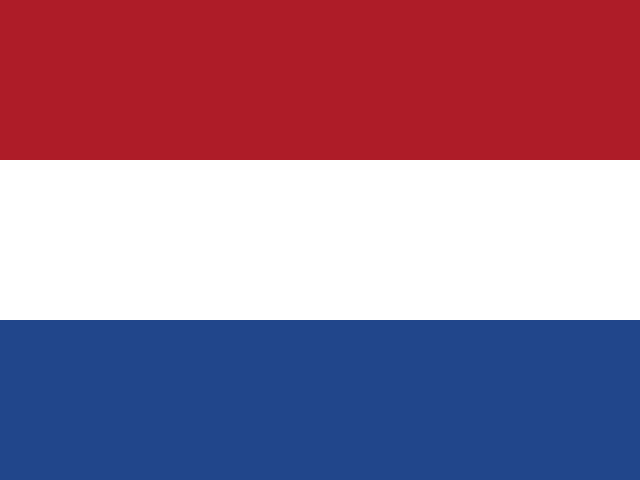
Academic freedom needs stronger legal protection, according to the Royal Netherlands Academy of Arts and Sciences (KNAW). “The political climate in Europe and the United States is a warning sign.”
Should scholars be free to follow their intellectual curiosity and share their ideas openly with students? Should they be able to collaborate with colleagues around the world, or should there be limits on such cooperation?
The previous Dutch government asked the Royal Netherlands Academy of Arts and Sciences (KNAW) to advise it on academic freedom — the freedom to teach and conduct research on subjects of one’s choosing. How secure is that freedom, and what threatens it?
The government had another question, too: what about freedom of expression in academia? Do students and faculty still feel comfortable speaking their minds?
Two questions, two reports, two conclusions. The KNAW argues that politicians should protect academic freedom through legislation. Freedom of expression, by contrast, is not something politicians should interfere with.
‘Not adequately protected’
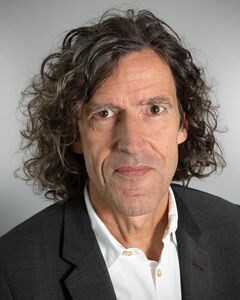
André Nollkaemper, a professor of public international law, is the lead author of the report on academic freedom. In practice, he argues, that freedom is not adequately protected, partly because of shortcomings in the law.
Current legislation merely states that academic freedom must be “respected” at universities and universities of applied sciences, without clearly defining what that means. The Dutch Constitution, meanwhile, makes no mention of academic freedom. That is a significant difference from freedom of expression, Nollkaemper explains, which is explicitly protected by the Constitution and European treaties. Freedom of expression therefore enjoys stronger legal safeguards.
Why does academic freedom suddenly need legal protection when it did not in the past?
Nollkaemper: “Comparisons across Europe show that the situation in the Netherlands has become quite concerning. The space for free scientific inquiry is limited. We are also seeing some researchers targeted by hate campaigns. On top of that, the political climate in Europe and the United States is a warning sign. We now have a better understanding of how important academic freedom is, as well as what can happen when political majorities shift. That is why we need to ask ourselves whether we have adequately safeguarded it. We believe we have not.”
Do you also see potential threats to academic freedom in Dutch politics?
“There was already proposed legislation on research security that would have imposed significant restrictions. The government wanted to screen students and researchers before allowing them to come here. Legislation on internationalization and the language of instruction also would have restricted the freedom of higher education institutions. For now, however, those proposals have been shelved.”
What do you expect legal protection for academic freedom to achieve? Will it also lead to lawsuits?
“There is indeed a risk that more people will invoke their academic freedom, but that is the price you pay for legal protection. I don’t have a crystal ball, but perhaps a lawsuit will arise if a university researcher is barred by university administrators from collaborating with the fossil fuel industry or a Chinese university. Or perhaps someone will want to teach a controversial theory, for example on climate change or migration. Recently, a scholar in Ghent came under fire for writing about racial differences in intelligence. Issues like that could lead to lawsuits over academic freedom.”
Should the courts be left to decide where the limits of this freedom lie?
“It does not always have to come to a lawsuit. We can start talking to one another early on: what falls within the scope of academic freedom, and what are its limits? You cannot simply teach anything and everything, for example, because students are enrolled in a particular degree program with its own structure and curriculum.”
Our academic freedom can conflict with that of others. If, for example, we collaborate with Israel or China, what does that mean for the academic freedom of Palestinians or Uyghurs?
“Ultimately, each case has to be assessed on its own merits. You may conduct research that has nothing directly to do with oppression, but the closer it gets to that issue, the more reason there may be to reconsider the collaboration. That is a decision for the academic community.”
You also identify the growing dependence on private-sector funders as a threat to academic freedom. New legislation is unlikely to change that.
“When research funding declines, the pressure to find outside money increases, and that creates a risk: researchers may have less freedom to choose their own research topics. They need to remain vigilant about scientific integrity. How do you communicate your findings to the public? You are not a helpless victim; you are an active participant. But things become more difficult as the space available to science shrinks.”
The defense sector is now investing in research and innovation, and universities are eager to get involved. Does that mean they are giving up their academic freedom?
“Additional funding is not, in itself, a threat to academic freedom. It depends on how the collaboration is structured. In every case, researchers’ freedom must be protected. They can certainly work with the Ministry of Defense to formulate a research question, but how they carry out the research should be up to the scientists. And how transparent will they be allowed to be? They must also have the freedom to say no.”
Perhaps government officials think that whoever pays gets to call the shots.
“I hope these reports will give them pause. Scientific research must be free, which means that whoever pays for it cannot dictate its content. The reports do come at a critical time, including for science itself. Academic freedom also carries a responsibility to safeguard it properly.”
You could argue that you should be careful what you wish for. Could legally defined academic freedom become a weapon used against a scholar who discusses something outside their field of expertise on a talk show?
“You should not interpret it too narrowly. What counts as someone’s expertise? Research often means not having all the answers yet. Moreover, scientists are trained to look at problems through a scientific lens. There is no reason they cannot sometimes use that perspective to comment on fields other than their own.”
Freedom of expression



The KNAW has also published a report on freedom of expression in higher education and research. The government should interfere as little as possible in this area, argues the report’s lead author, Ineke Sluiter, a former KNAW president and professor of Greek language and literature.
Freedom of expression is a cornerstone of a free society. Isn’t that self-evident?
Sluiter: “We could indeed have wrapped this up quickly, but freedom of expression keeps raising questions. This is not the first report on the subject, and it will not be the last.”
Why should politicians stay out of it?
“Freedom of expression is already well protected by the Constitution, other legislation, and the European Convention on Human Rights. Scholars also have a code of conduct requiring them to be as transparent as possible about their role in public debates. That is sufficient. If you start defining freedom of expression more precisely through new rules, you are effectively restricting it.”
So what can politicians do?
“That is precisely the problem: politicians want to do something. They often react to individual incidents and want to project an image of decisive action. But restraint also requires a certain kind of courage. When controversies arise at universities, politicians should more often say, ‘This is not for us to decide.’”
Controversies on and off campus often revolve around sensitive issues, such as collaboration with countries like China and Israel. Surely this report will not make those controversies disappear.
“No, but ideally, freedom of expression will allow the academic community and university governance bodies to engage in genuine debate about such issues. University administrators, like politicians, should exercise restraint and, at the very least, communicate transparently. There will never be unanimity, but after a debate, people will have a clearer sense of where there is support.”
In the report, you tell students that the classroom should be a ‘brave space.’ What does that mean?
“In the classroom, students may sometimes encounter theories they find objectionable, and that is part of the learning process. They are there to learn, and that means engaging with subjects and viewpoints they may not have encountered before. If that cannot happen in education, where can it happen?
“Students must respect one another’s space and viewpoints. Most people can manage that perfectly well. In fact, that applies to virtually all the issues we discuss: the vast majority of things go well. Almost all debates and lectures proceed without incident.”
Emotions can nevertheless run high, for example when discussing slavery or climate change. Is that a problem?
“No. These subjects are studied precisely because they are sensitive. In academia, there is almost always some degree of personal or intellectual commitment. People often assume that applies only to the social sciences, but if you study biodiversity, for example, it is also because you recognize its value. In teaching and research, however, you must ensure that your analysis is not driven by emotion.”
Discussion