- Student
- 4 min
- 07/09/2026

From the drawing board to the construction site
TU/e student spent four weeks working as a builder in Bali
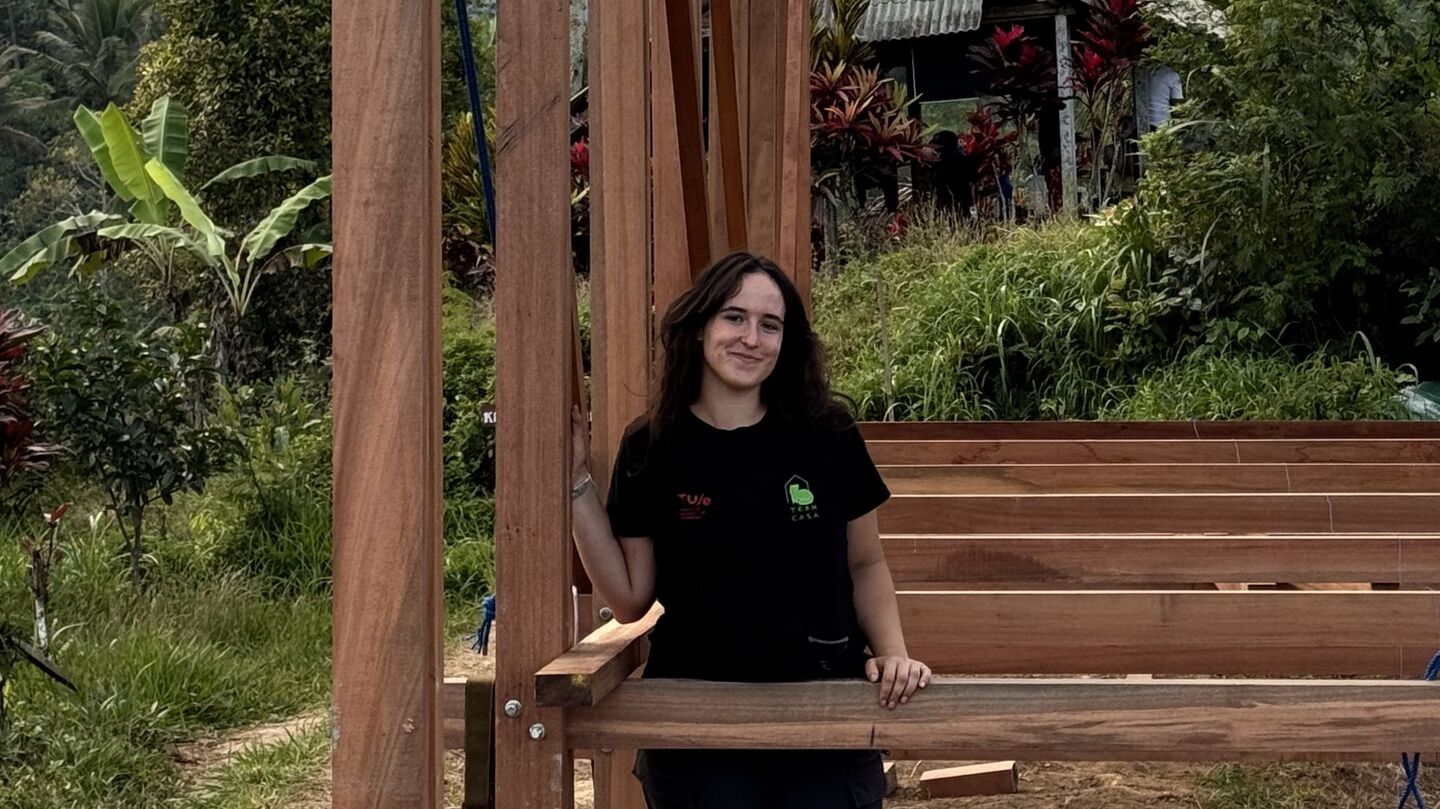
Raising a nearly eight-meter-tall structure by hand, with a group of students with no construction experience and without machinery. TU/e student Kaja Amidžić helped build a community space in Bali. For her, it was a lesson in what happens after an architect puts a design on paper.
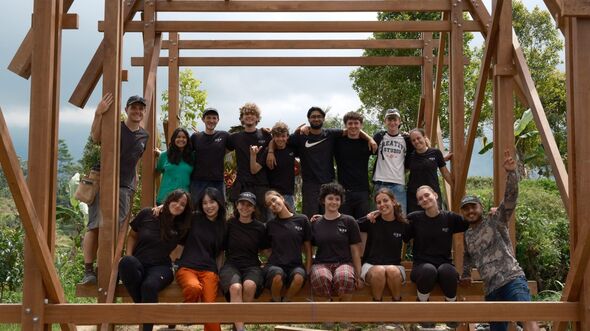
At six in the morning, Amidžić got up. A little later, she headed to the construction site in the village of Babahan, on the island of Bali, with a group of thirteen students. They started with a briefing: What needed to be done that day, and who would do what? Then they got to work.
This was her daily routine. In Indonesia, Amidžić helped build a community space for the local community and tourists. The project was organized by a studio from the United Kingdom, and the group consisted mainly of architecture students from British, Irish, and Scottish universities.
Amidžić ended up in Bali by chance. Through a friend, she came across the project and immediately became enthusiastic. She applied for financial support from TU/e, but paid for her own plane ticket.
Firsthand experience
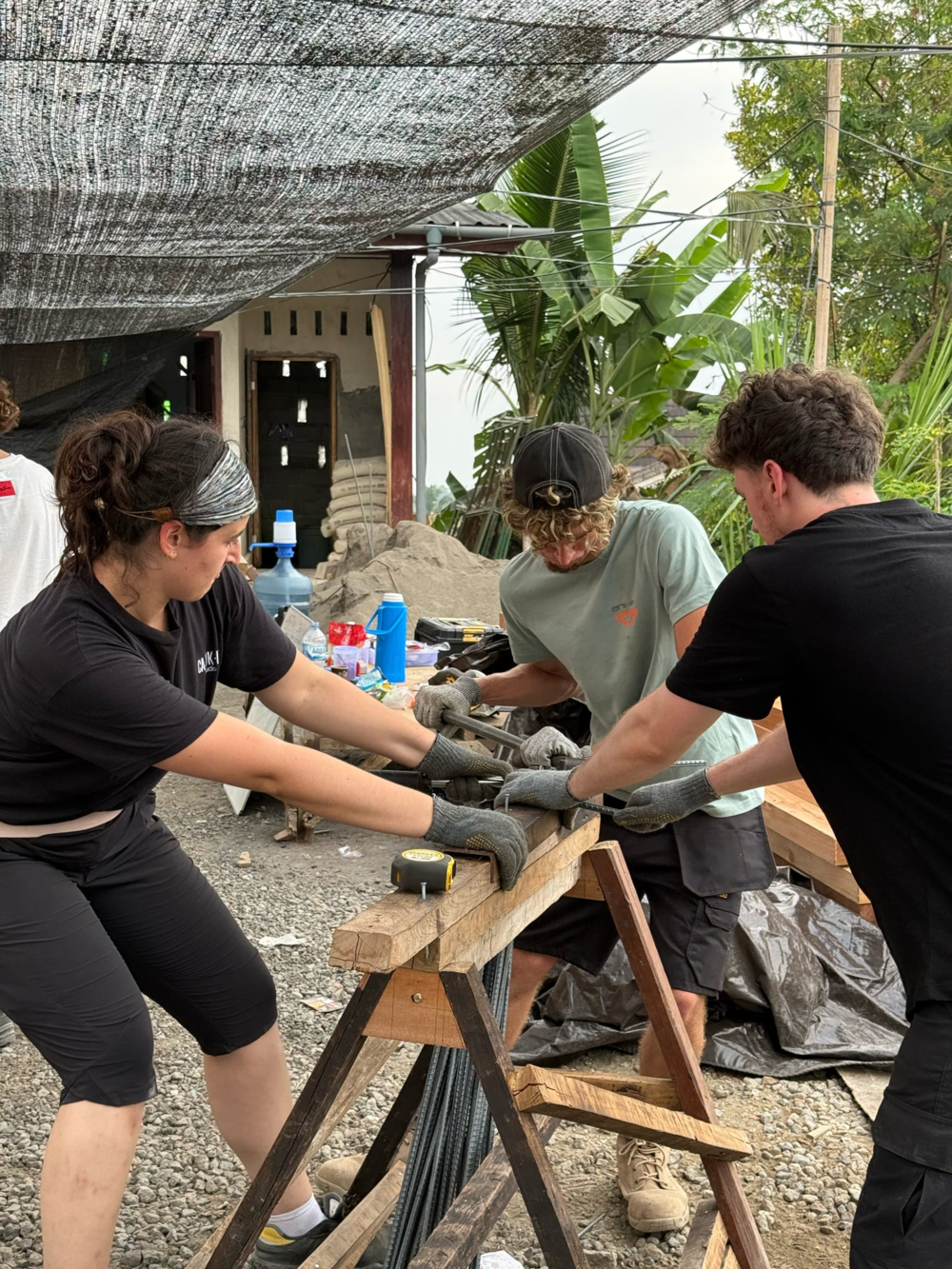
For Amidžić, working on a construction site was a very different experience from studying behind a desk. The work was physical and demanding. In the remote village, there was no machinery available, and most of the students had no experience on a construction site.
Yet that was precisely why Amidžić had gone to Indonesia. The bachelor’s student at TU/e’s Department of Built Environment did not just want to learn how buildings are designed in the Netherlands, but also wanted to experience what happens when a design actually has to be built.
“I think we have one perspective here at TU/e on how architecture works,” says Amidžić. “But I believe the best way to learn, is to go somewhere and experience it firsthand.”
Learn first, then build
Still, Amidžić initially found the plan rather remarkable. “At first I thought: can you really just send a group of amateurs to a construction site to build a community space? What if the building collapses after we leave?”
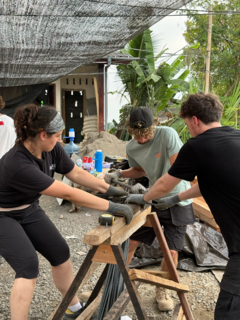
Fortunately, a lot had been arranged to ensure that the project could be carried out safely. First, insurance was sorted out. Then came several days of training. “They took us through every tool three or four times, so we knew how to use it.”
Many of the materials and tools came from the local community. “We learned that trucks and concrete mixers aren’t available everywhere. You have to do a lot of things by hand and work with whatever is available.”
Leader of the day
Fortunately, the students were not on their own—four experienced leaders supervised the group. Every day, one student was appointed leader of the day. That person kept an eye on whether everyone was doing their work properly and could turn to the supervisors for advice.
“You have to think about how things should be put together properly and how you actually get them up.” Some of the beams, for example, were so large that one student could not lift them. “You needed two people to carry one beam. And we had at least sixteen of them in one structure.”
Mixing concrete in the rain
The weather didn't always cooperate, either. “For the first two weeks, it just rained, and we worked in the mud,” Amidžić says.
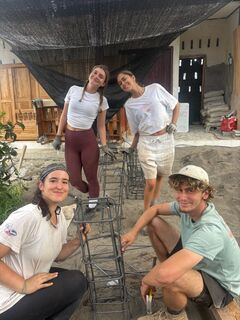
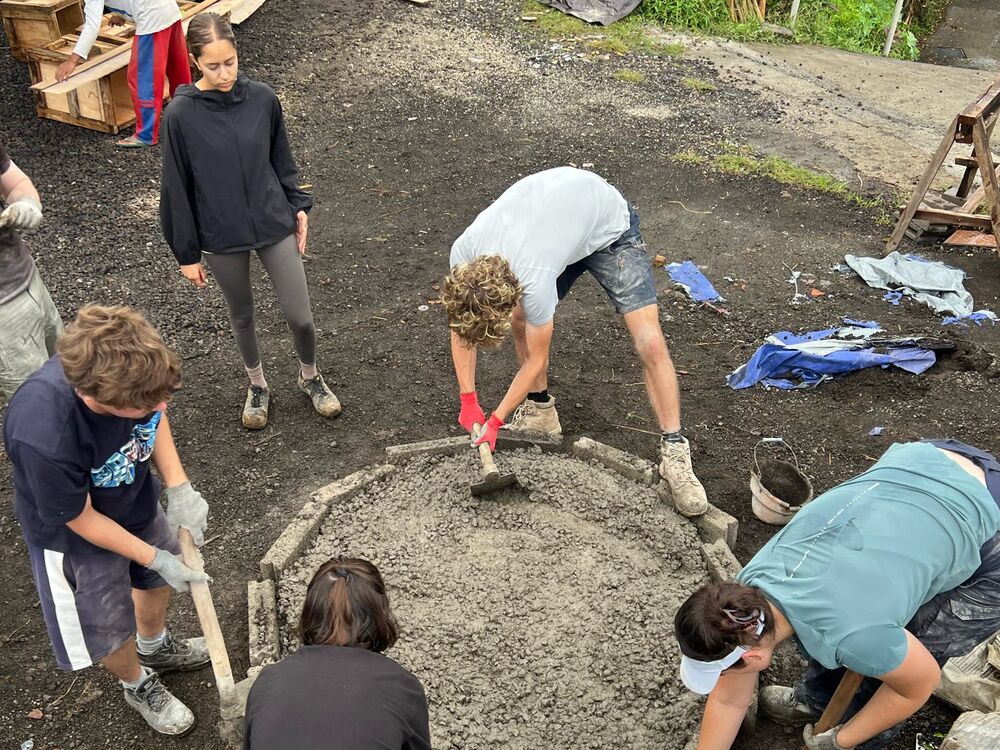
She found mixing concrete one of the toughest tasks because it had to be done by hand, without a concrete mixer. “We put stones in a circle and added all the ingredients,” she explains. “Then you had three or four people using a kind of tool to push and pull the mixture back and forth until it was properly mixed.”
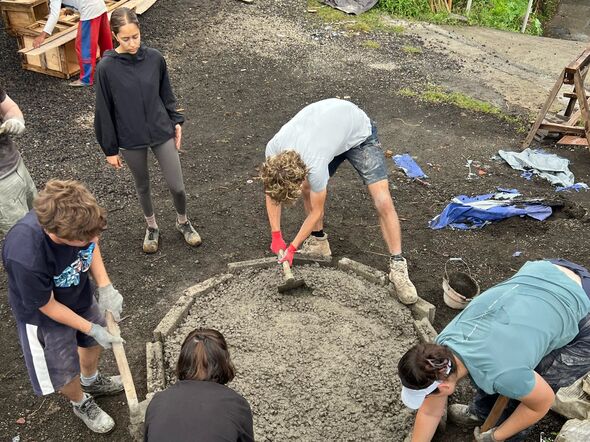
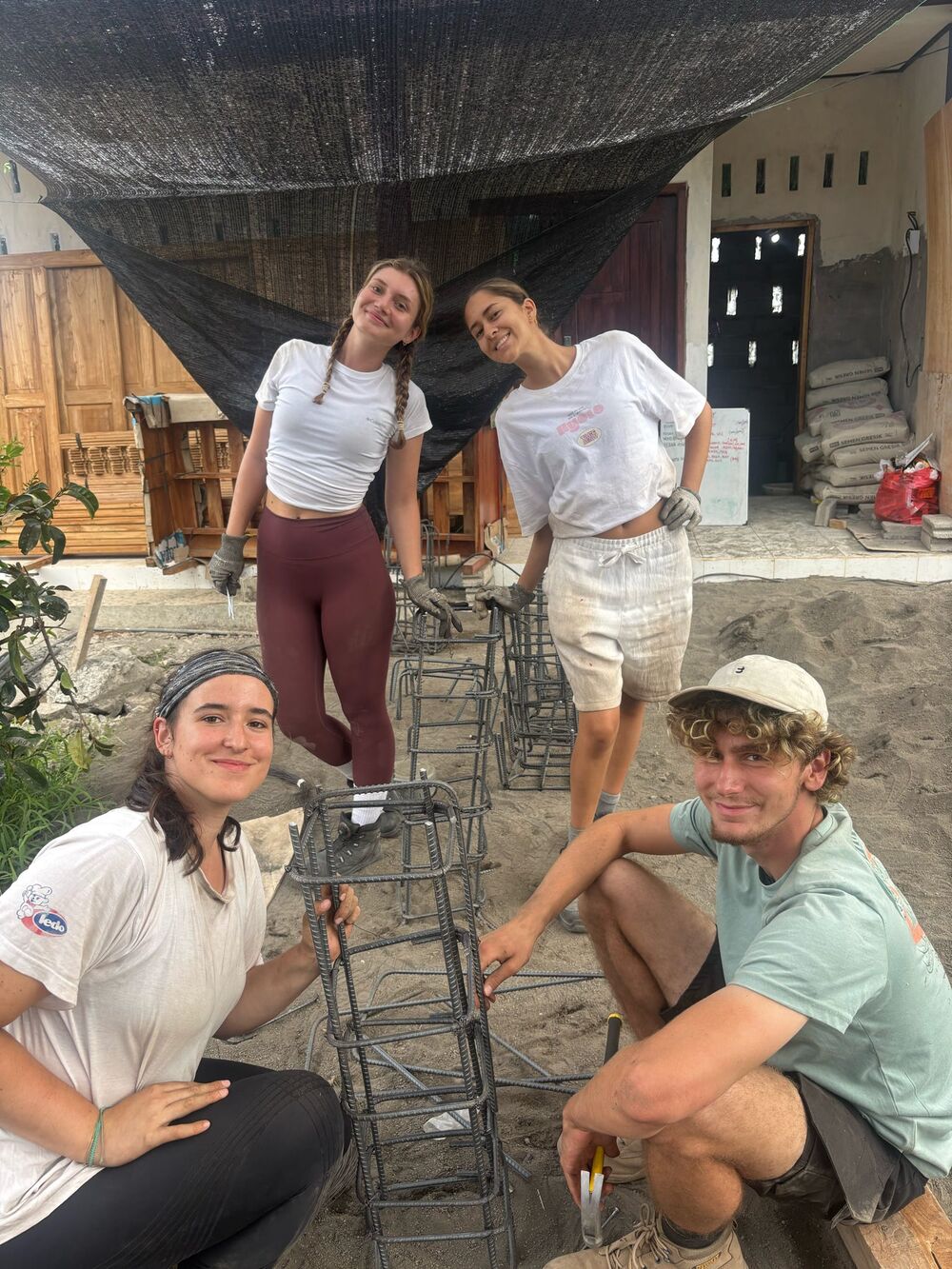
Another group then carried the concrete to the holes for the foundation. This was a job that required everyone to pay close attention to one another. Rebar reinforcement cages were placed in the holes: structures made of reinforcing rebars fastened together to strengthen the foundation.
“If someone makes a mistake and doesn’t hold one of those reinforcement cages properly upright in the hole before the concrete is poured, the foundation can end up crooked or twisted. Then it won’t work properly.”
In the morning and afternoon, the students switched tasks, partly because some of the work was very repetitive and physically demanding. After the workday, they returned to the local families they were staying with. During the four weeks, the students stayed with different families on the same street.
“If someone said stop, you stopped”
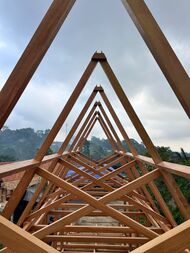
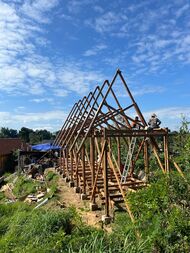
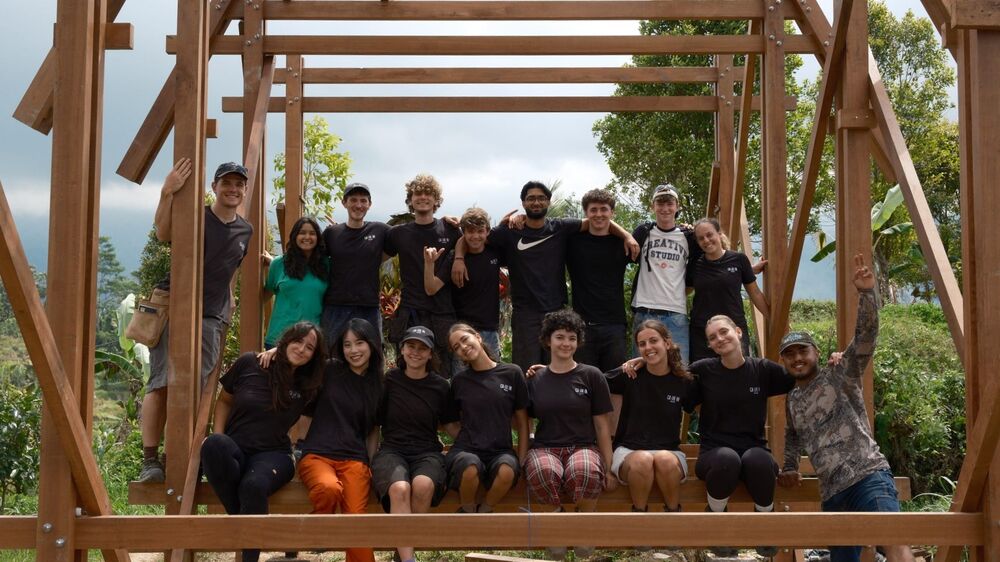
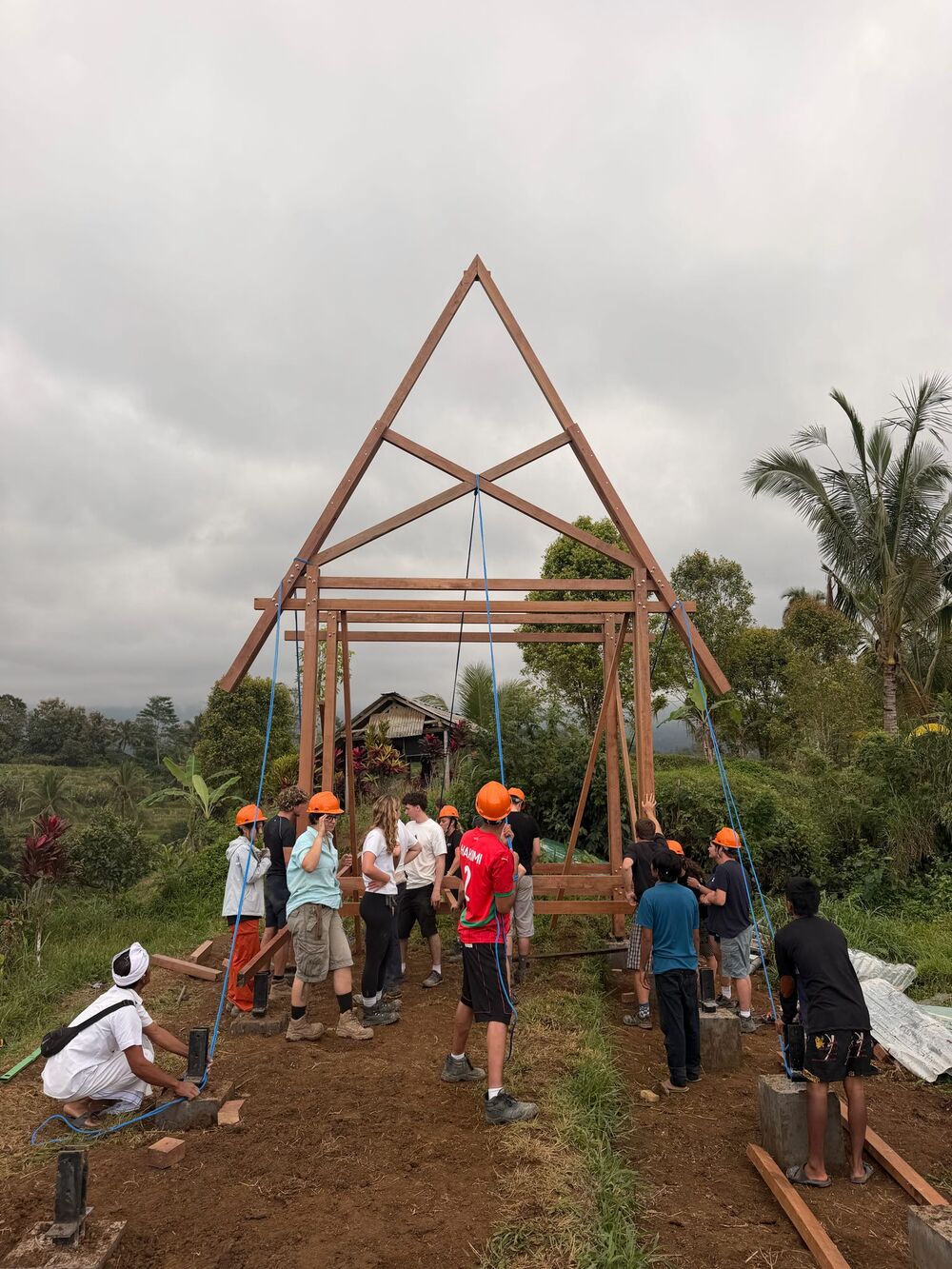
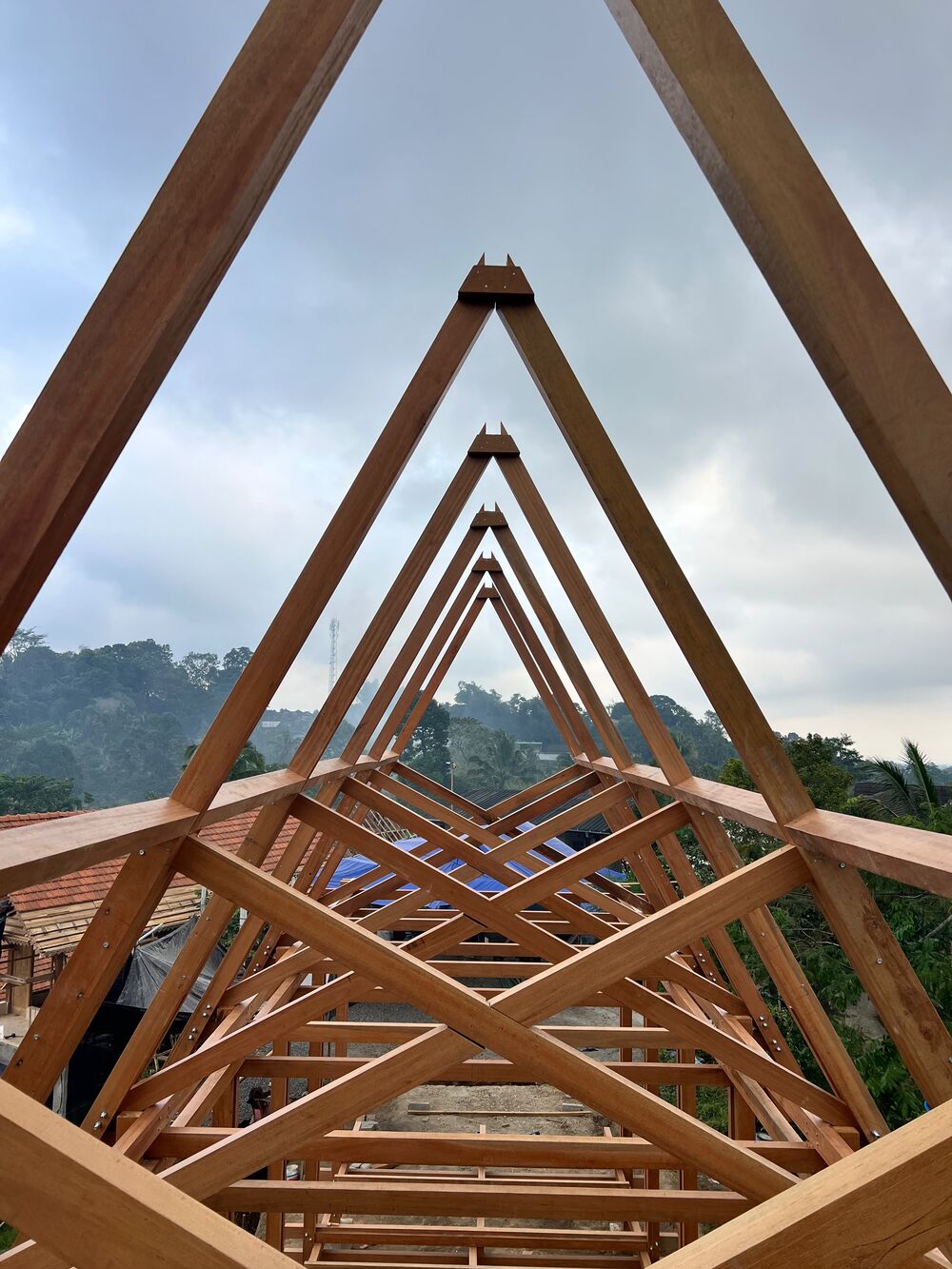
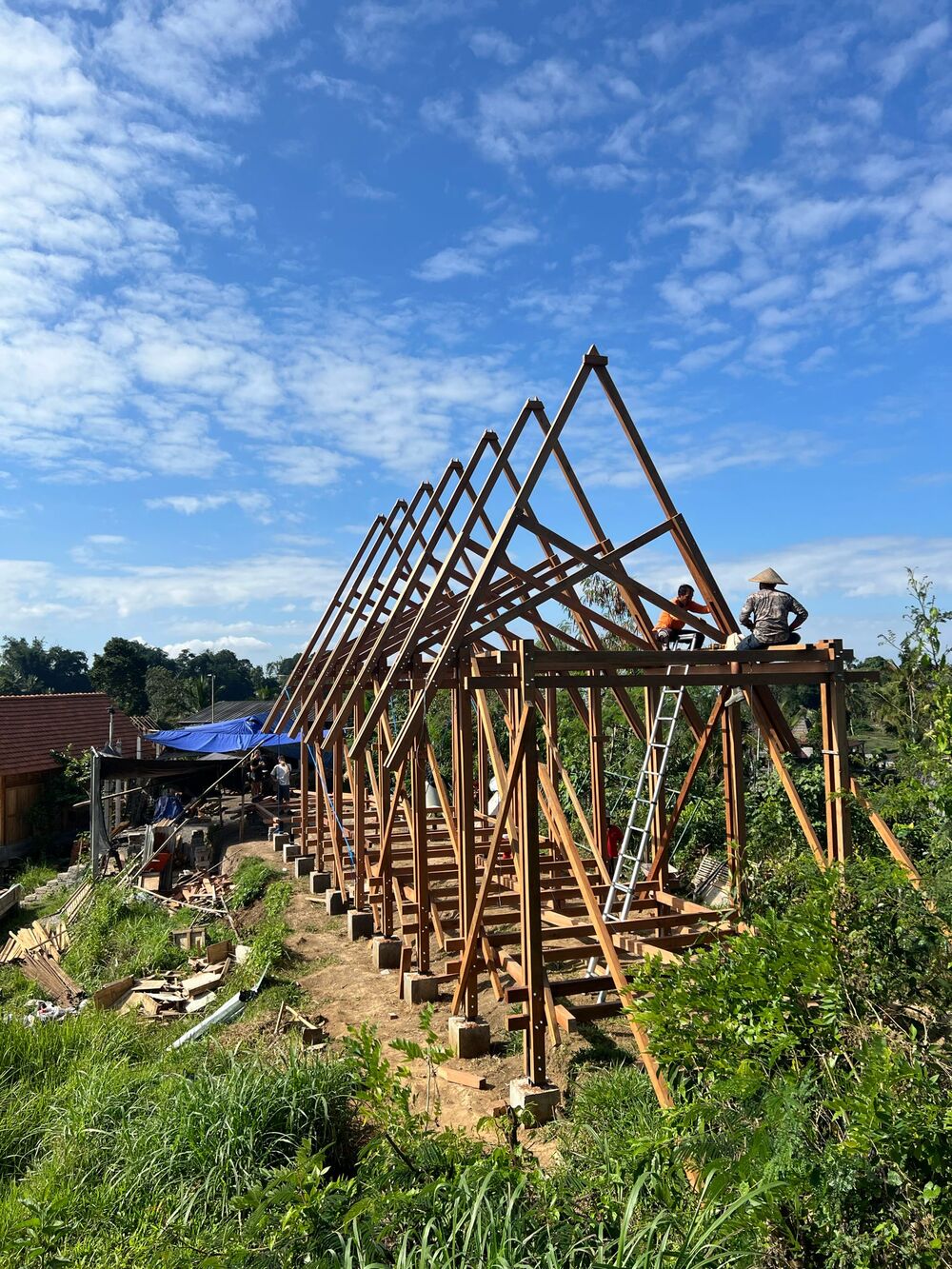
One of the most challenging parts came when the main structure had to be raised. The students had built ten frames. To raise them, they had to pull seven- to eight-meter-tall structures upright by hand. One person couldn't lift a beam like that; the students had to work together to get the structure into position.
The first attempt was difficult. “You don’t know what to do, you don’t know how to pull, who does what,” Amidžić says. “So first we had to come up with a plan.”
Once that approach was clear, things went better. “You know where your position is, what you have to do, and that’s it.”
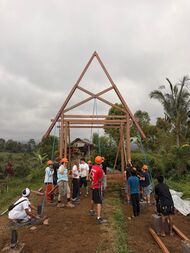
Safety also played an important role. The students wore helmets and gloves. “But if something heavy falls on you, a helmet isn’t going to help you.” That is why teamwork was essential, she says. “If one person says stop, you stop. Period.”
That way of working together wasn't only necessary when raising the structure; it applied to the entire project. “If you don’t work well as a team, it doesn’t work.”
From a line on paper to a building
The experience changed the way Amidžić looks at design, above all. “As an architect, you just draw a line on paper, but you don’t think about the fact that someone ultimately has to build that line,” she says. “I’ve learned that if you don’t think a design through properly, it can cause a lot of problems later on.”
In her studies, Amidžić also learns to think about how a design can actually be built in practice. In Bali, this way of thinking became very concrete. “You have to be pragmatic. Will this structure be difficult to build? Then maybe I can make a compromise and make it a little easier for the builders.”
She had also deliberately chosen the project in Bali because of its focus on climate-responsive design. “The climate there is very extreme and changes depending on the season. If your design doesn’t take that into account, it won’t work.”
Blisters and experience
After four weeks, the building was not yet finished. The foundations had been installed, the posts for the wooden structure were in place, and the ten frames of the main structure had been built. Construction continued after the students left.
Amidžić returned to Eindhoven with blisters on her hands, but above all with an experience she could not have gained so easily in the classroom.
She regrets that she did not find an opportunity like this through her program. During the project, she noticed that British students make use of opportunities like this more often.
“I think we need to take architectural education more outside,” she says. “We learn in classrooms, and that’s great. But I think we’re missing a bit of fieldwork in architecture.”
A friendship for life
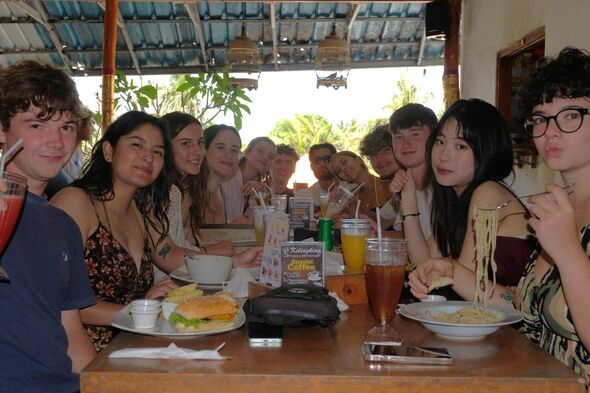
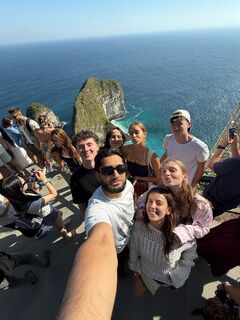
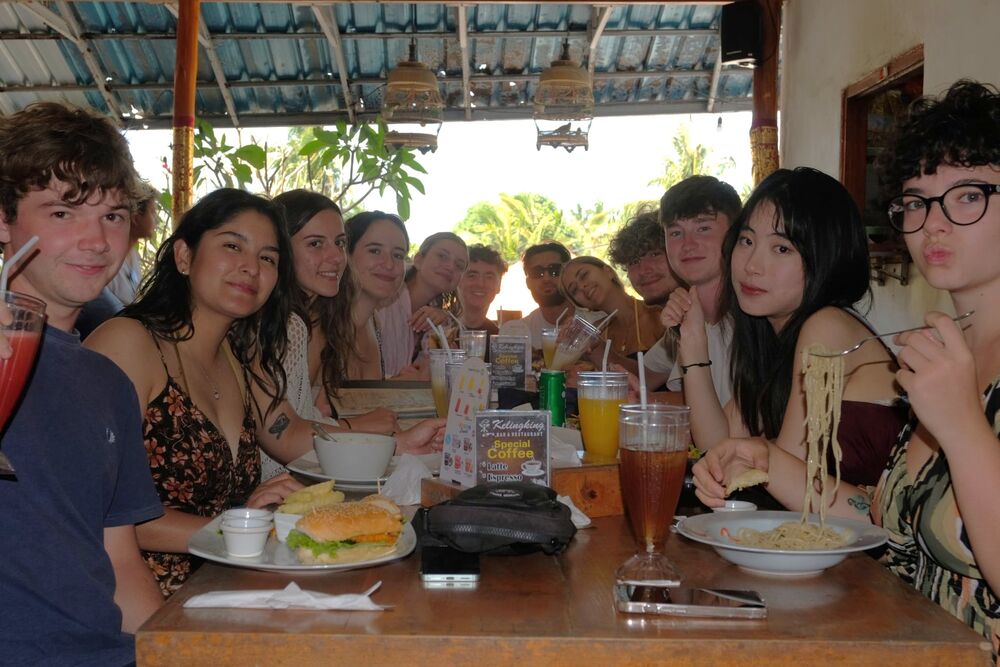
For Amidžić, the experience was not just about the work—the social aspect also played an important role. The students worked side by side five days a week and explored different parts of Bali on the weekends. Along the way, the team became a close-knit group of friends.

Ultimately, what Amidžić learned during those four weeks in Bali went beyond simply learning how to build. The most important lesson she is taking with her in her studies is this: “As an architect, you are just one part of the equation.” For her, a design is therefore not the endpoint. Once the drawing leaves the drawing board, the real work begins.
This article was translated using AI-assisted tools and reviewed by an editor
Discussion