- Research
- 4 min
- 28/09/2026
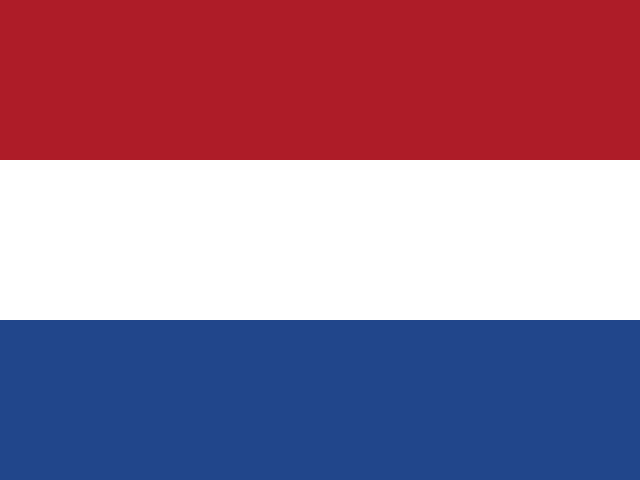
Deniz Ikiz investigates sites of collective trauma
From former plantations on Bonaire to gas extraction sites in Groningen: some places bear the traces of a history that continues to have an impact today. In the Traumascapes project, TU/e researcher Deniz Ikiz and colleagues from other universities are investigating what these places can tell us, how their meanings are negotiated, and how we might engage with them in the future.
Trauma is everywhere. It can result, for example, from an illness you have experienced or the death of a loved one. But sometimes a large group of people is affected by the same event, or the trauma is connected to a specific place.
These places are at the heart of the Traumascapes project. Several Dutch universities, including TU/e, are studying sites connected to collective trauma with a Dutch history or context. Some are close to home, while others are located in places where the legacy of the Dutch colonial past is still felt today.
Heritage projects [...] are often highly interdisciplinary and bring you into contact with many social scientists
Deniz Ikiz, assistant professor at the Department of the Built Environment (BE), is involved in the project on behalf of TU/e. As an architect, her research focuses on cultural heritage, climate change and changing human-environment relations.
“I find heritage projects, such as Traumascapes, very interesting. They are often highly interdisciplinary and bring you into contact with many social scientists.”
From Westerbork to witch hunts
The subprojects within Traumascapes are very diverse. One project, for example, focuses on Kamp Westerbork, a transit camp from which more than 100,000 Jews, Sinti and Roma were deported to Nazi concentration and extermination camps.
“After the war, the same camp was used to temporarily accommodate people returning from the former Dutch East Indies and, a few years later, as a residential camp for Moluccans and their families.”
Another project delves into the history of witch hunts in the Netherlands, during which mainly women, but also men, were executed in the late Middle Ages and early modern period on suspicion of witchcraft. “This is more of a historical analysis, in which we specifically look at trauma in relation to gender.”
A more recent example of a ‘traumascape’ is the Groningen region, where natural gas has been extracted for decades. “Gas extraction has had major consequences for residents, including induced earthquakes, damage to homes and prolonged uncertainty.”
Bonaire
Ikiz herself is working on a project in Bonaire. The Caribbean island has a long colonial history and came under Dutch colonial rule in the seventeenth century. It is now a so-called special municipality of the Netherlands, but the traces of its colonial past can still be clearly felt and seen.
There can be a real disconnect between who owns [...] these places today and what these landscapes mean to people on Bonaire
“Many of Bonaire’s natural resources were extracted, large parts of the island were deforested through colonial exploitation and plantation activities, and of course, people were enslaved and forced to work on these plantations,” Ikiz explains.
The traces of former plantations can still be found across the island. And according to Ikiz, questions of land ownership and development remain highly relevant today. “Some large former plantation landscapes are privately owned, including by investors from outside Bonaire.”
One, for example, was recently purchased by Dutch investors, and plans for residential development have generated considerable local debate about nature, heritage and the future of the landscape.
Ikiz: “There can be a real disconnect between who owns and develops these places today and what these landscapes mean to people on Bonaire, including descendants of enslaved people. That raises questions about who gets to decide on the future of these locations.”
More-than-human approach
In addition to the collective trauma experienced by people, Ikiz and her colleagues are also looking at ecological trauma and the impacts of colonial exploitation on nature.
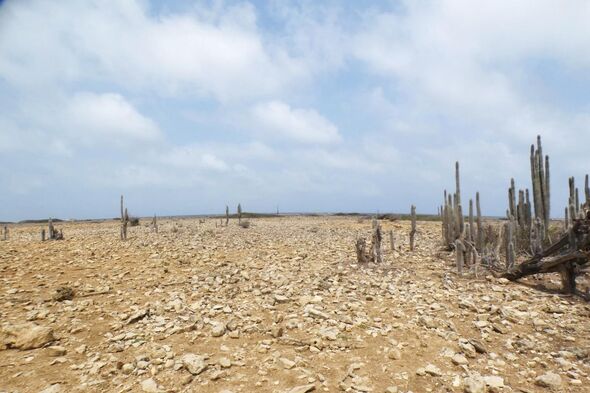
“Bonaire was once much more wooded than it is today. Extraction, logging, agriculture and livestock grazing transformed the island’s vegetation and ecosystems over centuries,” Ikiz says.
This has dramatically altered biodiversity. The disappearance of the forests has also made the island more vulnerable to soil erosion: the gradual wearing away and loss of soil. “Climate change and rising sea levels add another layer of pressure, particularly in low-lying coastal areas.”
Heritage communities and local knowledge holders are often not sufficiently heard in decisions about heritage
According to Ikiz, incorporating environmental trauma brings a more-than-human perspective into this research. “Studies like these are usually very human-centered. Here, we also take a more-than-human approach, looking at the relationships between people, other species and landscapes.”
Co-creating
The exact course of the research and its outcomes have not yet been determined. “Heritage communities and local knowledge holders are often not sufficiently heard in decisions about how heritage is understood and represented. In Bonaire, this includes descendants of enslaved people,” Ikiz says.
That is why Ikiz and her colleagues want to devote considerable attention to co-creation with the Bonairean communities. “First, we want to understand the multilayered history and the interconnectedness of the heritage sites. Then, together with the communities, we want to explore what these places mean today and how they envision their future.”
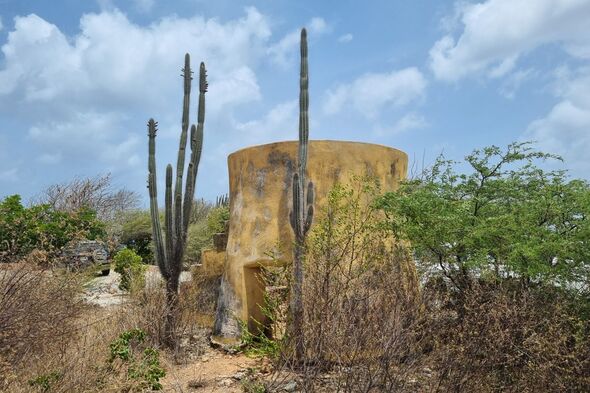


“We could, for example, help develop ideas for the future of these heritage sites. To preserve them, but also to better tell the story of the descendants,” Ikiz says.
“Or we could create exhibitions to raise awareness and knowledge about the island’s history, for example using locals’ experiences or VR images that show how things have changed over time. And, of course, there is also room for art.”
Visibility
The direction the research ultimately takes, will be determined in consultation with the communities. What is certain is that the Heritage Atlas of the Cultural Heritage Agency of the Netherlands will be supplemented with the results of the historical research on Bonaire.
“The Heritage Atlas brings together a large amount of geographical information about Dutch heritage,” Ikiz explains.
“At the moment, the Caribbean part of the Netherlands is much less visible within these heritage infrastructures, and the atlas does not specifically focus on sites of trauma. It is important that these histories also have a place in it. Our research can help make those places and their history more visible.”
Initial phase
The Traumascapes project started in March 2026 and will run for a total of six years. Recently, PhD researcher Kaylee de Jongh has been appointed to conduct the research on Bonaire. She is from Bonaire herself and also speaks the local language, Papiamentu.
The research is currently in its initial phase, in which the research framework is being further developed and collaboration with local partners on Bonaire is being established. The first fieldwork on the island is scheduled for January 2027.
Discussion