- Campus
- 5 min
- 14/01/2026

Why the carpaccio sandwich disappeared from campus cafeteria
Caterer Appèl uses data to cut food waste and reduce CO₂ emissions
The largest caterer on campus faces a tough balancing act: how do you serve tasty food at an affordable price while meeting climate goals? Account manager Collin Goedhart explains how Appèl uses data to make smarter choices about purchasing and menu offerings—and why that sometimes means saying goodbye to old favorites.

When Collin Goedhart joined Appèl as an account manager a year ago, he had a clear goal in mind: “It had to be better.”
It quickly became apparent that the business model needed a complete overhaul. “We weren’t operating smartly enough,” Goedhart admits. To maintain consistent quality and achieve better results, the caterer now makes decisions based on data. “We rely less on gut feeling these days.”
Protein transition
One key goal is reducing CO₂ emissions. Appèl is doing this through the so-called “protein transition”—shifting from meat and other animal products to plant-based alternatives with a smaller environmental footprint—and by tackling food waste.
Certifications such as Fairtrade also factor into their decisions. The university sets the sustainability targets, and Appèl aligns its choices accordingly.
These principles are reflected in a centralized menu plan, which determines what should be offered and what portion should be plant-based. “The menu is calculated in a program that shows the overall health and sustainability score,” Goedhart explains.
Based on this data, Appèl designs six-week menu cycles. This provides an overview that allows the caterer to balance quality and sustainability while still giving on-site staff some flexibility within the framework.
Halal chicken
Tough decisions remain, Goedhart notes. “For example, the CO₂ emissions from organic chicken are higher than from conventional chicken, so technically it’s less sustainable—which sounds counterintuitive,” he says.
According to him, it is therefore essential to make decisions together that ensure the right balance. Appèl primarily uses halal chicken to cater to an international audience, while other products carry the Better Life certification.
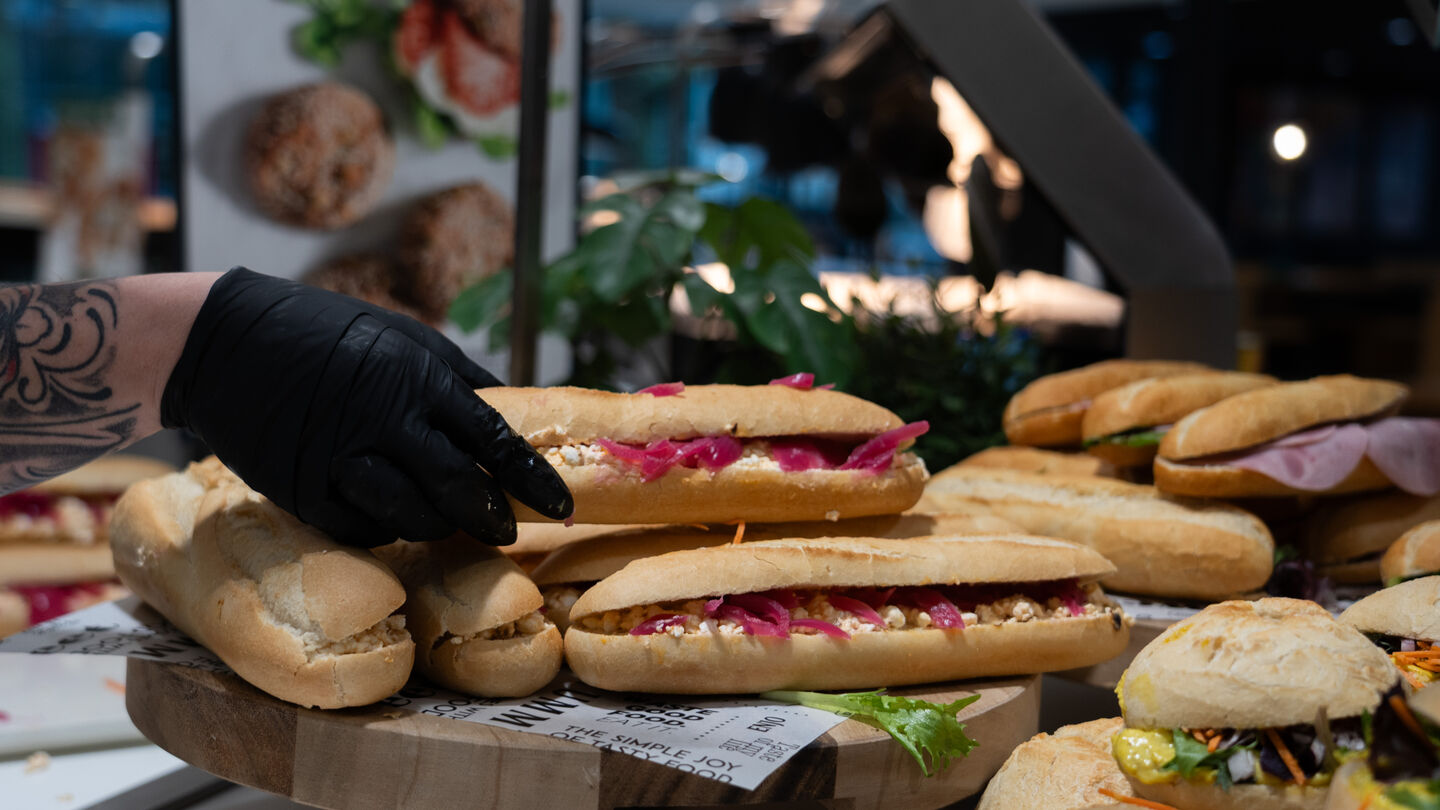
A major change is that beef has been removed from the menu entirely. “Beef has the highest CO₂ footprint, so we eliminated it from all our recipes. No more carpaccio sandwiches or beef bolognese,” Goedhart explains.
He suspects most customers haven’t even noticed the change. “If you don’t know, you probably won’t miss it.” Removing beef allowed the caterer to expand its chicken offerings, as chicken produces far less CO₂ than beef or pork.
Plant-based options have also grown, including items like a vegetarian filet Americain sandwich or a veggie burger.
No-waste policy
Sustainable recipes are only part of the story. Equally important is what isn’t eaten. Reducing food waste is a crucial lever for lowering CO₂ emissions and a top priority for Appèl.
To this end, the caterer worked closely with PhD researcher Marloes Remijnse, who studied food waste at Appèl. She developed an optimization model that helps determine which meals fit best on the menu and which purchasing strategies are most efficient.
Her study found, for example, that reusing leftover ingredients can reduce purchasing costs by about 4 percent and cut environmental impact by 11 to 19 percent. “Insights like these are extremely valuable,” Goedhart says. “They show that sustainability and efficiency can really go hand in hand.”
Pumpkin
Appèl incorporated the research recommendations into its menu engineering. A key step is using flexible ingredients—items that can be incorporated into multiple dishes in different ways. That sounds theoretical, but in practice it means that ingredients are used multiple times—each time in a different form.
“Take a pumpkin,” Goedhart explains. “You can roast it for a salad, turn it into a puree, use that puree to make a sauce, and then make a soup. One ingredient, four different applications.”
“For us, it’s about applying scientific insights intelligently to reduce food waste. I’m convinced you can do this without compromising quality.”
He stresses that while using leftovers can reduce purchasing costs, it doesn’t automatically lower prices. Reprocessing ingredients often requires extra components and preparation, while labor costs remain a fixed part of the menu price.
From production to consumer
To track waste accurately, Appèl monitors not just what diners leave behind but also what is lost earlier in the production process. In October, the caterer began using Orbisk, an AI-powered food meter that records precisely how much food is discarded during preparation.
This system focuses solely on waste before the food reaches the consumer. The data allows Appèl to analyze where production efficiencies can be improved.

The caterer also monitors daily sales closely. Using PowerBI—a Microsoft platform for collecting and analyzing data—Appèl tracks leftover products by day and location. This information feeds directly into the menu-engineering software to better align supply with demand.
Too Good To Go
Unsold food is offered whenever possible through the Too Good To Go app, which lets users purchase meals at a discount that would otherwise be wasted. Goedhart reports it has been a success.
“Last year we sold about a thousand meals through Too Good To Go and had ten thousand app views. That saved over 2,300 kilos of CO₂, and we’ve received a 4.5 out of 5 rating—which I think is pretty cool,” he says.
Community building
Appèl also places great importance on community engagement. To better connect with the audience and understand their preferences, the caterer hosted “talk cafés” for students and staff. The first session focused on price indexing, the second on communication.
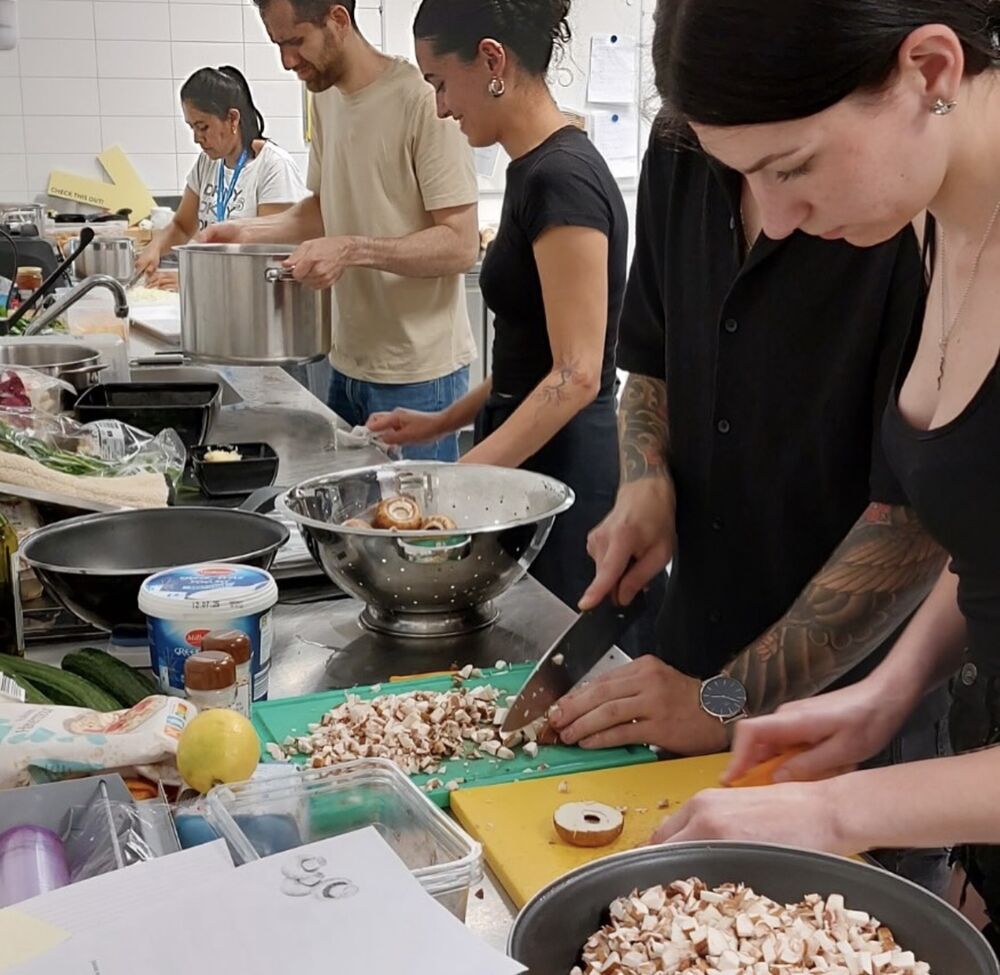
“We want offerings that suit everyone—not just in price, but also culturally,” Goedhart says. However, the talk cafés didn’t have the intended effect; hands-on cooking sessions proved far more effective.
Together with Fontys University, Appèl launched an initiative where participants could co-create recipes. Seventy students designed their favorite dish, and the community voted on the winner. The winning dish, a vegetarian Afghan meal of eggplant with rice, was then temporarily added to the menu.
“That’s exactly the kind of outcome you want,” Goedhart says. “Something people are proud of and passionate about. And it really connects you to other cultures.”
Transparent pricing
Customer satisfaction is a top priority for Appèl, Goedhart says. It is measured partly through mystery guest visits, with students rating their lunch experience. The average score is 4.3 out of 5.
Price is a common concern. Two years ago, a TU/e student launched a petition against high cafeteria prices, prompting an investigation by Cursor. “Labor costs—the largest component of menu prices—have risen enormously. That’s beyond our control,” Goedhart explains.
The customer base remains stable, but spending patterns have changed. “Students come less often, but when they do, they spend more,” he notes.
While prices cannot be lowered across the board, Appèl strives to make the experience as pleasant as possible. Every price category has options, from a basic ham or cheese sandwich at €2.20 to more elaborate choices. Promotions and affordable options are communicated clearly via the FoodCity app and at the point of sale.


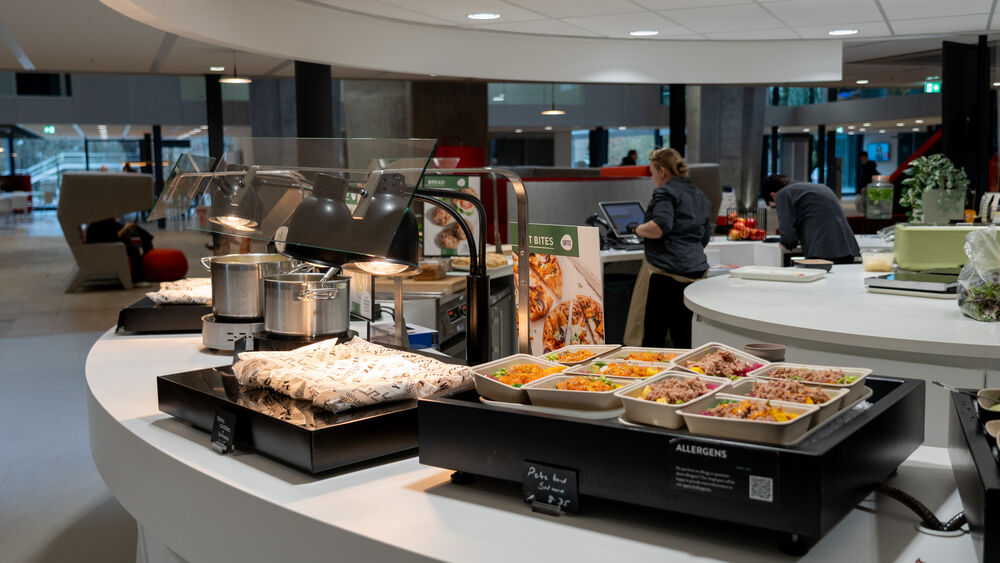

“This way, customers not only see the price but also understand their choices within their budget,” Goedhart says. According to him, transparent pricing can change perceptions without actually lowering prices.
Open dialogue
The price-versus-quality discussion is inevitable, Goedhart acknowledges. “That debate will never disappear, and you can’t win it. I want to focus on what we can do and explain why we make certain choices.”
Concrete feedback is essential, he adds, but often difficult to obtain. “Complaints usually come in anonymously. I can’t address those,” Goedhart says. He prefers direct conversations with dissatisfied customers.
“Even if we can’t change things immediately, we can at least explain our decisions.” He encourages customers to leave contact information with feedback. “I invite everyone to speak up so we can connect—person to person.”
This article was translated using AI-assisted tools and reviewed by an editor.
Discussion