- Employee
- 30/01/2026
TU/e colleagues create voting guide for internationals
“Most of them had no idea they were allowed to vote”
The municipal elections are coming up. Many internationals are also eligible to vote on March 18, but they’re often unaware of this. At the TU/e department of Mathematics & Computer Science, help is on the way for them—as well as the democracy.
“I once asked my international colleagues if they even knew they were allowed to vote for the municipal council. Most had no idea," says mathematics professor Mark Peletier. "That’s how the idea was born to create a voting guide (‘stemwijzer’ in Dutch) about the municipal elections, specifically for internationals.”
Initiator Peletier believes it’s important that everyone who has the right to vote exercises it. Together with mathematics colleagues Jim Portegies, Celine Chen, and Martijn Klabbers, and union representative Jan Vleeshouwers, he developed a handout and a presentation to help internationals get involved in our municipal council system. Vleeshouwers often attends University Council meetings on behalf of the unions, but also served on the municipal council in his hometown for ten years. “That allowed me to contribute significantly to the development process.”
Language
What are the biggest obstacles for internationals when voting? According to Peletier, language is the number one hurdle: “95 to 98 percent of communication by and about political parties is in Dutch.”
“Of course, learning the language is important, but following political news is more difficult than ordering a sandwich. Even if you master basic Dutch, you still encounter jargon and difficult language.”
Garbage bin
Culture also plays a role, says the professor. “I notice that German colleagues are surprised that we put our ballots in a kliko (a large garbage bin, ed.). A trash can!” Suddenly, you look at the value of your vote differently.
The voting method is also often different. In the Netherlands, you elect one person from the party of your choice. In Germany, in some federal states, you can cast multiple votes, which you can distribute among different people and parties.
Moreover, some people are accustomed to voting online from their home country. This is still not the case in the Netherlands, as security and verifiability cannot yet be guaranteed.
Who can vote on March 18?
If you are eighteen years or older, have a residence permit, and have been registered in your place of residence for at least five years, you are entitled to vote in the municipal elections in the municipality where you live. This right also applies to every adult EU citizen registered in a Dutch municipality on February 3, 2026.
You are only allowed to vote in your own municipality. You will receive a polling card by mail, which you must bring along with your ID to the polling station.
Confusion
The lack of clarity about the municipal elections may be due to confusion with other elections in the Netherlands. International citizens without a Dutch passport are not allowed to vote in the House of Representatives and Provincial Council elections. Citizens from EU member states are allowed to vote in the Netherlands for the water authority elections and the European Parliament elections.
Voting is not mandatory in the Netherlands, unlike in Belgium, for example. Anyone who, for whatever reason, doesn’t vote on March 18 doesn’t have to worry.
A first
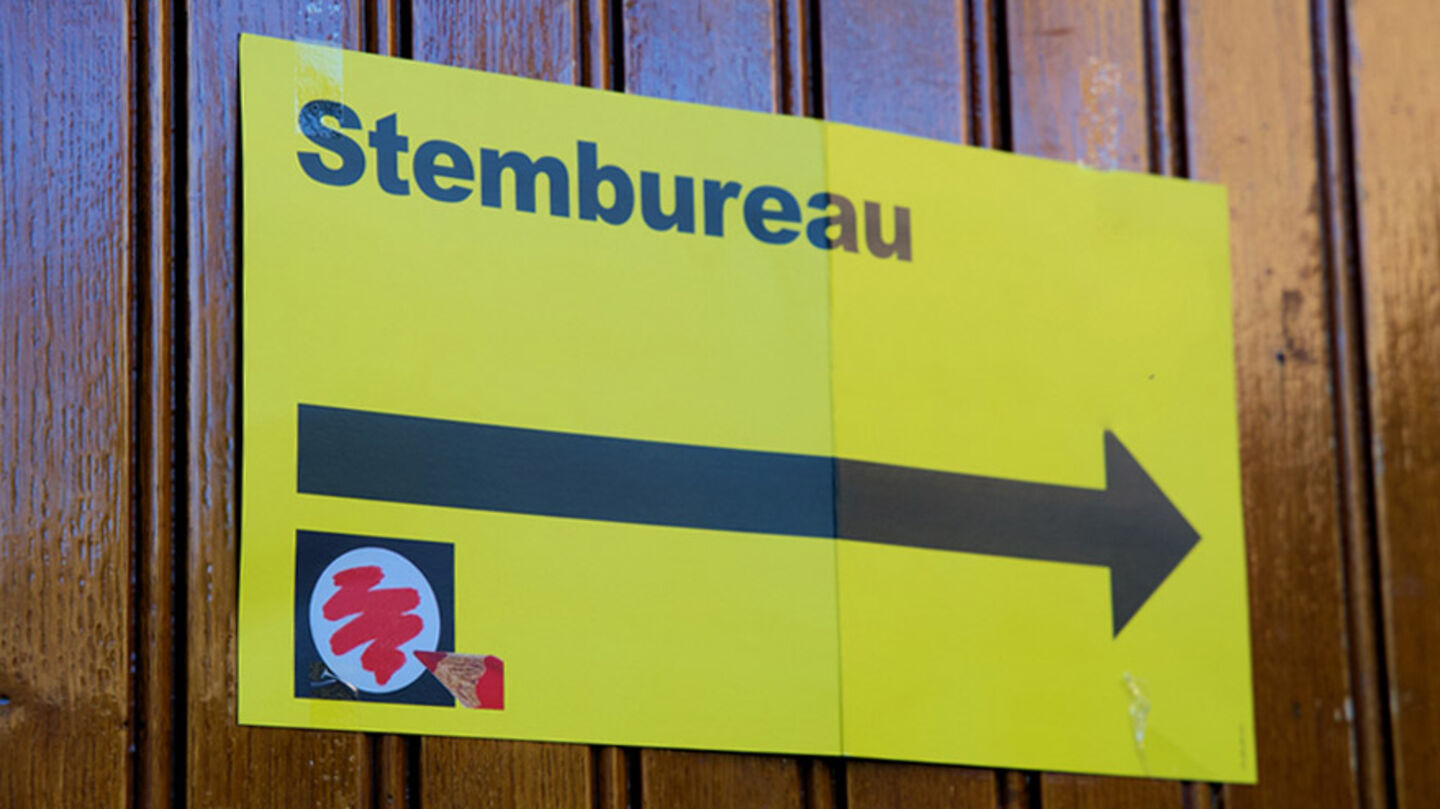
Only students and staff of Mathematics & Computer Science are invited to the information session on February 5. It’s a first, Peletier says. “We’ve noticed a broader interest within the university, but unfortunately, we don’t have the resources and staff to give the presentation more often.”
The organizers are willing to share the handouts with interested parties. Those can contact Jan Vleeshouwers.
Polling station
University lecturer Jim Portegies will present the meeting. “Something like this has to be done without steering people in any direction or political bias; I think he can manage. I would find that more difficult,” Peletier admits frankly.
The presentation covers both the opinions of the parties on the electoral list and the procedure. Where is the polling station, how do you identify yourself, and when do you receive your voting card?
The organizers have designed the ‘voting guide’, which they will present on February 5, to align the topics with the experiences of internationals, such as Beethoven and ASML. Peletier also notes that mobility is a topic of interest to the target group.
“We’re not only paying attention to what the political parties say, but also to what they do. For example, how they voted on motions.”
Feeling at home
Vleeshouwers believes the municipality of Eindhoven could also do more to attract—especially—internationals to the polls. “The municipality is organizing a meeting at the library in early March, but it could be approached broader. Expats are everywhere.”
“If we want to retain internationals, we have to make sure they feel at home here," Peletier believes. “That includes knowing your way around the political system and exercising your right to vote.”
He’s aware that politics is inherently complex, even for those born and raised here. “I expect quite a few Dutch people to attend the meeting as well. A little explanation is helpful for everyone.”
Discussion