- People
- 4 min
- 05/03/2026
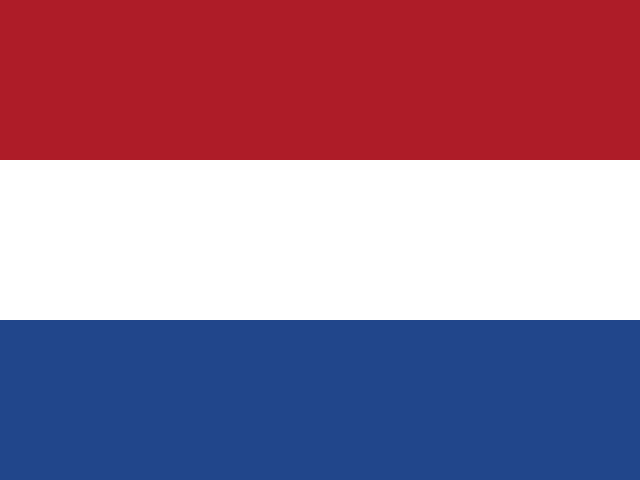
TU/e candidates want to make local politics more pragmatic
“At municipal level, you don't need to negotiate as much as in national politics. But you must be able to make decisions”
Ralph van Ierland and Joeri van Limpt, staff member and student at TU/e respectively, are on the candidate list for the municipal elections. On March 18, they will find out whether their ideals may be realized. One of them is: more STEM graduates in politics. “Graduates with a humanities background are much more interested in politics than STEM graduates, but we need both.”
Dutch politics at a national level seems primarily the domain of humanities graduates with a theoretical background, although official figures are lacking. There is no reason to assume this is much different in local politics. The call from “Bèta in Bestuur en Beleid” to better balance this ratio has been ongoing in the Netherlands for quite a while.
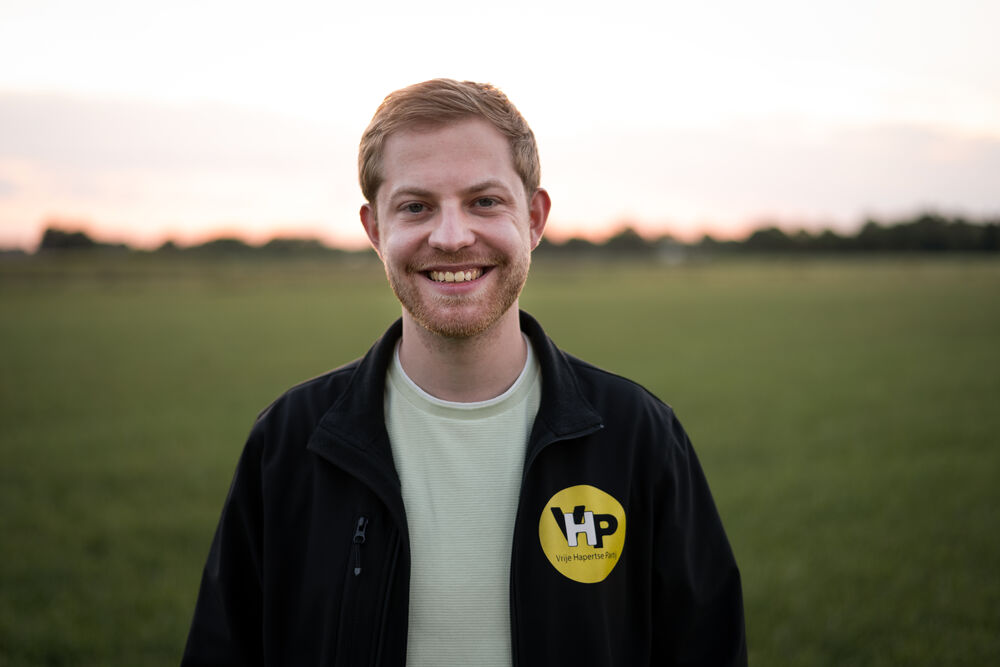
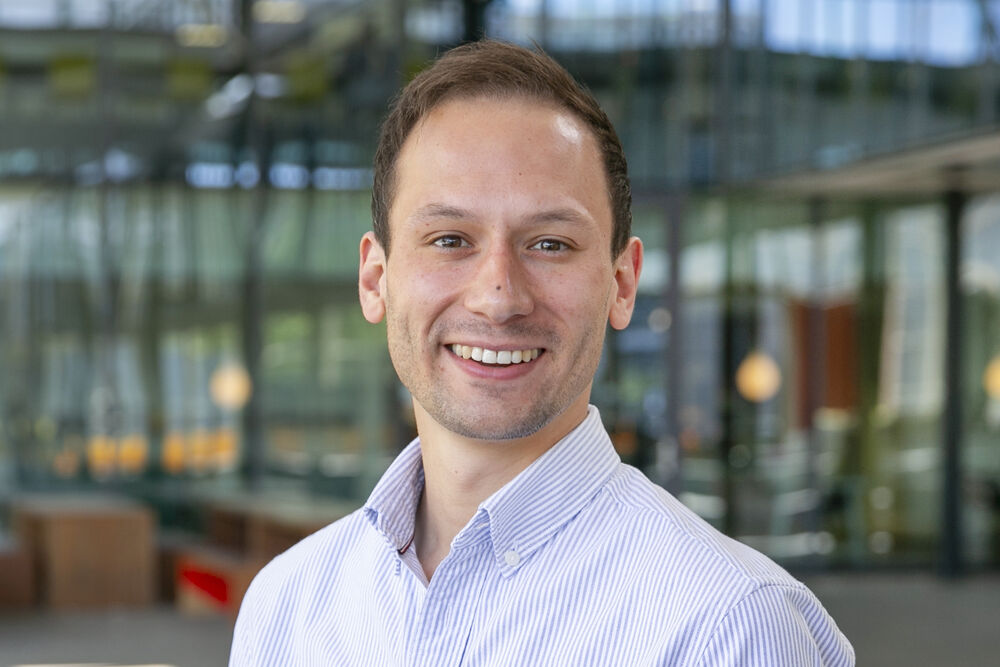
TU/e policy officer at ESA and former student Ralph van Ierland and student Joeri van Limpt want to contribute to this with their candidacy. Van Ierland takes place four on the list of D66 in Eindhoven, and Van Limpt is in place two for the Vrije Hapertse Partij in Bladel, a town near Eindhoven.
Van Limpt is a master's student in Chemical Engineering and Chemistry. The 24-year-old developed an interest in politics early on and now has four years of experience as a committee member for the Vrije Hapertse Partij in the municipality of Bladel. He himself comes from a hamlet: Dalem, part of the larger village of Hapert, just south of Eindhoven.
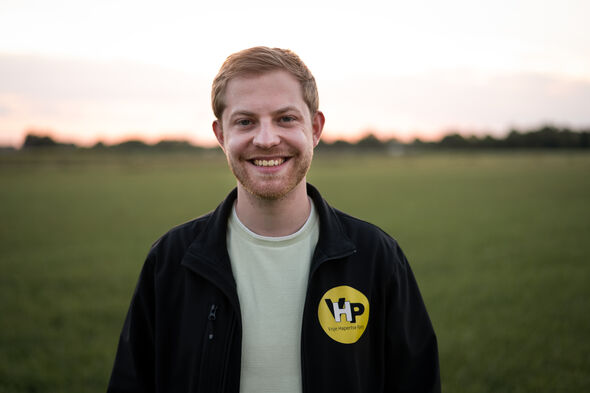
Van Limpt has a good chance of actually getting into the council: he is in second place and his party currently has four seats. He considers the fact that his party lacks a national support base an advantage. “As a result, we are not bound by what happens in The Hague with a sister party, nor by a left- or right-wing affiliation.”
Local needs
The focus on local needs means that Van Limpt is paying attention, for example, to the new market square that is planned for his village Hapert. “But also to the financial health of the municipality, because the cliff-edge year is coming.” That’s a term for the expected financial crisis facing Dutch municipalities, when they will structurally receive several billions less from the municipal fund, starting in 2026.
“As a result, we have to adjust our priorities, but I don’t think that should come at the expense of the new market square.” Van Limpt also sees that larger issues are at stake in his municipality, such as the need for housing.
Housing is also a key issue for former mathematics student Ralph van Ierland (D66). As a former member of the University Council, he wants to advocate for students, among others, who are struggling to find affordable housing in Eindhoven.
“I’m currently active as a citizen member of the Provincial Council of North Brabant, where I’ve already had a taste of politics. The scale of the housing problem quickly became clear to me there, as well as the major challenge surrounding the growth of Brainport.”
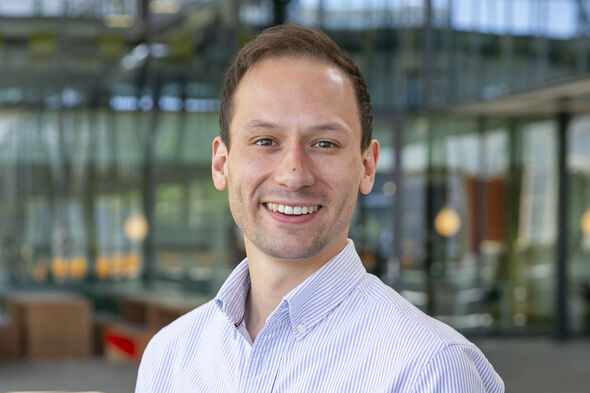
Van Ierland also cares deeply about student well-being. This issue came to his attention when he served on the University Council during the coronavirus pandemic. He now works as a policy officer at ESA, also focusing on student welfare. Van Ierland would like to give students and education some extra attention in politics, although he also sees that many problems overlap.
“The housing shortages don't just affect students, of course, but we do impose certain regulations on that affect them more. For example, when it comes to new student houses, which cannot be built within thirty meters of another student house.” He would like to see this rule relaxed to address the housing shortage.
“Furthermore, non-traditional housing solutions could help, both for students and other Eindhoven residents.” He refers, for example, to sharing a house with several friends, something that is often difficult to stipulate in rental or purchase agreements.
Growing pains
Mobility is also a key issue in Eindhoven. “Currently, large parts of the city are primarily designed for cars. This leaves less space for pedestrians and cyclists, and it's also unsafe for them in many places. We need to shift more from a car city to a bike city.”
This is a position not popular with everyone, as the D66 candidate acknowledges. “I understand that someone who works in home care, for example, needs that car, but we shouldn’t want every house with two people to have two cars.”
He believes the need for car ownership will naturally diminish if the city focuses more on public transport and cycling. “But for that to happen, we have to be willing to make that transition.” The D66 candidate also links the housing shortage to this. “If we have to build so much, there simply isn’t enough space to create one or two parking spaces for every house—especially in very tall apartment buildings.”
Van Ierland sees this friction as growing pains inherent in a city undergoing such rapid development. “Eindhoven is in its teens, but we are moving towards a mature, stable city, a place where everyone feels at home.”
Vote for a TU/e student or employee
Besides Van Ierland (D66), Eindhoven residents can also vote for one of three TU/e students: Eise Veringa, Youri Gerrits and Mathijs Pinxt. Eise Veringa is on the list for NSC and is a student in the Deparment of Industrial Engineering & Innovation Sciences. Youri Gerrits is number five on the CDA list and is doing the pre-master Urban Systems & Real Estate at Built Environment. Master's student in Chemical Engineering Mathijs Pinxt occupies the nineteenth place on the D66 list.
Other candidates on the Eindhoven list have studied or worked at TU/e in the past, but no longer do so.
Methodology
Using the 2026 candidate lists, consulted on the parties’ websites, we searched for matches with members of the TU/e community. We then checked the party website and freely accessible information on social media for matches with current TU/e students or employees.
Cursor has taken the utmost care in this overview but cannot guarantee the completeness of it. Any additions would be welcome via cursor@tue.nl.
STEM politicians
Back to the issue of science and technology in politics. As far as Joeri van Limpt is concerned, there’s definitely a need for more people with a STEM background in politics. “Many problems we’re currently seeing, both locally and nationally, are technical problems. So, solvable with our knowledge.” He mentions the nitrogen problem that’s slowing down housing construction and grid congestion, for example.
“You have to be able to think technically and pragmatically, something not all politicians with a humanities background are good at. And don’t get me wrong: we need both, but the interest in politics is much greater among people with a humanities background.” When asked why, he has to think for a moment.
“Perhaps because those with STEM background are more conflict-avoidant and less inclined to engage in discussions with many people? They’re more solution-oriented rather than eager to negotiate in long discussions.”
Van Limpt’s diplomatic phrasing is certainly spot on. He laughs. “At the municipal level, you don't need to negotiate as much as you do at the national level. But you do need to use data and be able to make decisions.”
Influence
Van Ierland also sees that local politics isn’t equally important to everyone. “I think a lot of people don’t understand what belongs to municipal politics and what belongs to provincial or national politics. As a result, they don’t know exactly where their influence lies.”
He refers back to the housing shortage. “Building a new neighborhood takes years. Political results aren’t always immediately tangible, therefore. But your choices now have an impact on the future.”
Van Ierland hopes that everyone will vote, regardless of the party they choose. “The elections are a great opportunity to delve into everything important that the municipality means to you. And internationals: you’re often also eligible to vote in these elections. Make use of that right.”
Who may vote on March 18?
If you are eighteen years or older, have a residence permit, and have been registered in your place of residence for at least five years, you are eligible to vote in the municipal elections in the municipality where you live. This right also applies to every adult EU citizen registered in a Dutch municipality on February 3, 2026.
Voting is only permitted in your own municipality. You will receive a voting invitation by mail, which you must bring with you to the polling station along with your ID.
Payment
Putting your heart and soul into politics also yields quite a bit, although the exact amount varies from municipality to municipality. “As a committee member, you get paid per meeting, but as a council member, you receive a fixed amount per month, around 1,300 euros in 2026," says Van Limpt.
The amount of the salary depends on the municipality’s population. This population also determines the number of seats on a municipal council.
However, Van Ierland also knows that this money also requires a considerable amount of time. “In smaller municipalities, a council member easily spends 16 to 20 hours a week, while in larger cities, this can easily exceed 25 hours. If you convert that into euros per hour, you often make more with a regular job."
Politics and studies
Combining politics with studies is difficult, Van Limpt acknowledges. “You have to learn to read those political documents. That takes time. And it’s also about setting priorities. Someone who plays soccer easily spends two evenings and a weekend day on it. I choose this. And I’m fortunate that my municipality is smaller than Eindhoven, so we manage to only meet after office hours.”
If Van Limpt is elected, he plans to continue combining university with politics. “I’m not done learning yet, and teaching also appeals to me.”
That’s why he's in talks with his thesis supervisor about pursuing a PhD after his master’s degree. “Part of a PhD program is teaching and supervising students. I think that would be really fun.”
Restoring trust
Van Ierland believes that the disputes between national politicians, which are regularly in the news, are not helping citizens’ trust in politics.
“When I think back to the University Council, there was more of a ‘we-do-this-together’ spirit. To restore residents’ trust in politics, less focus on individual politicians is needed in the debates. Incidentally, that's already less prevalent in the provinces than nationally.”
Van Ierland uses a cliché that certainly has a lot of truth to it: “We are in this together. We can’t deny the growth and needs in this region. And the truth is that it’s impossible to resolve all issues by tomorrow, but to resolve them ever, we have to start today.”
Updates: on March 10 and 12, respectively, TU/e students Youri Gerrits and Mathijs Pinxt were added to the list of TU/e candidates eligible for election in Eindhoven (see first box).
Discussion