- The University
- 18/06/2026

"Not every small collaboration needs full review"
TU/e reviews all academic partnerships, although there is “tension with academic freedom”
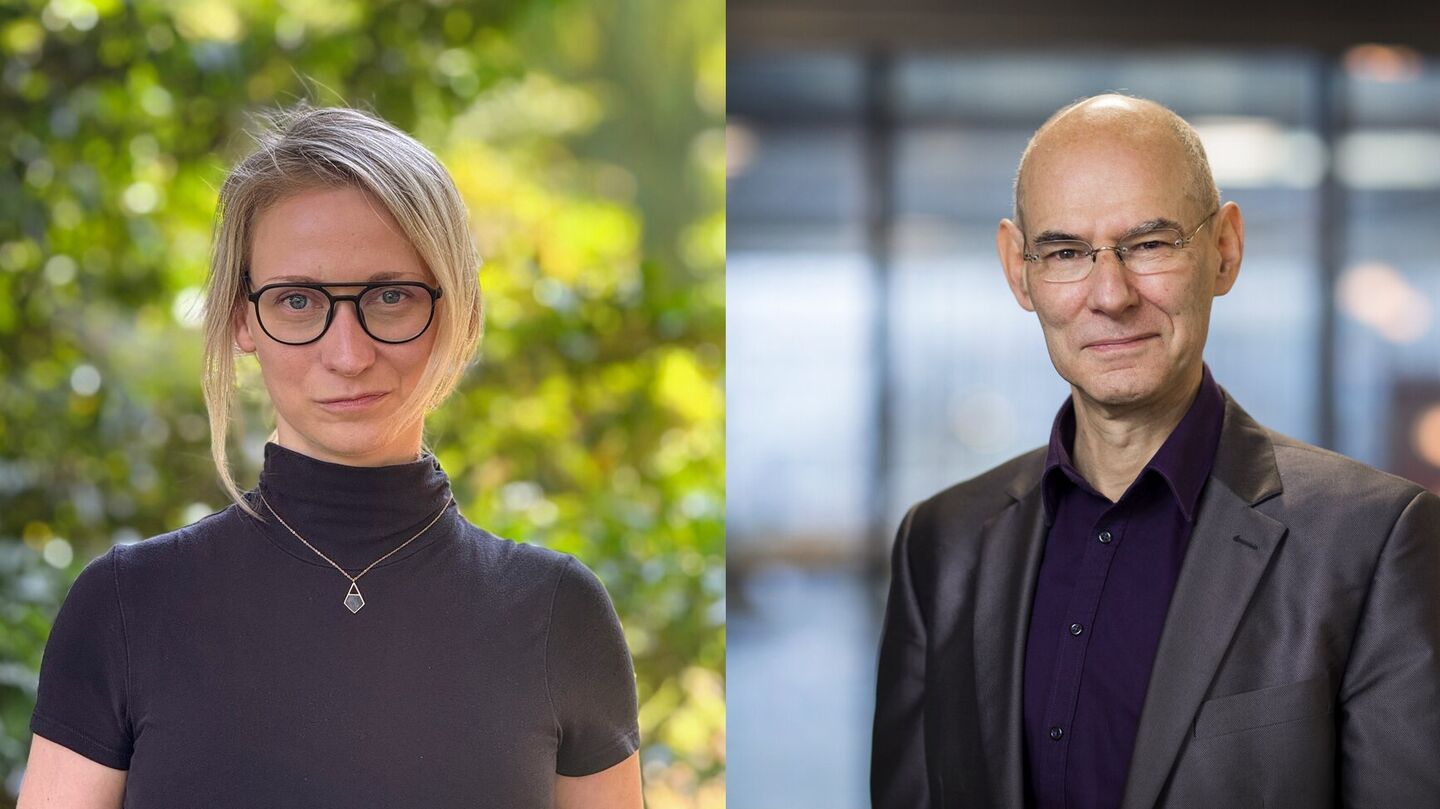
TU/e wants to evaluate its academic collaborations more carefully. Last week, the university presented its “Responsible Collaborations” framework, developed by Professor Emeritus Niek Lopes Cardozo. Committee Secretary Andrea Kis is preparing the procedure for implementation. “This approach helps members of our community understand their own responsibilities.”
The university’s partnerships are crucial to its strategic and academic direction. Its many collaborative relationships influence TU/e’s research and the educational programs offered on campus—sometimes drawing strong criticism from both the university community and society at large.
The campus has already been the backdrop for numerous pro-Palestinian demonstrations and climate protests. Due to the Trump administration’s attacks on science, collaborating with American researchers is becoming increasingly difficult, and the bags of money from Defense come with ethical concerns.
It forces the university to consider how, as an institution for education and knowledge development, it should position itself in relation to partners that directly or indirectly commit human rights violations, contribute to climate change, violate scientific integrity, or use technology for military purposes.
It requires the university to take a position on these issues, which are also societal in nature. “Therefore, you first have to think about what your role in society is. From that position you have a voice about these issues, a non-political one but based on the knowledge you have,” explains Niek Lopes Cardozo.
“Because it’s not just about deciding on collaborations. The minute TU/e judges sensitive collaborations or collaborators, the university articulates its societal position on these issues.”

Risks
Lopes Cardozo was appointed in July 2025 to set up a committee to assess sensitive collaborations. Initially, he was asked to take on the role of chair, but the emeritus professor did not think that was a good idea. He was, however, willing to do the groundwork as quartermaster.
Lopes Cardozo and his team first looked at the approaches taken by other universities. For example, he felt that Tilburg University’s small, all-powerful committee was not a good fit for TU/e. “That makes you the legislator, judge, and jury all in one.” Experiments with ethical deliberation in Delft did resonate. “That involves the community.”
He also looked at the application of the precautionary principle, which is applied quite strictly at the University of Twente. “They refuse to collaborate if it could, consciously or unconsciously, be harmful to humanity. That may sound nice, but it leaves you with very few options.”
The result is an assessment process for all academic collaborations, without a fixed ethical yardstick. The most sensitive collaborations are evaluated separately by a committee and a Moral Deliberation Panel, consisting of members of the TU/e community. Based on both these analyses the Executive Board (CvB) makes the final decision.
It is a flexible process. “You can tune it for risks without changing it,” Lopes Cardozo explains. “Take the relatively new collaborations with Defense. You could decide to be very cautious with your judgment in the beginning, until you have some experience and have a better understanding of all the risks.”
Seperation
The biggest challenge for Lopes Cardozo was designing a system to assess all collaborations, ensuring that only the most sensitive ones end up on the committee’s desk.
“We wanted something that comes from the community, but at the same time you don’t want every little collaboration to go through the whole process. That’s why we implemented a triage.”
Applicants – researchers that want an academic collaboration with another party – receive a risk assessment based on a self-test. A low risk usually means a green light.
In the case of elevated risk, the faculty board makes the decision in consultation with the applicant. “If there is an assessment, it’s appropriate for the department to be in the lead. They have the legal responsibility for the collaboration.”
Only the most sensitive collaborations therefore end up with the Committee on Responsible Collaborations and the Moral Deliberation Panel. The former will also provide both solicited and unsolicited advice to the Executive Board.
Secretary Andrea Kis: “Either one of the boards or other colleagues request advice on a specific topic, or we are seeing smaller requests adding up to a larger topic, which should then be discussed. That can include a moral deliberation if needed.”
The Moral Deliberation Panel can issue a yes-or-no answer, or sets conditions for whether a collaboration can proceed, by mitigating the found risks for example. Members for a pilot will be recruited soon.

Shared responsibility
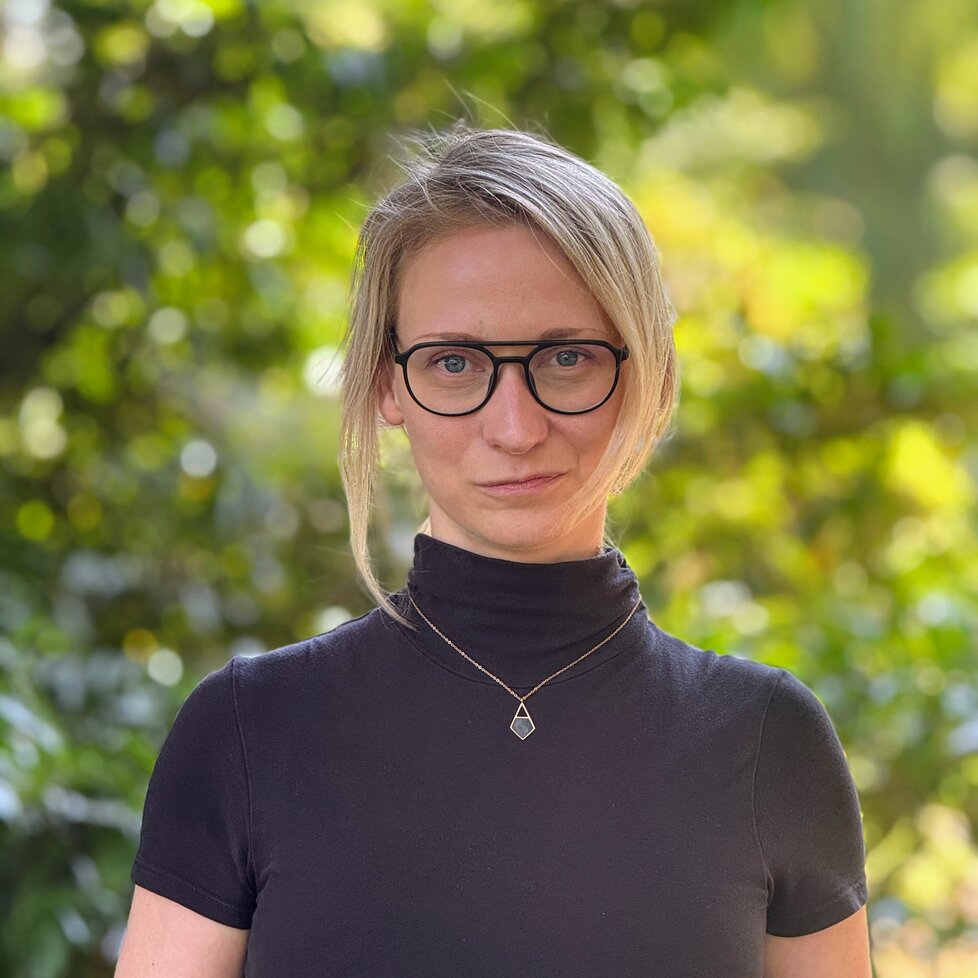
Kis started in January as secretary of the committee. As a researcher and policy advisor, she has spent several years focusing on the well-being of academics at TU/e. “My work is understanding researchers and how they function, what they prefer to do, and what their values are.”
She emphasizes the individual responsibility of applicants. “This process is also about helping our community members understand their own responsibility. It's a way to ensure that they are supported in their own moral judgment.”
“They will be able to ask for advice, look up previous outcomes of the committee and Moral Deliberation Panel, but also see that they are backed by the university taking the moral judgment itself.”
The new process does place limits on individual researchers when it comes to entering into collaborations. “There is a tension with academic freedom,” Lopes Cardozo acknowledges. “But as the Board would say: if there are problems with the collaboration, they will end up on our desk.”
He believes that this tension can only be resolved through dialogue. “If a researcher wants to collaborate with a party which may be an issue, the minute it is discussed with the department board, it is a shared responsibility.”
Moral dilemmas are not complex
Still, assessing a collaboration will not be straightforward, even with the new process in place. “Some of these problems are not complex, but uncomfortable. Complex is when you need a lot of information to reach a decision. A moral issue is either good or bad.” Lopes
Cardozo compares it to friendship. “Think of how you would deal with a friend who does something you ethically don’t approve of. How would you do that?”
If the process were to rely solely on moral considerations and not take the university’s interests into account, the analysis by the Moral Deliberation Panel and the committee would be very simple. “If it’s not clean, you say no.” But Lopes Cardozo does not see that as a sustainable solution, because all rejected collaborations would end up on the Executive Board’s desk.
“If they decide to do the collaboration anyway, because they do have to factor in other interests, that can happen once or twice and then the system is dead.”
Even if you know that a decision is difficult to implement, you still have to discuss it with each other
Israel
The new process is therefore not specifically designed for the most high-risk collaborations. “If you take the absolute most complex case to model your process, the system would get far too heavy.”
Instead, the most sensitive collaborations serve as a kind of stress test for the new system, such as the collaboration with the Israeli university Technion. “If you take this example, it will end up in the high-risk category, on the desk of the committee, who will say: for this we need a moral deliberation.”
In June 2025, the university froze its collaboration with Technion until the to be established committee can assess it. Individual collaborations and Horizon projects did continue. TU/e mainly works with Israeli partners within these European consortia. However, stopping these projects is not possible without financial and legal consequences.
Although the moral assessment of Horizon projects may be straightforward, the university’s interests make the situation more complex. TU/e also often has a limited role within a collaboration, as one of dozens of partners. Still, Lopes Cardozo believes these projects must be assessed through the new process.
“Even if you know that a decision is difficult to implement, you still have to discuss it with each other. Then you can look at measures to mitigate the risks.”
Work in Progress
Andrea Kis is currently working on the documentation, processes, and tools needed to implement the assessment plan. Together with the Executive Board, she is searching for a suitable chairperson. Only once that person has been selected will the other members of the committee be recruited.
After that, the plan for the composition of the committee and the expert team will also be evaluated. “We realized that we need multiple experts from a single specific field to analyze a case,” says Kis. “The idea is that they will be called upon by the regular expert team when necessary. For the committee, we are now considering setting up subcommittees for recurring topics.”
“And of course, this isn’t set in stone,” Kis emphasizes. “Whatever we set up now, we’ll have to test it and see how it works out. It could take years before we arrive at a perfect solution. I can’t stress this enough: this is a long-term plan.”
Discussion