- The University
- 6 min
- 23/03/2026
How does TU/e attract and keep the right VWO highschoolers?
Approach on three fronts: students, teachers and curriculum
The transition from secondary school to higher education should become “a slide rather than a diving board.” That’s according to Ella Hueting, director of the new Onderwijsnetwerk Zuid Nederland, an initiative of TU/e. What is the university doing to ensure students land as smoothly as possible?
On November 24, dean of the Bachelor College Ines Lopez Arteaga signed a declaration of intent on behalf of TU/e. Representatives from eight other major players in secondary and higher education in North Brabant and Limburg did the same, officially establishing Onderwijsnetwerk Zuid Nederland.
The goal of the collaboration is to make the transition from secondary school to a university or university of applied sciences as smooth as possible for new students. To achieve this, the partners are working on three levels: students, teachers, and policy. Eindhoven School of Education (ESoE) will conduct research into the effects of the interventions.
The education network
From secondary education, the following parties are represented in Onderwijsnetwerk Zuid Nederland: Brainport-scholen, Onderwijsregio Brabant Oost, and Onderwijsregio Limburg. From higher education, the participants—besides TU/e—are Tilburg University, Maastricht University (Faculty of Science and Engineering), Fontys University of Applied Sciences, HAS Green Academy (Venlo), and Avans University of Applied Sciences.
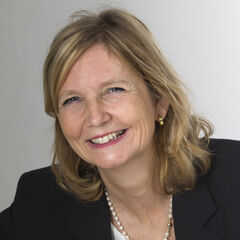
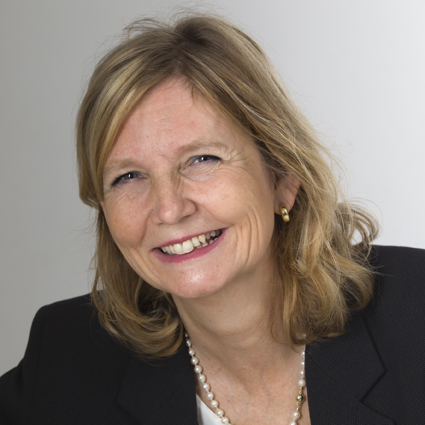
The southern region is not the first in the Netherlands to bring together secondary and higher education in a network. In fact, “we’re the last—but also the largest.” Ella Hueting, who started at TU/e as director of the new Onderwijsnetwerk Zuid Nederland after the summer, says this with a smile.
Originally trained as a lawyer, she developed a fondness for the innovative nature of technical education. She previously served as head of engineering programs at Fontys, among other roles.
Hueting credits Ines Lopez Arteaga, who came up with the idea for the collaboration, and Gerrit Kroesen, who worked to bring the network to life.
STEM subjects
Although not only institutions with technical programs are part of the education network, its initial focus is on aligning STEM subjects with technical degree programs. “That has to do with the importance for the region; it’s no coincidence that we receive support from ASML,” Hueting says.
Another factor is the national revision of the VWO curriculum for STEM subjects—Science, Technology, Engineering, and Mathematics. This educational reform is currently being shaped, and timing matters. By joining forces, the partners carry more weight in discussions with curriculum developer SLO.
A key priority is making STEM education more attractive to girls and students with a migration background
Later, the focus will expand to other disciplines, Hueting says: “Such as economics, where Tilburg University will take the lead.”
All hands on deck
For now, however, it’s all hands on deck in engineering and technology. Hueting: “A key priority is making STEM education more attractive to groups that are underrepresented in technical programs: girls and students with a migration background.”
“That’s where the potential lies in the Netherlands; there’s still a lot to gain in those groups.” She refers to it as underutilized talent: “Young people who could do it, but still don’t choose a technical degree. For example, because they feel insecure or are not encouraged in the right way within the education system.”
A seven average
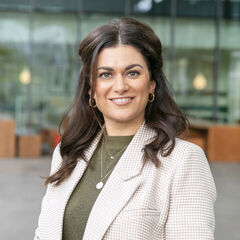
And that’s something the Brainport region can’t afford: leaving technical talent untapped. Marjoleine van Kollenburg-Wouters, program manager and driving force behind Pre-TU/e—the umbrella under which the university organizes activities for secondary school students—knows this well.
“Recently, we heard from a school that students are only allowed to choose the NT profile (Nature & Technology, ed.) if they have at least a seven average in STEM subjects. Is such a rule desirable when we need everyone in technology? That’s a question we can discuss within the network and develop a shared vision on.”
Pre-TU/e
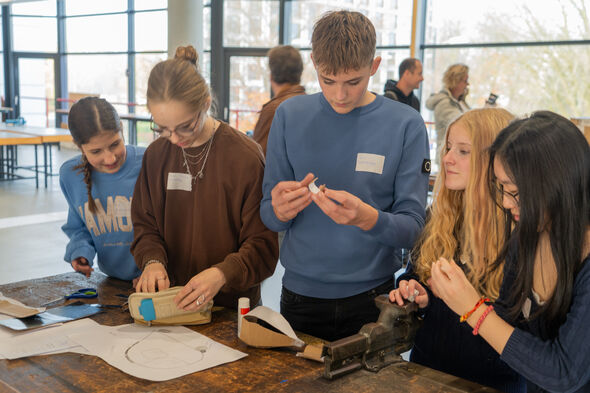
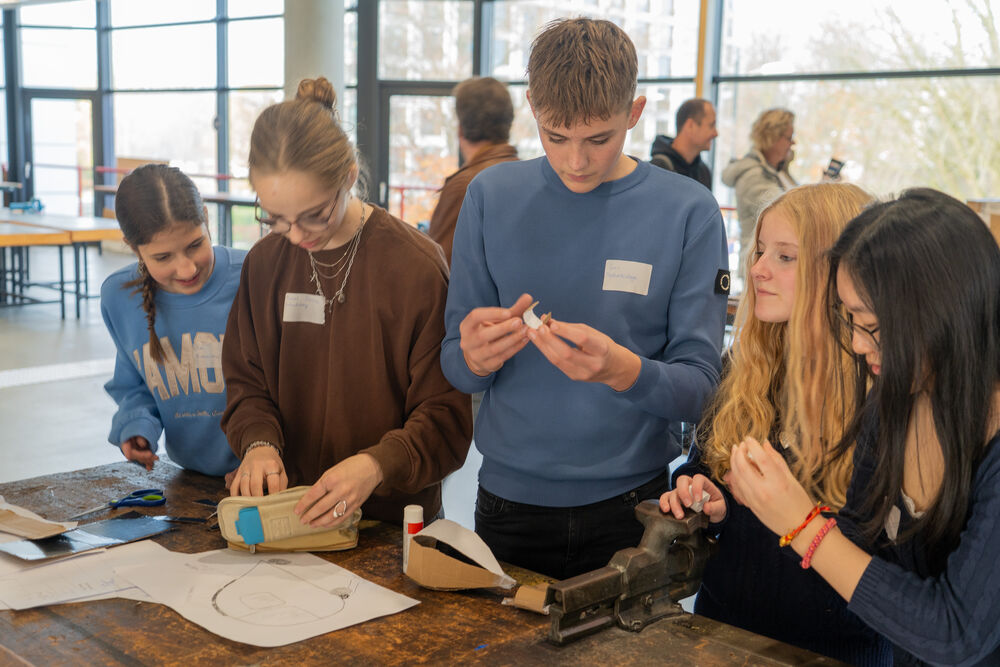
Pre-TU/e has been around much longer than Onderwijsnetwerk Zuid Nederland and offers a wide range of programs for secondary education. Van Kollenburg lists a few: “From expert guidance on graduation projects and Challenge-Based Learning workshops to profile choice days for 3 VWO students and a photonics masterclass.”
We are currently developing a project for VWO students in collaboration with PSV’s women’s team
Inspiring students through hands-on experience is key, and guidance is consistently provided by TU/e students. The Pre-TU/e team includes two permanent education developers to ensure activities are both substantively and didactically sound.
“One comes from secondary education, the other is an engineer from the ESoE teacher training program. So not marketers, but professionals with subject-matter and teaching expertise.”
Free lessons
One of the education developers within Pre-TU/e is Emily van Leemput. She also develops lessons for 4TU.Schools, a platform through which the four technical universities collaborate with secondary education to create lessons that are offered free of charge.
The lessons are intentionally interdisciplinary, Van Leemput explains. “At technical universities, we often see different disciplines coming together in research. In our classes, however, we explicitly link these interdisciplinary topics to individual high school disciplines.”
One example is the lesson What do DNA and data have in common?, which focuses on data storage in synthetic DNA. “In that lesson, we explore what data and DNA actually are. Both are highly relevant concepts for secondary school students.”
To develop that lesson, Van Leemput visited a research group within Biomedical Engineering, which provided her with input. “That allows us to create well-informed material, in which we connect the university’s expertise to the curriculum taught in secondary school.”
4TU.Schools has been around for nearly a year and has already developed around seventy free lessons.
PSV
The Pre-TU/e team finds engaging topics within TU/e, for example through student teams, but also beyond. Van Kollenburg: “We are currently developing a project for VWO students in collaboration with PSV’s women’s team, which is sponsored by Female Tech Heroes.”
Van Kollenburg notes that TU/e lecturers are often enthusiastic about contributing ideas. She welcomes this: “In every department, we have a contact person or outreach representative. Anyone doing exciting research or with another interesting idea for a student project can reach out to them.”
Subject support hubs
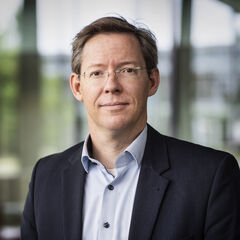
Teachers play a crucial role in the transition from VWO to higher education. That’s why the infrastructure of Onderwijsnetwerk Zuid Nederland includes so-called vaksteunpunten (subject support hubs): contact hubs where STEM teachers can turn to peers in higher education with their questions.
TU/e lecturer Hjalmar Mulders is the program leader of these hubs. The physicist himself taught at a secondary school for years while seconded from the university. “The reason we involve teachers can be summed up very simply: if the teacher is enjoying it, the class will too.”
A teacher’s enthusiasm is therefore a key factor in sparking students’ interest in technology. The vaksteunpunten are centers—each linked to a STEM subject—where teachers can find inspiration from colleagues in higher education, for example through technological innovations and the latest scientific insights.
Unconsciously, you assume secondary education is still exactly the same as when you were in school yourself, thirty years ago
Mulders: “Each vaksteunpunt has a coordinator at one of the higher education institutions in the network. TU/e has two.” Chemist and subject didactics expert Wendy Sanders coordinates the chemistry hub. “She has maintained such a network on her own initiative for years and does very valuable work.”
Mulders himself coordinates the physics hub. “Teachers can, for example, conduct experiments with their classes in the quantum lab on campus.”
AI in education
Onderwijsnetwerk Zuid Nederland aims to develop a broad vision on the role of AI in education. Teachers from both secondary and higher education will engage in discussions about the major impact of AI on education, as they experience its advantages and disadvantages in practice.
Graphing calculator
Teachers from secondary education also provide valuable input to their colleagues at universities or universities of applied sciences, Mulders notes. “Unconsciously, you assume secondary education is still exactly the same as when you were in school yourself, thirty years ago. So you expect first-year students to have the same background you once had.”
However, things have changed. “In physics, for example, the former requirement to also take mathematics B has been dropped. As a result, the subject is now structured differently, without math B calculation methods.”
According to Mulders, a major shift within STEM subjects was caused by the graphing calculator, which only became widespread after many current higher education teachers had already graduated. “And now we are in the middle of the next structural change: the rise of AI.”
For international lecturers, it is even more difficult to assess what prior knowledge they can expect from their students. The education network therefore plans to organize courses for first-year lecturers to inform them about this.
Young people
Knowing what first-year students have already learned is one thing, but more important is: knowing who they are. Teachers from secondary education can also provide this valuable insight. They can help answer questions such as: who will be sitting in our lecture halls? Are they really as digitally savvy? Do they truly have such short attention spans, and how do you keep their attention? What drives today’s young people?

What is beyond doubt is that the transition from a structured school environment to a degree program full of tempting freedoms is a major leap for young people. Mulders: “We sometimes forget that they move from a tightly structured system with mandatory classes and monitored homework to a situation where much more independence is expected.”
That aspect of the transition between secondary and higher education is also a focus of the network. “That step should become a slide rather than a diving board,” director Hueting concludes.
This article was translated using AI-assisted tools and reviewed by an editor.
Discussion