- Student
- 17/11/2026

From asylum seeker to graduate: a way forward for Avaz
Disowned by his family, TU/e student can finally finish his studies
One moment, you are a master’s student at TU/e, dreaming of a creative career as an architect. The next, you find yourself standing in line at the refugee registration center in Ter Apel, seeking asylum. This was Avaz’ reality after his family in Iran cut ties with him for coming out as gay. “It was a level of stress I had never experienced before.”
Avaz (his real name is known to the editorial team) is in the final year of his master’s programme in Architecture at TU/e. Unlike his fellow students, however, he has never been able to focus solely on his graduation project. After he came out as gay, his family in Iran cut all ties with him and withdrew their financial support. Since then, his time as a student has been marked by a constant struggle to stay enrolled.
When Cursor spoke with Avaz in January, he described his difficult situation. With limited opportunities to earn money as an international student, he feared he would lose his place at the university—and eventually his right to stay in the Netherlands.
Now, just as unexpectedly, his life has taken a positive turn. But getting there has been anything but straightforward.
Ter Apel
By the beginning of the year, Avaz’ situation had become increasingly precarious. The university had already granted him an extension to pay his tuition fees and provided a one-off financial grant from its emergency fund, but its options for further support were running out.
Despite the university’s efforts to help, Avaz was still unable to make ends meet. If he could not pay his tuition fees, he risked being deregistered from the university and losing his student residence permit, which would mean having to leave the Netherlands and return to Iran.
Given the circumstances, Avaz says university staff advised him to apply for asylum. “I didn’t want to ask for asylum. I came here as a student,” he says quietly. But the prospect of having to return to Iran, where he could face danger because of his sexuality, was even worse.
So, on a cold Friday afternoon, Avaz found himself on a train headed for Ter Apel. “I cried all the way there.” The journey took several hours. He travelled to Groningen, where he caught a bus.
A thin blanket, fruit and a toothbrush
By the time he arrived, evening was already setting in. At the reception center, he approached a security guard. Taking in Avaz’ rather distinctive appearance—always impeccably dressed in a suit—the guard asked him: “Are you a lawyer?”
Avaz bursts out laughing as he recalls the moment, and the absurdity of it all.
The staff were even more surprised when they asked for his documents and he showed them his residence permit. “‘What the hell are you even doing here?’ they asked me. ‘That’s a long story,’ I answered.”
After waiting in line to register, Avaz realised it was getting too late to complete the process that day. He was told he could stay the night rather than travel all the way back to Eindhoven and return the following morning. With no better option, he accepted a small package containing a thin blanket, some fruit and a toothbrush, and spent the night alongside asylum seekers from various countries.
A completely different world
“Even though everyone was kind to me, I was mentally devastated at that point,” Avaz recalls. He sent his academic advisor at Vertigo, who had always been there for him, a Teams message. “Even though it was Friday night, she tried to calm me down, reminding me that I was strong, that I would get through this and that everything would be alright.”
Still, spending that night at the reception center was one of the toughest experiences of his life. “Geographically, I was still in the Netherlands, but it felt like a completely different world. It was so different from what I was used to on campus.”
The following day, representatives from COA (the Central Agency for the Reception of Asylum Seekers) and the IND (the Immigration and Naturalisation Service) were there. “They asked me to fill in and sign some forms, took my photographs and fingerprints and told me they weren’t sure whether I could return to my student accommodation in Eindhoven.” They called the IND’s main office for advice.
“When they finally told me I could go home, I was so happy that I even hugged the COA employee who brought me the good news.”
“I was always complaining about my tiny apartment. But when I got home, I treasured it like never before. My own place. My freedom.”
Surreal experience
After that, he had to wait. For months, he heard nothing. Then, in July, he was invited for an interview at the IND office in Maarheeze. What followed was another surreal experience.
“They asked me so many questions, many of which made little sense to me. They wanted to know exactly how I had travelled to the Netherlands. I told them I had come here on a student visa and was not in the country illegally. So why were they asking me all these questions?”
They explained that they had to go through all the questions anyway. “They said they have no experience with people like me, so they are not really prepared for this scenario,” he says.
Crowdfunding
Throughout summer, Avaz’ main focus was his final graduation project. He spent every day at Vertigo, from 7:30 a.m. until late afternoon. After that, he went straight to his job as a bike courier for a restaurant, delivering meals well into the evening.
“I was still unsure whether I would be able to finish my studies.”
Meanwhile, University Fund Eindhoven (UFe) had established the Student Emergency Fund to provide financial assistance to students in need. As a last resort, UFe had also launched a crowdfunding campaign for four students in particularly vulnerable circumstances, including Avaz.
However, the campaign did not raise enough money, and he was told there was no guarantee the university would be able to help cover his tuition fees. “I knew the university could disenroll me at any moment, so I wanted to make as much progress on my project as possible. It was all that mattered to me, and I was putting all my energy into it.”
In September, he received an email from Edith Snelders, head of the University Fund, asking if he could come in for a meeting.
“My whole body was trembling. Every day, I was afraid of receiving an email from the university telling me I was being disenrolled, which would mean losing my student visa. I was terrified of having to return to the asylum reception center.”
He made his way to her office, his heart pounding. She told him that his tuition fees had been covered through crowdfunding and external funding.
“I immediately started crying,” he says. “No words can express how happy and relieved I was when I heard the news, after all the stress and uncertainty.”
What matters most
Avaz is determined to repay the University Fund once he secures a full-time job, so that students in a similar situation can benefit from the same support in the future. “I am incredibly grateful to everyone who helped me. I feel a strong responsibility to give something back and contribute as much as I can.”
The experience has profoundly changed his perspective on life, making him realize what truly matters.
“You know, I’ve lost everything: my family, all my possessions. I went from growing up in a very wealthy environment to having to take a simple job and live on very limited resources just to survive.”
“But through all of this, I learned one thing: never compromise your moral values. It’s easy to uphold your principles when life is going smoothly. But when you lose everything, you might be tempted to do whatever it takes just to survive. I’m proud that I stayed true to my values and never did anything immoral, even in the most desperate circumstances.”
“Never lose hope”
And there was one more thing that kept him going: hope.
“Never lose hope. Sometimes it’s just a tiny, flickering flame, but its that flame that gives you the strength to keep going.”
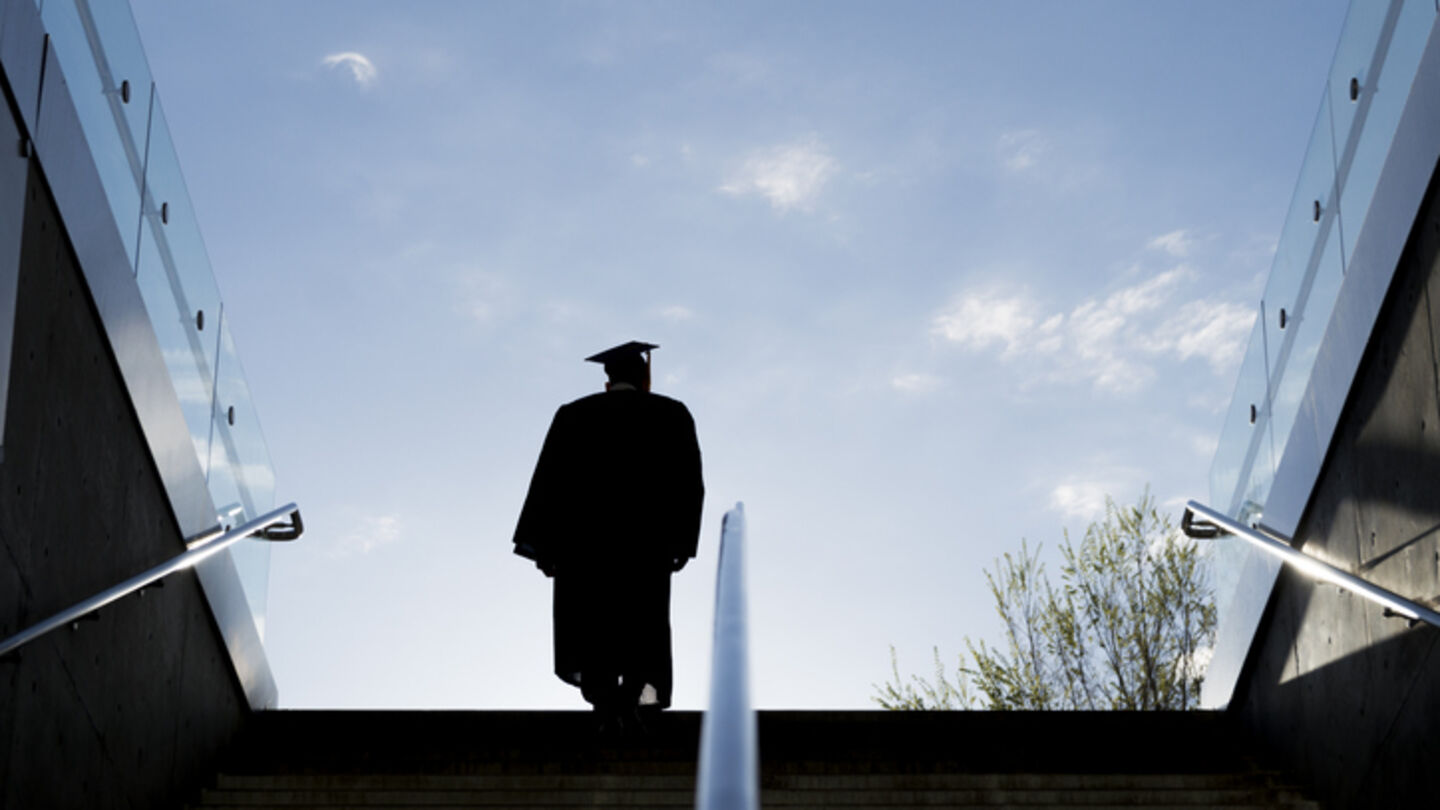
This December, Avaz is finally set to graduate. Now he can look ahead and dream of a future that is now closer than ever.
“I’m very grateful to be here, and grateful that TU/e gave me the opportunity to become part of this community. There is so much openness here, and so many opportunities for people who are willing to contribute. I love being part of it.”
TU/e’s response
“We offer assistance to students who encounter financial difficulties. Their first point of contact is their academic advisor, followed by the student counselor, who can help them explore options for resolving these difficulties, both through personal resources, within TU/e, and externally.
We recently helped a group of Iranian students resolve their financial difficulties, as Cursor wrote about here. Only after these options have been exhausted might an asylum procedure be brought up, and then only as a last resort. Sometimes students raise the subject themselves. In such conversations, we always point out the disadvantages and refer students to organizations where they can obtain more information. Discussions of this option are always informational and never constitute a recommendation.
This has been, and remains, an occasional occurrence, although we have noticed that students are asking about it more frequently as a result of tensions and conflicts around the world. We understand that students who ultimately choose this path face an uncertain situation that can cause additional stress. We make sure to point this out when discussing the subject with them.
We explicitly do not provide guidance on the asylum application process or advise students on whether to pursue it. At this stage, we are often unable to offer further support either, because students who make this choice frequently deregister from the university soon afterward to prevent their financial difficulties from escalating further.
We cannot comment on individual cases. As mentioned above, we understand that considering and going through an asylum procedure can place considerable strain on someone. We do everything within our capabilities to help our students. We want all our students to have the opportunity to successfully complete their studies, and we hope they can then build a career in our country. But once the university's options have been exhausted and a student deregisters, there is little more we can do, however painful that may be in difficult individual circumstances.”
Discussion