- The University
- 8 min
- 16/11/2026

Why researchers are not cutting ties with Israel
Three researchers and a former PhD candidate tell about projects that also involve Israeli partners
“Break the ties,” demonstrators have chanted on campus several times in recent years. They want TU/e to cut all ties with Israel, because of the devastation and suffering in Gaza. Research projects involving Israeli partners have therefore become a subject of debate. But how do the researchers themselves view the issue? “I would rather protest from within.”
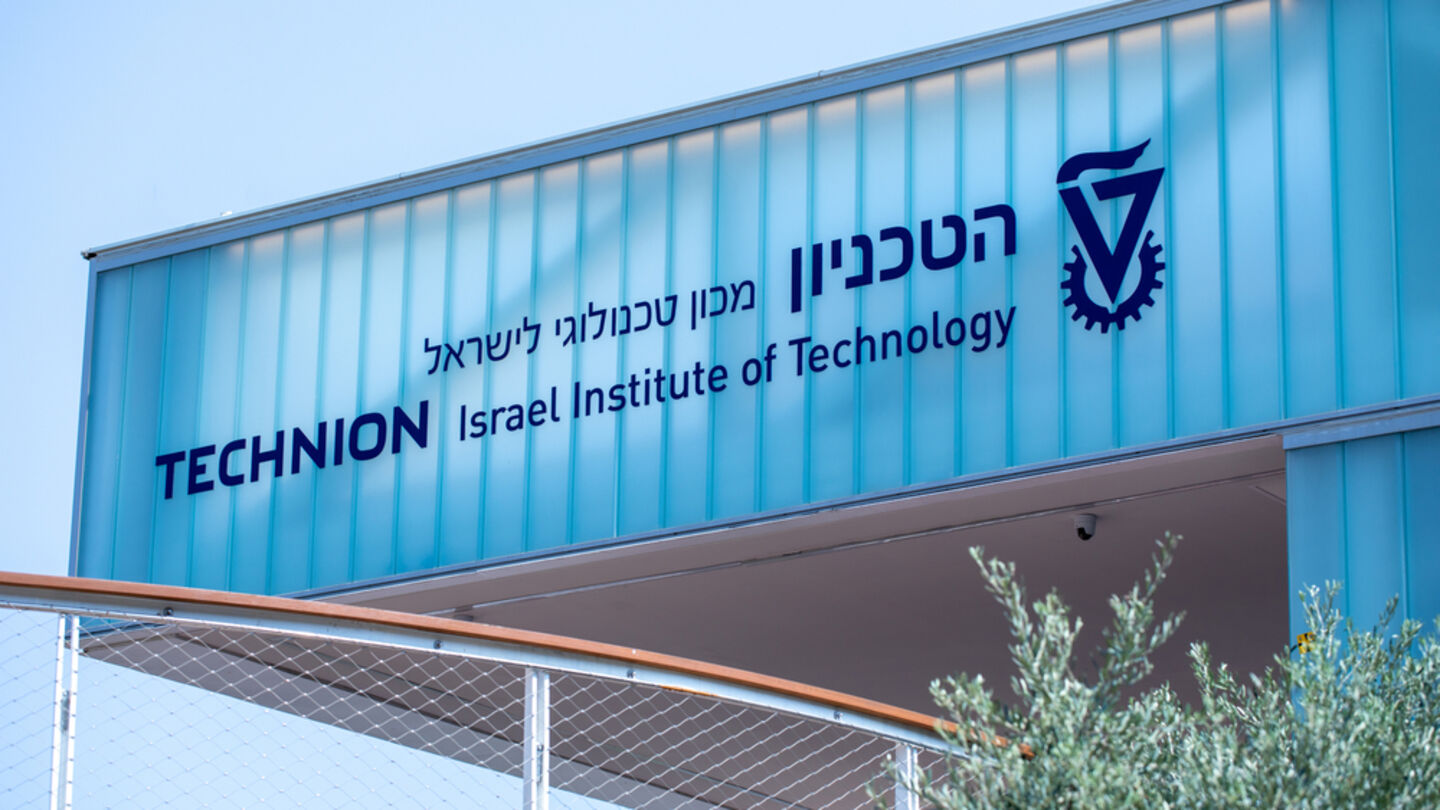
To date, TU/e has not heeded calls of protesters to end all projects involving Israeli partners. In June 2025, however, the Executive Board (CvB) decided to establish a committee on responsible collaborations and freeze institutional cooperation with the university Technion – Israel Institute of Technology.
TU/e still has several ongoing projects with Technion through the European Horizon funding program, which are not part of the what the university calls institutional cooperation, which is only the collaboration between TU/e and Technion within the EuroTech Universities Alliance. There are also collaborations with other Israeli partners, such as the former Mellanox Technologies, a company that manufactured high-speed networking equipment and is now part of NVIDIA, one of the world’s largest technology companies.
In this article, three researchers and a former PhD candidate who have worked on projects involving Israeli partners explain what these collaborations entail and why they have decided not to withdraw. The names of the researchers are known to the editorial team (see the acknowledgements at the end of the article).
Mellanox Technologies
One professor is involved in several projects that also include NVIDIA’s Mellanox division. The first three projects have been completed; one is still active. In practice, there is generally little contact with NVIDIA within these projects, the professor explains.
“I had no interaction with NVIDIA in one of the projects. In another the company contributed an industry perspective on what data centers need. For another it supplies materials such as GPUs (graphic processors, ed.), for experiments used by other partners than TU/e.”
At their core, all the projects focus on how to transfer data more quickly and efficiently, the professor says. “Almost all of this work takes place in a data center setting.”
Dual-use
Some of the project’s results could potentially be used in a military application, he thinks. “You use data centers for mobile phones and, for example, GPS, but we are not working on this with the intention of creating something for military use. We are addressing fundamental questions about how to transfer data more quickly and efficiently.”
Nevertheless, the fact that technology can also be used for other purposes creates a dilemma that researchers grapple with every day, the professor says. “This applies to everything. If you develop a better antenna, it can also be used in the wrong way. And when it comes to data centers, do you use that computing power to develop a new medicine or for something else? This is genuinely very difficult for us.”
Trust
One way to deal with these questions is to try to place trust in the process, he says. “We trust that our research is driven by science, that we learn from it, and that we develop solutions that benefit society.” He takes the same approach to collaborations with partners in general. “One project has around 25 partners, another has 56. As a researcher, I cannot verify every partner. I trust that the consortium has been approved. I also trust the procedures and that Horizon screens the partners and that everyone follows the rules.”
According to the professor, none of the four projects has been discontinued. “The Executive Board asked us to compile a list of all the partners involved in our projects and assess whether we were doing anything we perhaps should not be doing.” He found no indications of any such issues.
Dilemmas
The professor would like demonstrators that want to cut all ties to have a better understanding of what happens within these projects. In his view, the impression is being created that every project with a connection to Israel is bad and that researchers participate without considering the dilemmas involved. “But we face these dilemmas every day. It is not easy.”
The fact that a committee for responsible collaborations is now being established, is a relief to him. ”I am only responsible for what I can influence. We are talking about projects involving 56 members that have all been approved by the EU. And then the people involved are labeled, even though they may be more concerned about the situation in Gaza than the demonstrators themselves. This needs to be handled much more carefully.”
Mellanox hardware
A former PhD candidate worked on the a project that was coordinated by NVIDIA Denmark. The project had six participants in total, including the Israeli company Mellanox Technologies, now part of NVIDIA. The Marie Curie project, which focused on training PhD candidates, dealt with post-quantum cryptography: cryptography designed to withstand attacks from future quantum computers. “In this project, we looked at whether we could run a set of algorithms on specific NVIDIA hardware.”
Little contact
The hardware in question was a device developed by Mellanox, the former PhD candidate explains. “All the manufacturing and engineering teams were based there. They were also supposed to support us.” At first glance, it might seem that Israel played a major role in the project because of the hardware involved, but the alumnus says its role was minimal in practice. “My supervisor was based in Denmark. As far as I know, no one ultimately received day-to-day support from Israel. We did speak with the engineers there a few times, and they were very good at what they did.”
The original plan was also for some PhD candidates to travel to Israel as part of the project, but he recalls that this had already been called off before October 7. “There were visa problems, so we eventually had to choose NVIDIA locations in other countries.” The project itself changed little after October 7. However, an NVIDIA employee was kidnapped during the Hamas attacks. “That was very sad, but the company tried to support those affected as best it could and continue operating as normally as possible.”
A minor player
The research itself was academic in nature, the former PhD candidate says. He considers it unlikely that the knowledge gained through the research will be used in a military context. “NVIDIA is a very large company, though. You don't know who it works with. In any case, our research project did not involve any Israeli weapon companies.”
He understands why some people object to projects involving Israeli partners, but he considers it unfair to target specific research projects. “Governments have contracts worth billions every year. In our case, we were talking about a few hundred thousand euros. Although the Israeli partner was involved in developing the hardware we used, our direct interaction with its engineering teams was very limited.”
“We also discussed the situation among ourselves. In our conversations everyone expressed concerned against the suffering of civilians and hoping for a peaceful solution to the problem. I think it is good that demonstrators are drawing attention to what is happening there, but as an individual, I feel it is unfair when they target these projects. I think the focus should instead be on the major players that can actually make a difference.”
Technion
Although institutional cooperation with Technion remains frozen, several individual projects involving the Israeli university are still underway. One of these is a doctoral training project focusing on aligning AI systems with human values. “PhD candidates in the project work on improving the development and use of large language models (LLMs). They focus specifically on making these systems explainable and fair”, an involved researcher explains.
The contract for the project had already been signed before the most recent escalation, he recalls. “When that situation unfolded, researchers at TU/e wanted to open a discussion within the consortium about what we should do.” According to the researcher, however, legal issues and cultural differences left little room for such a discussion among the other partners, so those involved discussed the available options within the university itself.
Protesting from within
“Within our university there were different opinions about what the best course of action would be, but we agreed that we could not withdraw from the project because doing so would mean breaking the contract. If individual researchers wanted to withdraw, we would give them our full support, though.”
I believe that boycotting is not the most effective approach, because you leave the decision to others
Ultimately, everyone decided to continue, including the project researcher himself. For him, stopping was never really an option. “That is not how I deal with situations like this. I do not favor a general and unqualified boycott; I would rather protest from within. I want to remain involved. Leaving and boycotting can be effective, but what you lose is the ability to influence something from within.”
“Precisely in this project, we have an opportunity to ask: What values do we want these systems to promote? Can we come up with mechanisms to prevent AI from being used in the wrong way? I want to be involved so that I can influence how the technology is developed, because someone is going to develop it anyway.”
Complicity
The researcher understands the demonstrators who want to sever all ties. “They do not want to be complicit. They believe that any form of support for an institution such as Technion will ultimately contribute to problematic or harmful actions. I understand that and sympathize with their position.”
He also believes there is a valid argument behind the idea of complicity. “I am certain that AI systems are being used in weapons systems, let's not fool ourselves. That means they are also being used in war, and perhaps even in oppression or genocide. I understand why someone would want nothing to do with that. Still, I believe that boycotting is not the most effective approach, because you leave the decision to others.”
Limited involvement
In practice, Technion's contribution to the project has remained small, the researcher says. “I think that is indirectly related to the situation there. Technion has been unable to recruit PhD candidates. Some candidates were excluded by the project for reasons unknown to me, while others did not receive approval from Israel. So Technion currently has no PhD candidate on the project and is only minimally involved.”
The researcher says he has never received a request from TU/e to discontinue the project. “Quite the opposite, given the contract. The discussion about possibly stopping was entirely within the group of the project. It is good to see how effective these kinds of social structures can be and that these discussions take place, regardless of what the university wants to do.” The researcher still stands by his decision to continue with the project. “It is complex and very difficult, but I am happy with the decisions I have made.”
Many partners
Most projects listed in the database of collaborations with Israel involve numerous other partners. Sometimes there are seven or ten, but often there are more than 20 or 30, with some projects involving as many as 50 or even 70 partners. Researchers involved say it is not unusual for TU/e to have no contact at all with an Israeli participant within a large consortium.
Since TU/e decided to suspend institutional cooperation with Technion and establish a committee on responsible collaborations, the university has assessed new projects with a link to Israel using a temporary procedure, spokesperson of TU/e Ivo Jongsma explains. “All the projects that have been assessed have received the green light.”
Once the committee is fully up and running, he says, it will initially focus exclusively on institutional collaboration with Technion and on new projects, “because with those the university will have to deal the longest.”
Quantum Machines
A professor involved in a project that included the Israeli company Quantum Machines has never considered discontinuing. According to him, the project aimed to advance quantum computing. Quantum Machines was involved in two work packages within the project. Among other things, the company manufactures electronics for quantum computers. “It is something you are glad another party is developing. You work together to see how it can be improved.”
He had no concerns about having Quantum Machines as a project partner and considers the suggestion that working with the company would contribute to the oppression of Palestinians far-fetched. “If a partner wanted to do something with the research that was unacceptable, I would have a problem with that. But that was not the case here.”
Not a weapon
He does acknowledge that quantum computers can also be used for military purposes. “Ultimately, everything has dual-use potential. A quantum computer is not a weapon, but it is a very powerful computer that could, for example, be used to decrypt messages.”
However, the project’s Technology Readiness Level (TRL) is so low that Israel, or any other country, cannot do anything concrete with it at this stage, according to the professor. “To be able to decipher messages, you need to be able to run Shor’s algorithm. That requires approximately 10,000 logical qubits that operate virtually flawlessly. At the moment, we have zero logical qubits capable of doing that.”
A distorted picture
According to the professor, the project does not give any of its partners an advantage. “We have mainly benefited from it ourselves.” The project is also publicly funded and open, with all its results available to the public, just like those of the other projects discussed in this article.
“We have a very open collaboration. I think people sometimes have a somewhat distorted picture of how these collaborations work. If you think that what we are doing here in Eindhoven contributes to developing technology for a regime that oppresses people: that is not what we are doing. I know what the project involves, and it cannot contribute to the oppression of a people.”
That does not mean the professor fails to understand the demonstrators. “If you are very politically active, you will oppose any possible interaction or collaboration with Israel. If you do not want any collaborations at all, then there is no way to get it right. I focus more on the individuals I work with. There are excellent scientists all over the world. If we focus on scientific work, the world will be better for it.”
Discussion