
- Culture
- 05/12/2025
From Drees to Dorgelo: TU/encyclopedie back online
The digital encyclopedia about TU/e is accessible again. For a while, this online reference work was out of service due to outdated software, but anyone interested can now once again browse through its entries. They cover key moments, people, and events from the university’s history in Eindhoven.
“The TU/encyclopedie (only in Dutch, ed.) was running on software version 1.17, while the current version is 1.43,” says technical application manager Reinier Post. So it’s not surprising that the “TU/e Wikipedia” eventually stopped working.
Erik Geelen, academic heritage specialist at LIS, was one of the compilers of the encyclopedia. “Some time ago, I noticed that you could still search for and click on entries, but the pages would come up blank.”
Time, then, for a major update. “You can’t jump from 1.17 straight to 1.43; you have to update in steps of four versions.” Post, who has experience with the software used, MediaWiki, managed to bring the lexicon up to date in roughly one working day. “The encyclopedia looks different now, but all pages are accessible again.”
What is the TU/encyclopedie?
The TU/encyclopedie (Dutch) is the online version of the printed Kleine TU/e Encyclopedie, published in 2006 to mark TU/e’s fiftieth anniversary. From its founding in 1956 until 1987, TU/e was still known as THE: Technische Hogeschool Eindhoven.
The reference work was written by Joep Huiskamp, the university’s unofficial historian, who retired a few years ago. Erik Geelen contributed as photo editor, as he manages TU/e’s historical image archive.
In 2010, all TU/e employees received the encyclopedia as a handy paperback in their Christmas package, so the dark-gray booklet can still be found in many departments—including the TU/e editorial office. A year later, in 2011, TU/e celebrated another anniversary, and the encyclopedia’s contents were digitized and published online.
Philips
Now that the digital version of the TU/e lexicon is technically up to date again, the obvious question is what will happen to its content. Nearly two decades have passed since the encyclopedia was compiled, and the university is approaching its 70-year anniversary.
Much has changed on campus over those years: notable members of the TU/e community have come and gone, buildings have been demolished and constructed, and Philips has made way for ASML. These developments, however, have not been added to the TU/encyclopedia.
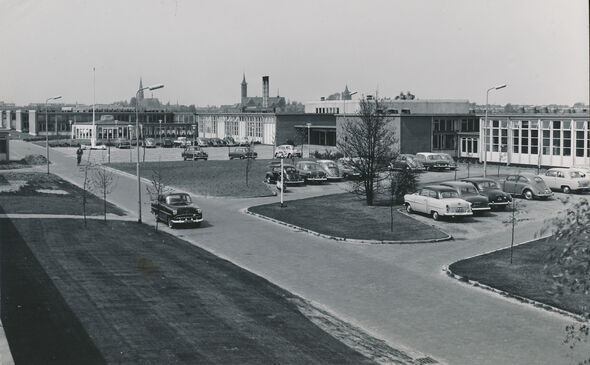
Geelen: “Where possible, I supplemented lists of names and dates and made small updates. I also added more photos to many entries, since a website offers more space than print. But I haven’t written any new entries.”
Historical storytelling
Will those new entries be added? That decision lies with TU/e’s Heritage and Art Committee. Secretary Britte Sloothaak responds on behalf of its members: “There are no plans to update the TU/encyclopedie by adding all missing years within the old format.”
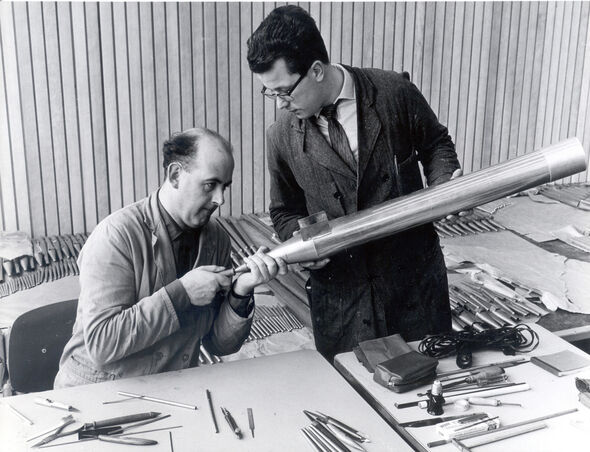
That does not mean TU/e’s history will receive less attention going forward. Sloothaak: “As a committee, we certainly recognize the importance of the TU/e Encyclopedia, and now that university and academic heritage has recently become part of our mission, we will spend the coming year exploring how we can document and communicate the university’s historical storytelling in a renewed and contemporary way. That does not necessarily need to follow the old format.”
“The 75-year anniversary in 2031 will serve as a catalyst—and our figurative guiding star,” she concludes.
Horowitz and Dorgelo
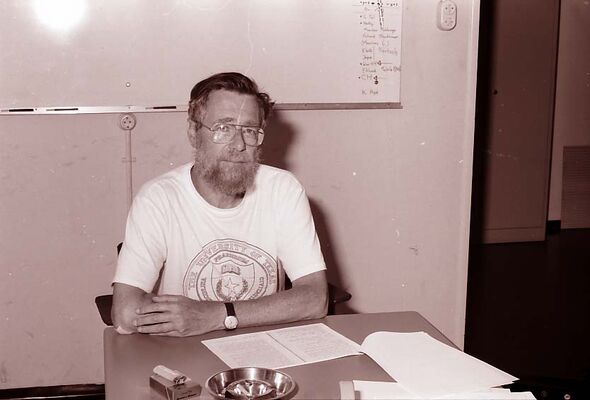
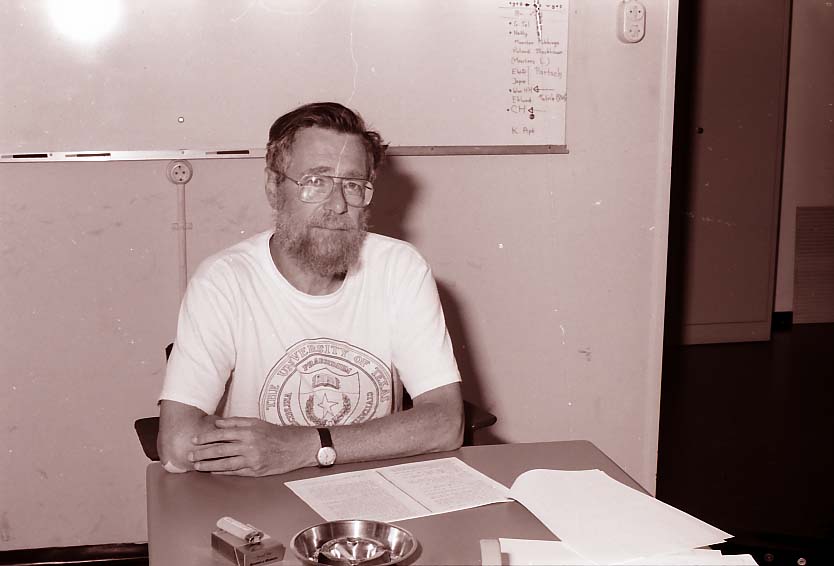
Nonetheless, the edition of the TU/encyclopedie that runs until 2006 still offers plenty to discover. Learn, for instance, about Edsger Dijkstra, the Turing Award winner whose algorithm still helps navigation systems find the shortest route from A to B. Or read about Helga Fassbinder, TU/e’s first female full professor, who contributed to shaping the new Berlin after the fall of the Wall.
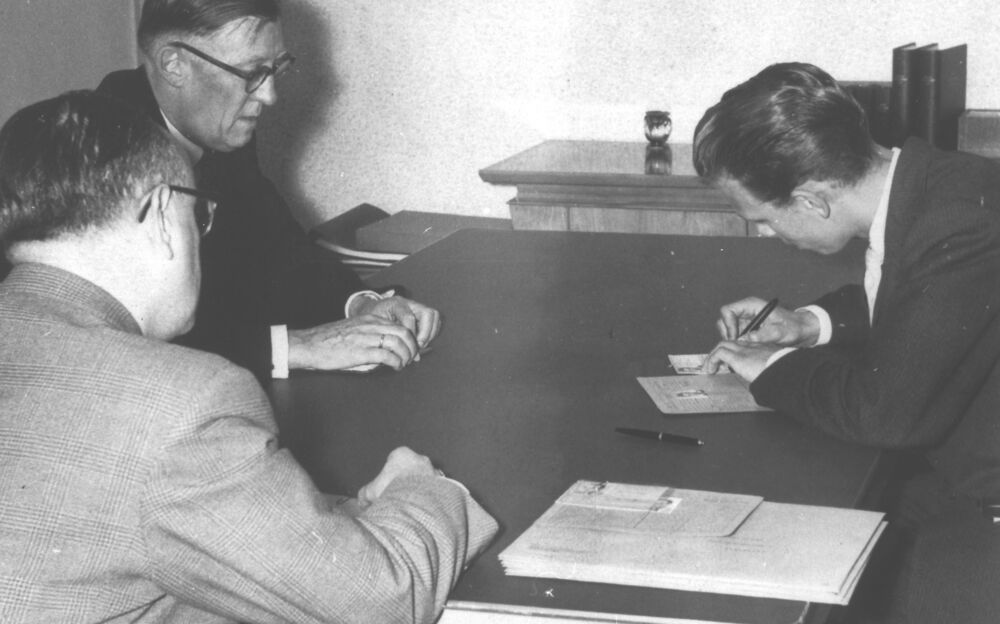


You can also find Alexandre Horowitz, the colorful and scatterbrained professor who for example designed the Philishave. And who knew that Henk Dorgelo—after whom the Prof. Dr. Dorgelolaan south of campus is named—was TU/e’s first Rector Magnificus? In short, the TU/encyclopedia is a very satisfying rabbit hole to disappear into.
Caption top photo: Queen Juliana visiting campus, speaking with curator Theo Tromp (to HM’s left) and Rector Posthumus (to HM’s right), September 17, 1963
This article was translated using AI-assisted tools and reviewed by an editor
Discussion