
- Campus
- 30/01/2026
Three TU/e buildings likely to be designated as monuments
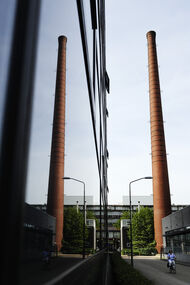
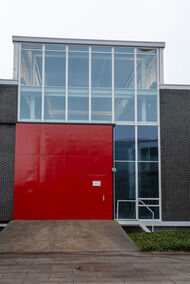
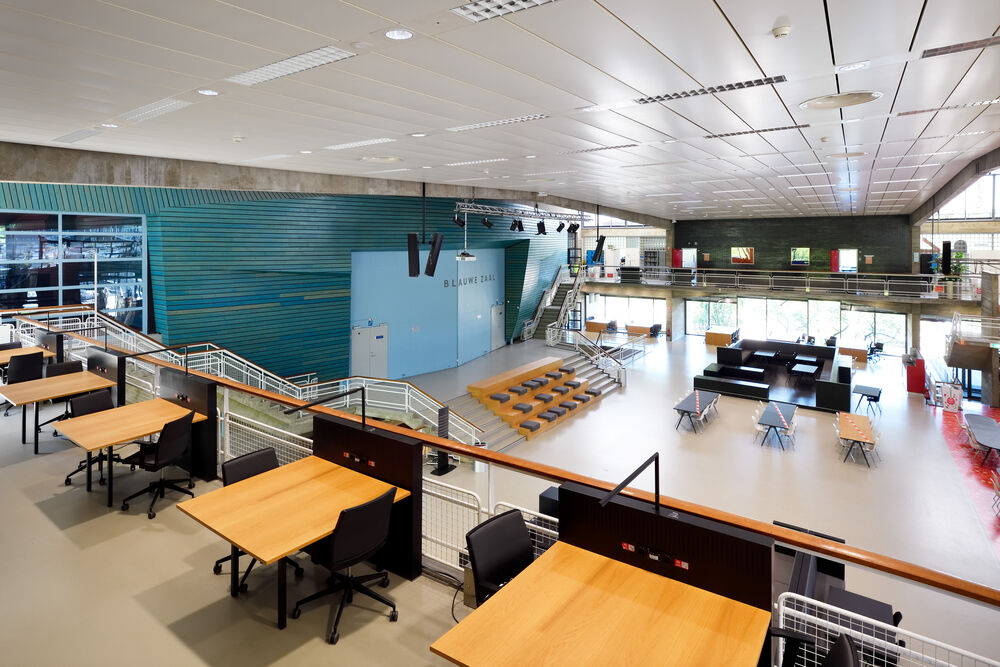
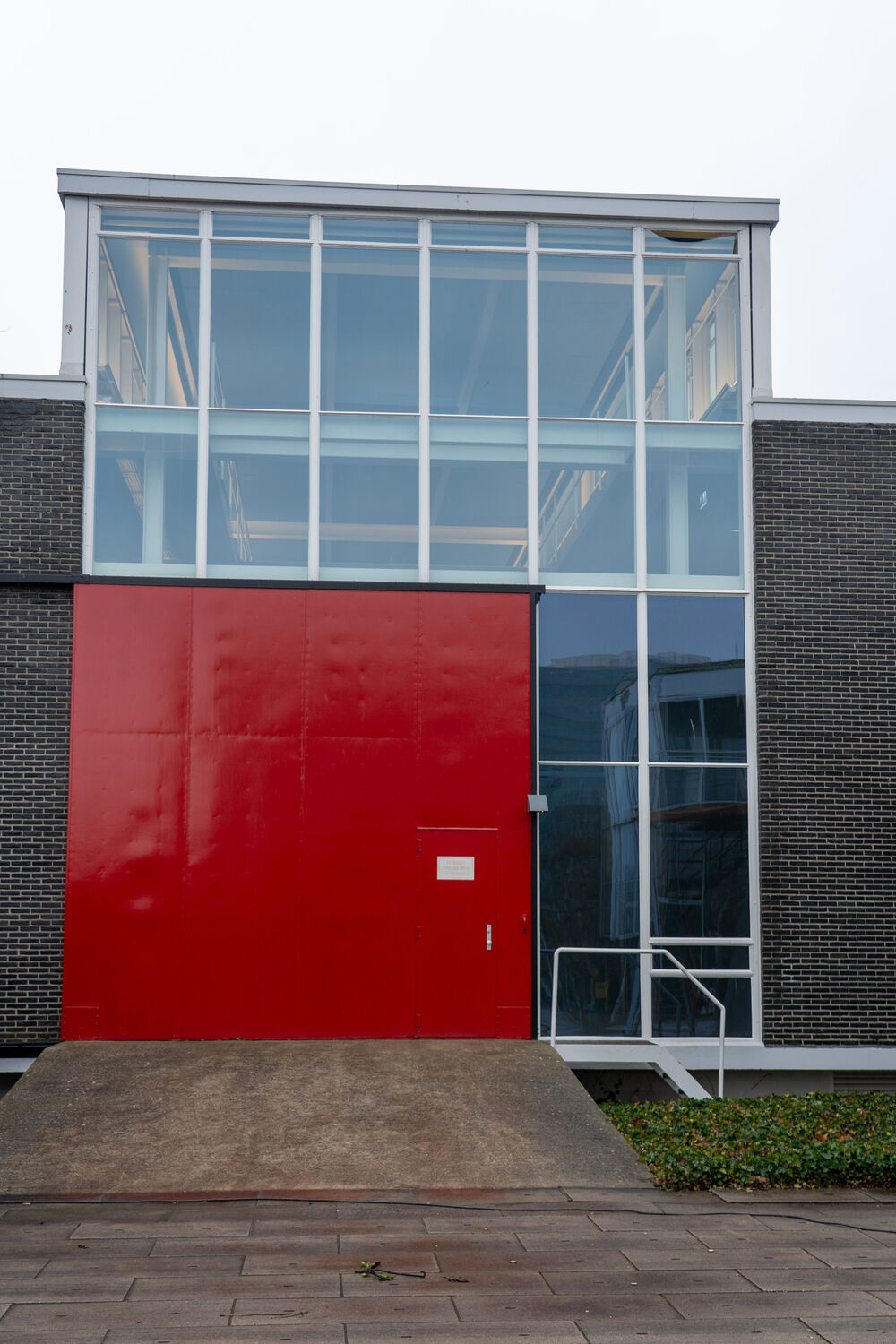
It still needs to be formalized, but the Municipality of Eindhoven intends to grant three buildings on the TU/e campus municipal monument status. These are the Auditorium, Ceres, and Gemini-Zuid. In addition, two artworks will be designated as historically valuable art.
Shouldn’t the Auditorium be given monument status? With that question, the Cuypersgenootschap—an association dedicated to the preservation of architectural heritage—inspired the municipality to take a closer look at the rest of the TU/e campus as well.
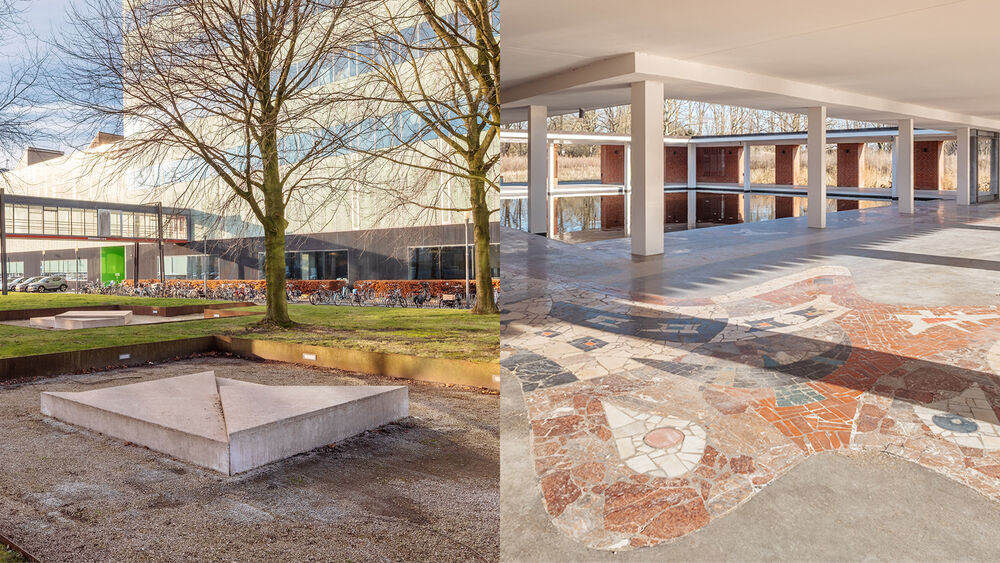
The result: not only the Auditorium, but also Ceres and Gemini-Zuid will receive municipal protection. The same applies to a floor mosaic by artist Jan Dijker and floor reliefs created by Ad Dekkers.
Young
The Eindhoven campus is of fairly recent origin, notes Alderman Remco van Dooren during a press moment about the plan, “but what happened in the relatively recent past is also important to pass on to future generations.”
The buildings and artworks that are now set to receive monument status all date from the 1960s and 1970s. There are only two other monuments in Eindhoven that are just as young: the Koelhuis and the water spheres next to swimming pool De Tongelreep. TU/e already has one national monument: the former W-Hal, now MetaForum.
Still relevant
All three proposed monuments were designed by campus architect Sam van Embden. With his vision for the campus of what was then the THE, he wanted to instill something in students based on the Bildungsprinzip, explains Patrick Groothuis, Vice President of the Executive Board. “It wasn’t just about teaching engineering knowledge, but also about where they would eventually go to work. The campus was inspired by that idea.”
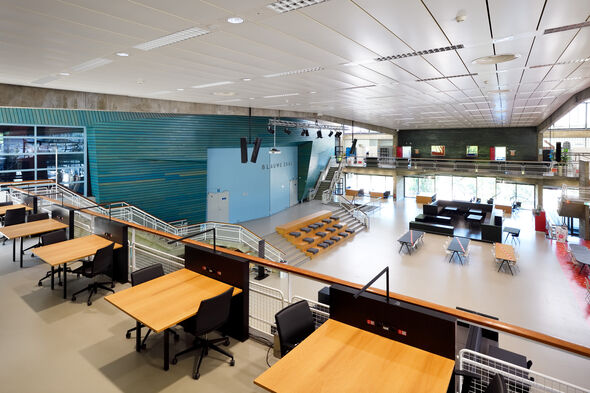
Groothuis also points to the walkways connecting all the buildings and the central meeting point in the Auditorium, which make collaboration easier. “What’s funny is that the philosophies from back then are still relevant, because today’s major challenges are never solved from a single discipline. Solutions always emerge at the intersection of multiple disciplines.”
Construction phases
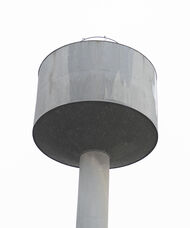
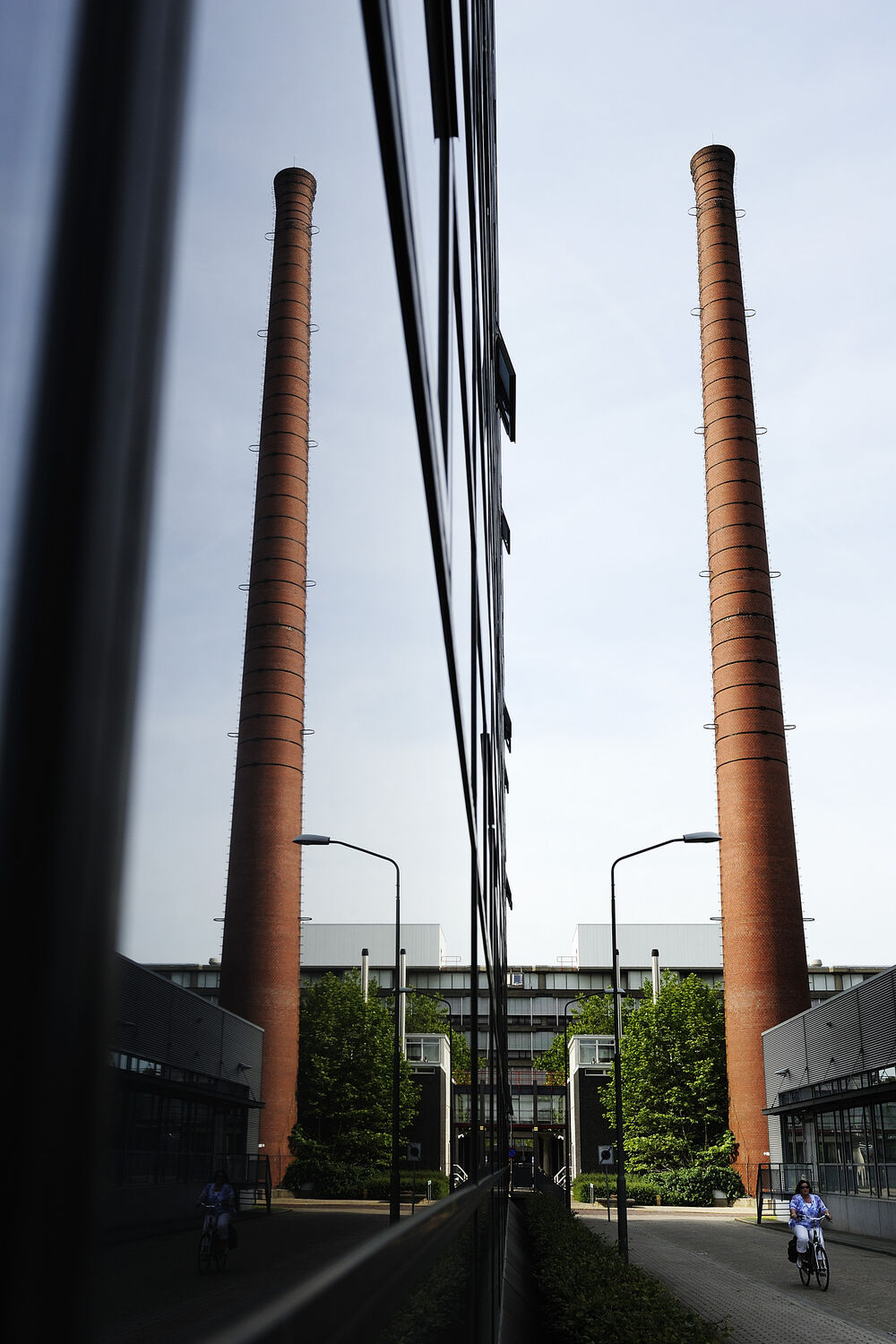
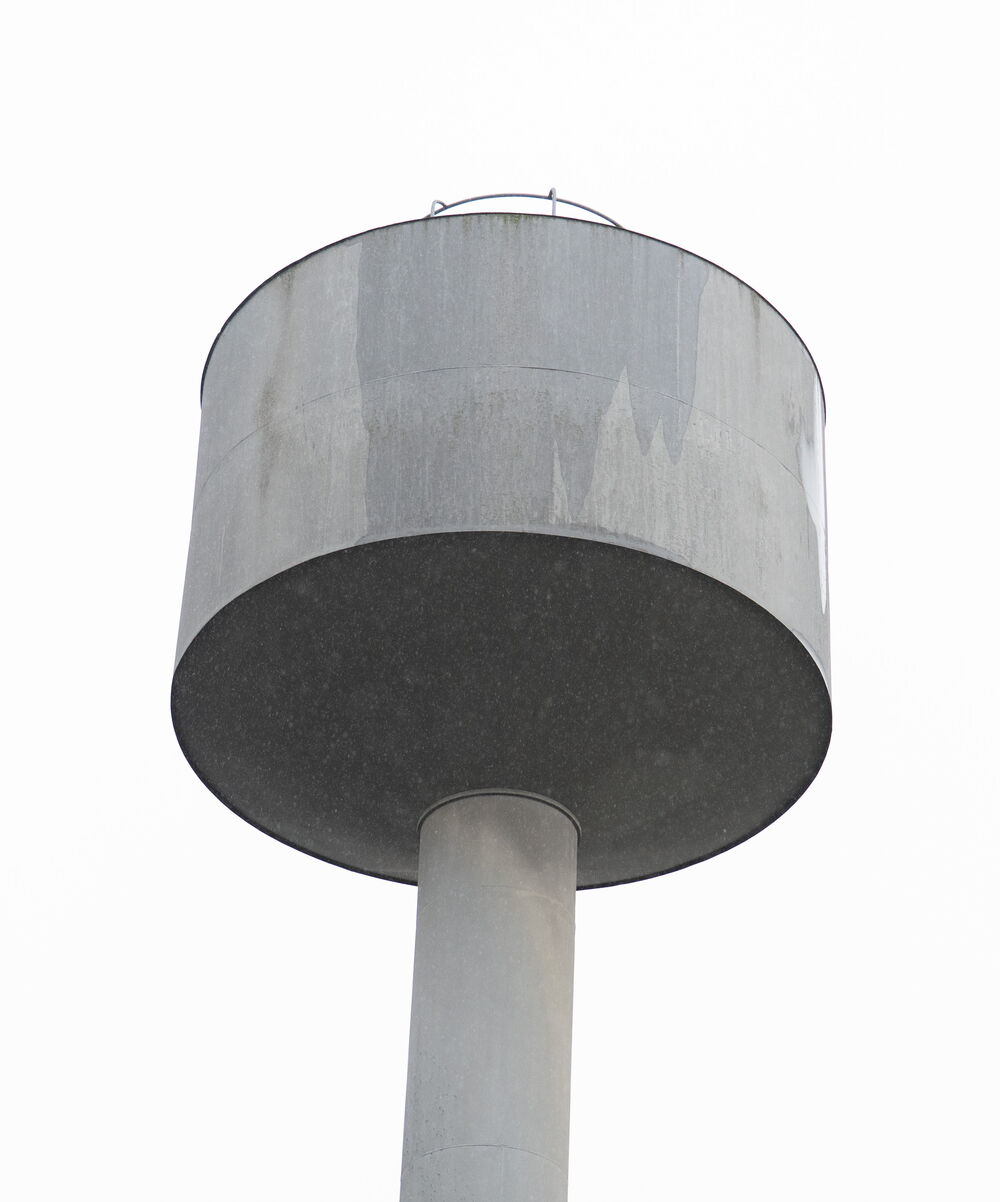
The Auditorium and the former boiler house Ceres—also including the water tower and the recently renovated chimney—both date from the first construction wave of the campus and are therefore, according to the municipality, illustrative of that phase. These buildings have an industrial, businesslike design and thus differ from Gemini-Zuid, which dates from the second construction phase.
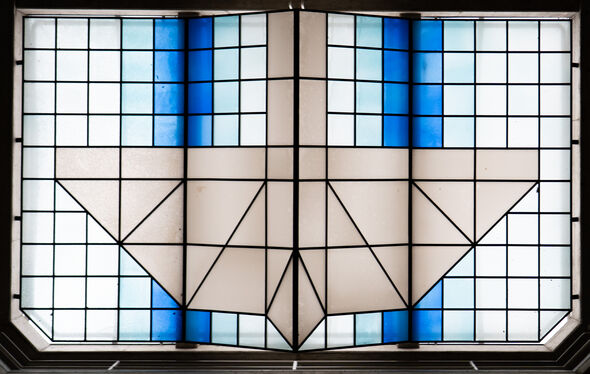
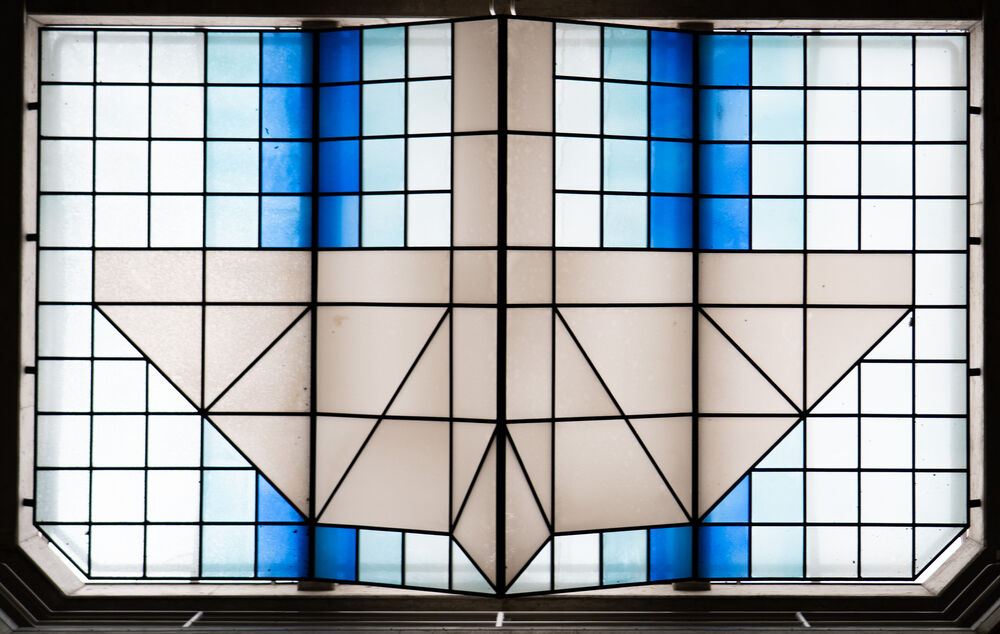
“The same architect took a very different approach and focused much more on the human scale,” says Rik van der Velden of TU/e’s quality committee. According to him, the glass artworks in the building by Jan van Goethem are also connected to this approach—artworks that, incidentally, will be preserved following the current renovation.
Art
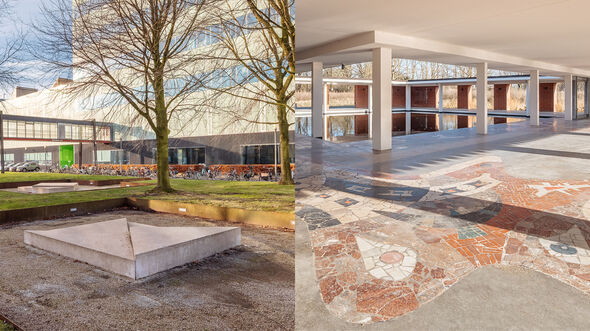
In addition to the glass artwork by Jan van Goethem as part of Gemini-Zuid, two artworks will also receive their own monument protection: a floor mosaic by Jan Dijker and a floor relief by Ad Dekkers.
The mosaic, which Dijker laid himself using shards of varying size, shape, and color, can be found near the remains of the pavilion building, next to the student housing towers. He created the artwork for the atrium of the Provisorium, the first building on the TU/e site. It is also one of the first artworks acquired by TU/e.
The other artwork, by Ad Dekkers, is located between Vertigo and Matrix. The reliefs were originally designed for the computing center, now Neuron. In 2002, the artworks were relocated to their current location. In these works, Dekkers uses geometric shapes such as circles, squares, and triangles, layered to show the process of changing form.
The renovation of Gemini-Zuid raises the question of whether it is practical for an innovative university to own monuments. “Buildings with monument status naturally have a somewhat more formal status, and that also comes with certain obligations,” Groothuis acknowledges.
But he does not expect it to make a substantial difference for the university, as TU/e already has a very deliberate policy aimed at preserving and strengthening valuable elements from the past for the future. “That’s also why we have a quality committee.”
Cultural-historical exploration
As early as 2010, the university agreed with the municipality that for campus elements involving art history or the first and second construction phases, a cultural-historical exploration would always precede any renovation or new function, Van der Velden explains.
“We also shared the entire renovation plan for Gemini-Zuid with the municipality, and that was incorporated into the official reasoning for the monument designation. The author of that document was pleased with our cultural-historical exploration—half of his work was already done.” Van der Velden therefore also expects little change in day-to-day practice, but he does see the monument status as a form of public recognition.
Open campus
Alderman Van Dooren hopes that designating the buildings and artworks as monuments will attract more visitors from outside to the TU/e campus. “In this way, we can inspire more people from Eindhoven and beyond with what is here.” Groothuis also emphasizes that the campus is for everyone, and that its openness will increase even further once the new satellite location of the Rijksmuseum, adjacent to the TU/e site, opens its doors.
Although the municipality has expressed its intention to grant monument status to the buildings and artworks, several procedural steps remain, during which objections can still be lodged. At the press moment, Groothuis jokingly assured that the university is not intending to make use of that right. If the process runs smoothly, the municipality expects to officially designate the buildings and artworks as monuments around the summer.
This article was translated using AI-assisted tools and reviewed by an editor.
Discussion