
- Student
- 28/08/2026

New battery pack brings InMotion closer to Le Mans
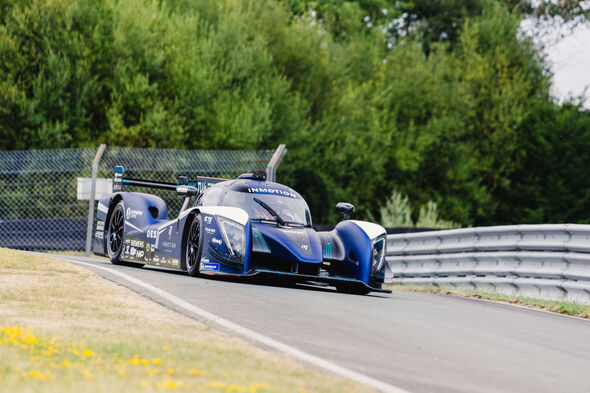
Student team InMotion tested the new battery pack of its electrical race car at full power for the first time. At the German Bilster Berg circuit, InMotion’s car reached a speed of 240 kilometers per hour. This brings the Eindhoven based team one step closer to its ultimate goal: competing in the 24 Hours of Le Mans.
The new battery pack, NGBP Evo, is the second version of InMotion’s Next Generation Battery Pack (NGBP). While developing the first generation took several years, the team managed to develop, build and integrate the new version in electrical race car “The Revolution” in just one year.
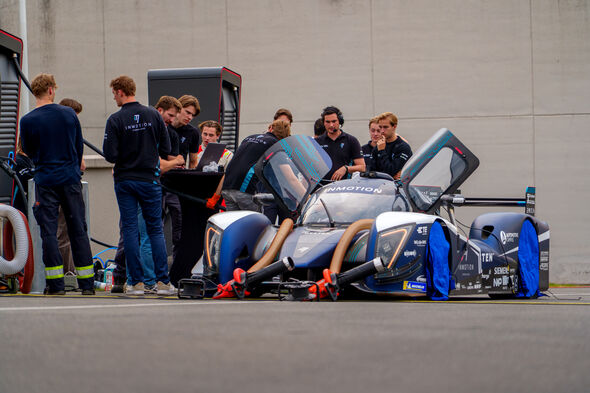
On the race track last Tuesday, the battery pack remained electrically and thermally stable under intensive conditions.
“The voltage difference between the cells in the battery is almost negligible, and the temperature difference across the entire battery pack remained low,” says InMotion’s PR manager Billie de Jonge.
“The fact that everything is performing well and that the results are consistent across the entire battery pack makes it reliable to use, meaning the car can now race properly.”
Longer races
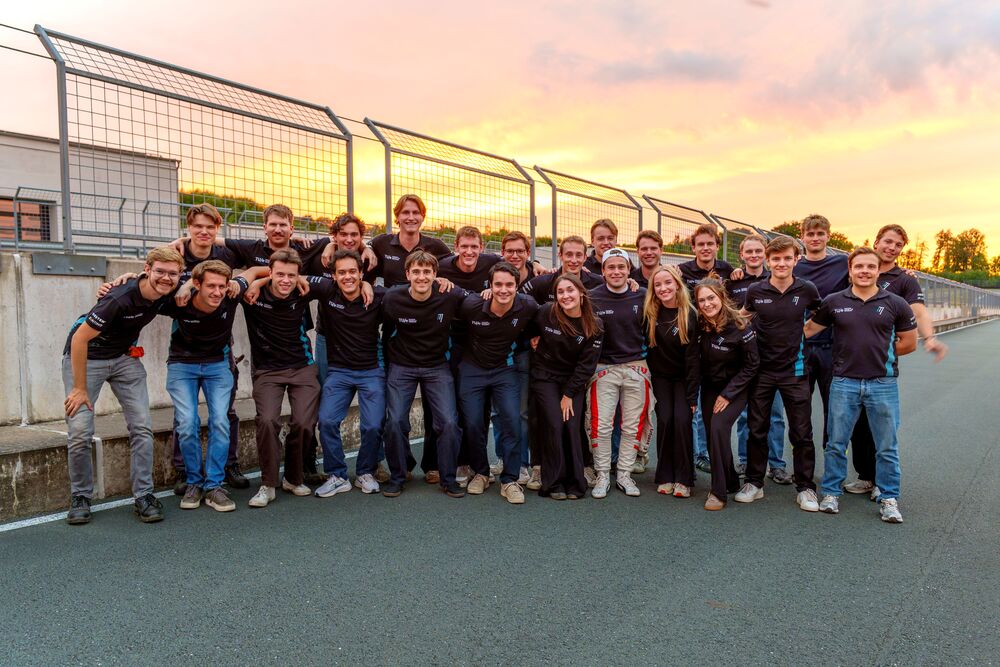
InMotion consists of 26 TU/e and Fontys students who work full-time on battery technology. The team uses motorsports as a testing environment. De Jonge: “In the coming years, we want to build up to increasingly longer races. We are now working toward the Supercar Challenge at Zandvoort, a one-hour race.”
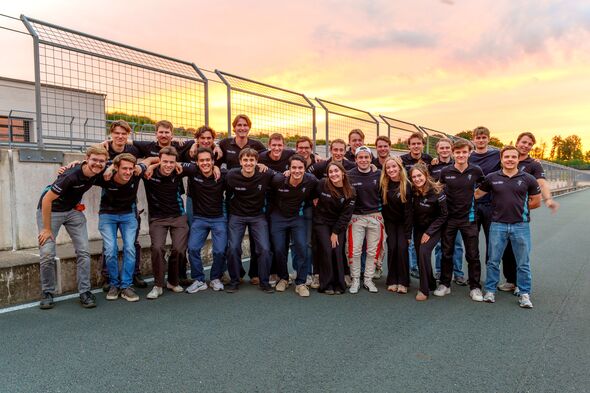
Step by step, the team is working toward its end goal: participating in the 24 Hours of Le Mans to demonstrate the potential of fast charging. The successful test at Bilster Berg brings that racing ambition one step closer.
“That is our ultimate dream,” says De Jonge. “It will take some time, but we are working hard and getting a little closer every year.”
Performance
NGBP Evo has the same charging capacity as its predecessor: in four minutes, the pack is filled up. In addition, the battery pack provides 39.3 kilometers of range per minute of charging.
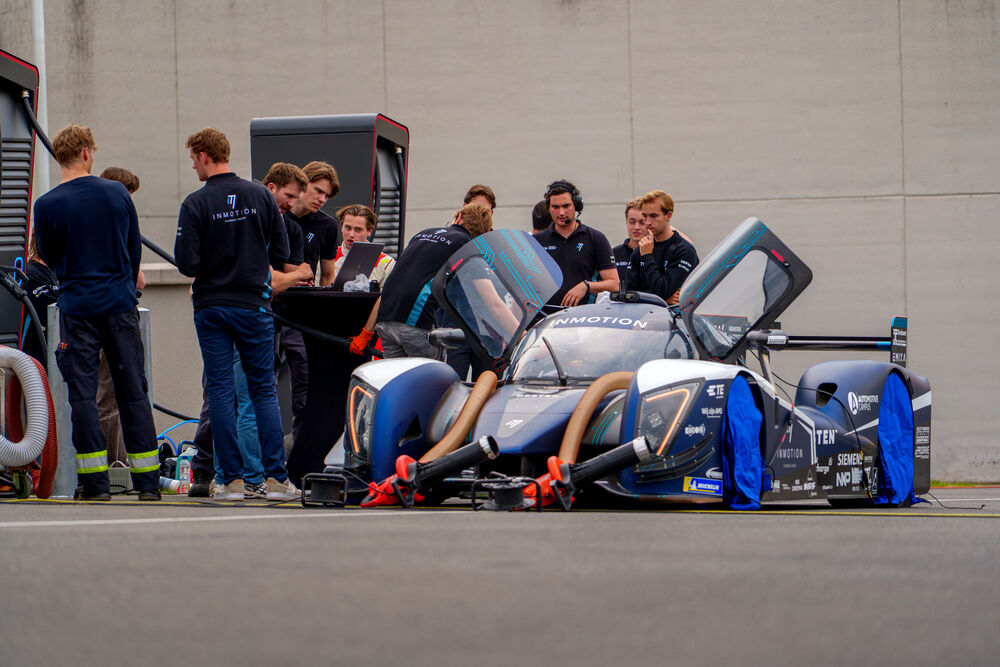
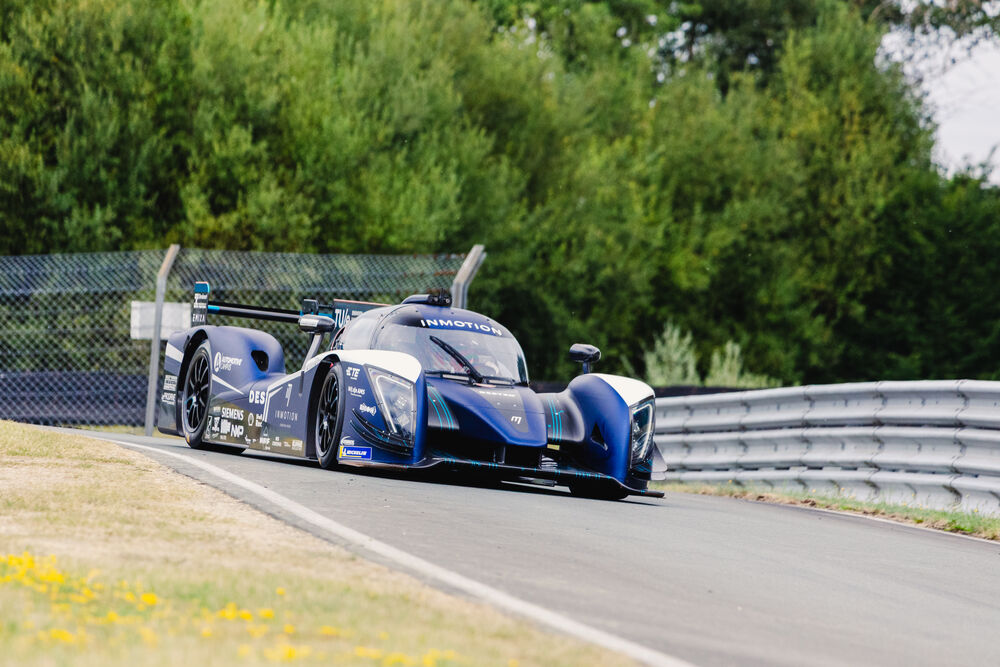
During the test day, the maximum temperature difference between the cells remained limited to 3 degrees Celsius. The maximum voltage difference between the individual cells was 20 millivolts. The improved cooling system achieved a flow rate of 36 liters per minute per module.
This article was translated using AI-assisted tools and reviewed by an editor.
Discussion