
- Student
- 20/03/2026

Behind the scenes | Karan Paranganat, student rep AI
From technicians to schedulers, and from IT specialists to catering staff—it takes many hands to keep TU/e running smoothly. But who are the people behind the scenes? Cursor puts them in the spotlight. This time: Karan Paranganat, student representative in IE&IS’s AI in Education Task Force.
Karan Paranganat has anything but a typical side job—and he wouldn’t have it any other way. As a student representative in the AI in Education Task Force of Industrial Engineering & Innovation Sciences, he enjoys sharing his unfiltered views on everything related to AI and its impact on education.
Each month, he shares his insights in the AI newsletter. “I try to take a critical look at the latest developments, while also addressing misconceptions and sharing useful tips,” he says, “but always with the student in mind.”
If Paranganat ever approaches you and asks you all about how you use AI, no worries. He’s simply curious and eager to learn from you. “How students use AI is constantly evolving, and the easiest way to stay up to date is to just talk to them. I like to see how they get creative.”
What time do you clock in?
“My working hours are rather flexible. I just work when I have the time. There are a few meetings that have set hours, of course. There’s a biweekly meeting to discuss all ongoing projects, but it’s not mandatory for me—so I only go when I can, and when I can’t I’ll read the recap document afterwards. There’s only one meeting where I’m really needed, specifically for our newsletter. This meeting is generally once a month.”
What does your job involve?
“I’m a student representative in the AI in Education Task Force of my department, Industrial Engineering and Innovation Sciences. It’s basically me, another student, and eight professors. The goal is to better adapt to AI, since it’s creeping into professors’ and students’ lives more and more. It's an ongoing project, on how to integrate and better prepare our department with AI use in education.”
“The task force as a whole does a lot of things. It helps teachers shape their courses: how to implement AI, but also how to design assignments that are less susceptible to AI misuse. We also run experiments, organize workshops, and create and test new pilot programs. And something I personally spend my time on, is keeping the community up to date on the latest developments in AI.”
“My role in the task force started with giving the professors a student’s perspective. Initially it was just me being in the meetings and talking about my personal experience with AI as a student, but over time my role grew a bit.”
“Now my main task is working on our newsletter. Every month we send one out to all our subscribers, about the latest AI news, and our thoughts on all these developments basically. I write one article in every newsletter, and besides that, I try to curate news too.”
“Usually my articles are about a phenomenon I see occur. Recently I wrote one about how I see a lot of students write software using chat. I also point to different articles or resources I've read, some of them regarding AI water usage and the complexity behind it.”
“Others are about AI being sometimes rushed and forced into government strategy and the errors that it causes. Or when AI is implemented or advertised to college students, what are the incentives behind that?”
Newsletter
The newsletter on AI in education is open for everyone to read. You can subscribe on the task force’s website, at the bottom of the home page. Here’s an example of January's newsletter, in which Paranganat wrote about sharing and continuing each other’s chats with tools like ChatGPT or Claude: “So you can send your whole conversation and prompting history, and the other person can pick up where you left off.”
“My inspiration for those articles comes from reading a lot of AI-related news—but often also by having a chat with students.”
“When I see students using AI tools I’ll just walk up to them and say: “Hey, what are you doing? And why? And what are you prompting?” This way I keep up to date with how students are using AI for their studies. Usually students are open to chat with me, because it’s anonymous, and I generally give off an ‘I'm just curious vibe’, I think.”
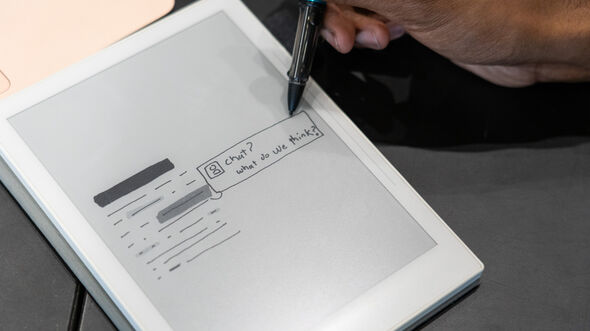
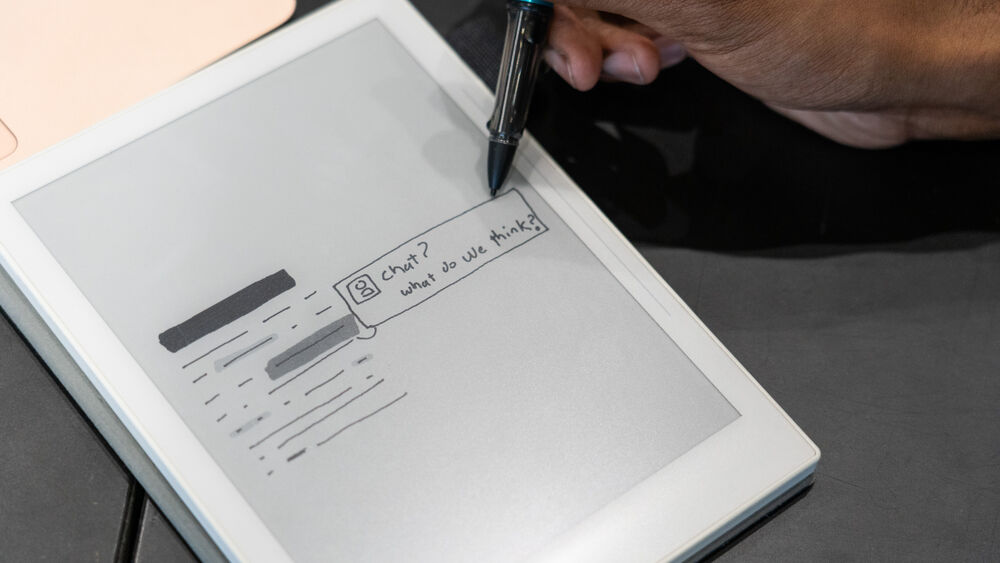
“If I have time, I also hand-draw an illustration for the newsletter. I do this by hand to complement everything I've written about AI.”
How did you end up in this job?
“Before I joined the task force I was already active within our department. As part of the student association, Intermate, and as part of our Program Committee, where I would give feedback on courses.”
“One day, someone from the Education Council of my study association said they knew a professor wanting to start a new committee—the AI in Education Task Force. And I said I would be interested.”
“I was curious and went to the interview, where I was very critical of AI, describing it as a giant hype, but also acknowledging its possibilities. I guess he liked my view because I got the job.”
What do you enjoy most about your job?
“I like that it’s a bit of a strange journalistic and anthropological role, and I enjoy the autonomy. It’s completely up to me what topics I’m researching and writing about.”
“Apart from that, I like that my opinion is considered a lot. The professors in the task force really appreciate the student’s perspective that I’m able to provide. A lot of the things I observe and bring in are unknown to them.”
And the least fun part?
“Because my tasks are a bit open-ended, I’ll sometimes be a bit enthusiastic, and start working on an article that turns out to be way too much work for the hours in my contract. I don’t mind doing a bit more, but if it’s really not doable in terms of time, I’ll have to leave the piece unfinished.”
What time do you clock out?
“As I said before, I don't really have strict hours. Sometimes I work during the day, other times in the evenings, but also on the weekends. I generally just work when I have the inspiration for something.”
What do you do after you clock out?
“To be honest, I really like this stuff, so I can't say I truly clock out. I just keep reading and researching the latest developments. It’s nice to take what I’m interested in and being encouraged to develop that in that context. Reading, researching, drawing, talking to people.”
“Apart from that I also go to the sports center. I usually go for yoga classes, or to the gym. And I’m finishing up my thesis at the moment, for my Master’s in Human-Technology Interaction.”
Discussion