
- People
- 20/03/2026

Middle East unrest continues, TU/e offers support
The unrest in the Middle East continues, and its impact is being felt far beyond the region. Iranian TU/e members are balancing fear and uncertainty while trying to keep up with their work and studies. The university is supporting them with psychological services and gatherings where they can share their concerns and find connection.
Since the beginning of 2026, Iran has experienced a period of unprecedented unrest. Massive protests against economic problems and political repression were violently suppressed by security forces, resulting in thousands of deaths among demonstrators.
The period has been marked by extreme uncertainty and fear, as Iranians abroad often could not contact their loved ones due to telephone and internet blackouts and did not know whether they were alive.
In February, the situation escalated further: the United States and Israel carried out airstrikes on military targets in Iran, during which Supreme Leader Ayatollah Ali Khamenei was reported dead. Shortly thereafter, his son Mojtaba Khamenei was announced as the new Supreme Leader in an attempt to continue the existing regime.
The conflict spread to other parts of the Middle East, with Iranian missile and drone attacks on Israel and neighboring countries, hundreds of deaths, and rising unrest in the region.
Tangle of emotions
Many Iranians initially reacted with relief or even exuberance to the news of the Supreme Leader’s death, and spontaneous celebrations were seen across the globe. However, that joy quickly merged with uncertainty and concern about what the future may hold. For many members of the TU/e community, the situation remains a source of stress and anxiety.
Ahmadreza Marandi, assistant professor at TU/e of Iranian descent, experiences a tangle of emotions: “It’s hard to put into words what I feel. Happiness that the brutal leader is gone, fear for the future, worry about family, sadness for those who have died, anger at the regime’s behavior… all at once.”
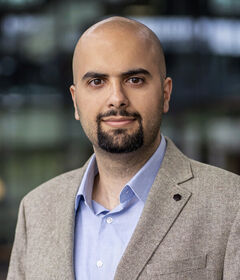
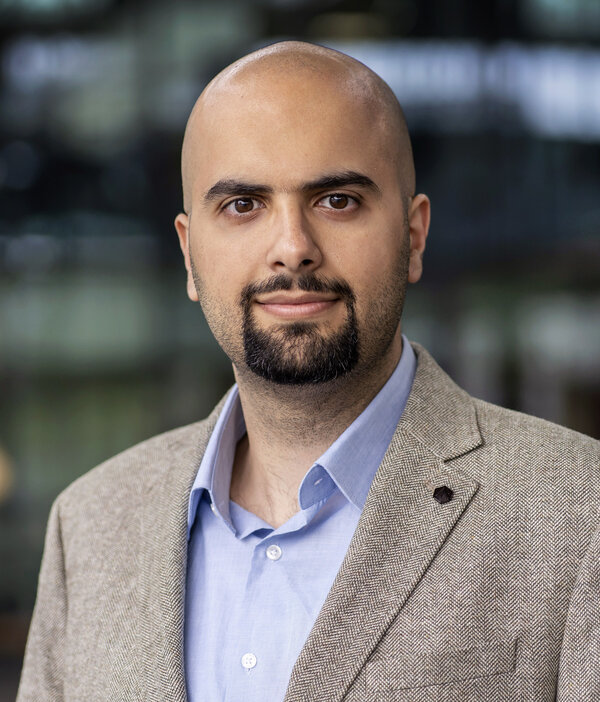
In January, Cursor spoke with him after the massive protests. At that time, he was pessimistic about Iran’s future. Now, after the U.S. and Israeli airstrikes and the death of the Ayatollah, he cautiously allows himself to think about change.
“My brother, who lives in the U.S., and I agreed: if the regime is eventually gone, we will celebrate this with our families in Iran. It may take another ten years, but the regime is now very weakened and simply cannot hold on.”
Not a nine-to-five job
There are 177 Iranian staff members at TU/e. The university actively tries to support them. “The HR teams within the faculties keep in touch with staff and provide tailored support where needed, depending on the employee’s needs,” a university spokesperson told Cursor.
In addition, staff affected by the war and unrest in the Middle East can turn to OpenUp. This online mental health platform offers one-on-one psychological support, and its services are available in multiple languages.
Marandi also notices that the difficult situation affects his work, but he is unsure how the university could help him personally. “Being a professor is not a nine-to-five job. I have deadlines, and there are students and PhD candidates who need to graduate and require guidance,” he says. “I can’t just turn them away because I feel mentally overwhelmed.”
Even in these challenging times, he feels committed to his students and the university. “I attended a meeting for Iranian students and staff at TU/e. I wasn’t there to ask for help, but to provide it. Our main task is to be there for students and support them so they can continue their studies.”
Overwhelming and stressful
Sarvin (real name known to the editors), a master’s student at TU/e’s Department of Built Environment and originally from Iran, also finds the situation overwhelming. “We constantly see images and reports of bombings. It’s extremely stressful, especially because my family and friends are there.”
Her studies also suffer, she admits. “It’s hard to concentrate on assignments and exams. It’s emotionally very heavy.”
Soroush (real name known to the editors), a master’s student in Computer Science from Iran, shares those feelings. “The whole situation causes a lot of stress. I worry about my family and the future, and it’s hard to keep up with my studies and assignments.”
He tries to balance following the news with protecting his own mental state. “I check updates a few times a day, not constantly. If I’ve just spoken to my mother, I allow myself to follow the news. Then I know she’s safe.”
Nowruz
As if that weren’t enough, Soroush's rental contract will expire soon. He must quickly find a new place and organize a move—something he currently lacks the energy and mental capacity for. This adds further instability to an already uncertain life.
The upcoming Nowruz, the Persian New Year (celebrated on the day of publication—March 20, ed.), makes the situation even more difficult. “I’m very close to my mother. The thought that I won’t be with my family this year breaks my heart,” he says.
Sarvin shares this sentiment. “I did not expect my first Nowruz outside Iran to feel so distant and emotionally heavy. Traditionally, Nowruz is a celebration of togetherness—family, warmth, shared rituals, and the comforting presence of loved ones. This year, we cannot gather, share a table, or even see one another on a screen as we once did—and it feels deeply lonely.”
Emergency fund
For many Iranian students at TU/e, the unrest at home is not only emotionally taxing but also threatens their financial stability. Edith Snelders, head of the University Fund and responsible for the student emergency fund, explains:
“Since early January, we’ve again seen a significant influx of requests for financial support from Iranian students.” These requests are almost always about not having enough money to cover tuition fees and living costs.
“It involves potentially large sums, but due to developments in the Gulf region, it’s hard to predict exactly how much,” she says. “We are seeking a solution that is appropriate for this group.”
Dialogue sessions
Student Diversity Officer Hofstra is closely involved in the meetings for TU/e members concerned about the global situation. ‘Listening Ear’ drop-in sessions are held at De Zwarte Doos. Not only Iranian and Israeli students are welcome; other students can also come to talk, learn from each other, and share worries. “The great thing about the sessions is that we often meet in small groups to simply talk, share stories, and also explain history.”
Soroush attended these dialogue sessions and finds them extremely valuable. “Being able to share your story and feel genuinely listened to helps enormously. Afterwards, I felt less stressed and lonely.”
The needs identified during these sessions form the basis for a new series of six meetings, guided by a dialogue facilitator. These sessions focus, among other things, on developing a better understanding of the different ways people cope with stress, such as humor, activism, or withdrawal. They also address strengthening a sense of connection and dealing with complex emotions such as guilt, sadness, and anger.
“During these sessions, we want to provide Iranians with tools for questions they struggle with, such as dealing with survivor’s guilt (the feeling of guilt for being safe while others are suffering, ed.) and focusing on their own lives despite everything happening in the background,” Hofstra says.
Daring to ask for help
Hofstra emphasizes that students can always approach their academic advisors for support. However, she notes that some Iranian students find it difficult to ask for help, whether due to shyness, shock, or simply not being used to it. Soroush confirms this: he also finds it difficult to ask for help and prefers to wait.
According to Hofstra, it is crucial that students come forward as soon as possible. “Through these sessions, we want to reassure students and show that it’s completely okay to ask for help, so that the right support can be provided immediately.”
The university spokesperson adds: “It’s important to emphasize that our support makes no distinction based on nationality. Students and staff who are concerned about the global situation—whether from the Middle East or other regions—can all turn to us for support.”
Hofstra underlines the importance of solidarity, especially in difficult times. “Often, simply listening or giving a warm hug is enough to lift someone’s spirits,” she says. “We are a community, and we take care of each other. It doesn’t have to be complicated.”
This article was translated using AI-assisted tools and reviewed by an editor
Discussion