- People
- 5 min
- 19/01/2026
Iranians at TU/e: despair, fear, and a glimmer of hope
Iran is going through extremely hard times. What does this mean for Iranian staff and students, watching from afar?
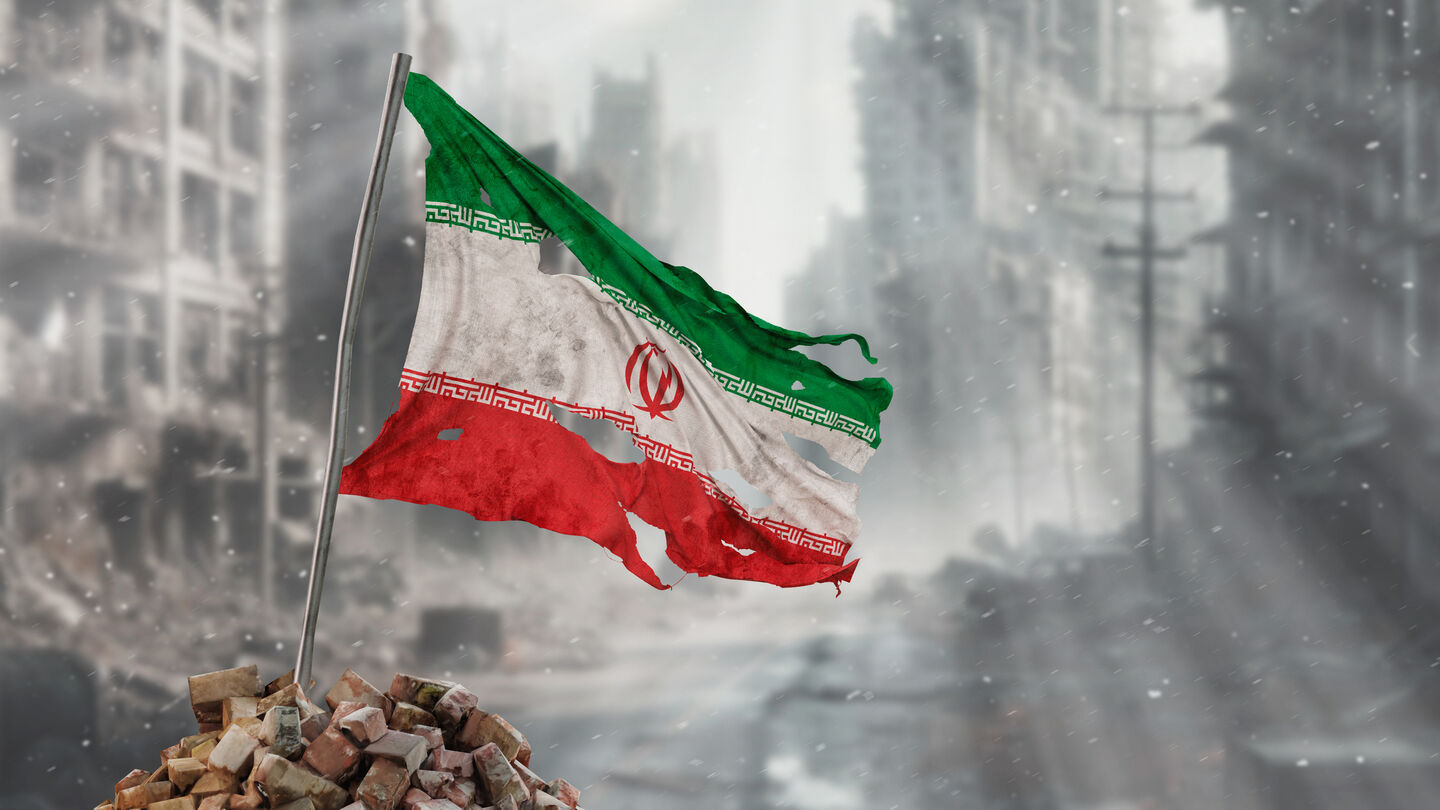
Since late December 2025, thousands of protesters have been killed in Iran during demonstrations against the regime. For three members of the TU/e community—like many of their compatriots—these days are marked by unrest, concern for their families, and a profound sense of powerlessness. “It feels like my country and my family are being held hostage, and that there is nothing I can do.”
For Iranians at TU/e, it is nearly impossible these days to focus on their studies or work, while back in their home country the regime responds to massive public protests with deadly force. Cursor spoke with three of these TU/e community members about their concerns for family and friends, the impact on their daily lives, and how they are trying to cope with the fear and helplessness that constantly weigh on them.
What's going on?
The protests began in late December 2025 at Tehran’s Grand Bazaar, where shopkeepers initially took to the streets to protest against the economic crisis. They voiced their frustration over soaring inflation, rising food prices, and deteriorating living conditions, which many attribute to government policy. Within days, the demonstrations spread to universities and other cities across the country, with students and citizens speaking out against the regime of Ayatollah Ali Khamenei.
Extreme violence
Iranian security forces responded with extreme violence, including opening fire on protesters. Starting January 8, the government shut down internet and telephone connections to limit contact with the outside world.
Human Rights Watch reports that thousands of demonstrators have been killed and many others arrested, although the exact number remains difficult to verify due to the communications blackout.
Communication restrictions
Iranians abroad are making every effort to stay in touch with family and friends despite these severe restrictions. Many people inside Iran rely on satellite internet via Starlink or use VPN services to bypass the blockade and exchange messages. However, using these workarounds is risky, as the government may punish illegal access.
Iranian social media and messaging apps are accessible without a VPN, but they are often monitored and offer little privacy.
Loss of contact
Iranians at TU/e—and around the world—are following the news with a knot in their stomachs, desperately trying to reach their loved ones despite widespread phone and internet shutdowns. Ahmadreza Marandi, an assistant professor at TU/e’s Department of Industrial Engineering and Innovation Sciences, is deeply worried about the situation in his home country. Both he and his wife have family living in Iran, but since the government shut down the internet, they have not heard from them.
All they can do is closely follow the news and social media. Occasionally, images make their way out through illegal internet connections, but they are usually far from hopeful. “Seeing images of piles of dead bodies, blood-stained streets, and soldiers with machine guns, makes it feel as if all memories of my past have vanished,” Marandi says.
A TU/e master’s student in Computer Science, who prefers to remain anonymous for safety reasons, is also struggling with the lack of contact. For this article, we are using the pseudonym Soroush. “Personally, I had no contact with my family for five days. One of my friends had Starlink, so I asked him to call my family to let them know I was okay. It was extremely stressful not being able to reach anyone—no family, no friends, nothing at all. It was the weekend and I was home alone. I can honestly say I have never felt so lonely in my life as I did during those two days," Soroush says.
Gradually, contact was restored. “From Tuesday on, phone lines were partially restored, but only for incoming calls from Iran. When I finally heard my parents’ voices, I immediately burst into tears. Only then did I realize how much pressure I had been under in the previous days.”
Nazanin, a master’s student in Construction Engineering (her real name is known by the editorial team), also had no contact with her family in Iran for nearly a week. Being able to speak to her parents again felt like an enormous relief.
“We weren’t focused on exchanging a lot of details. It was mainly about reassuring each other: they told me they were safe and that I shouldn’t worry, and I let them know that, despite everything, I was doing okay.”
Still, the communication blackout did not come as a surprise to Nazanin. “When the protests started, we knew there would be shutdowns. This is the fourth time I’ve experienced this in my life. So it’s not new, but this time it’s worse than ever—and it’s also the first time I’ve had to go through it from a distance.”
Despair and powerlessness
Marandi feels desperate and powerless about the situation in his home country. “It feels like my country and my family are being held hostage, and that there is nothing I can do.”
Nazanin experiences a similar sense of helplessness. Ideally, she would want to be in Iran herself to participate in the protests, despite the enormous risks involved. “Some of my friends and I are super frustrated that we can’t take part in the protests and can only watch and wait.”
Soroush sees the protests as a revolution. “Everyone—including me—is exhausted by this situation and this regime. We want freedom, peace, and for our voices to be heard by the world. This feels more like a revolution than a protest.”
He is also concerned about the lack of international attention. “It’s heartbreaking to see human rights organizations speak out about other conflicts while remaining silent about Iran. I want the world to know what we are going through and to stand with us.”
Impact on work and studies
Marandi acknowledges that the situation deeply affects him and has a major impact on his daily life. “We are completely devastated, both mentally and emotionally. I also have a child at home, which means I have to pretend everything is fine for her sake, so as not to burden her emotionally. That puts a lot of pressure on me.”
Remaining focused on his work is another major challenge. “Personally, I try to distract myself with work, but after a while I notice that I keep going back to the news.”
Soroush finds the situation particularly difficult during the exam period. “I’ve clearly lost my concentration and my performance has suffered. Over the past few days, there were predictions that the U.S. might bomb Iran, which caused me to sleep poorly and wake up multiple times during the night. I’m trying to keep myself together.”
Nazanin also finds it hard to concentrate on her studies, but she does her best. She sees it as her responsibility to make use of the privilege of being safe and having the opportunity to study—something she is acutely aware of.
Being in the Netherlands, where she has everything she needs and has nothing to fear, sometimes hits her with feelings of guilt at the most unexpected moments.
“Recently, I was standing at the supermarket checkout, simply paying for bread and milk, when I was suddenly overwhelmed by guilt that I can do something so ordinary, while my family, friends, and fellow citizens are risking their lives on the streets—for the freedom of all of us and our future.”
Painful
The Iranians greatly appreciate the support from the community, even though it can be hard to handle all the attention. Colleagues often ask Marandi how he is doing, with the best intentions, but he finds it difficult and painful to respond.
“Imagine being in a lot of pain, and someone comes by every hour asking how you’re doing. It’s obvious that we are suffering. Instead of repeatedly asking Iranians how they feel or what the situation is like now, it’s better to simply let them know that you’re there for them if they need you.”
He is grateful for the support he feels from the university. “We’ve heard that the Executive Board has discussed the situation and that a meeting is planned with some of us to explore how TU/e can help.”
Gratitude
Nazanin expresses deep gratitude for the support she has received from friends in the Netherlands and abroad. “So many people have reached out, and I truly appreciate that,” she says. In particular, she feels thankful to her mentor, who proactively got in touch and offered help.
“She said she would inform other mentors as well and that we can count on their support—for example, by contacting the academic advisor on our behalf. That is such a genuinely kind and meaningful gesture.”
Meditation
Soroush also notices support from friends around the world. “I want to thank all my friends and everyone who supports us. I’ve seen many people from different countries trying to stand with us, and I’m truly grateful for that.”
Meditation helps him regulate his emotions. “Every night before going to sleep, I meditate, and that helps me manage my thoughts and emotions.”
Marandi says that staying connected with the Iranian community means a great deal to him. “I always try to see how we can support and help each other.”
Soroush notes that other Iranian students cope with the situation in different ways. “Sometimes talking to them actually makes me even more stressed.”
Is there hope?
No one dares to predict the future with certainty; the situation is simply too unstable. Ahmadreza Marandi is primarily concerned about the younger generation in Iran. “I think about my nieces and nephews and worry about what their future will look like.”
When asked whether he still has hope, he hesitates. “I don’t know whether it’s hope or whether I’m fooling myself. The number of deaths is alarming; it says a lot about how the government views its people. I honestly don’t have an answer to that.”
Nazanin shares this uncertainty. “What I hope for is probably a miracle, because I can’t think of a realistic solution,” she says. At the same time, she believes it is essential not to give up the fight. According to her, it is now or never. “If the current government remains in power, then there is no hope for us. And that breaks my heart, because this is about my country.”
Still, there is cautious optimism as well. Soroush hopes the current movement will lead to change. “I hope this movement brings us freedom and peace and puts an end to the regime. We want the world to know who we are and what we are fighting for, so that our voices are heard.”
The interviews in this article were conducted between January 14 and 16, 2026. Due to the rapidly evolving situation in Iran, circumstances may have changed since then.
This article was translated using AI-assisted tools and reviewed by an editor
Discussion