
- Student
- 01/05/2026
New social space opens at Mechanical Engineering
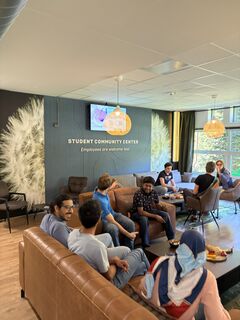
A new social space aims to connect Mechanical Engineering students in a different way. The initiative responds to students’ need for an additional gathering space that fosters a stronger sense of community. The new Community Center was officially opened on Thursday.
“Five weeks ago, we held focus groups with students. Those showed that the current facilities for community building are not very diverse or inclusive,” says Yves Houben, ESA manager within the Department of Mechanical Engineering (ME).
Although there is a study association, Simon Stevin, Houben says not everyone feels equally at home there. “There is a perception that many activities are linked to alcohol use, which makes it less appealing for some students. Some students also experience Dutch as the dominant language there,” he says.
The department emphasizes that the new meeting space is meant to complement existing initiatives. With a diverse student population, ME aims to provide facilities that cater to as broad a group as possible. The Community Center, located on the ground floor of the Pendulum building, was officially opened on Thursday afternoon. “The physical space is there, and we see that as a starting point from which it can grow into a real meeting place,” Houben says.
Social pressure
How does the new Community Center relate to existing initiatives such as study association Simon Stevin?
“Study associations are independent and set their own policies, but we are working together on this,” Houben says. “We see that Simon Stevin is developing within a more international context. At the same time, conversations with students showed a need for an additional environment where there is no social pressure to meet certain expectations.”
Alia Hussein, a second-year ME bachelor’s student from Egypt and one of the focus group participants, recognizes that need. “I feel like there isn’t really a sense of community among ME students,” she says. “I miss a shared space where you can meet other students, hang out, and relax. Something as simple as having lunch together and chatting with fellow students—or even staff—so you can connect in a very low-threshold way.”
Dutch-oriented
Although Hussein has joined study association Simon Stevin, she is not very involved in its activities. In her experience, that is not something that comes naturally for everyone. “There are not many internationals there. The activities are very Dutch-oriented, and the Dutch group forms the core and is very close-knit, which sometimes makes it difficult to be accepted and to really feel like you belong.”
Maša Krneta, a second-year ME student from Croatia and another focus group participant, recognizes this experience as well. “Simon Stevin is presented to you when you enroll in the program as: this is your study association. But for non-academic activities, it doesn’t really feel like something for me. It seems very Dutch-oriented, which makes it less inviting for internationals.”
“What’s great about the Community Center is that it starts from scratch, which means internationals are involved from the beginning, rather than being a group that has to adapt to something that already exists and follow established Dutch norms,” she adds.
According to Houben, this does not only apply to international students: even among Dutch students, a sense of connection is not always self-evident.
Pilot
It is precisely for that group that the new Community Center is intended as a complementary offer. The initiative is designed as an accessible meeting place within the faculty, where students should feel free to walk in.
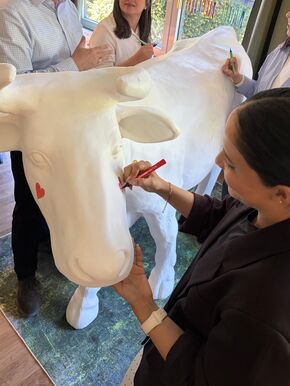
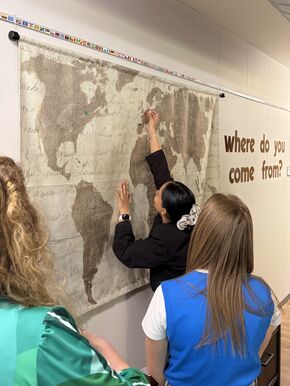
It can accommodate up to forty people and has plenty of tables and board games. On a world map, visitors can place a pin on their country of origin, making the diversity of the community visible. There is space to offer or exchange items, or to request extra tutoring. There is also a community artwork that everyone can contribute to.
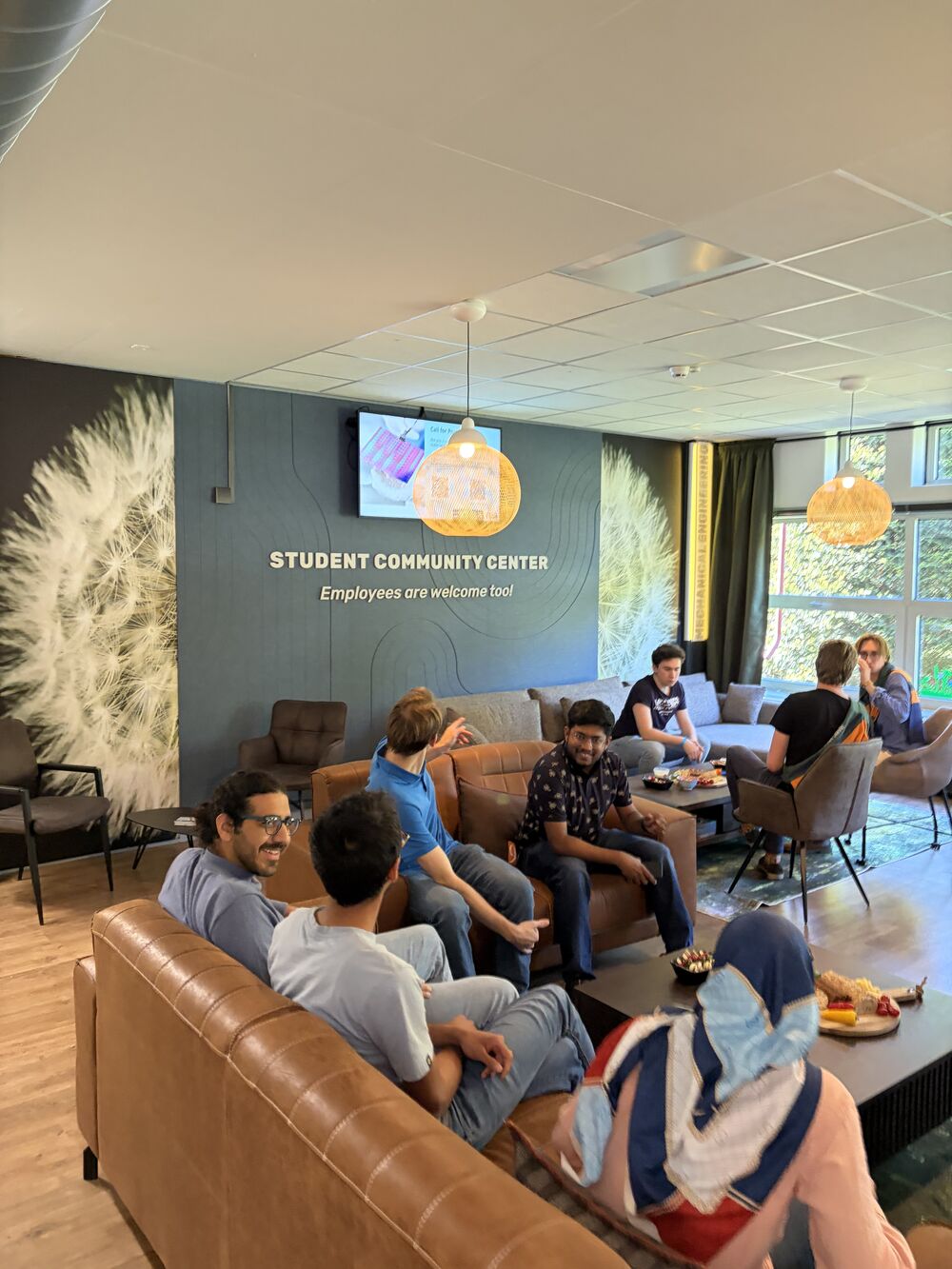
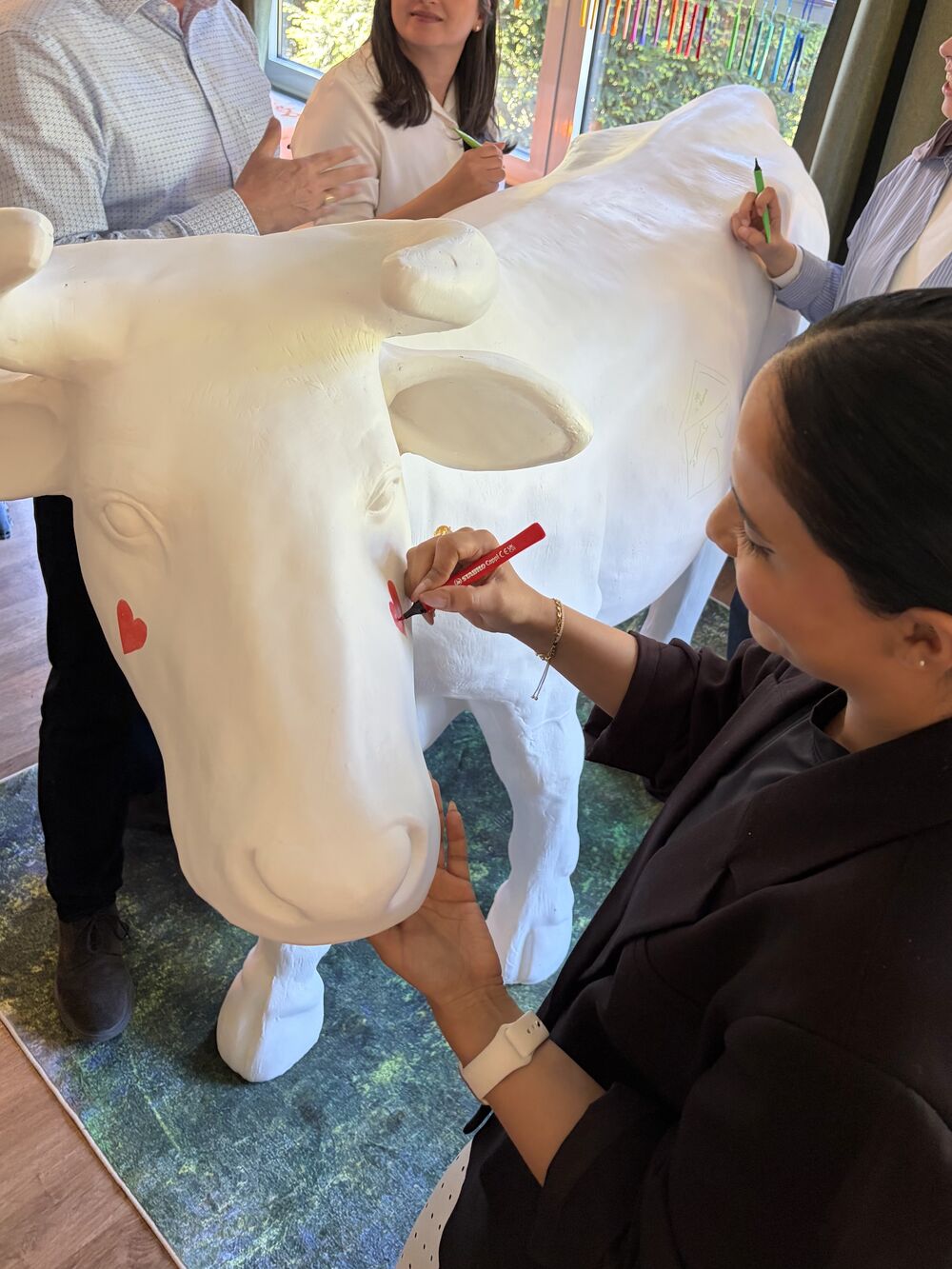
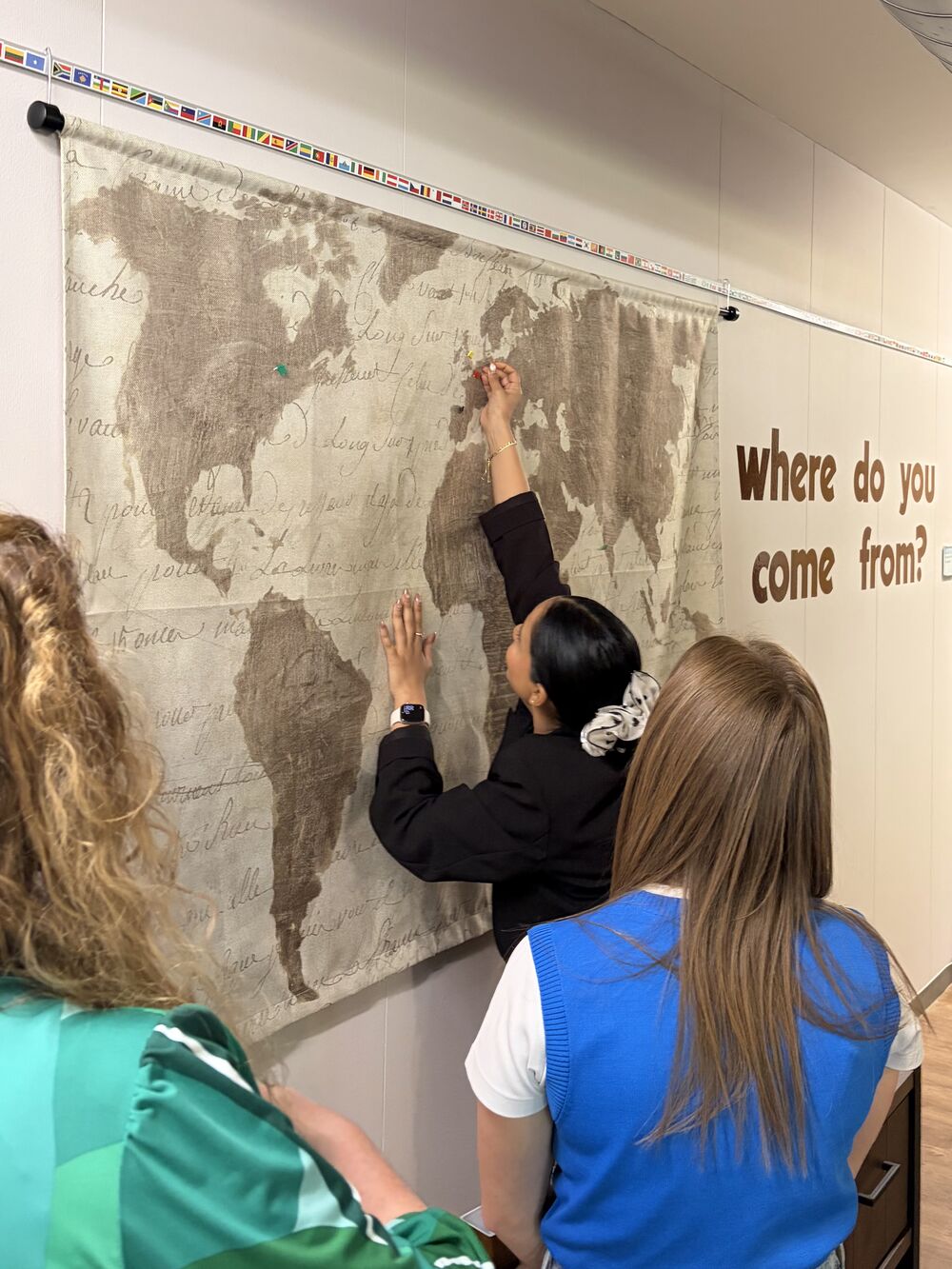
The initiative is also seen as a pilot. “We hope to set an example for other faculties,” Houben says. “There is a lot of curiosity about it, and there is also interest in setting up something similar in other departments.”
Alcohol-free
To keep the center accessible to as broad a group of students as possible, alcohol use is not allowed. That was a deliberate choice, Houben says. “There are students who feel uncomfortable with activities where alcohol plays a central role, which makes them feel less welcome.”
Krneta is glad the new center offers an alternative in this regard. “I feel like social activities often revolve around a drinking culture. So I think if you organize more alternative activities, like board games or sports tournaments, more international students would be interested and show up,” she says. That is exactly what the Community Center aims to provide.
The meeting space, according to both students, may also go beyond just the social aspect. “You meet other students, talk about your studies—for example, which electives you’re taking—or ask older students for advice on their bachelor’s final project,” Krneta says. “I find that really valuable.”
Relocation
Despite its ambitions, the center was realized in a remarkably short time: just five weeks from the initial idea. “The physical space is already there, but there is still plenty of room to further develop it,” Houben says. “In the coming weeks, we will have many conversations with people who want to think along, participate, and stay informed about what is happening.”
A change is also planned: the Pendulum building will be demolished in February or March next year, meaning the Community Center will have to move. “Fortunately, we have already found a new location,” Houben says. “Everything we have purchased is movable, so no investments will be lost.”
Ultimately, he hopes the initiative will be driven by students themselves, who will use the space to organize all kinds of activities, such as board game nights or community dinners. “It is entirely up to them how they want to shape it.”
No name yet
“I am very curious to see what this center will look like in half a year. It is still completely open,” Houben says. “That is also why we call it the Community Center and have not given it a fixed name yet. We want to see what students will call it. It does not feel right for us to impose that; it really has to come from the community.”
But most importantly, he says, is that the space is actually used and embraced. “I consider it a success if it is used, whatever that exactly means or looks like.”
This article was translated using AI-assisted tools and reviewed by an editor.
Discussion