
- People
- 05/10/2026

Braven tames data chaos in semicon and photonics industries
Data is a key building block of innovation. Yet researchers and engineers often store it in fragmented OneDrive folders and separate Excel spreadsheets. TU/e alumni Thomas van Bodegraven and Benji van den Brand experienced this frustration firsthand and are working on a solution with their startup, Braven.
In high-tech experiments, researchers generate gigabytes of data with each measurement, but that data is not always stored efficiently. Thomas van Bodegraven and Benji van den Brand each encountered the problem of fragmented data in their own way, during their studies and professional careers. Both studied at TU/e for a master's degree in Electrical Engineering.
Van den Brand, who was first active on student team Aster and later worked at photonics scale-up Mantispectra, saw how different approaches to storing data created isolated pockets of knowledge. As a researcher at the NanoComputing Lab of the Integrated Circuits research group, Van Bodegraven noticed how difficult it can be for academics to manage data in a structured way.
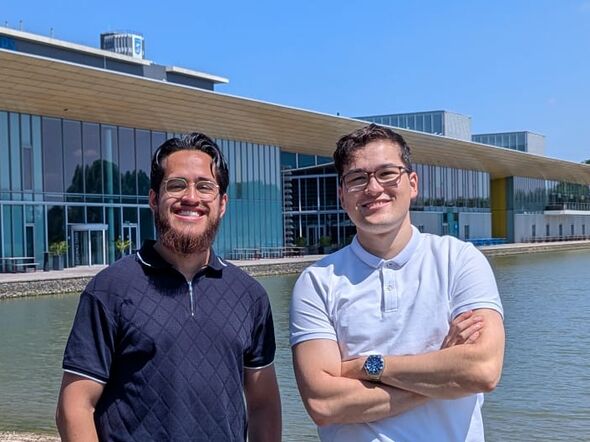
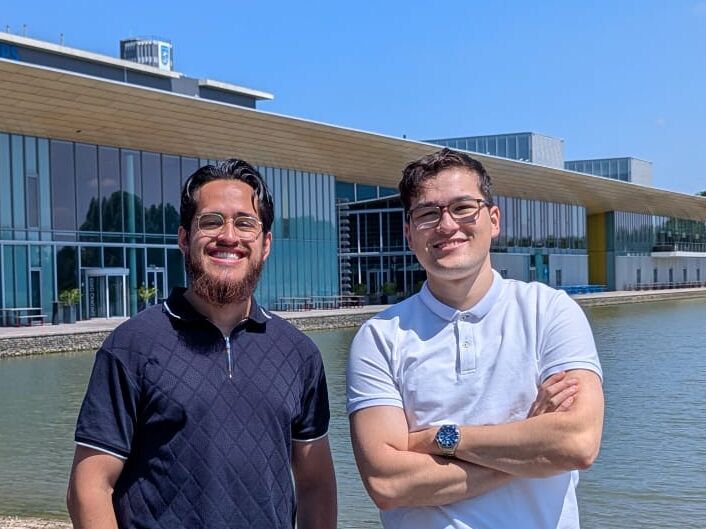
“Engineers want to innovate, discover new things and experiment. They often see documentation as an afterthought,” says Van Bodegraven. “That’s why data is scattered across many different locations, including OneDrive folders, network drives and local drives on individual laptops, which makes the data harder to trace.”
The two alumni are therefore developing Braven, a web application that automatically collects and structures fragmented research data in one central location.
Seeing the same problem
The two founders are targeting the photonics and semiconductor industries. Drawing on their own experience, they understand the terminology, workflows and challenges specific to both sectors. Companies in these industries produce and store enormous amounts of data, but few sophisticated data management tools are available.
To validate their idea, the founders spoke with researchers at TU/e and in industry. They heard a lot of recognition of the problem. Van den Brand: “Whether you’re talking about academic research groups or large high-tech companies, almost everyone faces the same challenges with fragmented data.”
The engineer’s language
Braven connects all Research & Development (R&D) data and the relationships between different datasets. On the backend, the application functions as an advanced data infrastructure that preserves the connections between experiments. On the frontend, the software “speaks the language of the engineer,” making it easy for engineers to find, understand and reuse their data.
This makes documenting knowledge a natural part of the work, rather than a tedious administrative task afterward
“We’re engineers ourselves, and we’re not fans of complicated databases,” says Van Bodegraven. That is why Braven connects the different tools, data and steps in the existing R&D workflow, allowing engineers to keep working the way they already do. “This makes documenting knowledge a natural part of the work, rather than a tedious administrative task afterward.”
Pilot
With support from TU/e’s Knowledge Transfer Office and The Gate, the founders are setting up their company. A 50,000 euros innovation grant from the Eindhoven Metropolitan Region (MRE), applied for together with photonics companies Mantispectra and Firely Sensors, is funding the development of their first functional prototype.
One of the pilots they have set up involves very high-resolution measurements that generate gigabytes of data per experiment. Van den Brand: “This is an important test to demonstrate that the platform can process large amounts of data in a scalable and stable way.”
The two founders see data security as a crucial next step for their startup. Van Bodegraven: “When we talk to large companies, their first requirement is always that the data stays in the building and is not stored on our servers. We want to support that.”
A new standard
The pilot phase is a direct step toward the commercial launch, which is planned for early next year. From then on, the platform is expected to become available on the market through a licensing model.
Ultimately, the founders hope to set a new global standard for data management within five years.
This article was translated using AI-assisted tools and reviewed by an editor.
Discussion