
- Student
- 05/10/2026

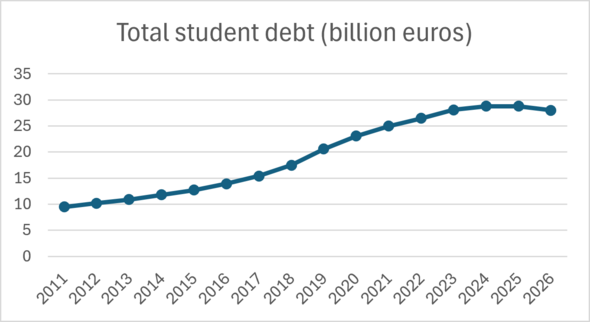
In 2015, the government at the time abolished the basic student grant for new students. Partly because of this, total student debt in the Netherlands began to rise more rapidly. Now the basic student grant has been reinstated, and it is having an effect: fewer students have student debt.
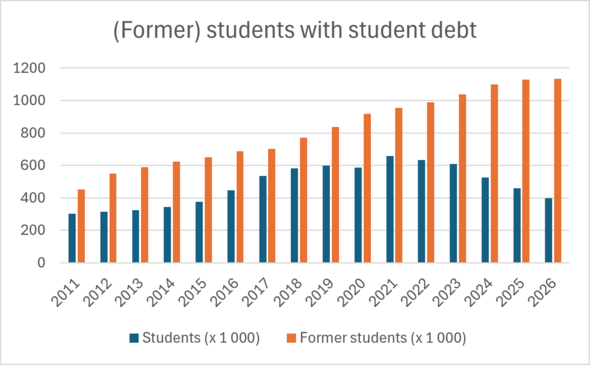
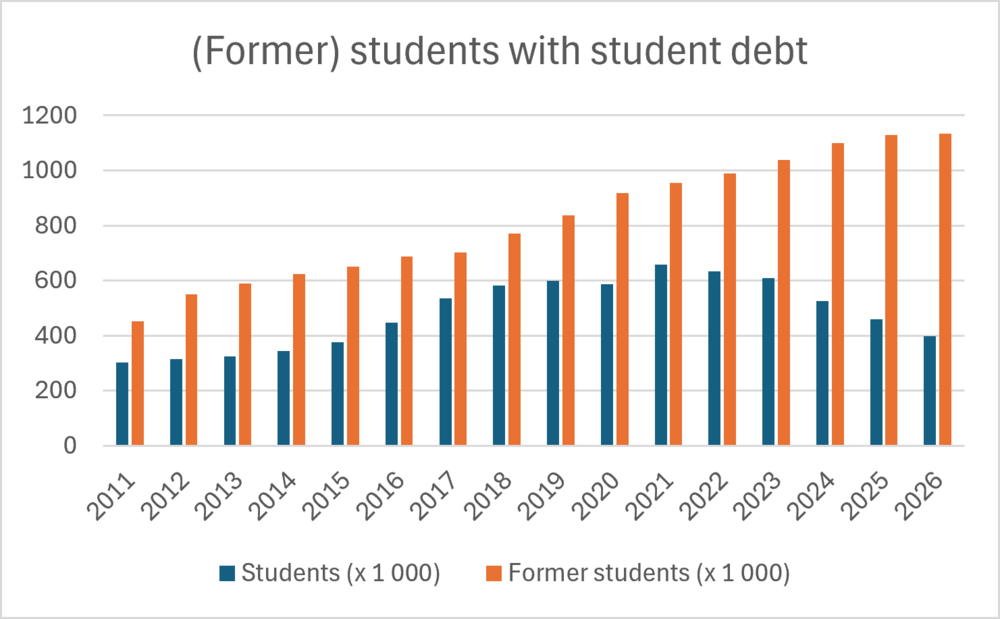
The number of students with student debt is declining not only because the basic student grant has been reinstated, but also because there are simply fewer students. Universities, universities of applied sciences, and MBO institutions are beginning to feel the effects of this decline. The total number of former students with debt is still increasing, but the peak appears to have been reached.
For a long time, not all students could fully benefit from the basic student grant when it was reinstated, because they did not receive it for the years they had already studied. For MBO students, who are also included in the figures, the grant had continued to exist.
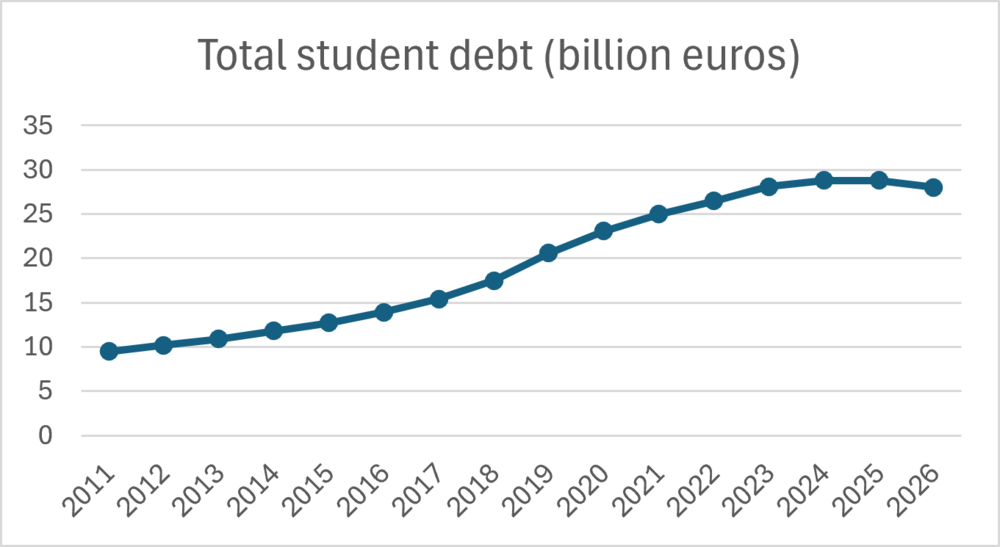
The total debt, including that of current and former students, has now fallen by 800 million to 28 billion euros, Statistics Netherlands (CBS) reports.
The highest debt is among people between the ages of 25 and 30. They have just graduated and have had little opportunity to repay their debt. Most people in this group have a debt of around 18,000 euros. The average is 25,400 euros, but this is because a smaller group has borrowed much larger amounts.
Extremely high debts
The number of extremely high student debts is increasing: in the Netherlands, 195,000 people have student debt between 30,000 and 50,000 euros. Another 145,000 people have debts above that amount. That is 22 percent, twice as many as in 2017.
Incidentally, interest rates on student debt are set to rise, according to the interest rates published last week. Student finance provider DUO still has to officially announce the new rate.
This article was translated using AI-assisted tools and reviewed by an editor.
Discussion