
- Education
- 02/10/2026

TU/e launches master’s track in aerospace engineering
Students looking to specialize in aerospace engineering in the Netherlands will have another option starting next academic year: Eindhoven. TU/e’s Department of Mechanical Engineering is launching a new master’s track in Aerospace Systems Engineering. Applications opened October 1.
The reason for launching the new track is simple, says Joris Remmers: “Because students asked for it.” The associate professor of composite materials in the Department of Mechanical Engineering (ME) is leading the project.

“They regularly come to me for advice. You can really see how enthusiastic they are about the field,” Remmers says. “So about a year and a half ago, we thought: why not simply offer them the opportunity to study it?”
Expertise already in place
According to Remmers, TU/e already has plenty of the expertise needed to offer such a program. “Many of my colleagues have a background in aerospace, myself included, and we simply think it’s a fascinating field,” he says.
Remmers also sees opportunities to collaborate with companies and organizations in the region. VDL Groep, for example, is active in the aerospace industry. Eindhoven Airport could also become a potential future partner.
The expertise is also broadly applicable. “Aerospace is essentially everything that flies and everything you need to make it fly. Think about developing aircraft components, but also drones, which are increasingly being used,” Remmers explains. “In fact, aerospace is a very complex application of mechanical engineering to aviation and spaceflight.”
Wind tunnel
The new track focuses on the systems behind aerospace technology. “That’s why ‘systems’ is part of the track’s name. We look at the aircraft as an extremely complex system, and that’s what we want to study.”
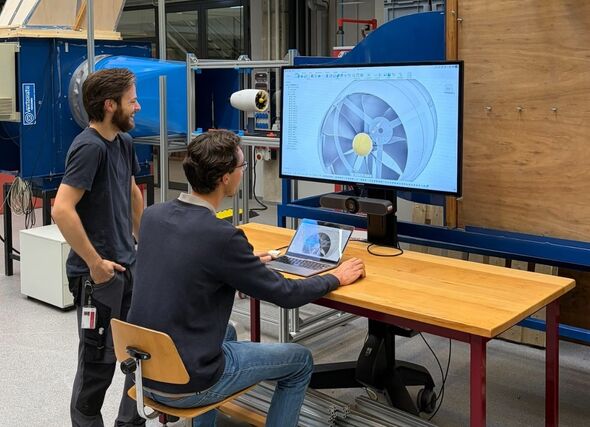

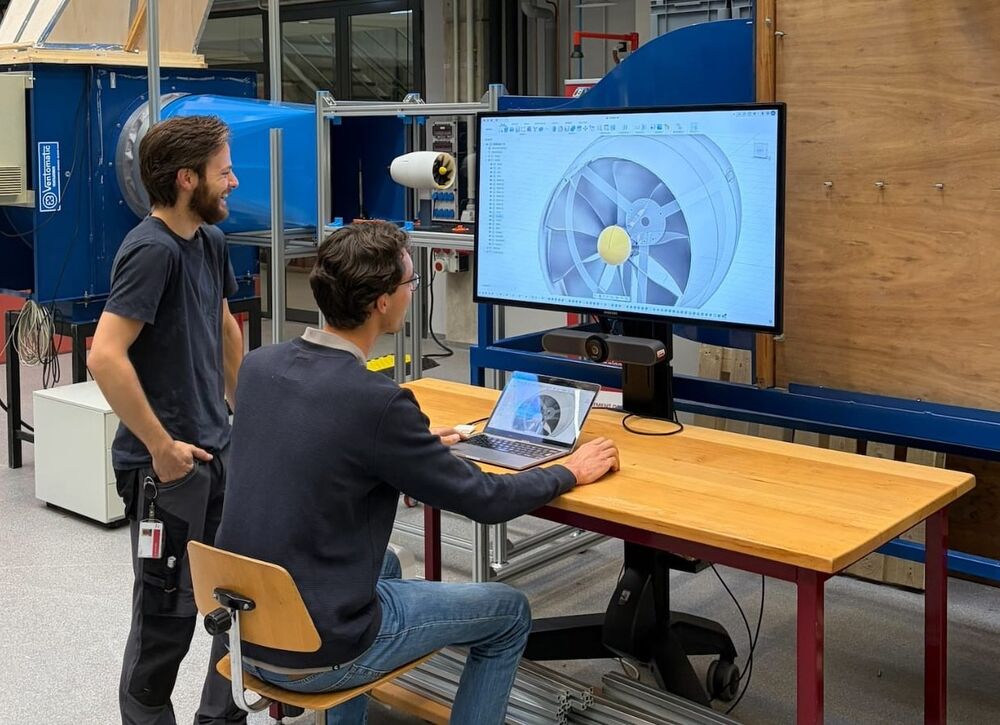
To make this possible, TU/e has also invested in new facilities. “We purchased a new, small wind tunnel that we can fully customize so that we can conduct aerodynamic experiments.”
TU/e already has a wind tunnel for research into airflow in the built environment, but the new facility is specifically designed for applications within the new aerospace track.
Tracks
Tracks are defined areas of specialization within a master’s program. Mechanical Engineering already had several tracks, but previously these mainly consisted of a collection of courses centered around a particular theme.
Students could choose to deepen their knowledge in one of these areas during their studies. That option will remain, but it will now be referred to as a specialization.
Under the new structure, a track is a clearly defined program of study within the master’s degree. Students apply for a specific track when they are admitted to the master’s program. Aerospace Systems Engineering will be the first official track within Mechanical Engineering.
After admission, students follow a curriculum that combines general Mechanical Engineering courses with courses specifically focused on their chosen track. These track-specific courses are only available to students enrolled in that track.
During their first year, students take twelve courses, at least four of which focus on aerospace. Together, these courses provide a broad foundation in the field, covering topics such as aerodynamics, materials science and flight control.
Attracting more students
“With the new track, we want to attract more students, but above all, we want to retain our bachelor’s students,” Remmers says.
TU Delft is currently the only Dutch university with a standalone aerospace engineering degree program. It was recently announced that Princess Ariane has been admitted to the bachelor’s program, which has a numerus fixus, or capped enrollment.
“Perhaps we can offer a place here to students who otherwise would have gone to Delft for an aerospace program,” Remmers says. “We will undoubtedly also attract students who would have chosen a master’s degree in Mechanical Engineering anyway, but we hope the overall number of students will increase.”
Although the program in Delft and the new track at Mechanical Engineering are broadly similar, TU/e hopes to distinguish itself by focusing on systems thinking. “We don’t want to compete with each other, but rather strengthen each other and broaden the range of opportunities available in the Netherlands.”
Defense
When people think of aviation and spaceflight, defense often comes to mind as well. It is therefore natural to ask whether the new track is linked to the planned collaborations between Dutch universities and the Ministry of Defense.
“Sooner or later, technology is also used for those applications, but that is not our primary focus. We have not received any requests from the Ministry of Defense in this regard,” Remmers says.
TU/e is, however, already establishing contacts with aerospace-related companies in the region, “so that we can offer students internships and graduation projects in the field.”
Room to grow
It remains to be seen how many students will enroll in the track next year. Since October 1, bachelor’s students who are nearing completion of their degree have been able to apply.
Remmers would be happy with a group of around forty students. “Then you have a full classroom, and hopefully a great multidisciplinary group to work on projects together.”
The goal is to further expand the program over the coming years. “Our ambition is for the Eindhoven region to play a role in the development of aviation.”
According to Remmers, there are plenty of challenges to tackle, from making aviation more sustainable by reducing fuel consumption through lightweight materials or more efficient engines to further developing autonomous flight and intelligent drones. “We hope to contribute to these developments with our expertise.”
This article was translated using AI-assisted tools and reviewed by an editor.
Discussion