
- The University
- 08/10/2026
During Dutch Desing Week (DDW), TU/e is showcasing its own work in the Atlas and Vertigo buildings and at Ketelhuisplein in the Strijp-S district. Industrial Design (ID) is exhibiting on the second, fourth, and eighth floors of Atlas. The exhibition centers on the department’s 25th anniversary. Through more than eighty projects, ID demonstrates how it has evolved over the past quarter-century.
The exhibitions cover various themes. There is a focus on recurring topics such as health technology and sustainability, as well as the new theme “designing designers,” which highlights how the department shapes the designers of the future.
Strijp-S
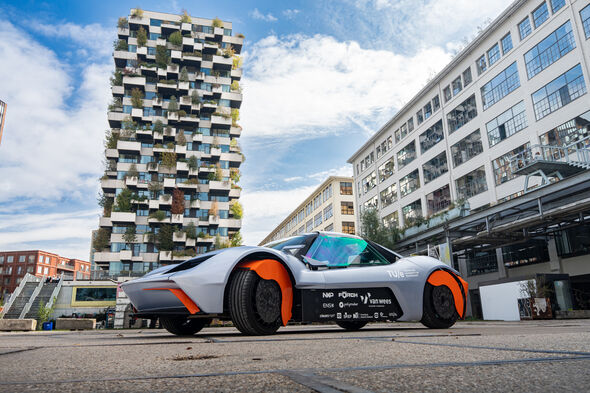
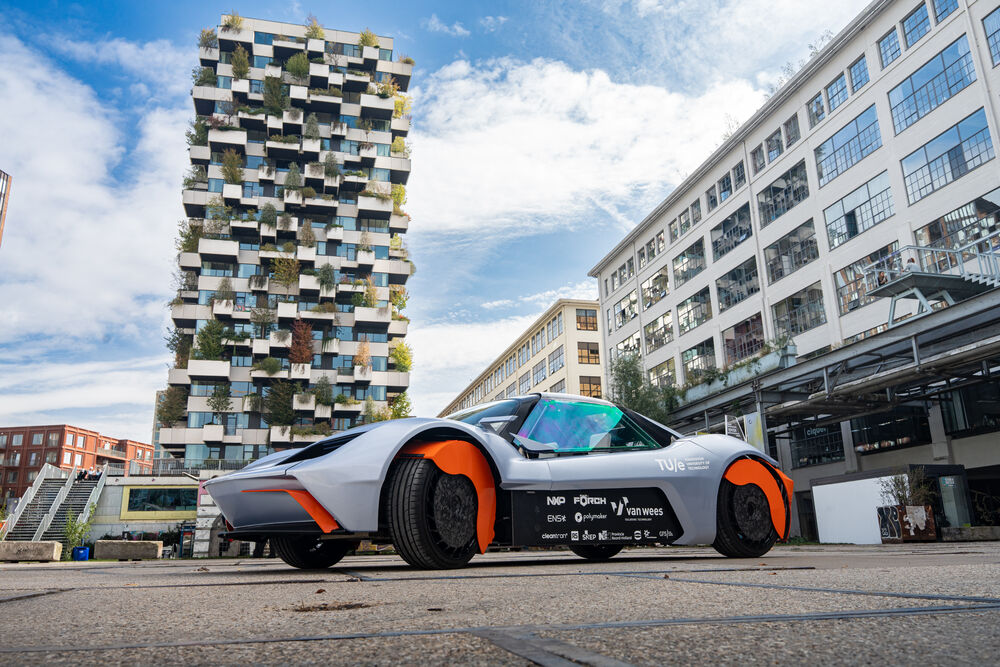
Once again this year, TU/e is hosting a Drivers of Change exhibition at Ketelhuisplein in Strijp-S. There, you will find two shipping containers housing projects from Industrial Design and the Built Environment department, alongside the student team TU/ecomotive and their new car, Ventra, which collects particulate matter.
Inside the Klokgebouw, individual students from various technical universities—including TU/e—are showcasing their innovative projects at the exhibition 4TU Design United.
Northern lights
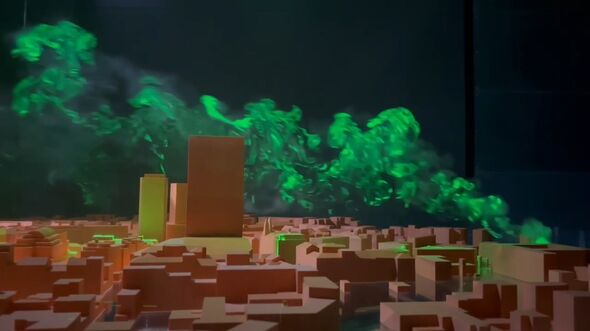
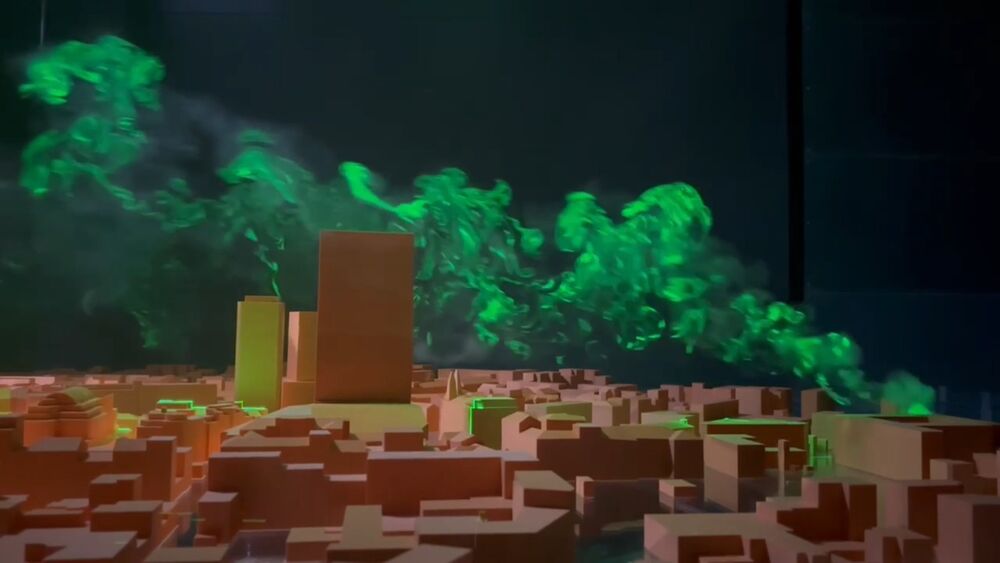
At Ketelhuisplein, you will find a striking project by Stefanie Gillmeier (assistant professor in the Built Environment department). With its visuals, the installation bears a strong resemblance to the Northern Lights: green, dancing waves against a dark sky.
However, appearances are deceptive; the green hue is simply the color of a laser, which she and her research group use to visualize airflow patterns that can carry polluted air that is usually invisible to the naked eye. A hidden health risk in cities.
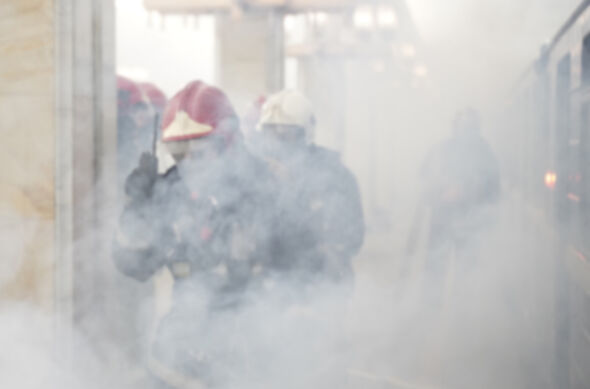
“One potential application of this research is ensuring proper evacuation during disasters in underground tunnels, such as a metro station. In the event of a fire, it is useful to know exactly how the pollution spreads across the city so you can evacuate safely.”
Accurately predicting where polluted air travels and how it moves requires a vast amount of data. To this end, first a replica of the Bulgarian capital, Sofia, was studied in the TU/e wind tunnel.
However, for the Dutch Design Week (DDW), a smaller-scale model inspired by Eindhoven was created. “That makes it more recognizable for local people, and the Sofia model was also too large for the shipping containers”, explains Gillmeier.
The following step could be the creation of a digital twin—a tool for testing scenarios in a virtual environment based on real-world situations. For this project, the TU/e Department of the Built Environment is collaborating with the GATE Institute (Bulgaria) and Chalmers University of Technology (Sweden).
MOD[us]
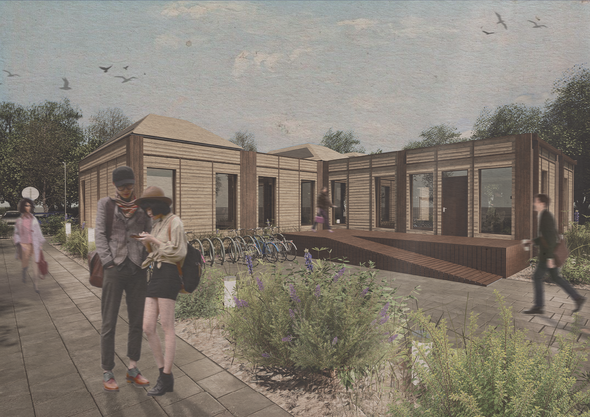
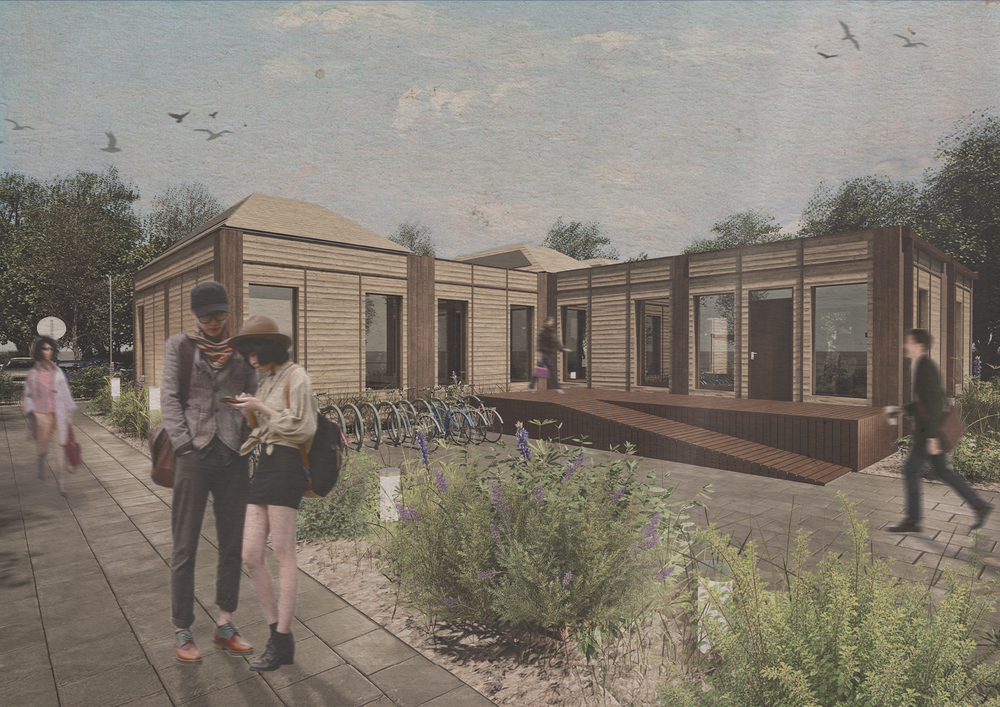
Several student teams are participating in the DDW again this year. You can find Team VirTU/e at the NRE site with MOD[us], a scalable, modular building system. It is designed to help tackle the housing shortage while remaining easily adaptable—for instance, if there is a shift in migration patterns or an increased need for office space.
“MOD[us] is based on a unique Triplet concept: a system of three modular buildings for student housing, refugee accommodation, and Meet[us]—multifunctional spaces for socializing, working, and collaboration. Together, they form a flexible system in which modules can quickly and affordably transform from one function to another,” says team manager Minha Haris.
Also present is Team CASA, showcasing its innovative modular furniture systems. The teams clearly collaborated: their adaptable furniture designs align seamlessly with the modular core of MOD[us].
“Instead of asking how we can build more, MOD[us] asks: how can we build smarter systems that evolve alongside society?” states Haris.
DDW
All TU/e exhibitions at DDW are free to visit. However, for many other DDW locations—such as the area in the Klokgebouw where students are exhibiting their work for ‘4TU Design United’—you do need to purchase a ticket. Cursor will also report on the opening and highlight the most notable projects on site.
Discussion