- Research
- 4 min
- 10/06/2026

Home stretch | The protective layer of the future
Part-time PhD candidate Tommaso Frison uses electrons to create stronger and more sustainable coatings
From kitchen cabinets and cars to soda cans: nearly everything around us is covered with a protective layer. Increasingly, new special coatings are being developed which harden applying radiation. During his industrial PhD project, Tommaso Frison developed new knowledge and technology to make that process faster, stronger, and more sustainable — with the help of a beam of high-speed electrons.
Coatings are everywhere. A thin protective layer, often barely visible. They keep out moisture, sunlight, and rust, helping products last longer. Think of laminate on kitchen cabinets, automotive body coatings, or the outer layer of a soda can or chip bag.
When I speak with Tommaso Frison, his eyes immediately fall on my unpainted nails. A shame, he laughs. “Gel nail polish is the perfect way to explain my PhD research.”
A brief manicure lesson follows. Gel nail polish consists mainly of liquid building blocks called acrylate monomers and oligomers, Frison explains. These small molecules can rapidly form a hard plastic when the polish is exposed to UV light.
“Traditional coatings contain solvents that need to evaporate in order to cure. Radiation-cured coatings work differently: high-energy radiation triggers a chemical reaction that causes the coating to harden extremely quickly.”
Dual role
Nearly all radiation-cured coatings are cured using UV radiation. However, in thicker or more complex coatings, UV light does not always penetrate deeply and evenly enough. Although it is still used only to a limited extent in industry, electron beam radiation (EB) can also be used to cure coatings. According to Frison, this technology offers major advantages.
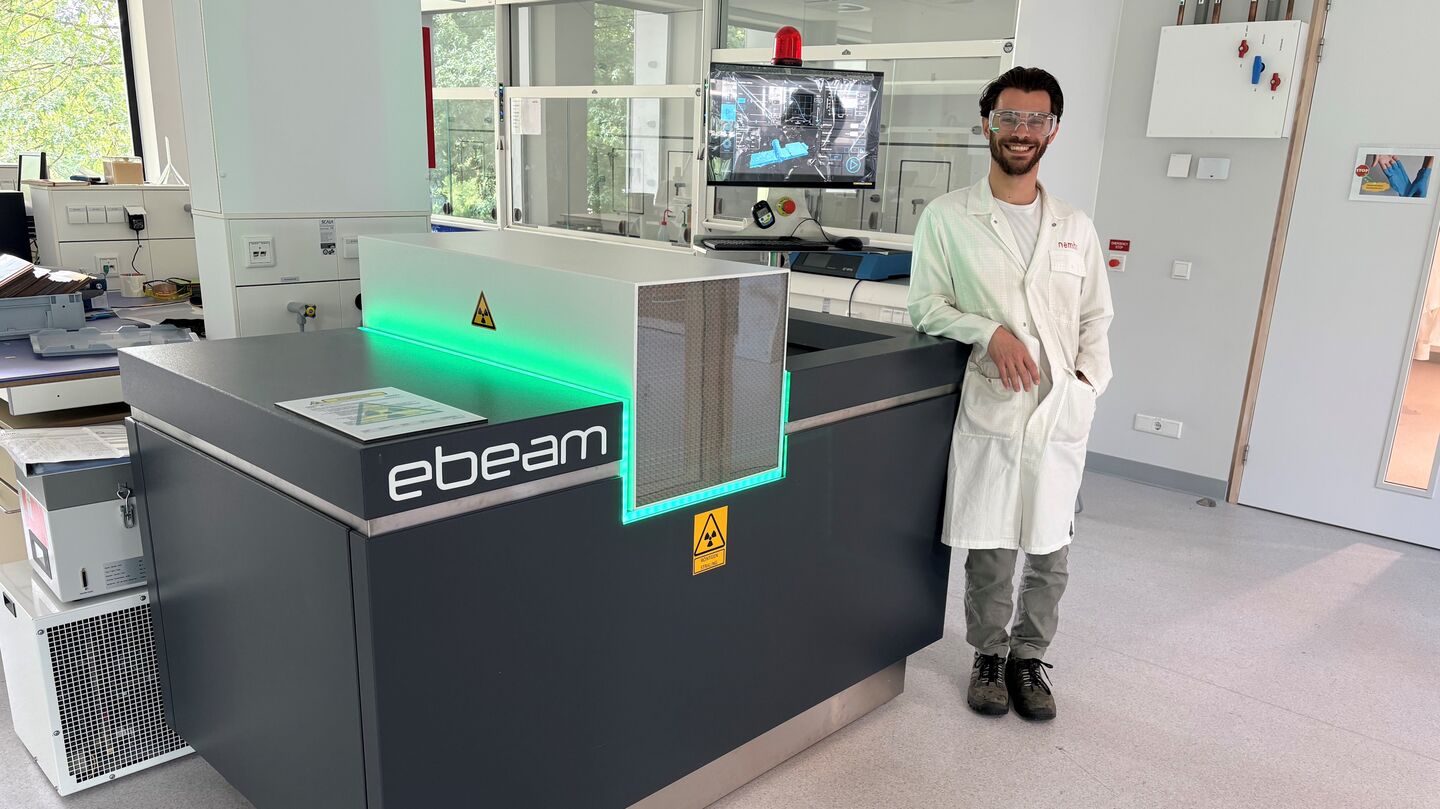
His employer, technology and competence center Nemho Innovations, is one of the leading pioneers of EB technology in the Netherlands. To better understand how coatings cure under the influence of electrons — and how the process can be further optimized — Frison combined his work as a polymer chemist with a part-time PhD trajectory at TU/e over the past several years. On Thursday, June 11, he will defend his dissertation at the Department of Chemical Engineering and Chemistry.
“UV-curing equipment is significantly less expensive than EB equipment. That is one of the main reasons why UV technology still dominates,” says Frison. “However, UV coatings also have some drawbacks. UV curing requires chemical initiators, known as photoinitiators, to start the reaction. These additives are often toxic, making the coatings less attractive for many applications, such as food packaging. In addition, UV is not ideal to cure thick coating layers, or coatings containing other key ingredients such as pigments or fillers.”
Chemical map
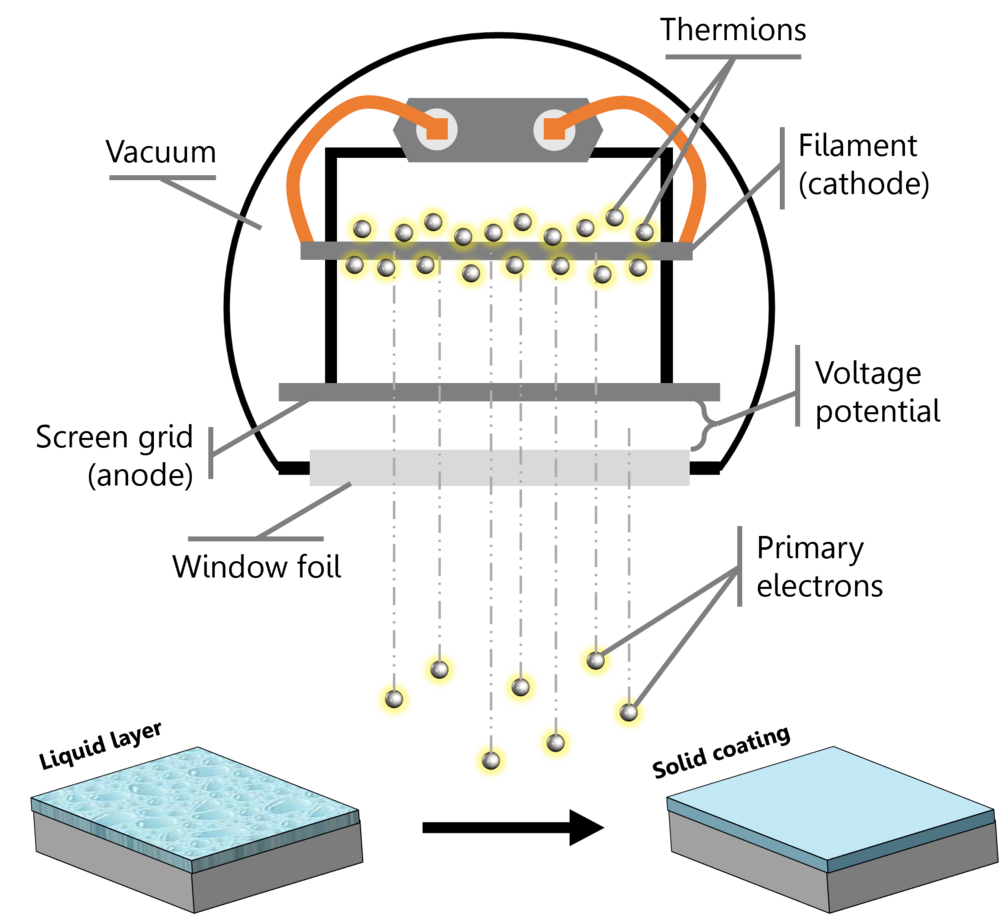
Using a model acrylate, Frison investigated step by step what happens when a coating is exposed to an electron beam. The beam is generated inside a vacuum chamber around a filament, similar to the wire in an old-fashioned light bulb.
“When you send an electric current through such a filament, electrons are released. By applying a voltage difference, you accelerate those electrons into a beam. The material then passes through that beam on a kind of conveyor belt and cures almost instantly.”
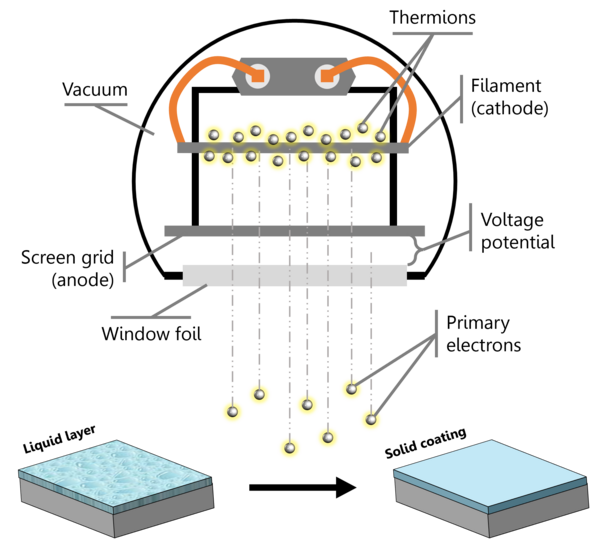
The process is extremely fast — much faster than UV curing, Frison emphasizes. “In the printing and packaging industries, this technology can therefore enable much higher production speeds.”
According to Frison, the detailed description of all chemical reactions occurring in the model acrylate provided an important basis for further optimization.
“We were able to see exactly which molecular bonds formed and which broke down under specific conditions. Based on that, we developed an analytical workflow that allows us to control and improve EB curing more effectively.”
One of the key conclusions of his research is that EB coatings form a more uniform and robust protective layer than conventional UV coatings.
“As a result, they are more resistant to weathering and chemical exposure. We truly believe these more sustainable coatings represent the future.”
New materials
The fundamental insights from Frison’s research did not remain confined to the laboratory. They also laid the foundation for the development of new materials. In that sense, his industrial PhD project had a somewhat different focus from a traditional doctoral trajectory.
“My supervisor always said: I don’t want to see graphs, I want to see products,” he says with a laugh.
Frison used the so-called chemical map that emerged from his research as a blueprint for several new coatings. One example is coatings based on multiphase polymer materials: combinations of different polymers that together perform better than the individual components.
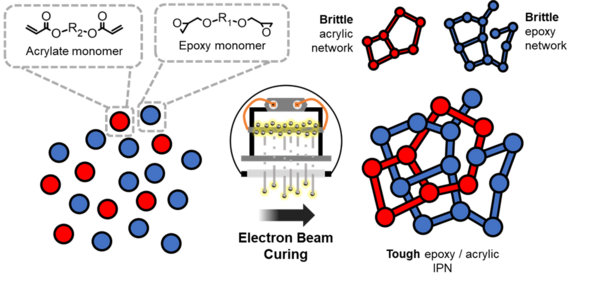
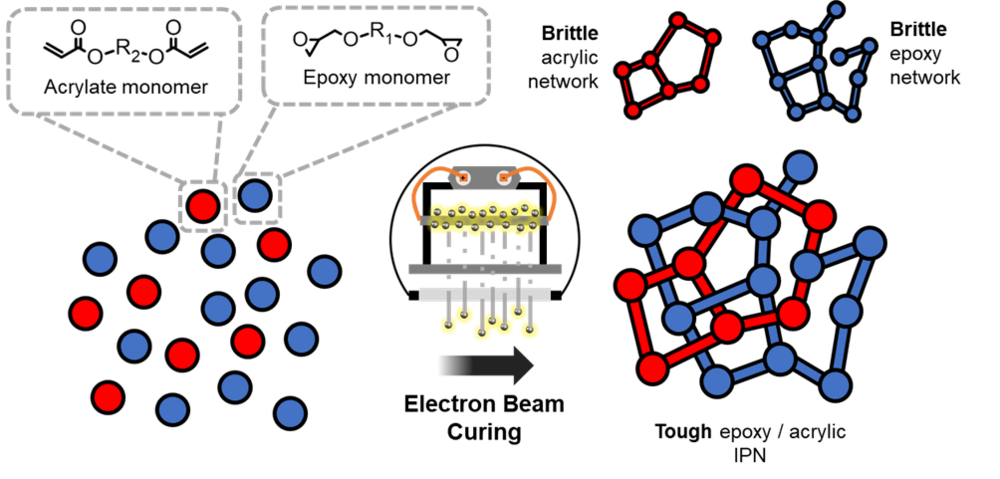
“By mixing acrylates and epoxies in the right proportions — materials that individually do not form particularly strong coatings — we have already developed several new materials with excellent performance. We also created a new type of coating based on block copolymers, which offer even stronger surface properties. That means your kitchen countertop or laboratory bench can be protected even better.”
Like a fish in water
Although Frison enjoys combining fundamental research with practical applications, he did not immediately feel at home in his dual role as researcher and industrial chemist.
“In the first years, I often felt more like I was drowning than like a fish in water,” he says. “Sometimes I wasn’t even sure what the water was anymore.”
He opens his dissertation to the acknowledgments section, which begins with David Foster Wallace’s famous fish parable: “What the hell is water?”
“In an industrial PhD project, you have to balance multiple expectations. It took time to find the right equilibrium. But in the end, it gave me a lot — including the realization that I want to continue building bridges between academia and industry. I’ve learned how to swim; now I’m ready to sail.”
PhD in the picture
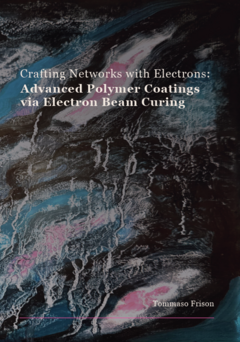
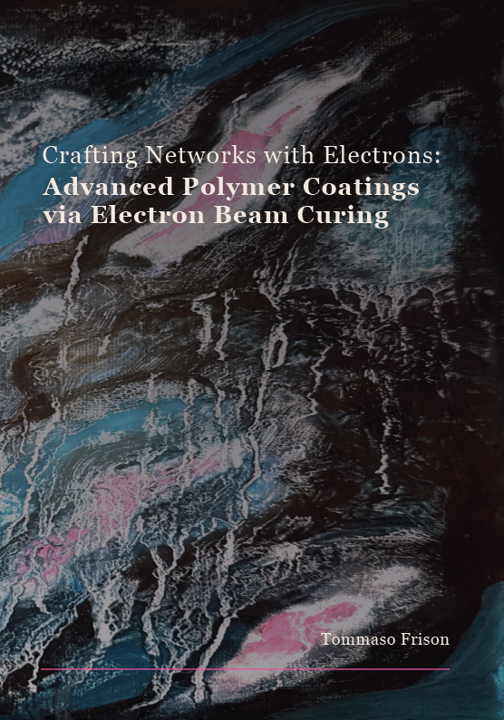
What's that on the cover of your dissertation?
“My grandmother is a painter and was inspired by one of my Atomic Force Microscopy images. It’s her artistic interpretation of my research.”
You’re at a birthday party. How do you explain your research in one sentence?
“I always end up talking about gel nail polish again. I do the same thing — but with electrons.”
How do you unwind outside your research?
“I spend a lot of time exercising and hanging out with friends. That may actually be the best thing my time in the Netherlands has given me: I’ve met so many wonderful people. Some of them started a dj collective. I used to organize a lot of parties and events myself, and I am starting to feel the itch to set something up together.”
What advice do you wish you had received as a beginning PhD candidate?
“Enjoy it! A PhD is a unique opportunity to dive deeply into a subject you are genuinely passionate about. At the beginning, I was so busy with everything else that I sometimes forgot that.”
What’s your next chapter?
“I mean the sailing quite literally: after my defense, I’m taking a sabbatical for a few months. I’m traveling through Southeast Asia, and I’m planning to take a sailing course there. A new passion!”
Discussion