
- Research
- 3 min
- 22/06/2026

New computer model reveals how Ozempic changes your brain
Weight-loss injections such as Ozempic, Wegovy, and Mounjaro have become incredibly popular. It is well known that the active ingredient semaglutide slows down stomach activity, but much less is known about what exactly happens in the brain. Using computer simulations, researchers from TU/e’s Computational Biology group have now provided insight into how these “miracle drugs” lead to successful weight loss.
Although semaglutide, a synthetic version of the gut hormone GLP-1, was originally developed to treat type 2 diabetes, it has mainly made headlines in recent years because of a remarkable “side effect”: weight loss.
Ozempic—the brand name under which semaglutide was first introduced to the market—stimulates the pancreas to produce insulin, helping to keep blood sugar levels under control.
It soon became clear, however, that Ozempic also suppresses appetite and increases feelings of fullness. As a result, several semaglutide-based or related medications specifically aimed at treating severe obesity have become available in recent years.
Looking at the system
Despite the success of these drugs, it is still not fully understood how they lead to weight loss, says TU/e (full) professor of Computational Biology Natal van Riel of the Department of Biomedical Engineering.

“Pharmaceutical companies use many computer simulations to predict, for example, how much semaglutide will be present in the blood at different dosages or through different methods of administration. But that does not tell the whole story.”
His research group therefore takes a systems biology approach. Rather than focusing solely on the concentration of the drug, as pharmacokinetic models do, they investigate what semaglutide does to the body as a whole.
“We want to understand which biological processes are affected, especially during long-term use. That gives us a more complete picture of the effects on different organs and systems.”
Fewer cravings
In a new gut-brain model developed by biomedical engineering master’s student Vivan Kennis, processes in the digestive system, metabolism, and brain are described together.
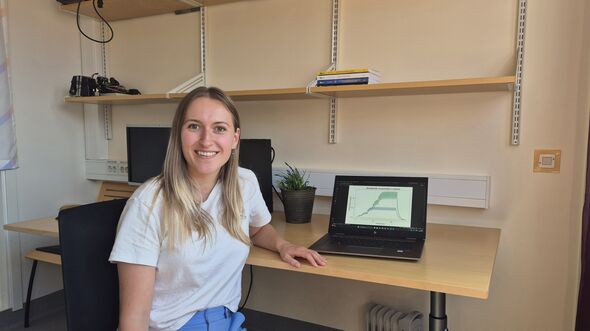
Kennis points to a diagram filled with arrows from a paper that she and her colleagues recently published about their research. She translated all known interactions from scientific studies—from metabolic processes to neural signals—into mathematical equations.
“Everything that has been described in the scientific literature so far, I brought together in one model,” she says.
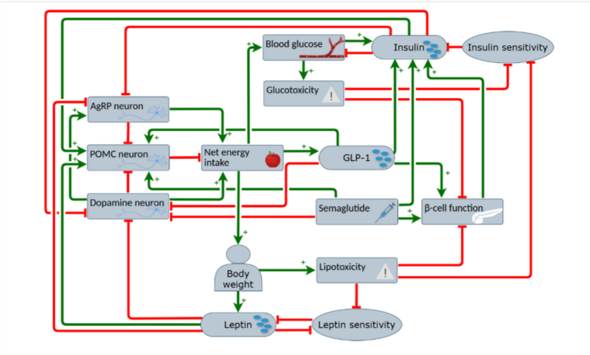


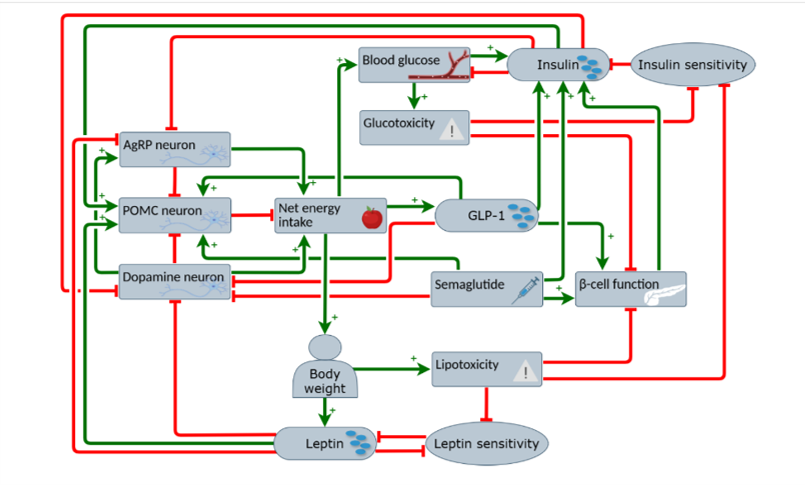
Using the relatively new programming language Julia, she converted these equations into a dynamic simulation, which was then validated using available data from clinical studies.
“Of course, many of those studies have already been conducted.”
A shot of dopamine
The results show not only what happens in the digestive system, but also which changes occur in the brain, Kennis explains enthusiastically.
“The new model helps explain why users feel less hungry and seem to experience fewer cravings.”
According to Kennis, dopamine plays an important role. This neurotransmitter is involved in the brain’s reward system.
“Normally, eating triggers a dopamine response—a kind of reward signal. Our model shows that semaglutide dampens that response. As a result, eating more provides less reward, reducing the urge to keep eating. It’s not just that the stomach says ‘enough’ sooner; the brain also responds differently to food.”
More effective weight-loss treatments
Not everyone benefits equally from the medication, however. Kennis found in several studies that a significant proportion of users stop treatment early, often because of side effects or disappointing results.
Professor Van Riel emphasizes that the next step will be to use the model to further investigate differences in individual responses, particularly among people without diabetes.
“We now have a fairly good understanding of average weight loss, but the variation between individuals is large. Some people do not lose weight at all and mainly experience side effects. At the moment, doctors cannot yet predict in advance how effective the medication will be for a specific patient.”
The researchers hope that the new computer simulation can help improve understanding of these differences and ultimately make it possible to predict which patients will benefit most from semaglutide. This could lead not only to more personalized treatments, but also to the development of more effective weight-loss therapies in the future.
This article was translated using AI-assisted tools and reviewed by an editor.
Discussion