
- Campus
- 13/01/2026

TU/e’s chimney is being dismantled—but only inside
The Netherlands’ only chimney restoration company is spending this week dismantling the internal partition wall of the monumental 75-meter-tall chimney on the TU/e campus. The aim is to keep the chimney drier, making maintenance easier in the long run.
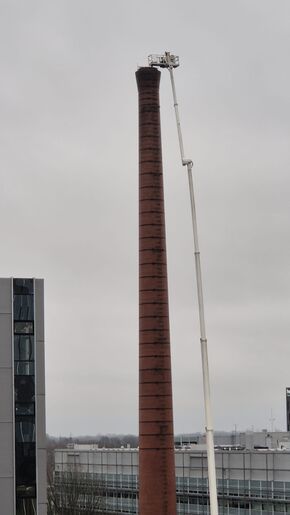
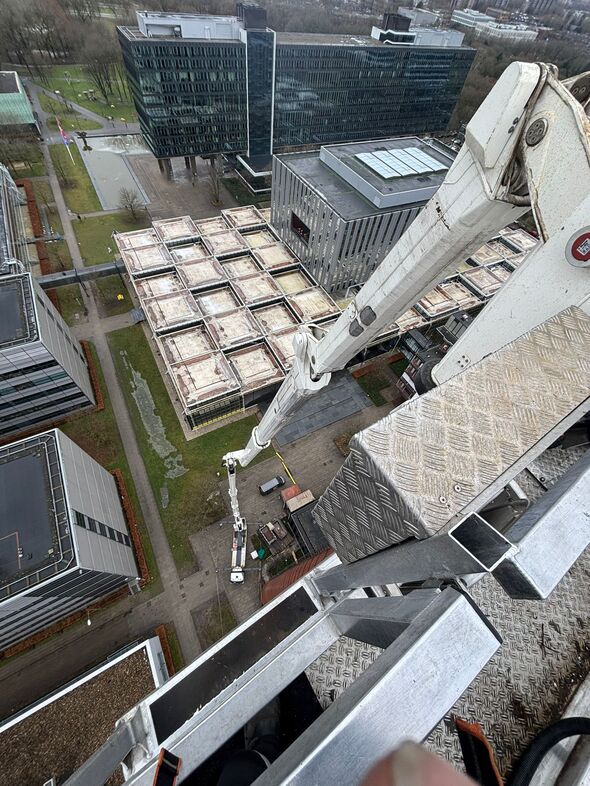
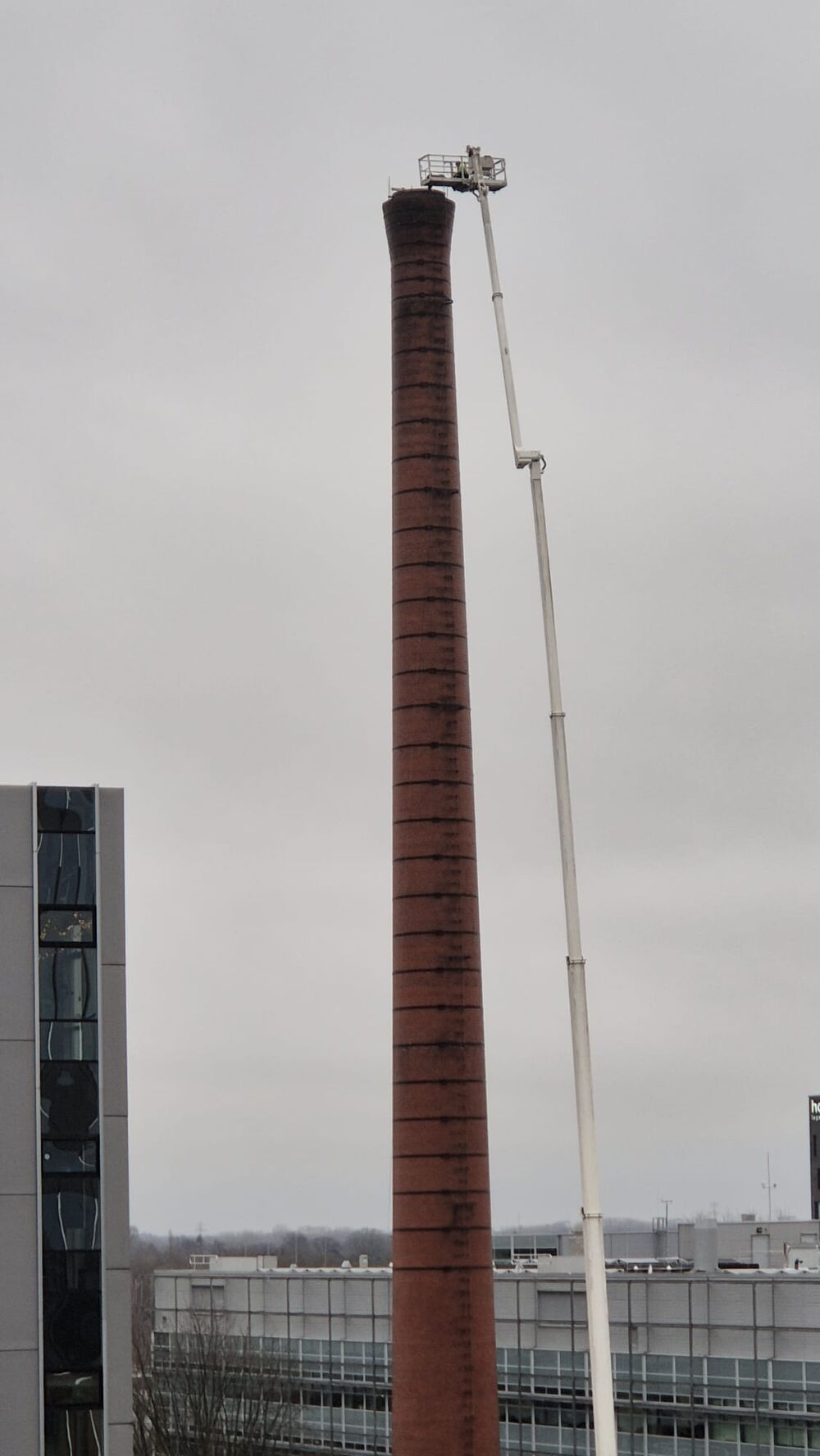
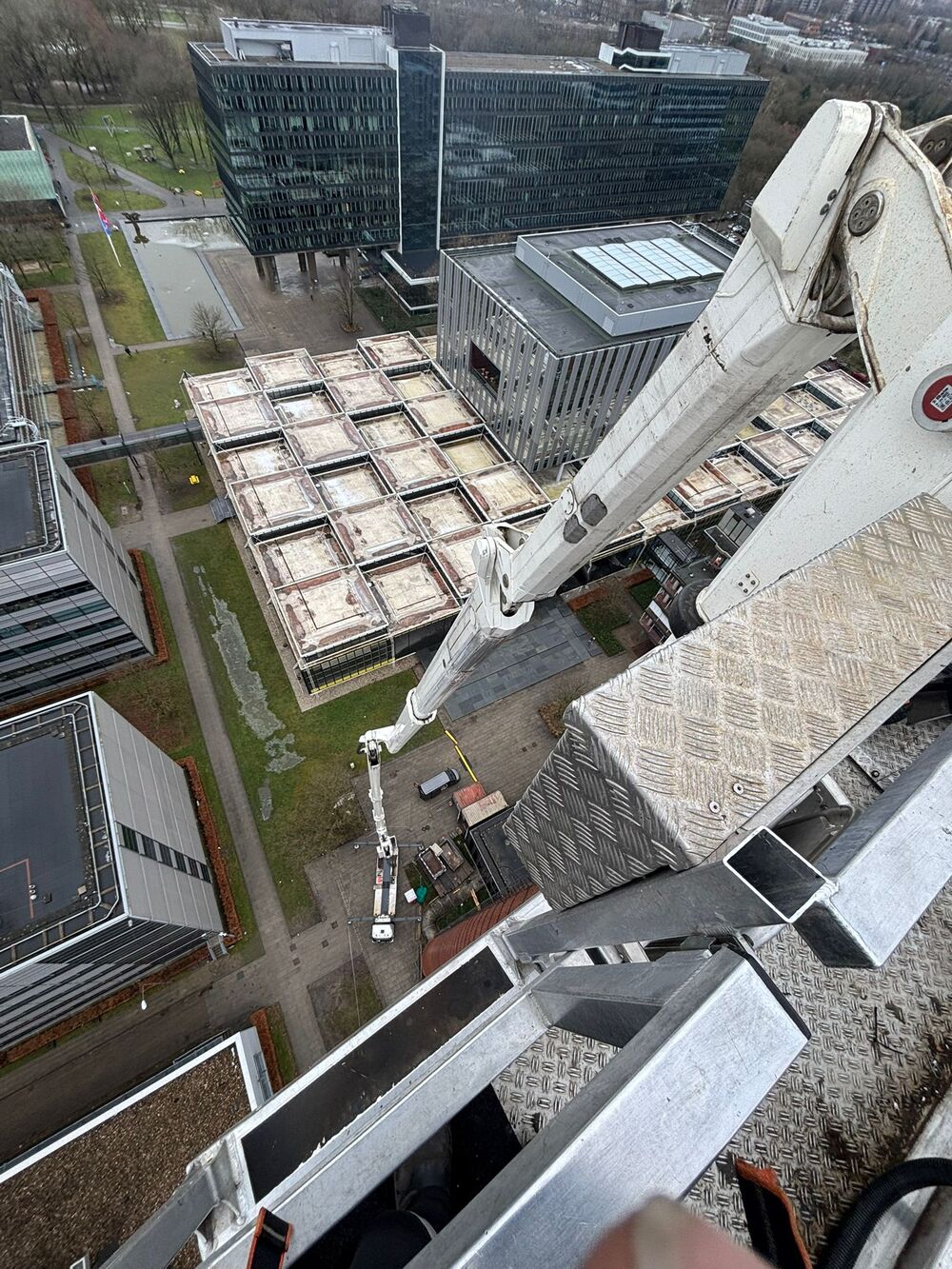
Three people carrying out maintenance on a chimney for a full month — “for something that no longer works.” The operator of the hired aerial work platform finds it remarkable. On Monday, he attached a horizontal beam to the top of the brick chimney from the outside. At 75 meters high, the structure is a real landmark on the TU/e campus.
A basket now hangs from the beam, functioning as an internal elevator inside the chimney. From there, three employees of chimney and furnace company Harm Meijer from Groningen will be carrying out their work in the coming weeks.
Boiler house
The chimney was in use for half a century. Until 2006, the water for heating the university buildings was heated by gas in the adjacent boiler house, now known as the Ceres building. Smoke from the boiler house was fed into the chimney through three semi-underground flues.
That is to say: into the chimney’s inner column. This inner column, about 25 meters high, is known as the partition wall, explains Ron Meijer, son of the now-retired founder of the chimney restoration company. The partition wall functioned like a cavity wall, protecting the outer wall from hot flue gases.
The outer wall rises another 50 meters above the inner column. In that upper section, the—by then cooled—smoke mixed with clean outside air drawn in from below.
Crumble
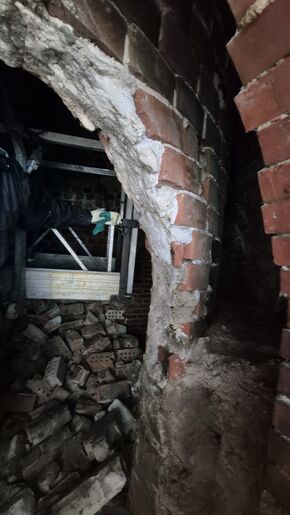
Now that no hot smoke passes through the chimney anymore, the partition wall has become more of a hindrance than a help. Moisture lingers there, which can cause the mortar between the bricks to crumble. The steel climbing irons on both the inside and outside of the chimney can also start to rust.
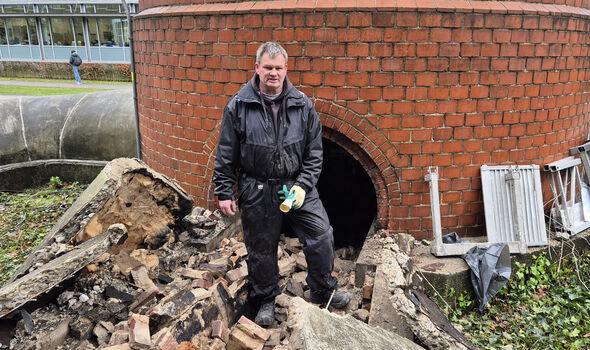
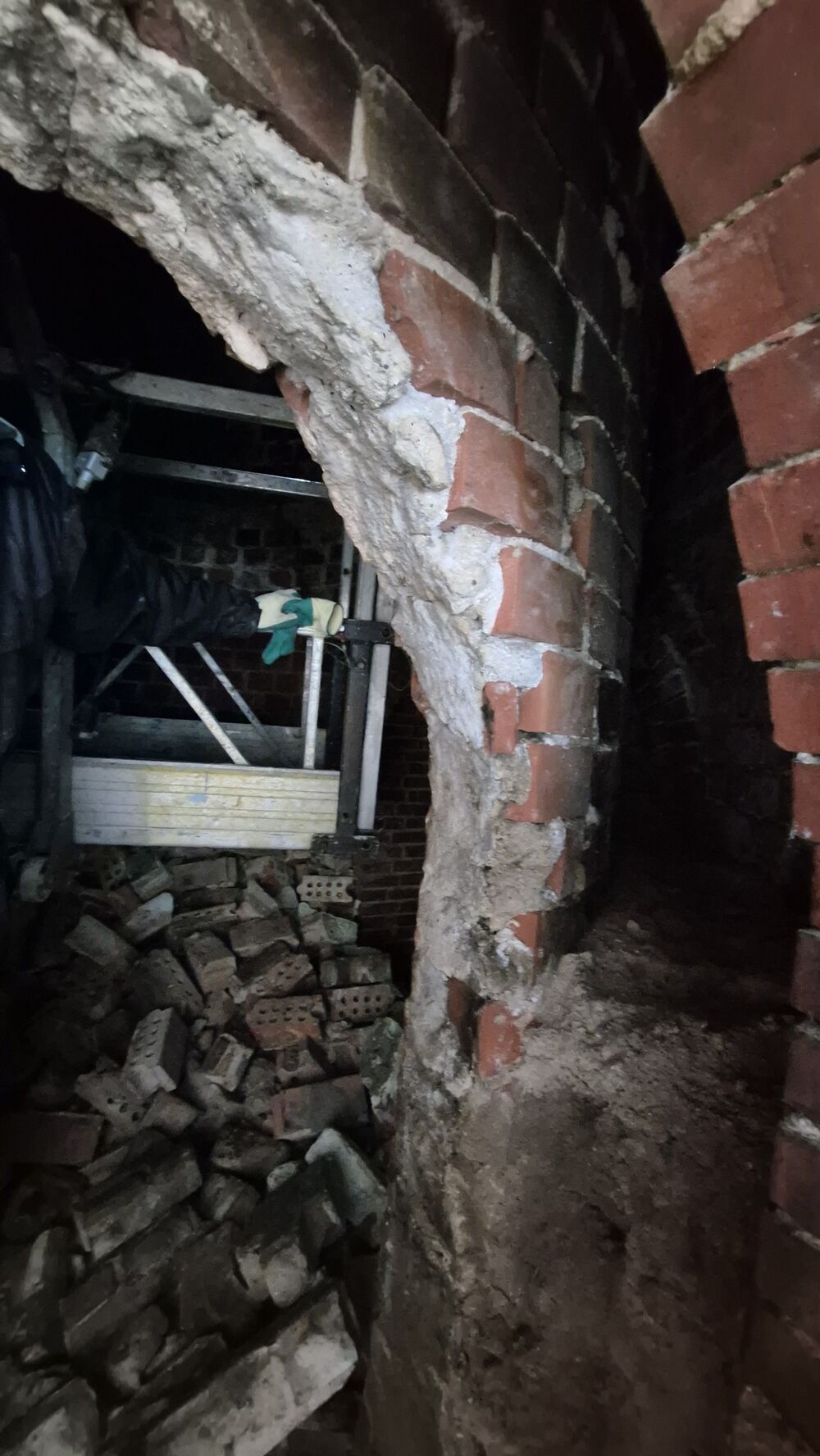
The main task for the team is to remove the partition wall. “To do that, we first had to demolish the middle of the three flues; otherwise we couldn’t reach it. It will take about a week to clear all the rubble,” says Meijer. After that, further maintenance will be carried out on the inside of the chimney.
150 climbing irons
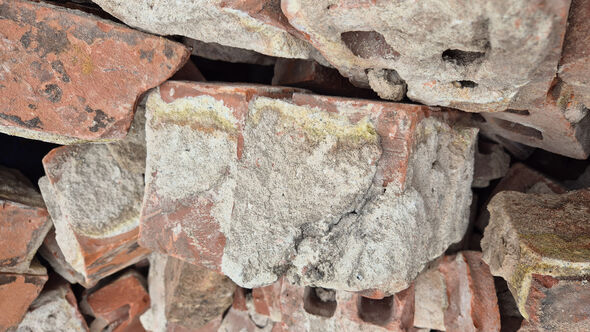
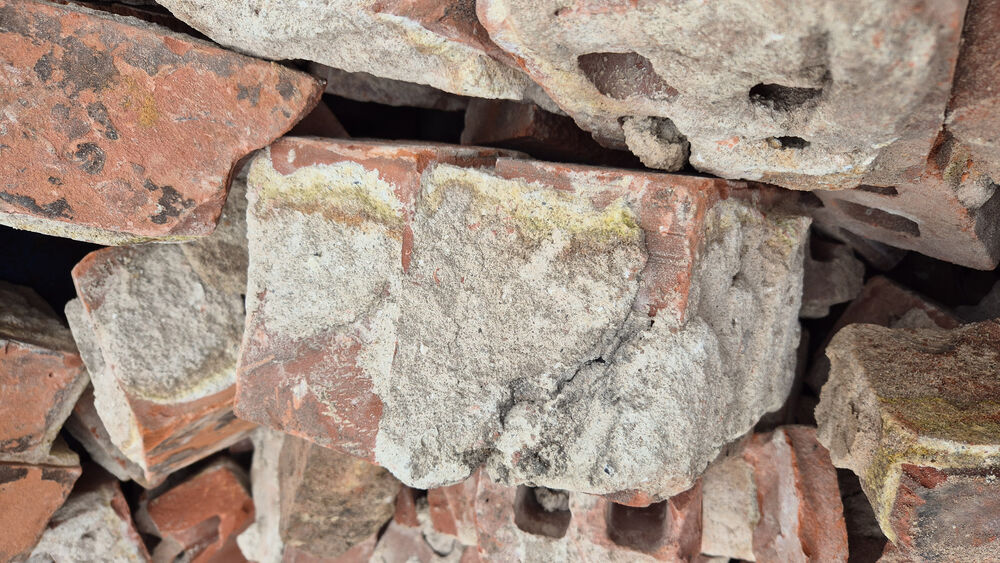
“We’re removing 150 climbing irons. We chisel them out and then fill the holes again. After that, we’ll clean the inside,” Meijer says, pointing to a removed stone from the partition wall that shows a layer of sulfur formed during the years the chimney was in use.
“The yellowish edge is sulfur. When moisture gets to it, a reaction occurs that makes the mortar crumble. The same thing happens in the wall that will remain. We want to wash away that sulfur. That’s why we’ll spray the inside with a high-pressure cleaner, then rinse it again a day later. After that, everything needs to dry.”
At the end of the job — which Meijer estimates will take four weeks — the team will install a grate over the removed flue.
Heritage
Meijer’s company is based in Ten Boer in the province of Groningen. That’s not exactly nearby, but it is the only company in the Netherlands that restores brick chimneys. The Groningers have been in this region before: last year, they also worked on the chimney of the Campina milk factory on the Kanaaldijk. For Strijp-S, Meijer believes a Belgian company was hired.
“There used to be twelve thousand factory chimneys in the Netherlands; now there are only six hundred left. Similar figures apply to windmills. It’s great that this heritage is being preserved, to show our history.”
Today, heating (and cooling) on campus is provided by the aquifer thermal energy storage or ATES system, to which all TU/e buildings on the site are connected.
Outside
In four weeks, the aerial work platform will return to campus to remove the crossbeam from which the internal lift is suspended. Maintenance of the outside of the chimney is scheduled for 2027. At that point, Meijer will, among other things, refurbish the paintwork on the iron bands and the outside climbing irons.

Discussion