
- The University
- 24/08/2026

EE doesn’t want to limit enrollment and opts for alternative
More and more students want to study Electrical Engineering at TU/e. To keep the total number of students in the bachelor’s program under control, the Executive Board proposed an intake restriction to limit enrollment. But according to dean Mark Bentum, there are much better alternatives.
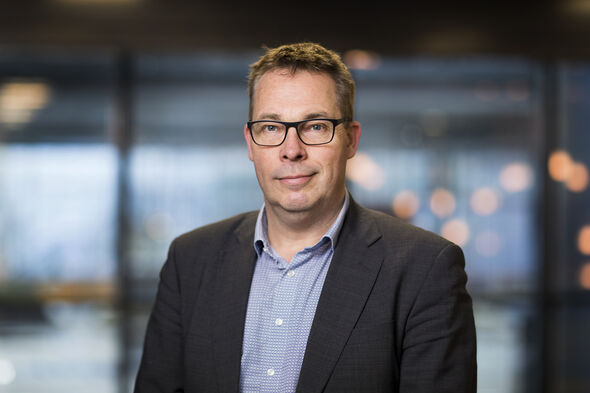
When Mark Bentum, dean of Electrical Engineering, was asked by the TU/e Executive Board to introduce an intake restriction, he pulled out all the stops to avoid having to do so—at least for now.
TU/e is running up against financial and practical limits as the number of bachelor’s students grows rapidly, he acknowledges. But as long as the department can handle the growth, he wants to continue educating as many bachelor’s students as possible. “That is my social responsibility.”

As an alternative, the department is now introducing other measures that will not limit enrollment but should reduce the total number of students in the bachelor’s program.
The department will work closely with Fontys, hoping to enable students for whom it is a better fit to transfer to a university of applied sciences during their first year. The program also wants to shorten the time it takes students to complete their degree, allowing bachelor’s students to move on to a master’s program more quickly—preferably at TU/e.
“We want to guide students during the program rather than at the gate. We call this guidance: looking at the entire educational flow rather than just managing the inflow.”
Why don’t you think an intake restriction is a good idea?
“I understand that you need to keep the number of students in the bachelor’s program under control; we can’t grow indefinitely. Not financially, but also in terms of space. We only have a limited number of lecture halls on campus. Student housing is also a problem.”
“On the other hand, we have an ecosystem of companies around us that are constantly saying: ‘We want more students—including bachelor’s students.’ We didn’t start Beethoven because we wanted fewer students, but precisely because we wanted more (master’s) students.”
“As dean, I am responsible for the program, and I also have a social responsibility. That is why I don’t think we should restrict the number of students, unless we can no longer handle the quantity.”
But can you handle it? You just said there is a shortage of space, and what about the workload?
“We have a fairly large department, so we have said that we can accommodate a temporary increase in the number of bachelor’s students. We may have to take special measures, such as offering lectures twice, but we can handle that. As a department, we have said that we consider the demand from society and industry more important than the pressure here.”
Is there support for this within the department?
“Yes, there generally is. Of course, some lecturers will be less enthusiastic, but that is always the case. As a department, we have a very healthy student-to-staff ratio.”
“There is also support from industry. We have many contacts with industry. I didn’t ask them whether they support or oppose an intake restriction, but whether they support our plans. And there is definitely support for them.”
“Companies made some strong statements. They were mainly about keeping people in the field. Brainport needs both HBO- and university-educated electrical engineers. And certainly MBO graduates as well. The message was: keep those students in the field!”
How are you going to do that?
“In our program, more than one-third of students drop out after their first year; they receive a negative binding study recommendation (BSA, ed.). Those students are lost to the electrical engineering profession. What we want to do now is launch a parallel program together with Fontys from day one. We will incorporate this into the introduction at the start of the program, and we will take several courses together.”
“During the first two months, we will actively monitor students by talking with them and giving them interim tests. This means we know at an early stage how they are likely to perform. Students will then have the opportunity to transfer to HBO as early as the second quarter.”
“This means they will not experience any delay in their studies, but more importantly, they will continue studying electrical engineering. Afterward, through the HBO top-up program, they can enter our master’s program directly after completing their studies.”
So those students are welcome here again?
“Absolutely. What we often hear from students who did not want to go to HBO is that they don’t want to give up the environment within Electrical Engineering, partly because of the very active study association Thor and the Walhalla bar. That is why we say: you are still welcome here. Join student teams, join the associations.”
“We think this plan will achieve several things at once. We will retain students in the field of electrical engineering, HBO is facing declining student numbers, so this is a welcome boost for them, and ultimately we hope that many of those students will return to our master’s program.”
These students would have dropped out anyway because of the BSA. So this doesn’t limit enrollment, does it?
“That’s right. But we will also actively work to shorten the time it takes to complete the degree. Our average study duration is currently around 50 months. We want to reduce that by providing students with more intensive guidance. This will keep the total number of students enrolled in the Electrical Engineering bachelor’s program manageable.”
“For example, I teach a third-year course myself: electromagnetism. This is a notoriously difficult course in electrical engineering worldwide. What we have done is require students to work on problems throughout the quarter. We work in small groups under the guidance of a teaching assistant, and students explain to one another how they arrived at their solutions.”
“This approach has increased pass rates from 20 to 30 percent to around 60 percent. If you introduce more interventions like this, you can have a major impact.”
How does that solve the capacity problem?
“The time it takes to complete the degree needs to be shorter. That will keep the total number of enrolled students manageable. Our model shows that with these measures, the total number of students will remain more or less constant. It comes to around 900 to 1,000 students across all years combined. That means the program will not grow beyond what we can manage, and it will remain financially viable.”
But what if 700 new students suddenly enrolled next year?
“That’s a good question. Let’s first see whether that happens. We don’t expect it to. But if it does, we will probably eventually have no choice but to introduce an intake restriction. We don’t want that, but there are limits.”
So basically, you don’t want to limit enrollment at all?
“If it were up to me, no.”
What do you think has made the Executive Board willing to give the department the room to try this?
“I think the link with HBO is important in that regard; it gives us confidence. At the same time, we are preparing for an intake restriction in case this doesn’t work. We will evaluate everything in the spring, looking at the results and the new pre-enrollment figures. If it turns out that students are not progressing or that the system doesn’t work, we will have to conclude together that another solution is needed.”
If an intake restriction is introduced after all, will the new arrangement remain in place?
“Absolutely. We have been working on the connection between HBO and university education for some time. Starting this academic year, we are already teaching a first-year course together with HBO. In fact, we have been exploring for years whether we could move toward a joint first-year program. That is a major challenge, but we are taking steps in that direction.”
This article was translated using AI-assisted tools and reviewed by an editor.
Discussion