- People
- 6 min
- 13/10/2026

Beyond the CV | “What we focus on makes a huge difference”
TU/e professor Sveta Zinger on self-doubt, opportunities and the luck of being surrounded by good people
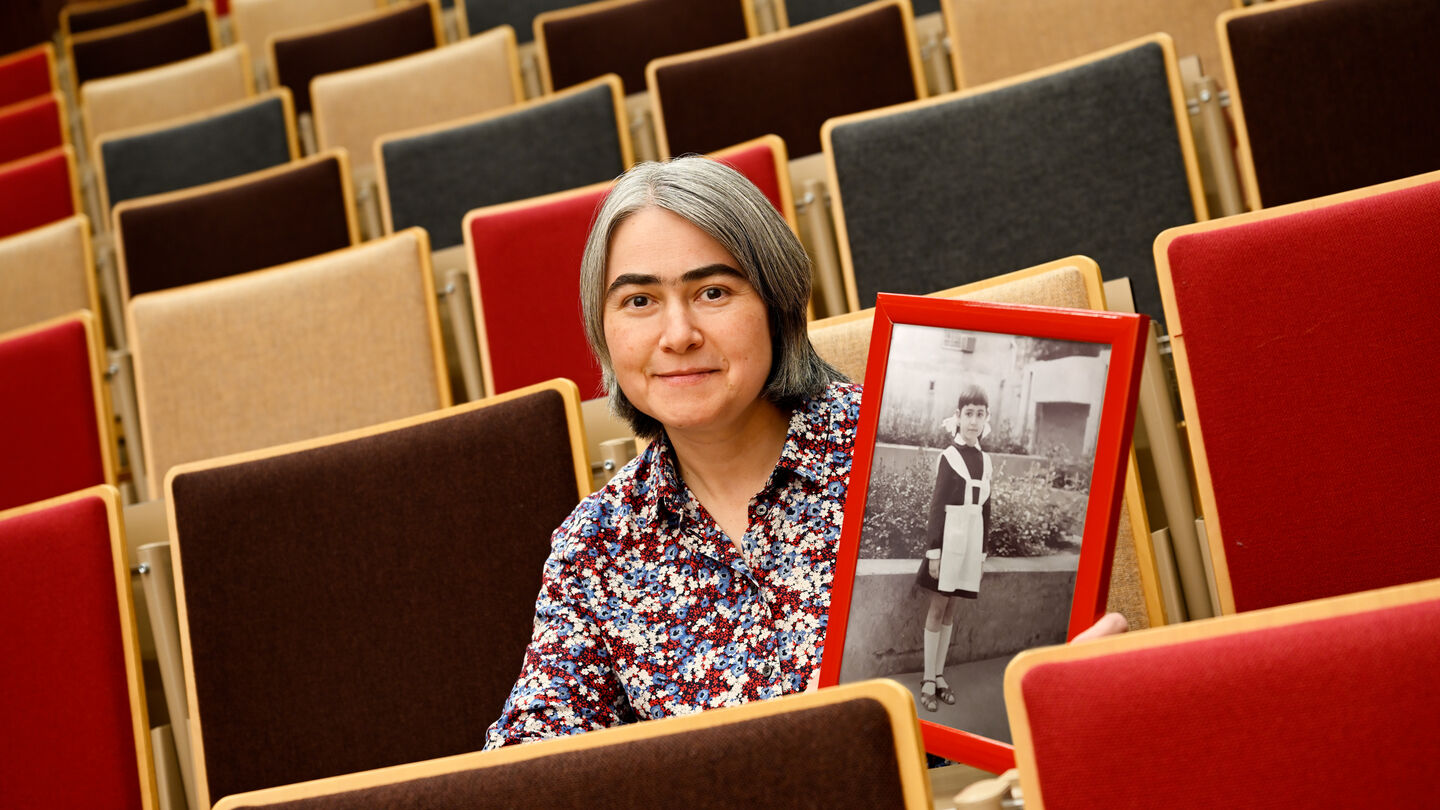
Growing up in a closed city in the Soviet Union, she could not have imagined an academic career in the Netherlands. A piece of meteorite sparked her fascination with science; a professor’s encouragement took her abroad. In this series, TU/e professors share the stories their CVs don’t tell. This time: Sveta Zinger, full professor of Electrical Engineering.
As a child, Sveta Zinger was curious and a good pupil, who consistently earned high grades. But exceptionally talented? She wouldn’t say so. “I always worked hard,” she says, crediting her family for encouraging her along the way.

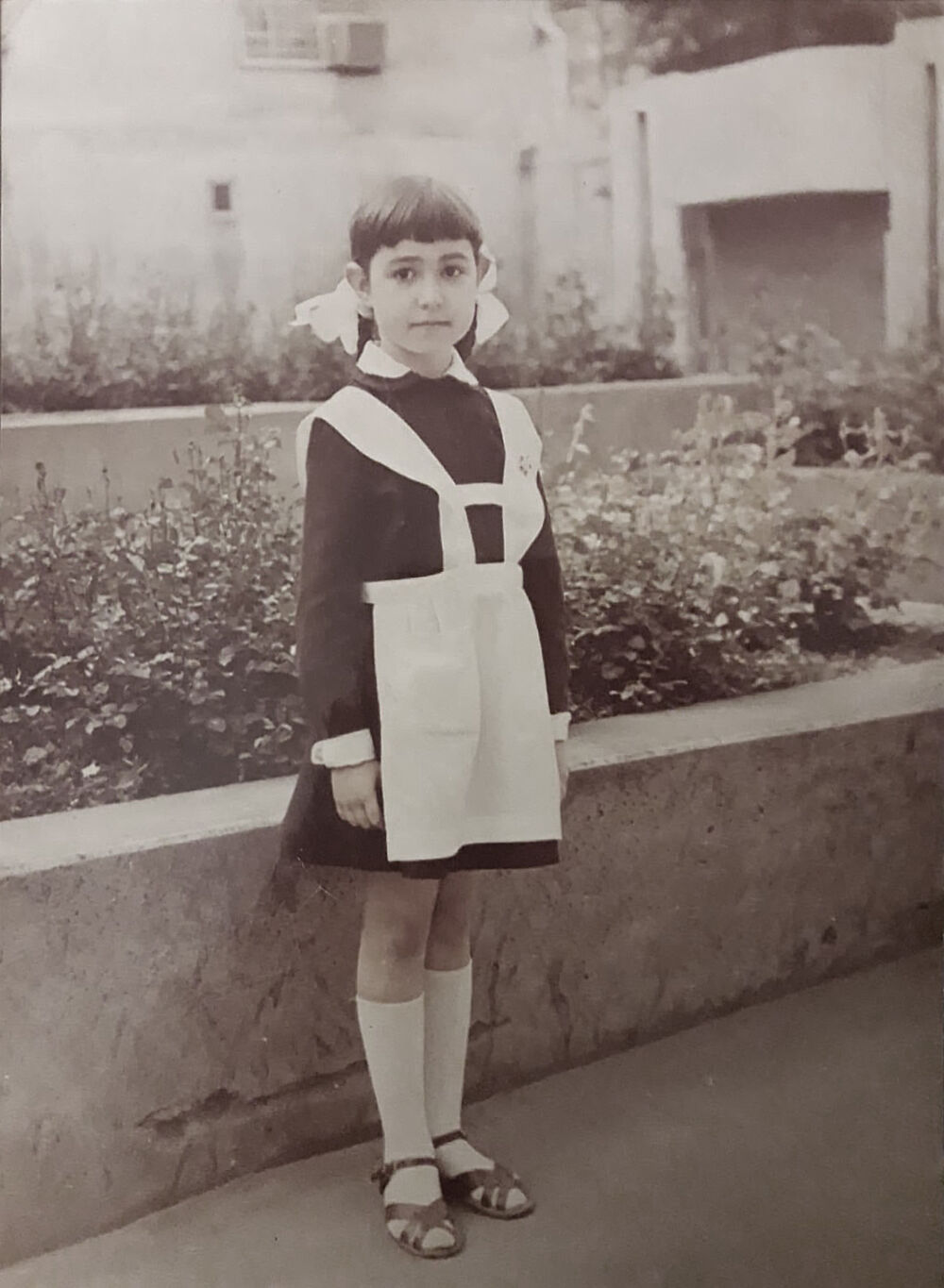
She grew up in what was then the Soviet Union and what is now Ukraine. Even before starting school, learning was part of her daily life. Instead of going to daycare, she often stayed with her grandmother, a teacher of language and literature. Her grandmother taught her to read, write and count while looking after her. “So the first couple of years at school, there was hardly anything new for me to learn.”
Zinger also remembers wanting to earn good grades honestly. She was assertive and highly self-critical—if she noticed a mistake a teacher had overlooked, she would point it out.
One teacher noticed this trait early on. After school one day, she told Zinger: “You’re not gonna have an easy life.” Looking back, Zinger thinks the teacher had already recognized something in her: a strong desire to do things right, coupled with a tendency to be hard on herself.
Meteorite
Zinger clearly remembers the moment when science first captured her imagination. Her grandmother’s older sister was a professor of physics, and during a visit to this great-aunt’s home, Zinger came across something that fascinated her: a piece of meteorite.
“I was holding it in my hands and studying it—it was so heavy,” she recalls. There was also a huge salt crystal. Fascinated by these extraordinary objects, she began wondering: who are the people who study things like this?
That was when she realized that her great-aunt was doing research. “I thought, oh, that’s how you get to study these fascinating objects!” She didn’t yet understand what being a professor meant. But the idea of exploring things that were not yet understood stayed with her.
The unknown
Years later, during her master’s, Zinger encountered that same fascination with the unknown in a very different way. Around 26 years ago, she began experimenting with machine learning—then a new and emerging field. “They were telling us, ‘This is a new domain called AI,’ but it was all completely unknown,” she recalls. “Working on new things and creating knowledge is fascinating. That’s what really drew me into academia.”
There was another part of academic life that appealed to her too: sharing knowledge. Teaching had already become something she enjoyed early in life. “There were teachers in our family, and I also started teaching my friends who needed some help with mathematics, for example.”
What she did not have was a particular ambition to become a professor. “That was never a goal. I always focused on doing my research and teaching. I never really concerned myself with professorships, promotions or job titles.”
That attitude would serve her well. Rather than planning her career around a particular title, she followed her curiosity—and, sometimes, opportunities that she had never expected.
From a closed city to France
Zinger grew up in a very different environment from the international academic world she would later become part of. She comes from a closed city with facilities for rocket production and military applications, where foreigners were not allowed to enter. “It was pretty isolated. In fact, I didn’t meet a stranger until I was eighteen.”
At the time, she never imagined she would leave Ukraine. “Because no one I knew did.”
Then the Soviet Union collapsed, and new opportunities began to emerge. During her master’s, a professor announced before a lecture that students could apply for an internship at a university in France. Anyone interested was invited to stay behind to discuss the details.
“I thought, they should take the best person, which is not me, and I just went home,” Zinger says, dryly.
The next day, however, the professor called her into his office and asked why she had not applied. She told him the truth. He encouraged her to apply and told her to work on her résumé. “I didn’t even know what a résumé was,” she says, smiling.
But she followed his advice. She applied—and was accepted for the internship. It was an opportunity she might never have encountered without a professor who saw potential in her before she saw it herself. And it would change everything.
Like a fish in water
After the internship, she was offered a PhD position there, much to her surprise. “I didn’t even have a French diploma, but they made an exception for me, and I started. That’s how several months in France became several years.”
The beginning was not easy, she recalls. “Until then, I never really spoke English, and I didn’t speak French at all, so you can imagine what it was like for me.” She was thrown in at the deep end, but she stayed afloat. “Eventually, I defended my thesis in French.”
She also met another foreign student—who is now her husband—and he eventually invited her to move to the Netherlands with him. After a postdoc in Groningen, where she learned yet another language—Dutch—she joined TU/e.
She felt at home almost immediately. “Although I never lived here, didn’t study here, and knew no one, I felt like a fish in water among all the engineers.”
She stayed, and this year gave her inaugural lecture as a full professor.
The role of luck
“I was always very lucky with the people I met. I had friends you can only dream about, and I was lucky to meet the French professor who believed in me. At TU/e, I have excellent colleagues, and I have always enjoyed being in my office. That’s a huge part of luck.”
For Zinger, luck is about the people around her and the opportunities they create. “Being able to take part in all those projects, and having dozens of students and PhD students to supervise—that’s what luck means to me.”
But she doesn’t mean luck in the sense of doing less and getting more, she stresses. “I’ve always worked hard and done my best, in my own sincere way. There is always one critical reviewer—I always report to myself,” she adds with a touch of dry humor.
Equal opportunities
The same pragmatic attitude shapes Zinger’s view of equal opportunities. She believes that motivation and a willingness to accept the price that comes with pursuing something can take you a long way. Asked whether she has ever felt she had to prove herself more than others, or had been disadvantaged because of who she was, she pauses for a long moment.
“I was always looking at my situation from a different perspective: have I done my best? You can always look for reasons why you didn’t succeed, but those thoughts are not constructive. Think about what can be done and what is within your influence.”
She takes a similarly pragmatic view of gender inequality in science. At an event for women in science, two women once asked her what she thought about the male dominance in academia.
Her answer was simple: “I don’t think about this, I’m doing my work.” She believes it’s our choice what we focus on. “If you look for unfairness, you will find it. And it’s good that it gets more attention and is being addressed. But we have bodies for that—I would rather focus on my work.”
The sun is shining
It is a perspective that says something about Zinger more broadly. Throughout her career, she has often focused less on what she lacked, or what might stand in her way, and more on what was in front of her. She remembers one experience from her first days in France that made this way of thinking particularly clear.
She had just arrived, spoke no French and only a little English. At a language course, she suddenly found herself surrounded by people from all over the world—Latin America, Australia, China. Everyone seemed to speak better English than she did.“I was thinking: How am I going to survive this? I’m sure they will not understand any word of me, any cultural reference.”
Then one girl pointed out the window and said: “Look at the sun shining.” “And then I realized: we are all people, we have more in common than we might think.”
She stayed with the group, and everything turned out just fine. For Zinger, the moment became a lasting lesson. “Think about what we have in common instead of the differences and negativity. What we focus on makes a huge difference.”
This article was translated using AI-assisted tools and reviewed by an editor
Discussion