- People
- 13/11/2026

Beyond the CV | “If I were growing up today, I’d drop out”
Professor Guus Pemen on giftedness, his unconventional path to academia, and his love of hands-on technology
When Guus Pemen visited the high-voltage laboratory at TU/e as a student, he knew immediately: this is where I want to work. But the road to his dream job was anything but straightforward. As a gifted student, he struggled for years to find his place in the education system. In this series, TU/e professors share the stories their CVs don’t tell. This time: Guus Pemen, professor of Electrical Energy Systems.
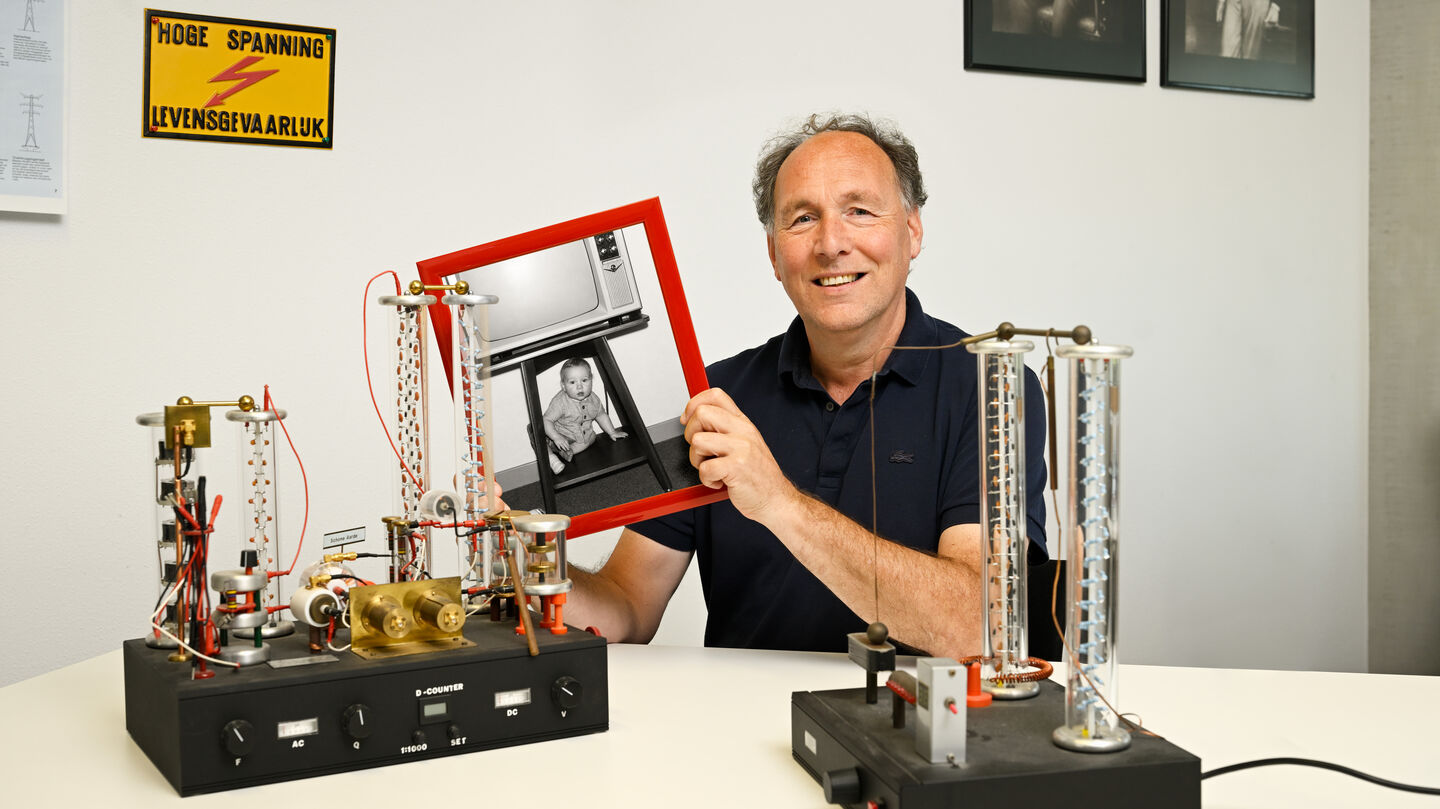
“I’ve always had a passion for visually striking hardware: tangible technology that’s beautiful to look at,” says Guus Pemen. His field, Electrical Energy Systems, offers plenty of it. Think impressive high-voltage power lines stretching across the landscape and substations filled with visible electrical equipment.
“I’m fascinated by electrical installations like these, where you can see every component and clearly understand the physics behind how they work. Take a transformer: you can actually see how it works. I think that’s beautiful.”
Under the TV stand
His fascination with technology began at a very young age. As a toddler, Pemen had an unusual favorite spot in the house: underneath the television stand in the living room. He could spend hours there, captivated by the large, old-fashioned black-and-white television, which received just two channels. “You actually had to walk over to the TV to switch to the other channel,” he recalls with a big smile.
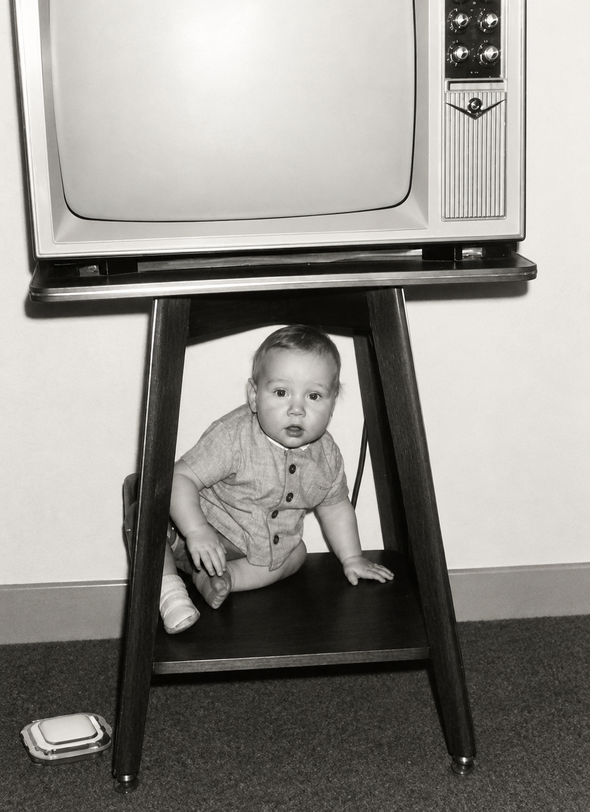
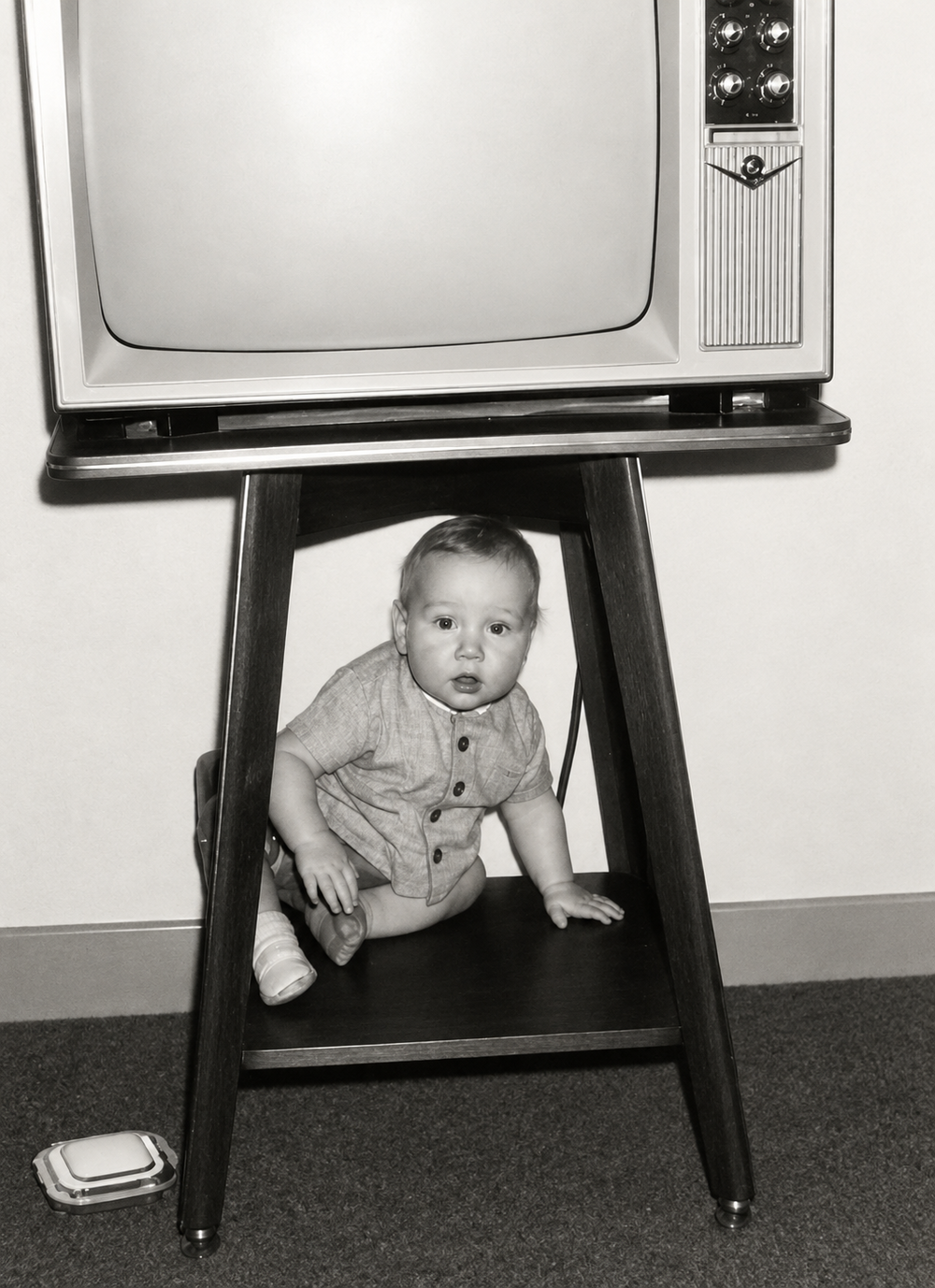
When Pemen was about three years old, a friend of his parents came to visit. The man, who was an engineer, opened up the back of the television. For young Guus, it was like stepping into a whole new world. For the first time, he could see what was going on behind the screen. “You could see all those electrical components. They looked absolutely incredible.”
But it wasn’t just the sight of them that fascinated him. The television also made a soft humming sound and gave off a distinctive smell. By the time Pemen was eleven or twelve, he had begun exploring in greater detail how the device actually worked.
“That’s when I discovered that the sound came from the flyback transformer, a high-voltage transformer used in older televisions. And that distinctive smell was probably ozone, produced by the high-voltage connection to the picture tube.”
Filtering out the hiss
As a teenager, Pemen started building electronic devices himself, from measuring instruments to speakers and amplifiers (“so I could make a lot of noise”). He also experimented with circuits to improve cassette recordings.
He loved recording music from the radio but couldn't stand the background hiss or voices getting mixed in. “So I’d try to build electronic circuits that could filter out things like the DJ’s voice. That sort of thing.”
His interest in technology took a new turn when he enrolled at a technical college (hts). During a field trip to TU/e, the students visited the university’s high-voltage laboratory. Something remarkable happened there.
“When I walked in, I had exactly the same feeling I’d had as a little boy when I first saw the inside of a television. That image came rushing back. I was hooked. I knew right away: this is where I want to work. This is what I want to do.”
And that’s exactly what happened. Today, Pemen has been leading a large research group in electrical energy systems for more than twelve years. Yet his academic career was far from a conventional one.
One plus one
“I’ve always struggled with school,” Pemen says. Whether it was math or history, he understood the material perfectly well, but the way he was tested didn't suit him.
He gives an example: “Suppose the teacher asked, ‘What's one plus one?’ I’d start wondering why the question was being asked. Was there some hidden meaning behind it? I’d get caught up thinking about that, lose track of time, and end up getting a failing grade on a really simple question.”
It was only much later in life that Pemen discovered he was intellectually gifted, with an IQ above 130. Gifted children often think and learn differently from the way traditional education systems expect them to. As a result, their abilities can go unrecognized, and they may underperform despite having a strong grasp of the material.
Pemen refuses to let this discourage him and continues to follow his own interests. “I had a wonderful childhood and always just did my own thing. Technology was my passion, and I figured things out for myself.”
Way too smart
After elementary school, Pemen barely made it into intermediate general secondary education, known in the Netherlands as mavo (now referred to as vmbo-t). “I was way too smart for it. I could pass every subject without doing any work.” He organized parties, played sports, and kept himself busy with all kinds of things—everything except school. “I simply wasn’t being challenged at all.”
At the next level, a secondary technical vocational college (mts), Pemen found a better fit. Because his grades weren’t high enough for the electrical engineering program, he initially enrolled in mechanical engineering. However, he was allowed to take additional electrical engineering courses alongside his main program. “You could just do that back then.”
He seized the opportunity and eventually earned diplomas in both fields. For the first time, he felt that people recognized and understood him.
Alternative civilian service
At the higher technical college (hts), Pemen found himself challenged even further. His visit to TU/e’s high-voltage laboratory stayed with him. So when he refused military service on grounds of conscience and was required to complete alternative civilian service instead, he knew exactly where he wanted to go.
“There was only one place where I wanted to do it, and that was there.” He wrote a letter to the professor in charge of the laboratory and was given the opportunity to work there.
It turned out to be a perfect match. Pemen immediately felt at home and, after some time, was even offered the chance to pursue a PhD, despite never having attended a university as a student. Professor Piet van der Laan, who made this possible, became an important mentor.
The path I took, from intermediate general secondary education all the way to university, wouldn’t be possible today
“I’m incredibly grateful to him for giving me that opportunity. He gave me one-on-one lectures in areas I knew little about. He also taught me how to conduct research. I call him my academic father. The connection we had made a tremendous difference in my life.”
Barriers between levels of education
Pemen realizes that he was fortunate that the education system was less rigidly structured back then than it is today. “Schools had considerably more autonomy. The path I took, from vocational school all the way to university, simply wouldn’t be possible today. There are now far more barriers between the different levels of education.”
He worries about young people who are being left behind as a result. “Every year, around 30,000 students drop out without earning a high school diploma. It’s estimated that between a third and a half of them are gifted. These are people with enormous potential who simply don’t fit into the education system. And that number keeps growing every year.”
Education is increasingly being dictated by rules, leaving less and less room for individual needs and circumstances
He wonders how his own life might have turned out if he had grown up today. “I’m fairly certain I would never have become a professor. I probably would have dropped out, too, and perhaps I would have ended up as a carpenter.”
This makes the issue deeply personal for him. “I find it incredibly sad. Universities, too, have become enormously bureaucratic, documenting everything in endless reports and policy documents. As a result, education is increasingly dictated by rules, leaving less and less room for individual needs and circumstances.”
Pemen argues that the education system needs to allow more room for individual differences among students, so that everyone has the opportunity to develop their talents and reach their full potential. “I think I’m a good example of why that matters.”
This article was translated using AI-assisted tools and reviewed by an editor.
Discussion