- People
- 4 min
- 29/10/2026

Beyond the CV | “Anything is possible”
Professor Bas Overvelde on juggling and having the courage to forge your own path
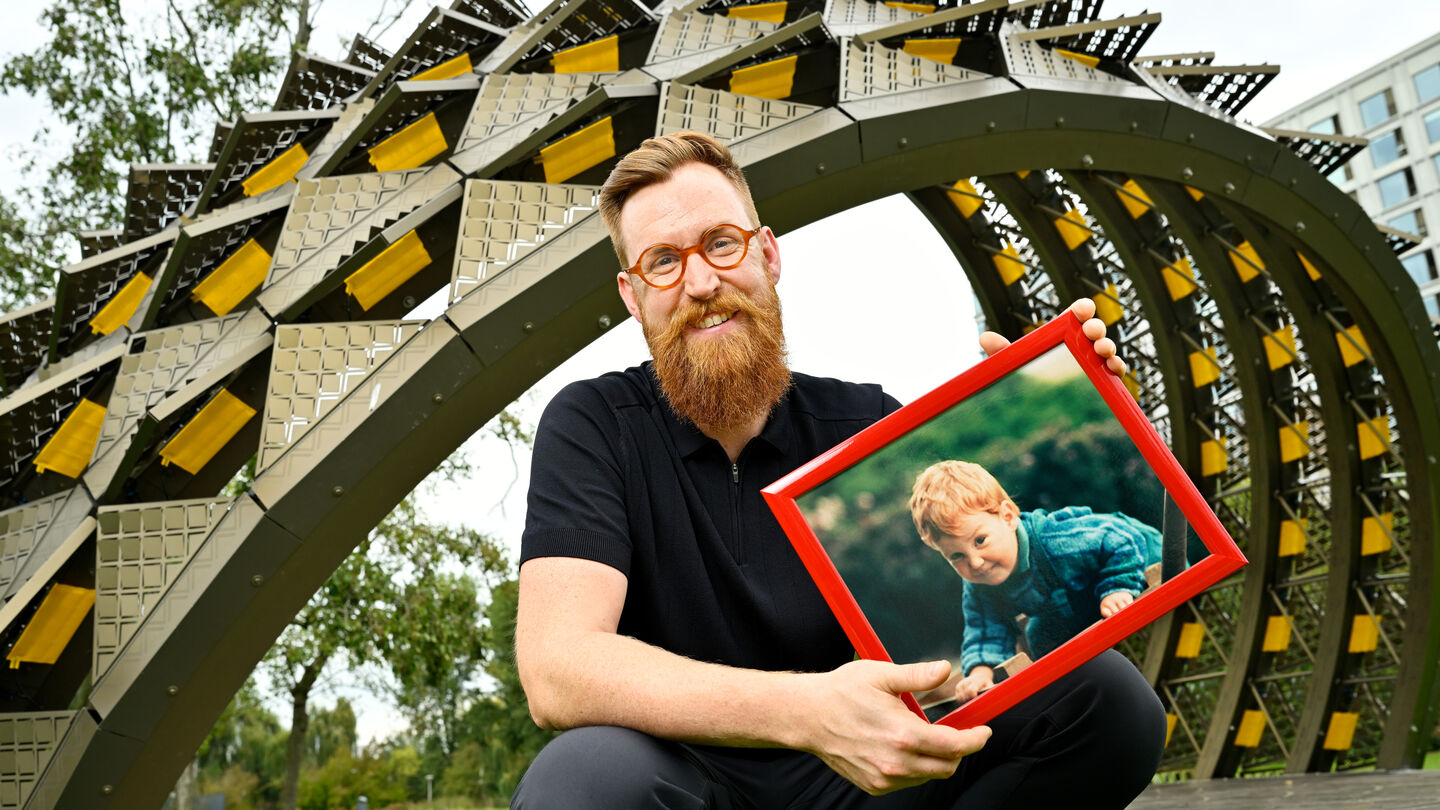
He earned barely any credits when he first started college. Yet Bas Overvelde wasn’t particularly worried about his future. Today, with that same optimism, he leads his own research group. In this series, TU/e professors share the stories their CVs don’t tell. This time: Bas Overvelde, professor of Mechanical Engineering.
Bas Overvelde is an expert in soft robotics and heads the Autonomous Matter & Machines Lab, where he investigates how soft machines and materials can exhibit autonomous behavior. This year, he received a €150,000 European Proof of Concept Grant for his research.
Few people know that his time as a student got off to a rocky start.
During his second year studying physics, he felt out of place and wasn’t spending much time on his studies. “I actually spent a whole year juggling on the street with friends,” Overvelde says, almost in passing. “It was a big hobby of mine at the time, and I enjoyed it, so that’s what I did.”
That instinct to explore and follow his curiosity was there from an early age. “As a kid, I was always trying things out and having fun,” he says with a broad smile. He was good at math, had a strong spatial sense, and was eager to understand how things worked. He also enjoyed experimenting with three-dimensional shapes and origami-like creations. That same urge to explore would later become an important part of his work.
Gyro Gearloose
He never really had a role model. Or perhaps he did, in a way. “It was Gyro Gearloose, the inventor from Donald Duck,” he says with a laugh. “He was my favorite character in the comic. I thought the idea that you could invent things was fascinating.” Still, as a child, he wasn’t particularly focused on ambition or achievement. He had no idea what he wanted to be when he grew up.
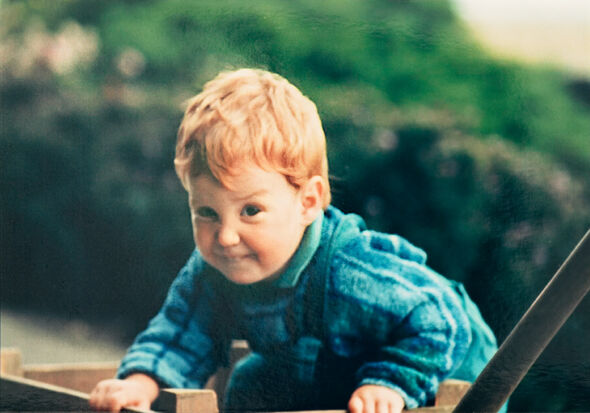
“I never had a master plan for what I wanted to achieve,” he says. His secret? “I follow my interests and look for possibilities, while staying flexible enough to seize opportunities as they arise.”
In high school, he was still mostly exploring and experimenting, without knowing exactly which direction he wanted to take. At the end of his first year, teachers told him he was too playful. “It certainly wasn’t meant as a compliment at the time, but I do value the optimism that comes with that attitude,” he says.
Solving puzzles
Over time, he discovered that engineering was a good fit and gave him room to express his creativity. One school project in particular has stayed with him: he came up with the idea of having his entire class build a three-dimensional city out of paper. “That was one of those moments when I thought, this is something I really enjoy doing.”
It still took him a while to find the right field of study. He eventually switched from physics to mechanical engineering, where he finally found his place. But it was during his master’s program that things really clicked. “I spent a lot of time programming, building models, simulating 3D structures, and doing calculations. Basically, solving lots of puzzles. I could lose myself in that for hours.”
Sixteen hours a day
From there, his academic career began to accelerate. After completing his studies successfully, he moved to the United States to pursue his PhD. It may have been the most formative period of his career, but it also demanded a great deal of him. He seized the opportunities his academic environment offered and, toward the end, spent long stretches working around sixteen hours a day, seven days a week.
That investment paid off: after earning his PhD, he was able to start his own research group right away, without first taking a postdoctoral position. “I remember telling myself then that I’d never work that hard for such a long stretch again, because it just isn’t sustainable in the long run,” he says with a smile.
An incurable optimist
Throughout his career, Overvelde has preferred to follow his interests rather than stick to a carefully mapped-out career path. “I like trying new things, and I’ve always had a lot of confidence that I’ll make them work. In that sense, I’m a real optimist,” he says. “If there’s something new and exciting to be done, I’m usually the one saying, ‘Let’s just go for it!’”
That sometimes means making big decisions and leaving things behind. Last year, for example, he moved his entire research group from Amsterdam to Eindhoven, including the lab and all the equipment.
When people ask whether he worries he might regret the move one day, he takes it in stride. “I’m not particularly nostalgic by nature. I look back on a great period of my life, but when I move on, I move on. I don’t lie awake wondering whether it was really the right decision.”
“It always works out somehow”
He takes the same matter-of-fact approach when asked whether he ever questions his place in academia. “Of course, like everyone else, I sometimes wonder, ‘Do I really belong here?’ But if it turns out I don’t, then so be it. You have to find your own path. I don’t worry about it. I just believe that, one way or another, things always work out.”
He believes the fear of not being good enough, often associated with impostor syndrome, is widespread in academia. “I think we all just need to stop doing that,” he says with a wink.
“I believe everyone has their own strengths. Every PhD student I supervise is different. That’s what makes leading a research group so rewarding. I think we all need to take a good look at what excellence and impact really mean, and how we recognize and reward them in academia. That’s how people can find their place and thrive.”
Competition
He sees the constant expectation to do more and more all around him. “As a research group leader, I have some control over what I do and how much I take on, which makes it complicated. The pressure isn’t necessarily imposed on us directly; it comes from the competition within academia. I wish people would collaborate more and root for each other. Then we could celebrate our successes together.”
“I’m very competitive when it comes to sports and games, but not at all in my work,” he says. What he finds most rewarding is mentoring people, building a team, and exploring and pursuing shared interests. “That’s when the good results follow naturally.”
This article was translated using AI-assisted tools and reviewed by an editor
Discussion